Problem-solving abilities Addition and Subtraction Word Problems Worksheets for 4-Year-Olds
4 filtered results
-
From - To
Unlock your child's potential with our expertly designed Addition and Subtraction Word Problems Worksheets for 4-Year-Olds! Tailored to develop early problem-solving abilities, these worksheets seamlessly blend fun and education. Each activity invites your young learner to practice essential math skills by solving simple yet engaging word problems. As youngsters navigate relatable scenarios involving addition and subtraction, their cognitive abilities and analytical thinking evolve. Our colorful, captivating worksheets ensure your child not only excels in early math but also gains confidence through hands-on learning. Give your child a head start on math mastery and problem-solving excellence with our premium worksheets!
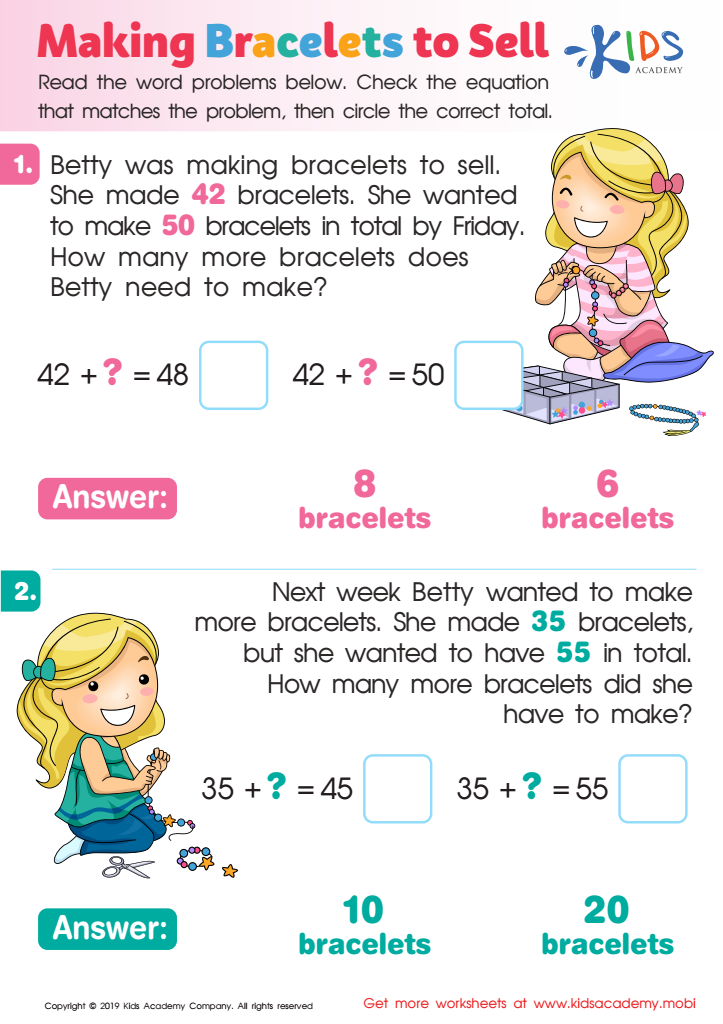
Making Bracelets to Sell Worksheet
 Assign to My Students
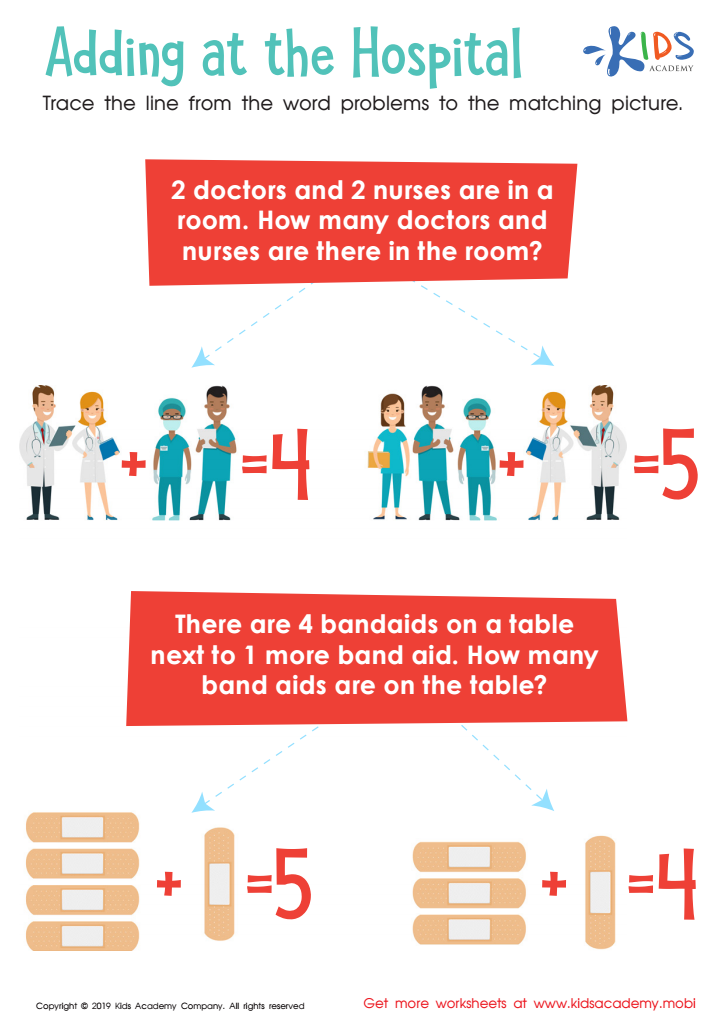
Adding at the Hospital Worksheet
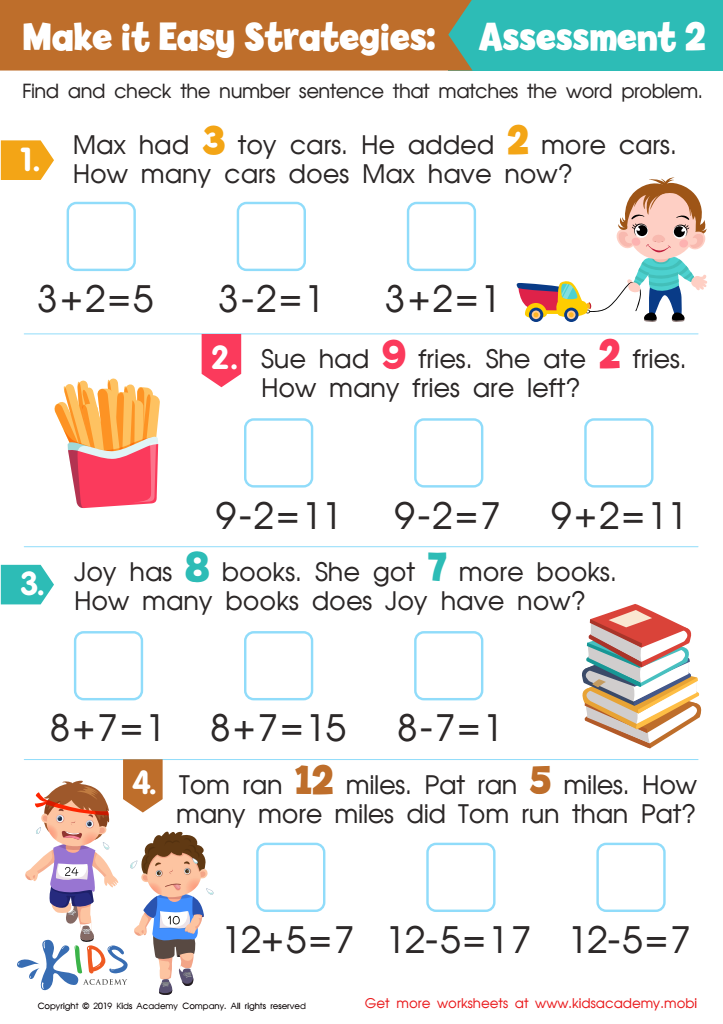
Make it Easy Strategies: Assessment 2 Worksheet
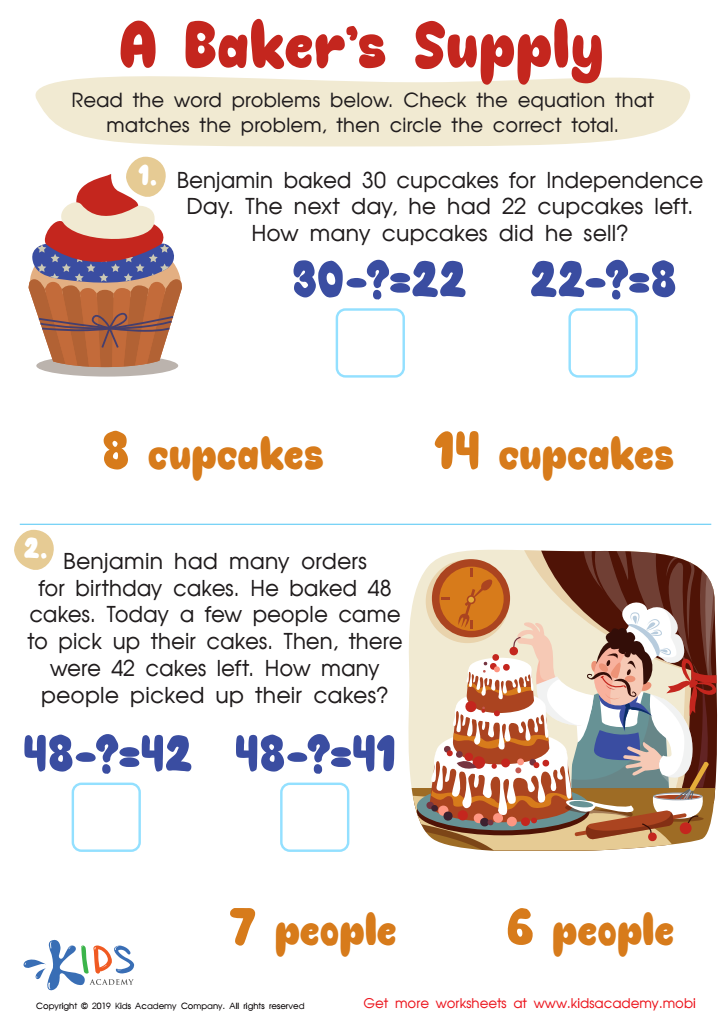
A Baker's Supply Worksheet








Problem-solving abilities, especially involving addition and subtraction word problems, are crucial for 4-year-olds as they lay the foundation for essential cognitive skills and future academic success. Engaging children in such activities nurtures their critical thinking, which helps them develop reasoning skills and understand cause-and-effect relationships. When parents and teachers emphasize these abilities, they facilitate not just mathematical proficiency but also the growth of a child's logical thinking.
These early mathematical experiences foster number sense, helping children grasp the concept of quantity, sequencing, and the relationships between numbers. Tackling word problems specifically enhances comprehension, as children learn to translate real-world scenarios into mathematical expressions. This promotes not only arithmetic skills but also language development, including vocabulary and syntax.
Moreover, problem-solving in early childhood encourages a growth mindset. Children learn to embrace challenges and view mistakes as learning opportunities rather than setbacks. This develops resilience and confidence in their abilities to tackle difficult tasks, a vital life skill.
In summary, focusing on addition and subtraction word problems for young children equips them with essential cognitive tools, nurtures a positive attitude toward learning, and builds a strong foundation for future academic endeavors in math and beyond. Parents and teachers play crucial roles in this developmental phase by providing the support and encouragement that foster these skills effectively.