Check out this FREE Trial Lesson on Addition & Subtraction for age 4!

A

Favorites
With answer key
Interactive
  • 4
  • Basic Addition Skills
  • Addition & Subtraction
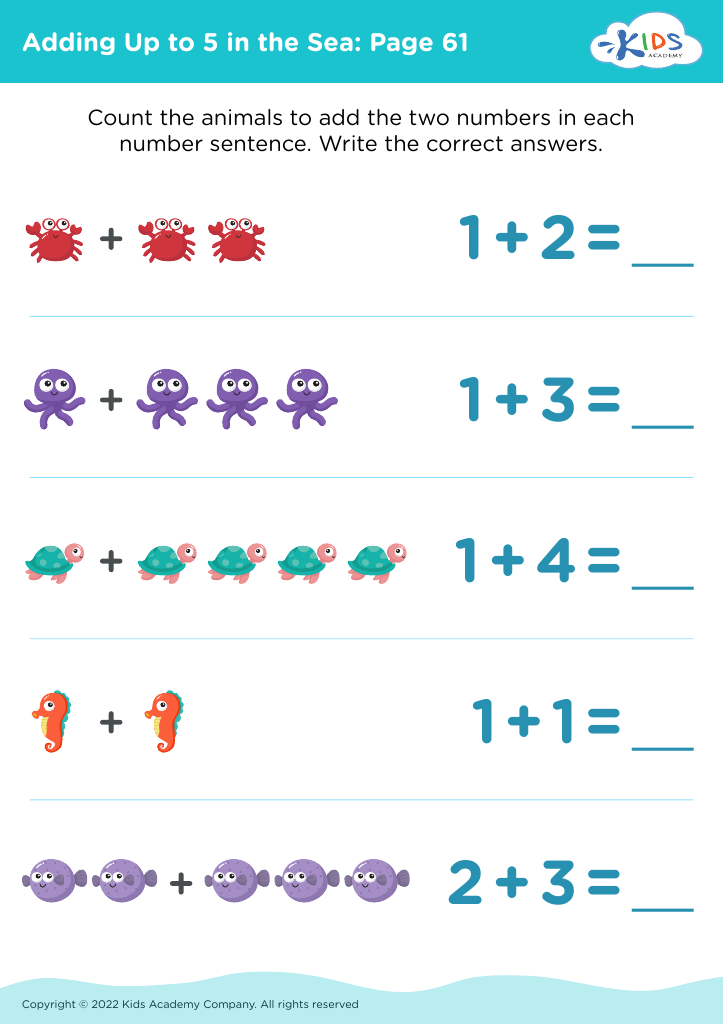
Adding Up to 5 in the Sea: Page 61
Worksheet
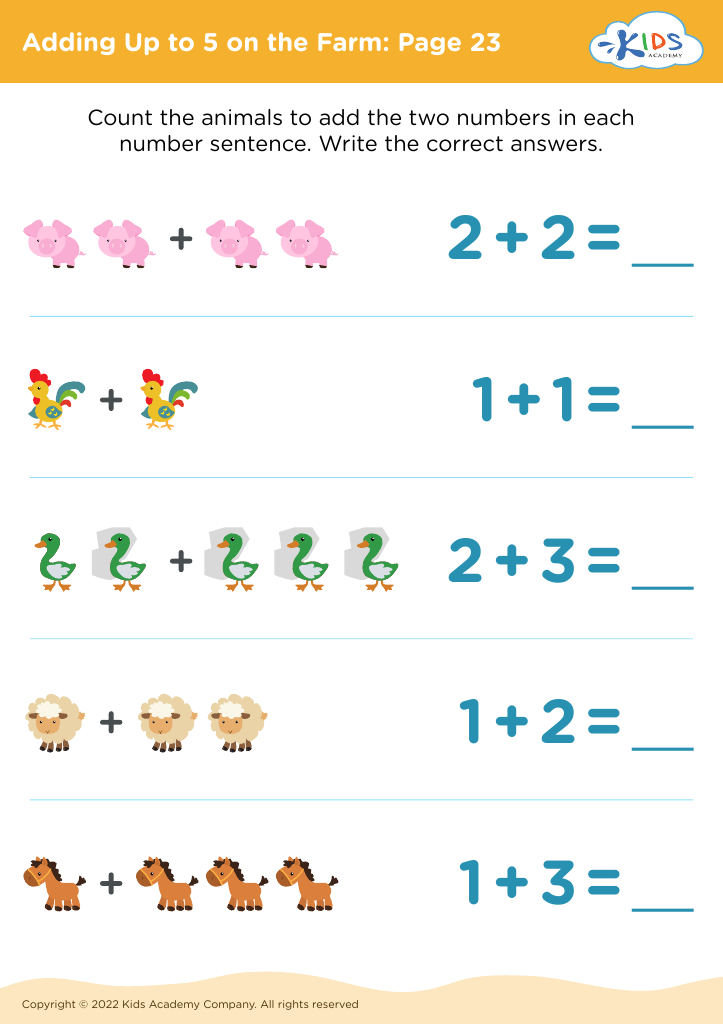
Adding Up to 5 on the Farm: Page 23
Worksheet
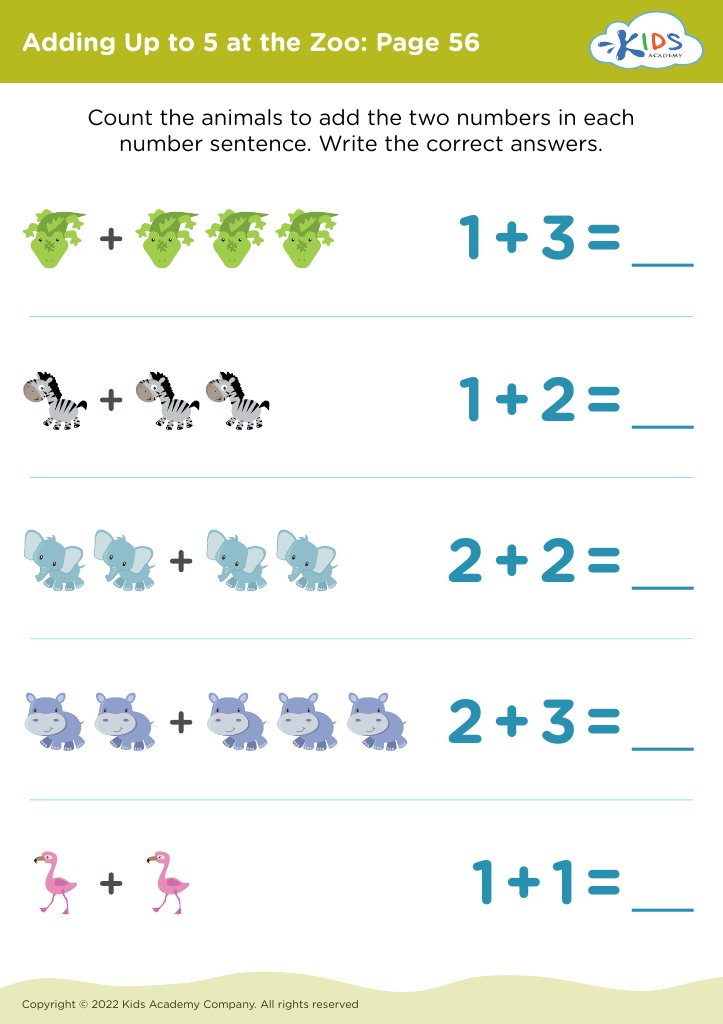
Adding Up to 5 at the Zoo: Page 56
Worksheet
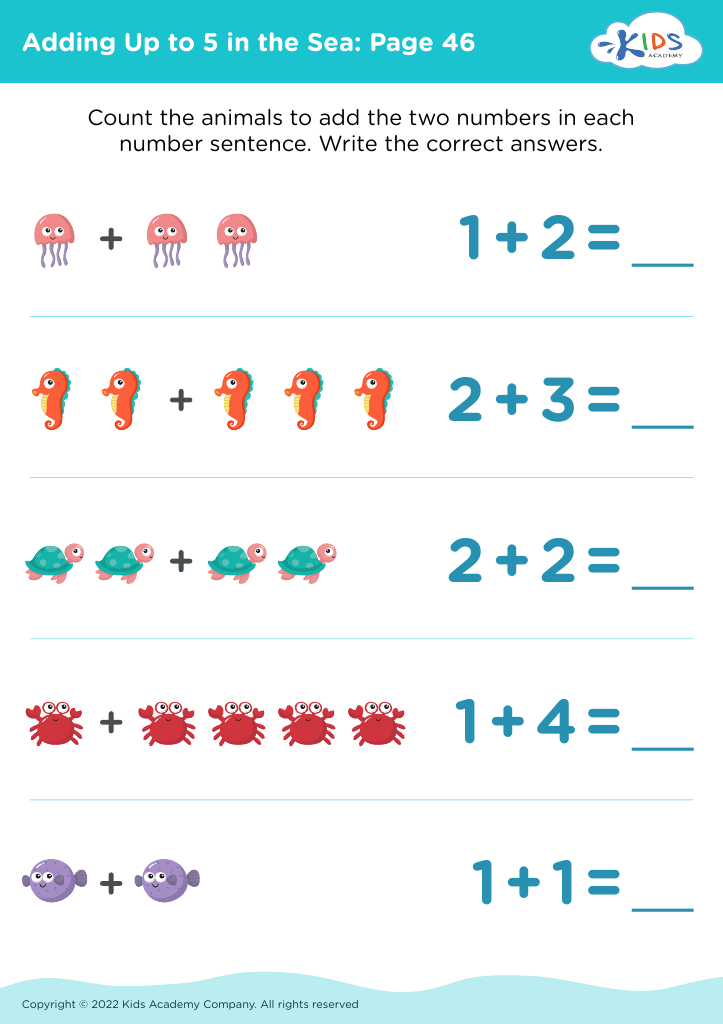
Adding Up to 5 in the Sea: Page 46
Worksheet
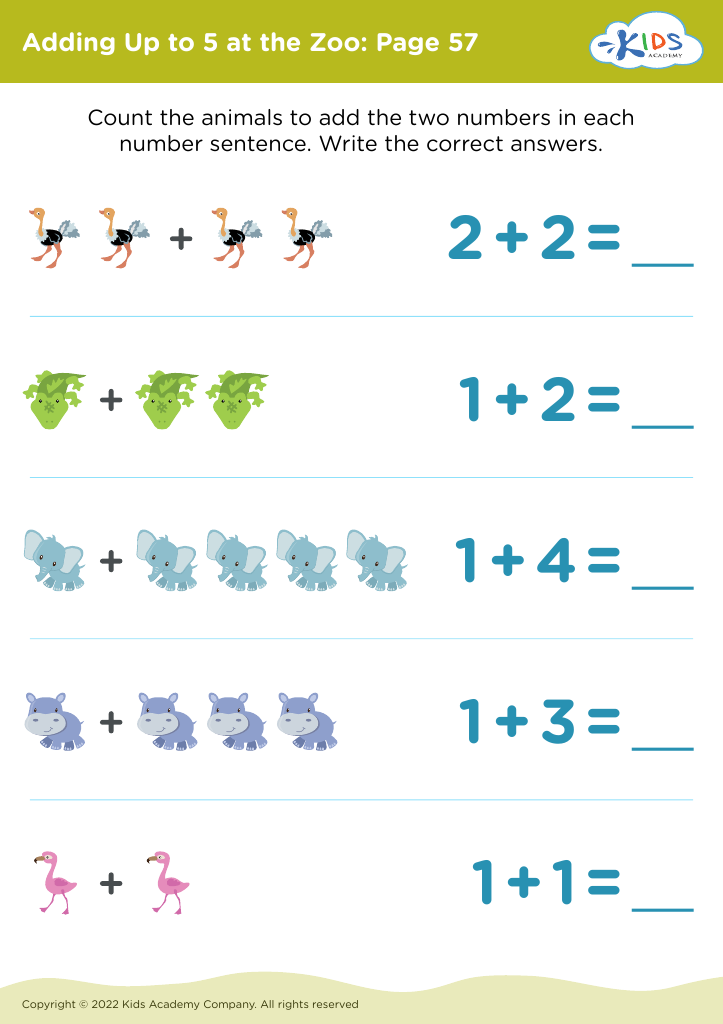
Adding Up to 5 at the Zoo: Page 57
Worksheet
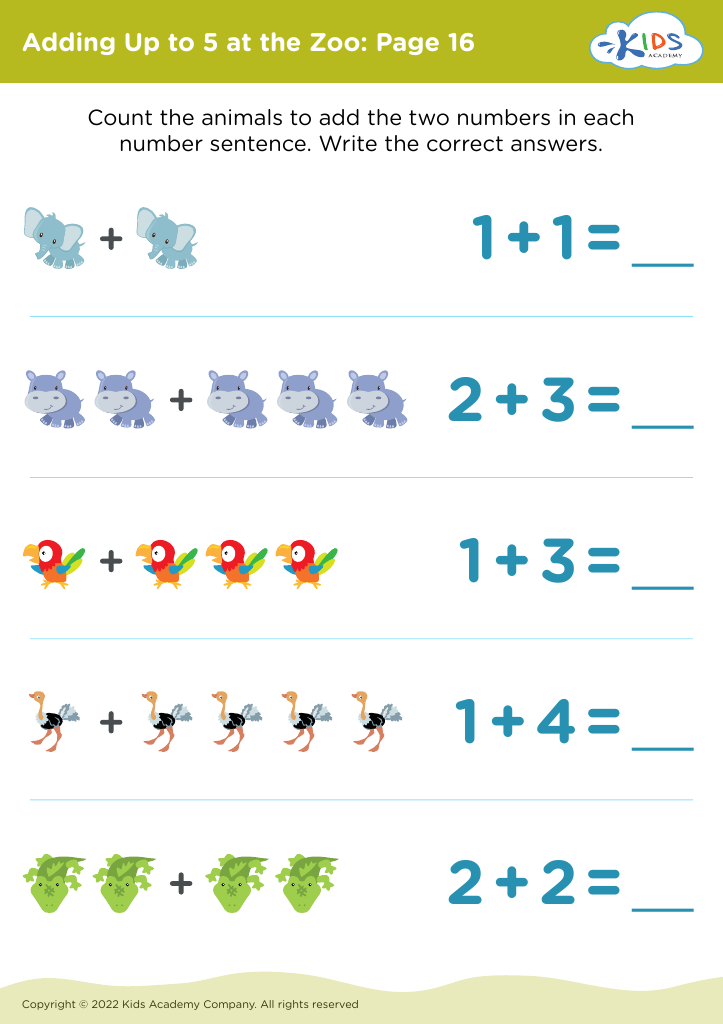
Adding Up to 5 at the Zoo: Page 16
Worksheet
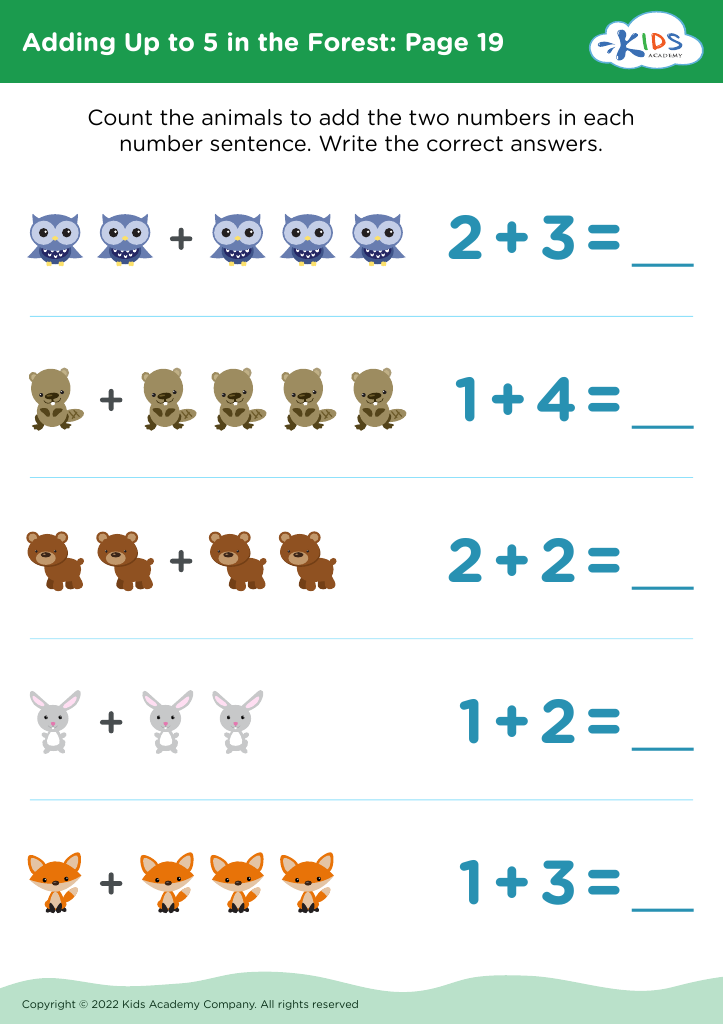
Adding Up to 5 in the Forest: Page 19
Worksheet
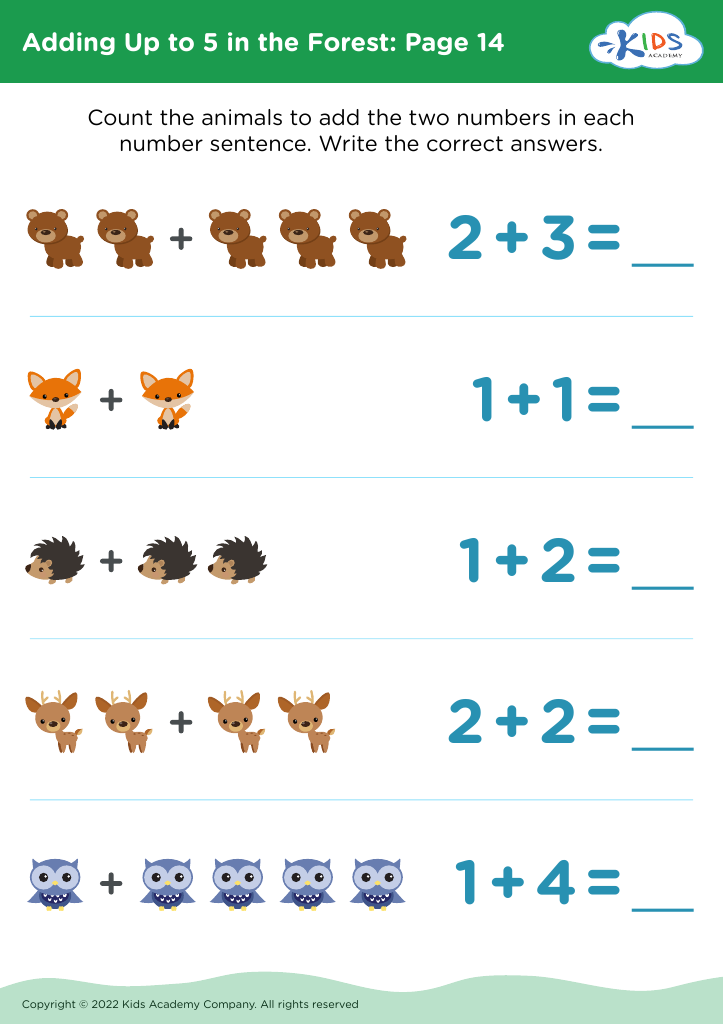
Adding Up to 5 in the Forest: Page 14
Worksheet
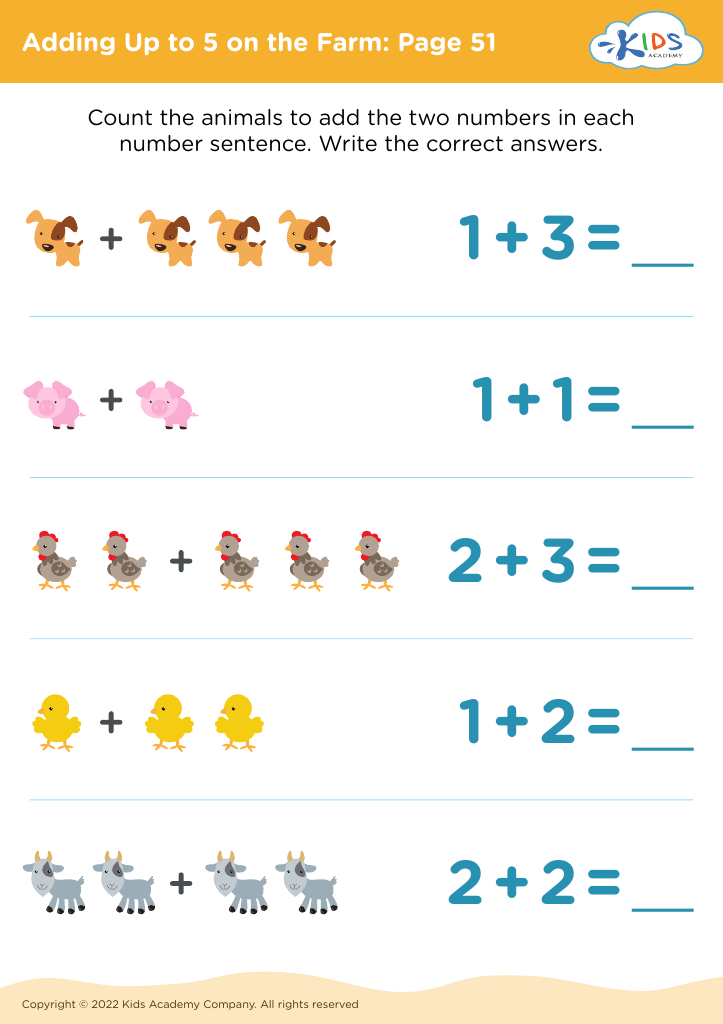
Adding Up to 5 on the Farm: Page 51
Worksheet
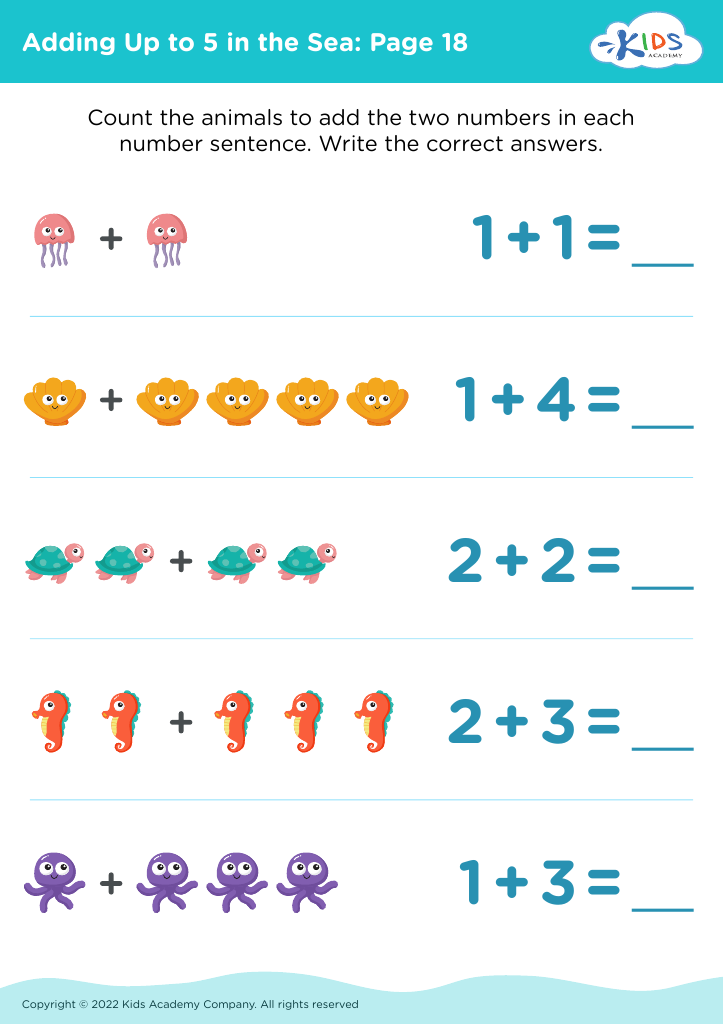
Adding Up to 5 in the Sea: Page 18
Worksheet
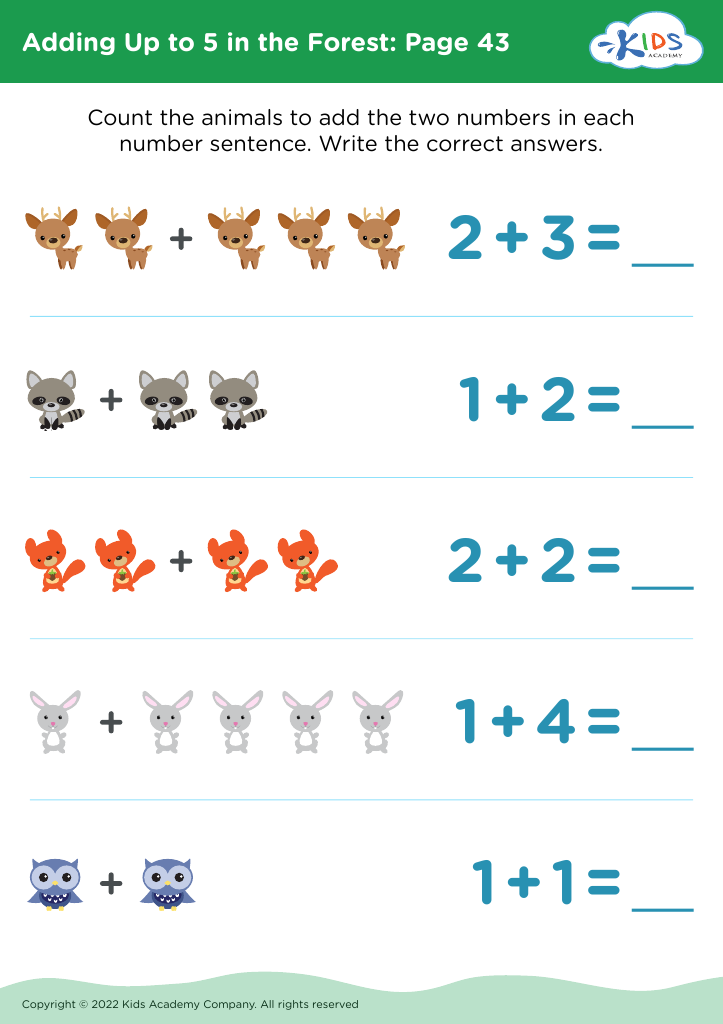
Adding Up to 5 in the Forest: Page 43
Worksheet
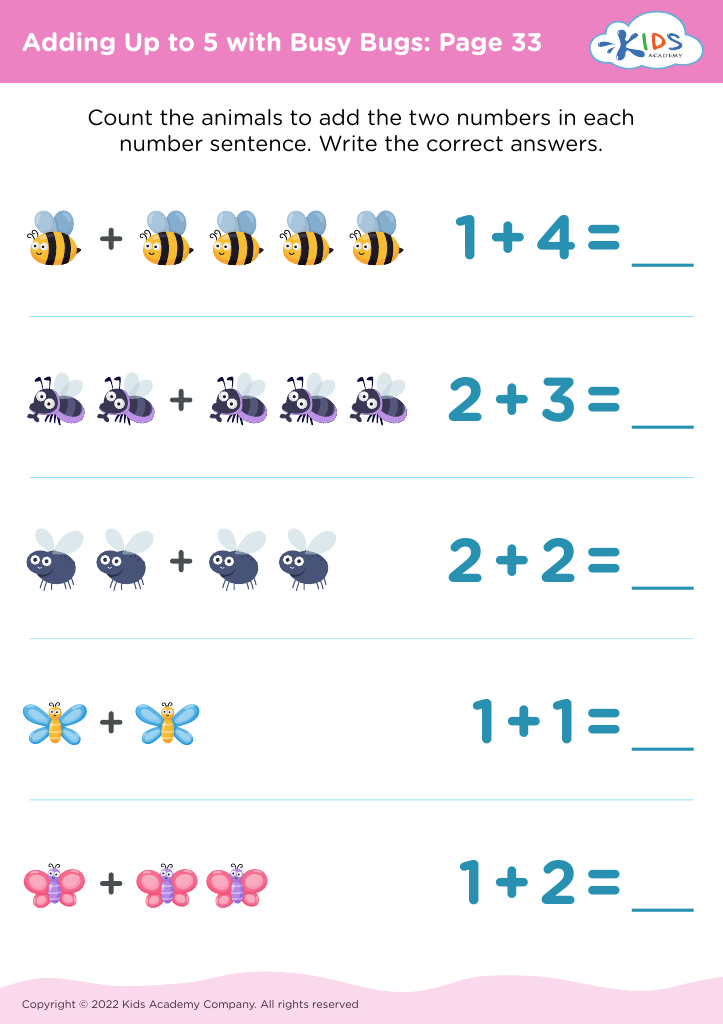
Adding Up to 5 with Busy Bugs: Page 33
Worksheet
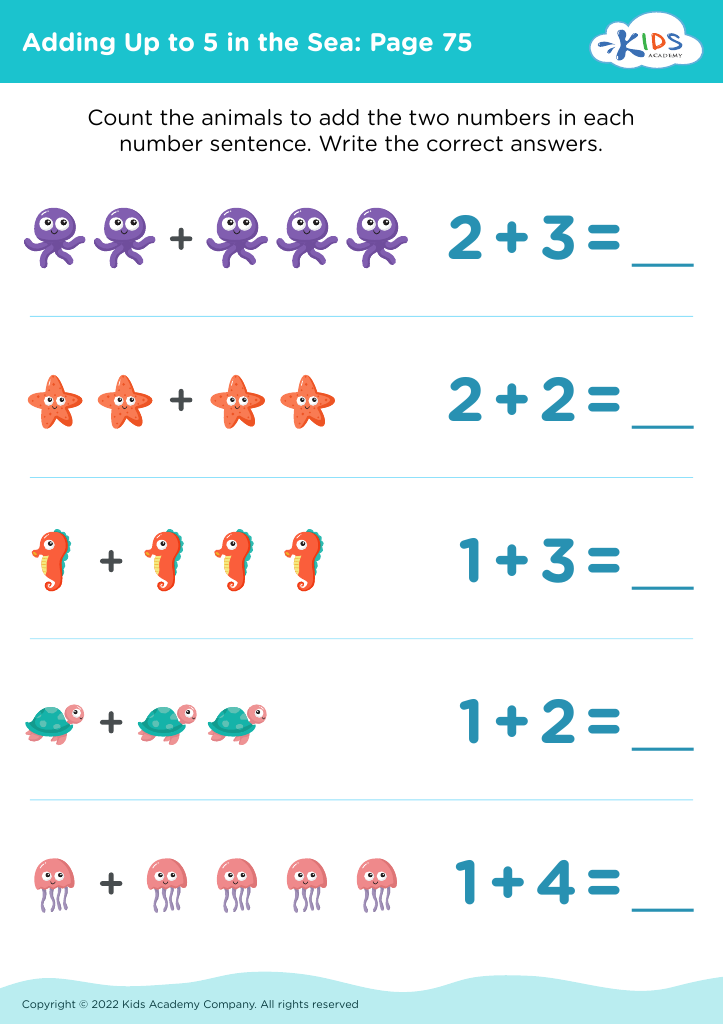
Adding Up to 5 in the Sea: Page 75
Worksheet
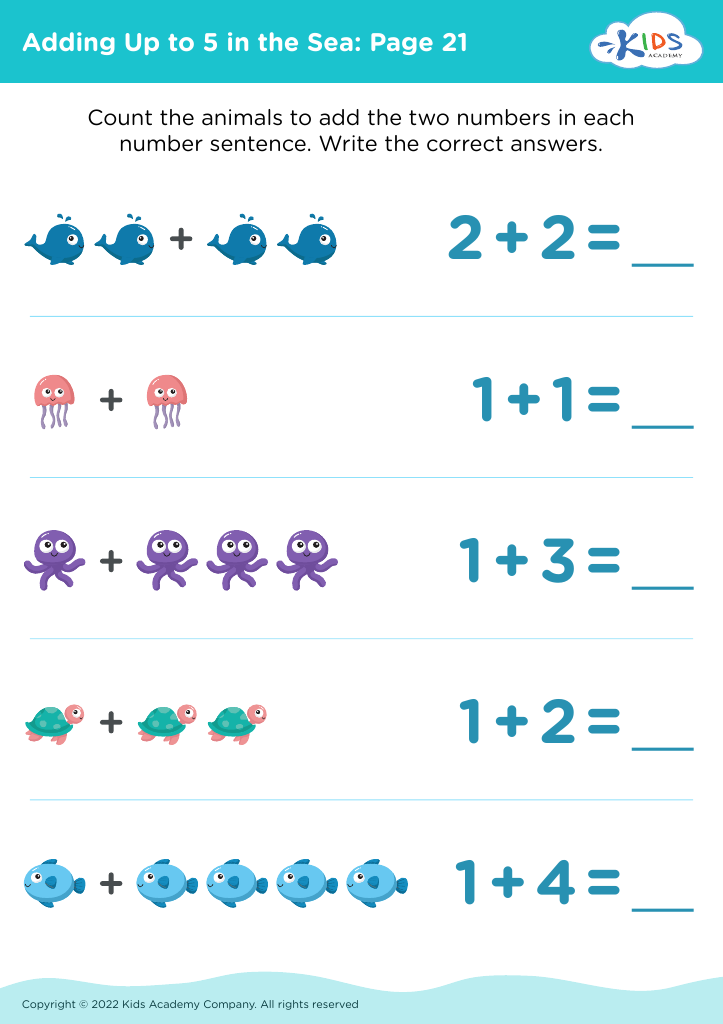
Adding Up to 5 in the Sea: Page 21
Worksheet
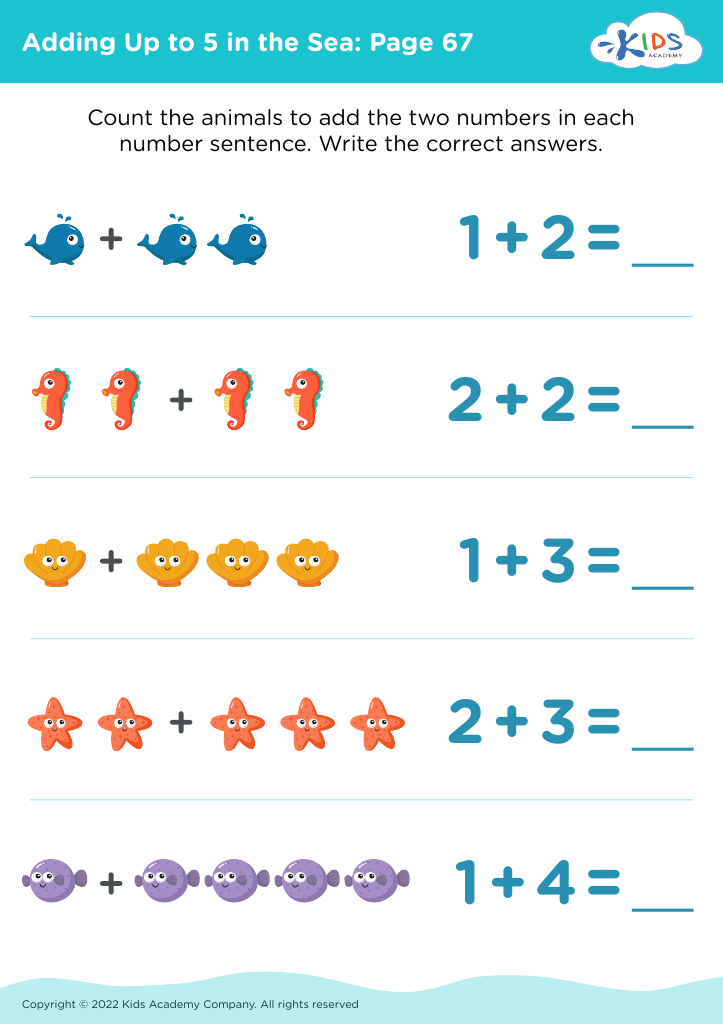
Adding Up to 5 in the Sea: Page 67
Worksheet
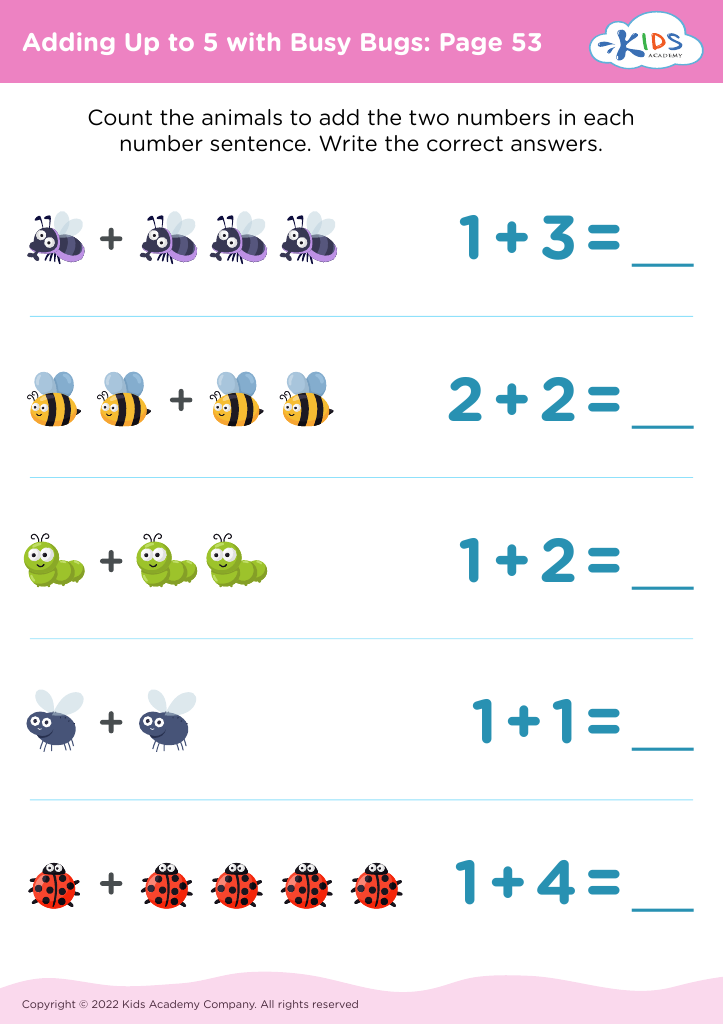
Adding Up to 5 with Busy Bugs: Page 53
Worksheet
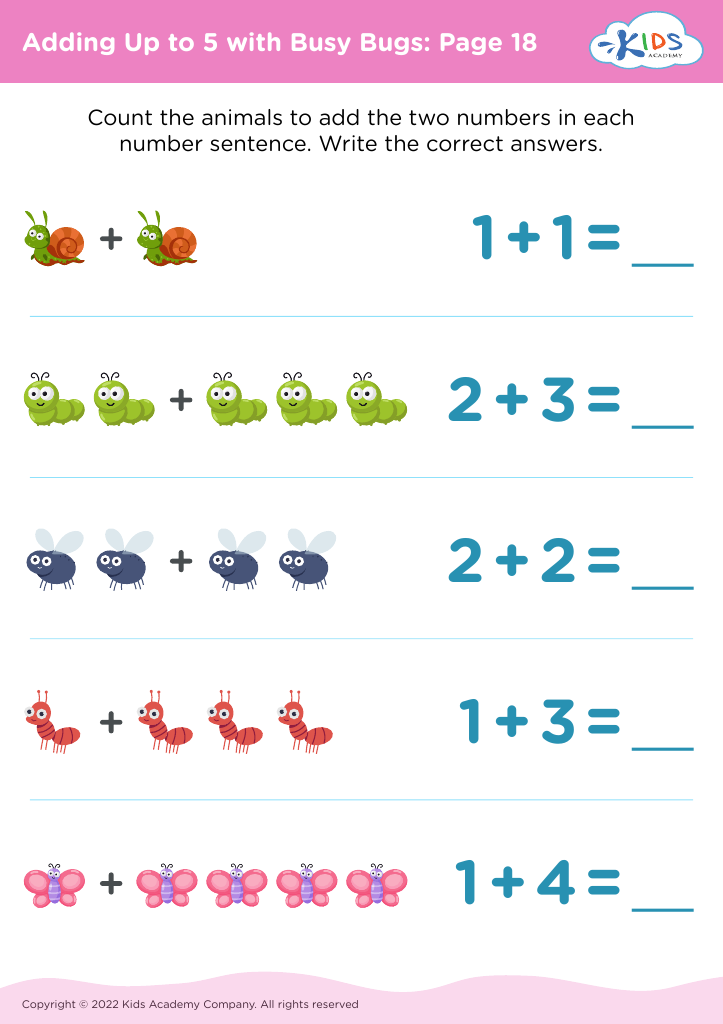
Adding Up to 5 with Busy Bugs: Page 18
Worksheet
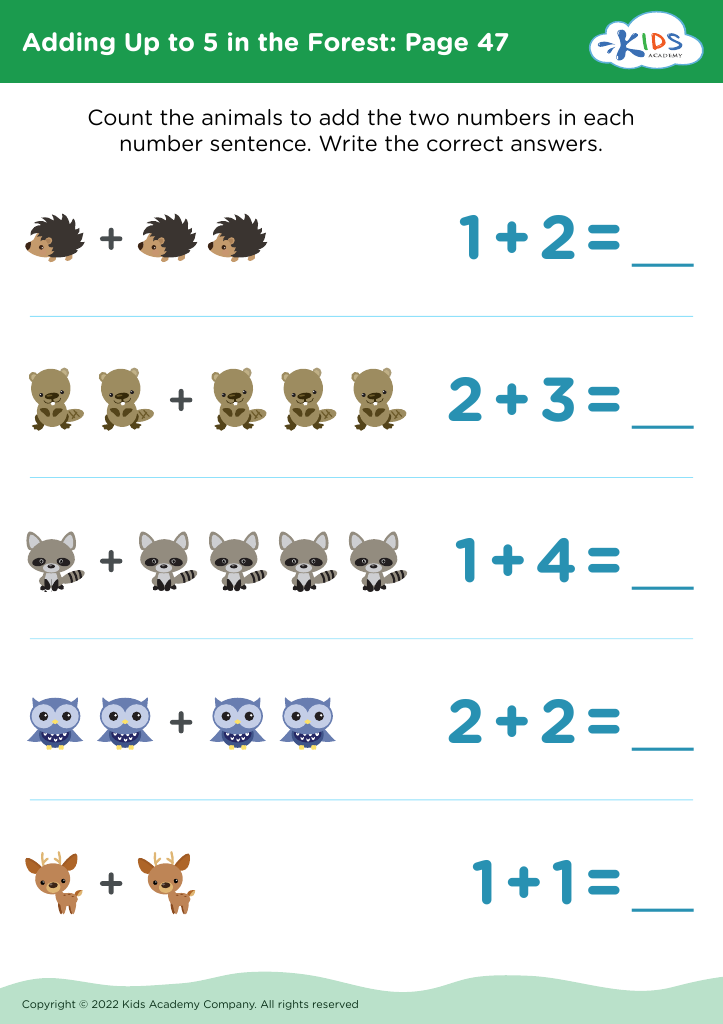
Adding Up to 5 in the Forest: Page 47
Worksheet
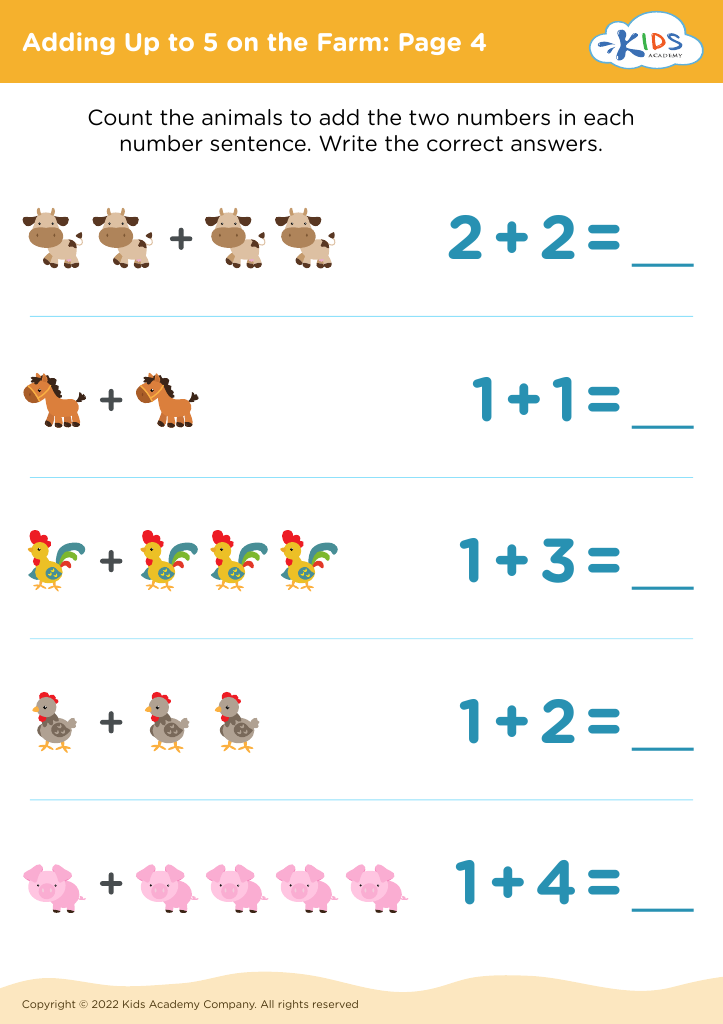
Adding Up to 5 on the Farm: Page 4
Worksheet
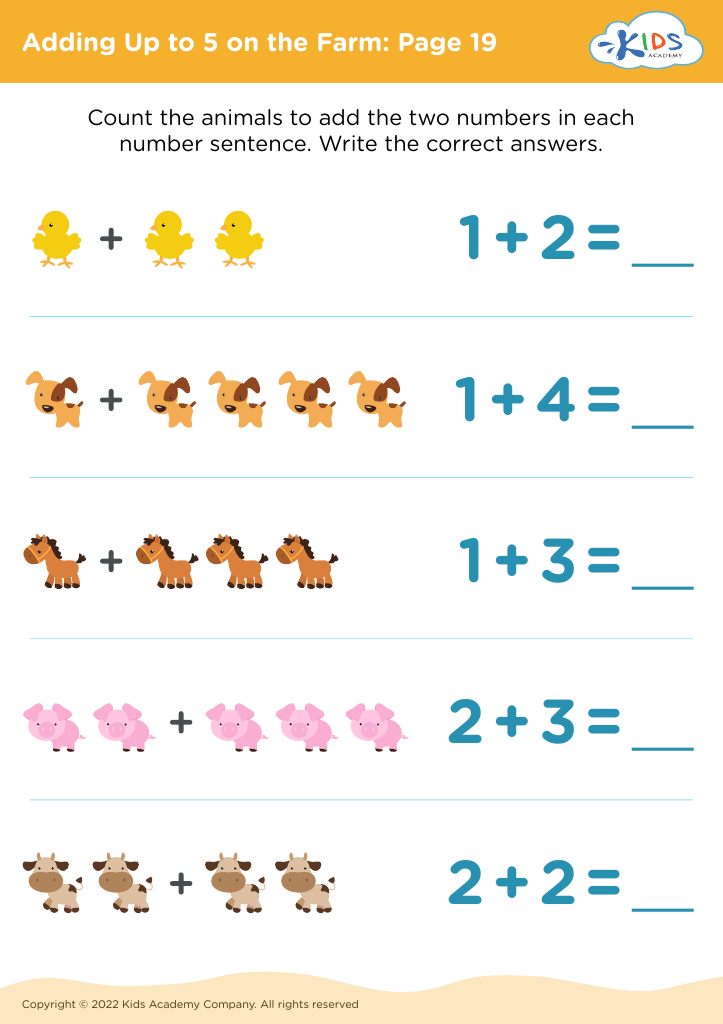
Adding Up to 5 on the Farm: Page 19
Worksheet
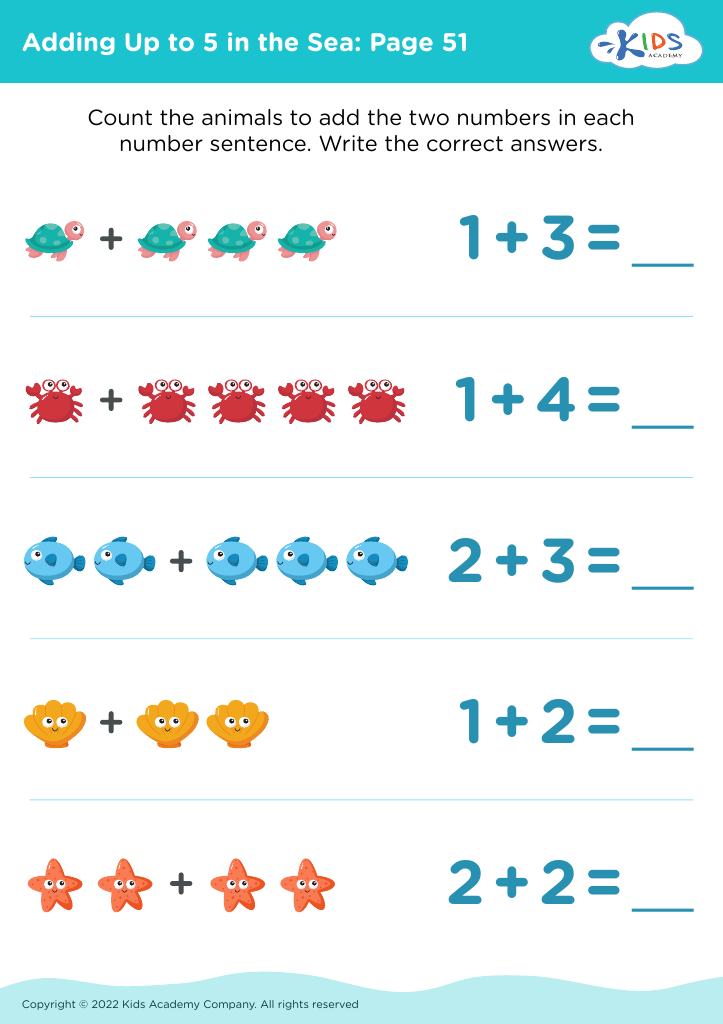
Adding Up to 5 in the Sea: Page 51
Worksheet
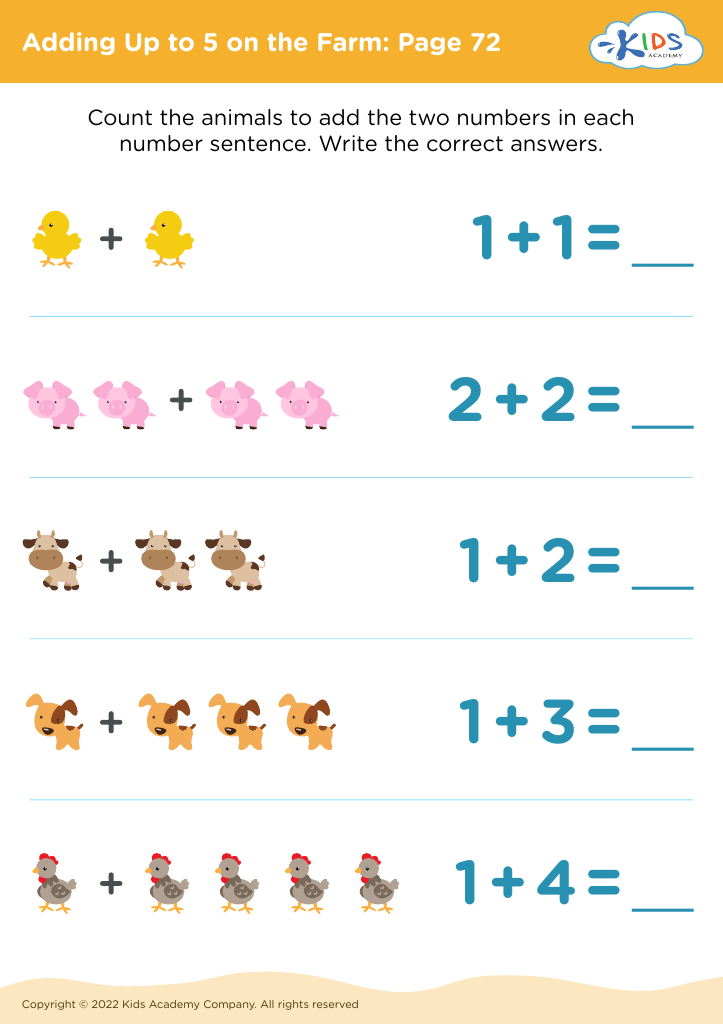
Adding Up to 5 on the Farm: Page 72
Worksheet
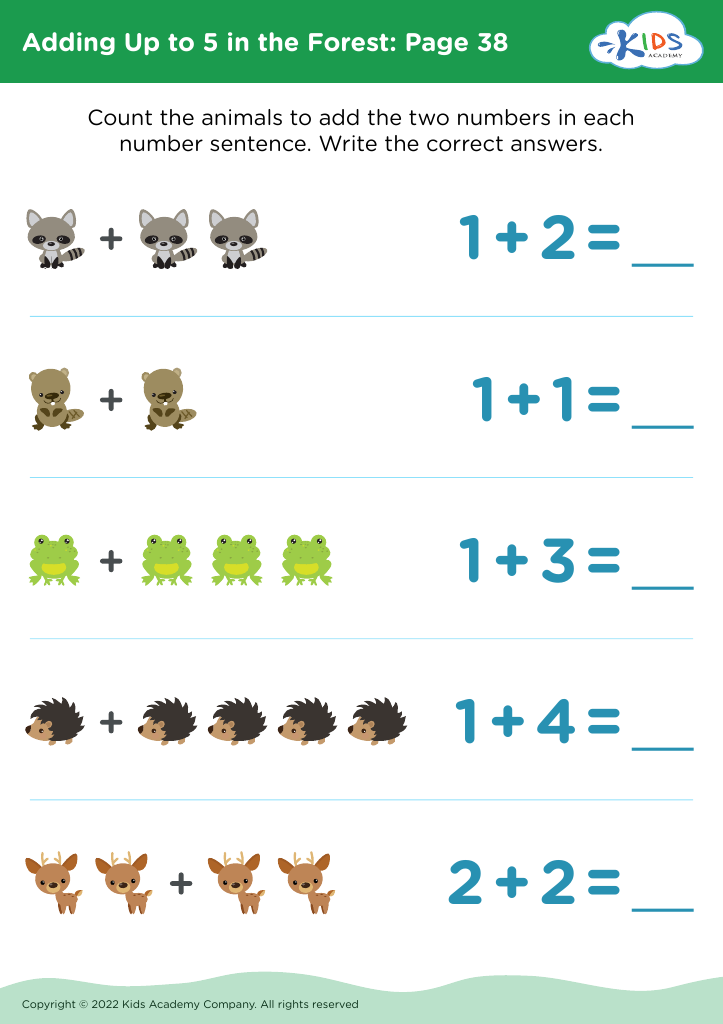
Adding Up to 5 in the Forest: Page 38
Worksheet
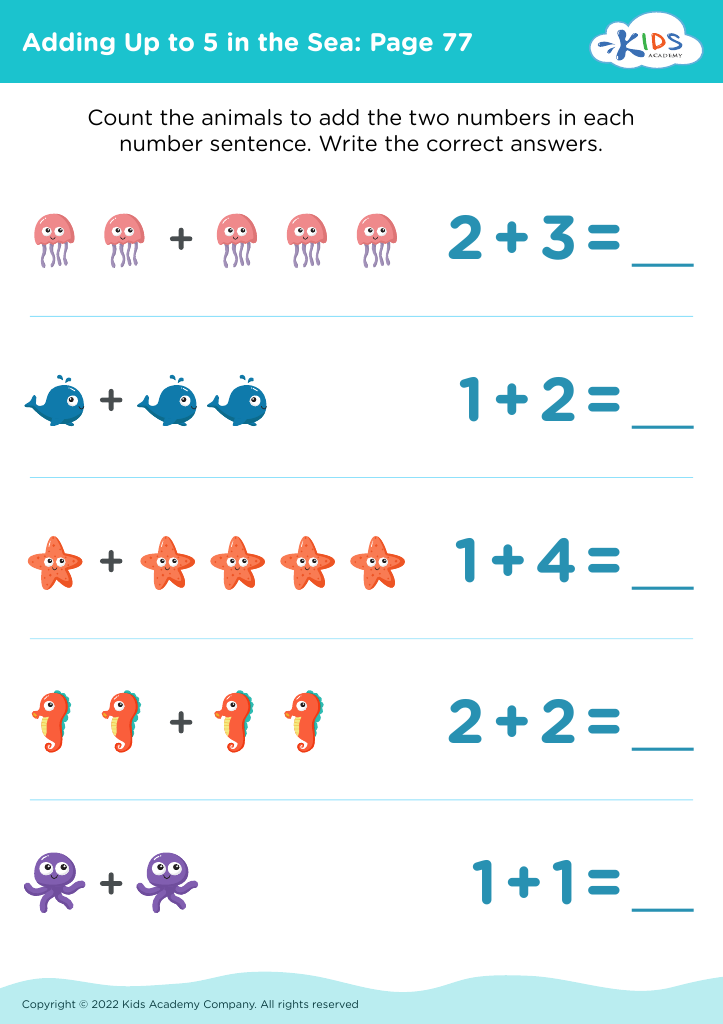
Adding Up to 5 in the Sea: Page 77
Worksheet


Basic addition and subtraction skills are fundamental for a child's cognitive development and future academic success, making them crucial for parents and teachers to prioritize in 4-year-olds. Mastering these skills lays the groundwork for higher-level mathematical concepts that they will encounter later in their education. At this age, children are naturally curious and eager to learn, making it an ideal time to introduce numbers and mathematical concepts through playful activities.

Furthermore, early exposure to addition and subtraction encourages critical thinking and problem-solving skills. Engaging children in these foundational math concepts promotes their ability to think logically and analyze situations, which are vital skills in all areas of life. These activities also enhance their language development as they learn to articulate mathematical processes.

Moreover, learning basic math skills helps build a child's confidence. When children grasp these concepts early on, they feel a sense of accomplishment that fosters a love for learning. Parents and teachers play a crucial role by incorporating math into daily activities, creating a supportive environment that encourages practice and exploration.

In summary, nurturing basic addition and subtraction skills in 4-year-olds benefits their cognitive, emotional, and social development, setting the foundation for lifelong learning and success.