Filters

142 filtered results

Clear all filters
Favorites
With answer key
Interactive

142 filtered results

Difficulty Level

Grade


Check out this FREE Trial Lesson on Addition & Subtraction for age 4!

Use Mental Strategies -Counting

Favorites
With answer key
Interactive
  • 4
  • Counting skills
  • Addition & Subtraction
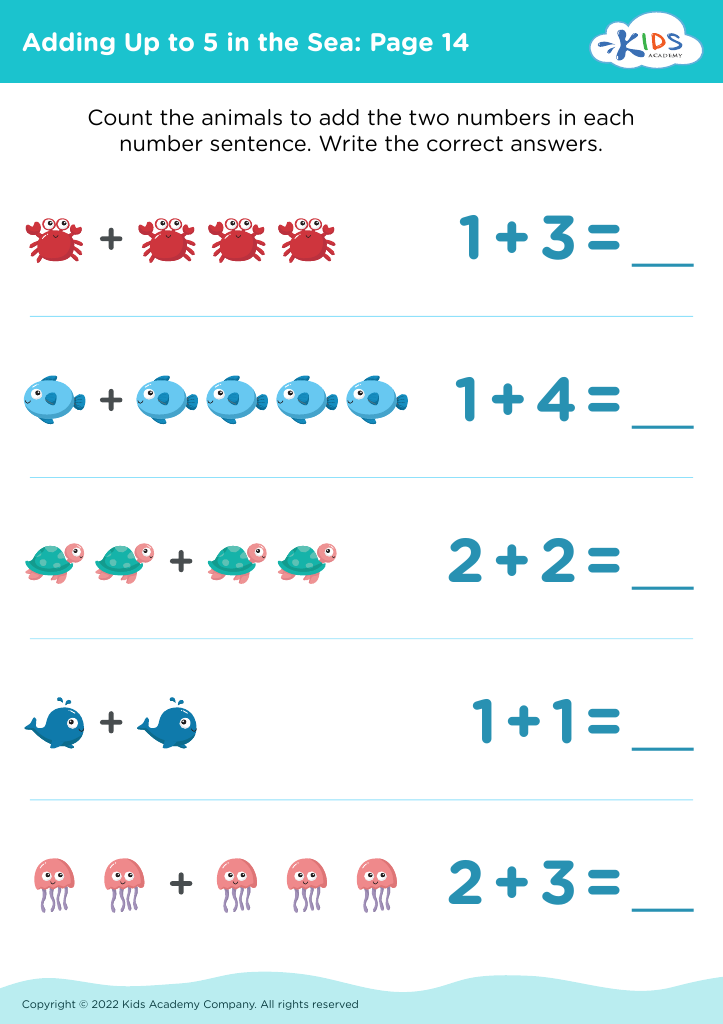
Adding Up to 5 in the Sea: Page 14
Worksheet
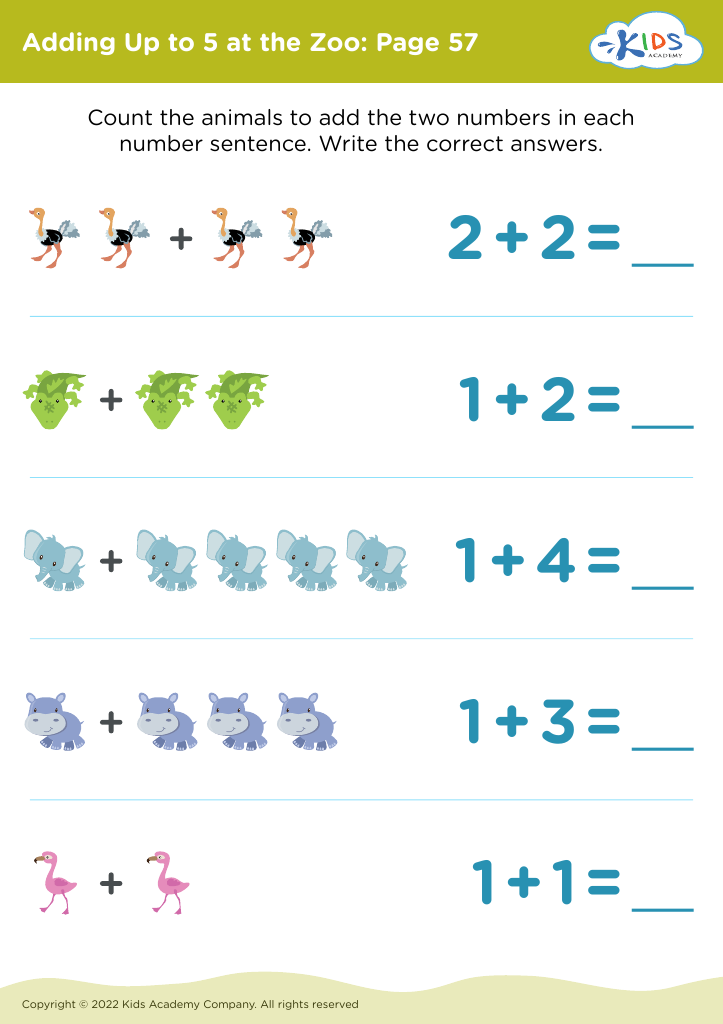
Adding Up to 5 at the Zoo: Page 57
Worksheet
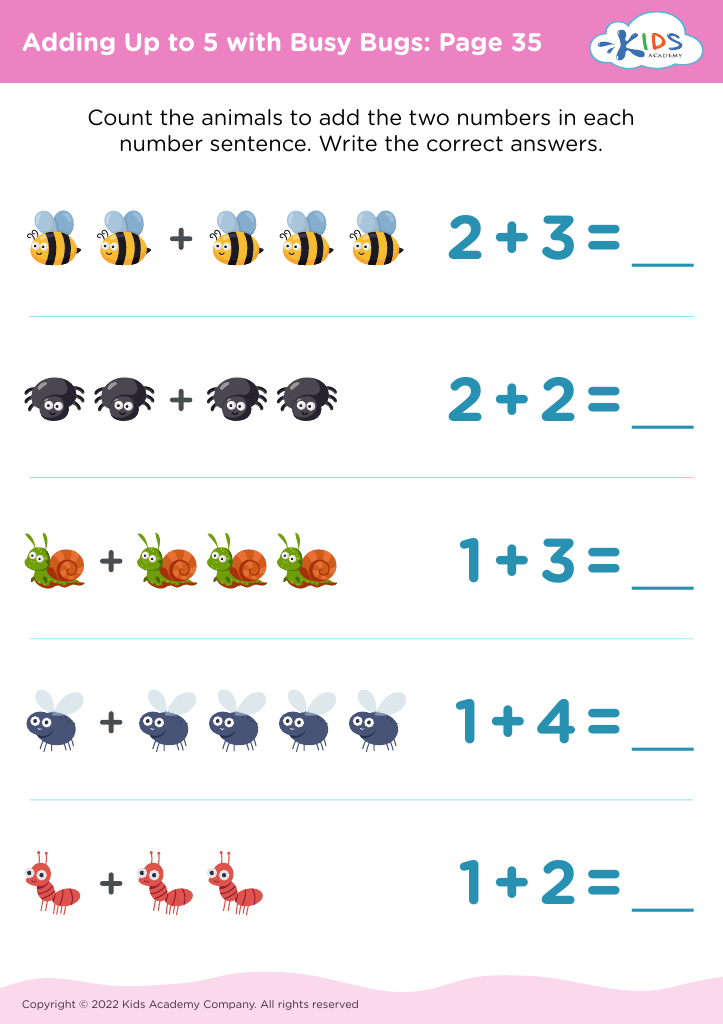
Adding Up to 5 with Busy Bugs: Page 35
Worksheet
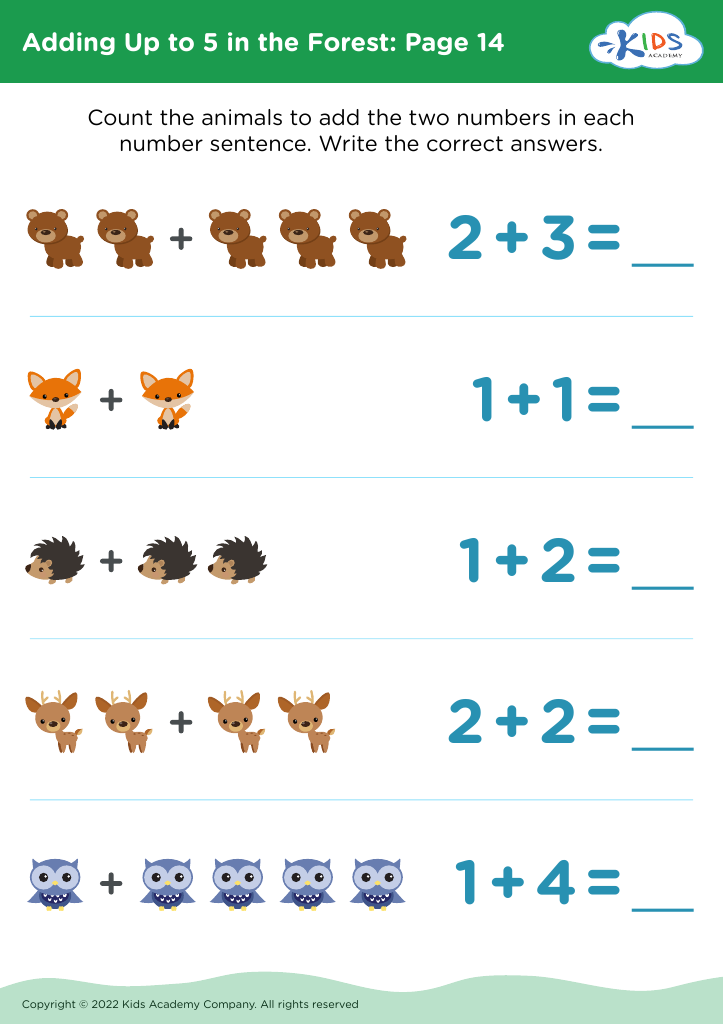
Adding Up to 5 in the Forest: Page 14
Worksheet
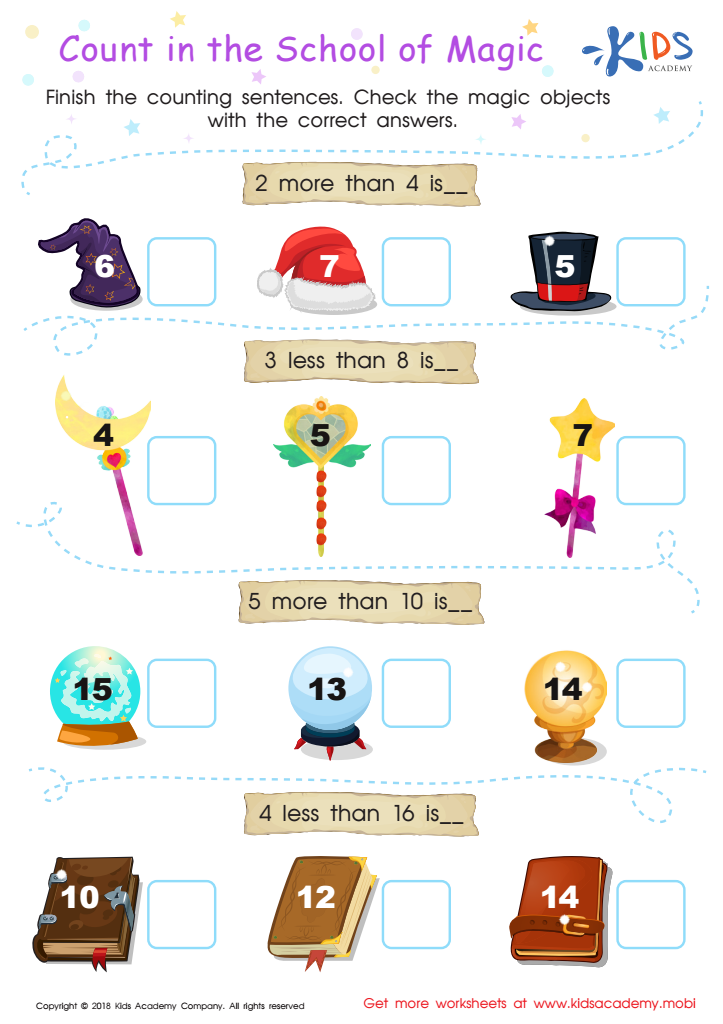
Count in the School of Magic Worksheet

Count in the School of Magic Worksheet

Your math learners can explore the School of Magic with this worksheet. They'll read equations with addition and subtraction numbers under 20, count back and forth to find the answer, then complete the counting sentences. Fun pictures and easy accuracy make it an enjoyable and successful learning experience.
Count in the School of Magic Worksheet
Worksheet
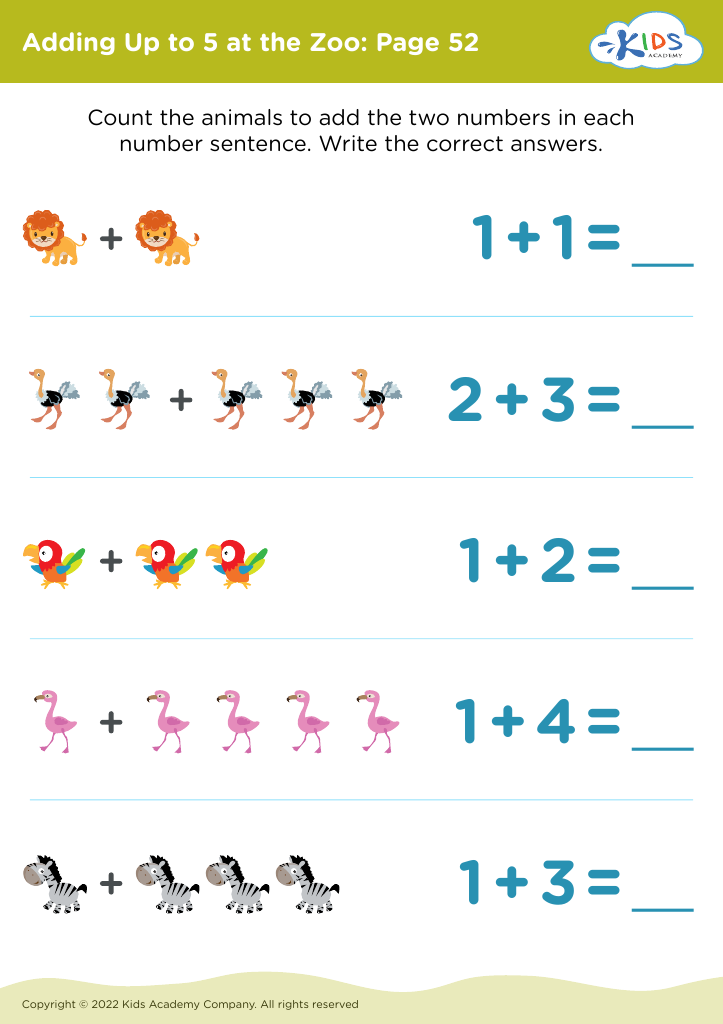
Adding Up to 5 at the Zoo: Page 52
Worksheet
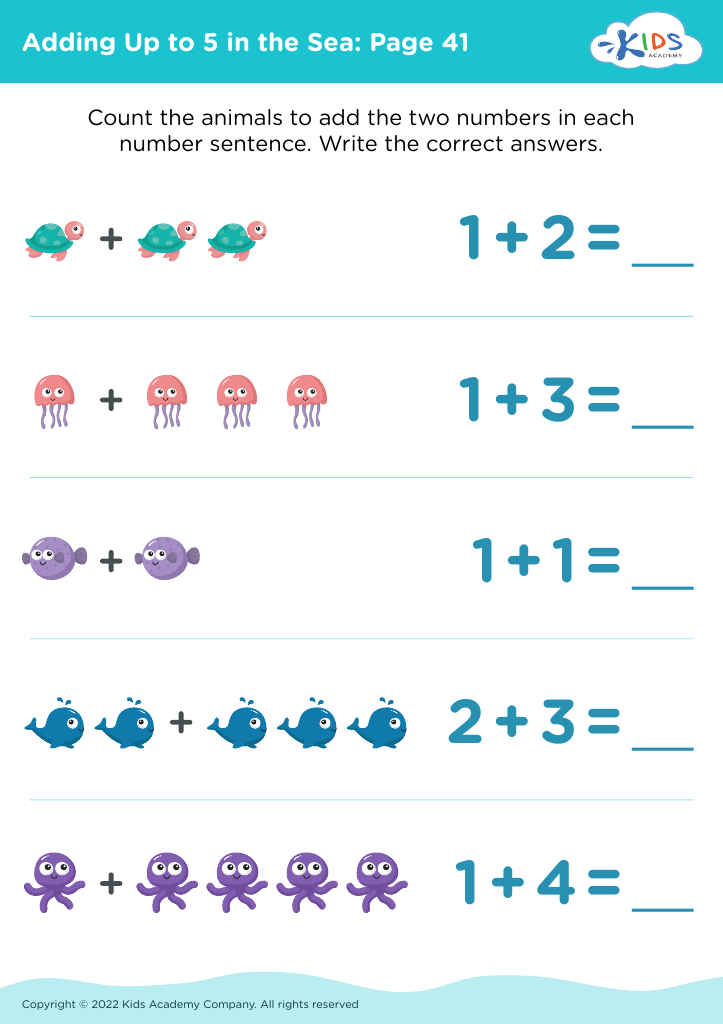
Adding Up to 5 in the Sea: Page 41
Worksheet
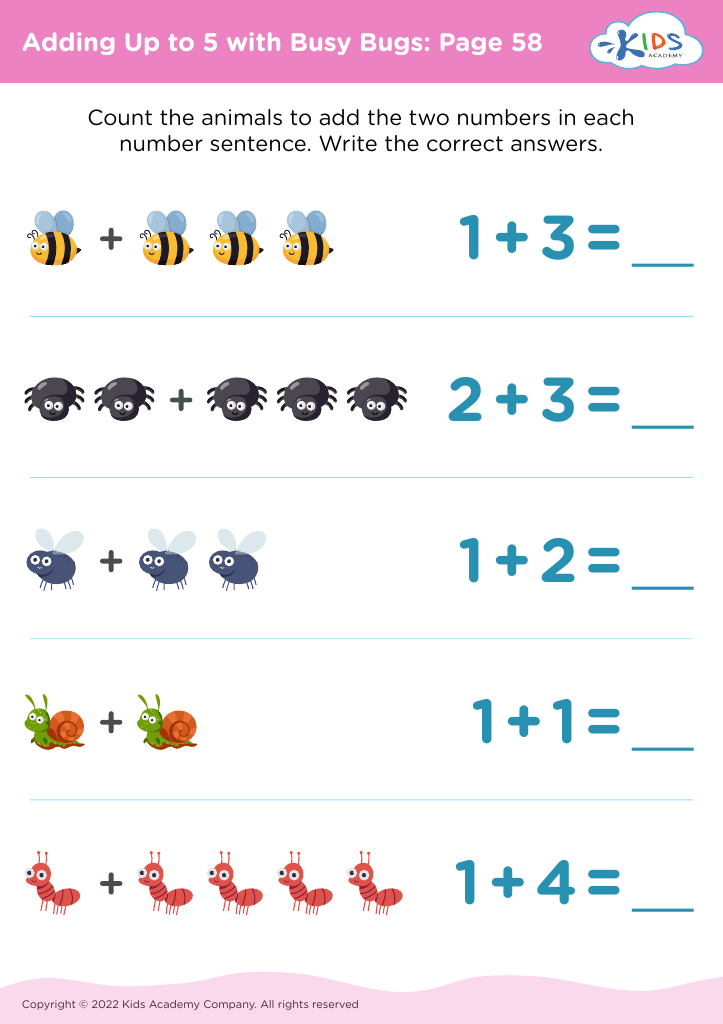
Adding Up to 5 with Busy Bugs: Page 58
Worksheet
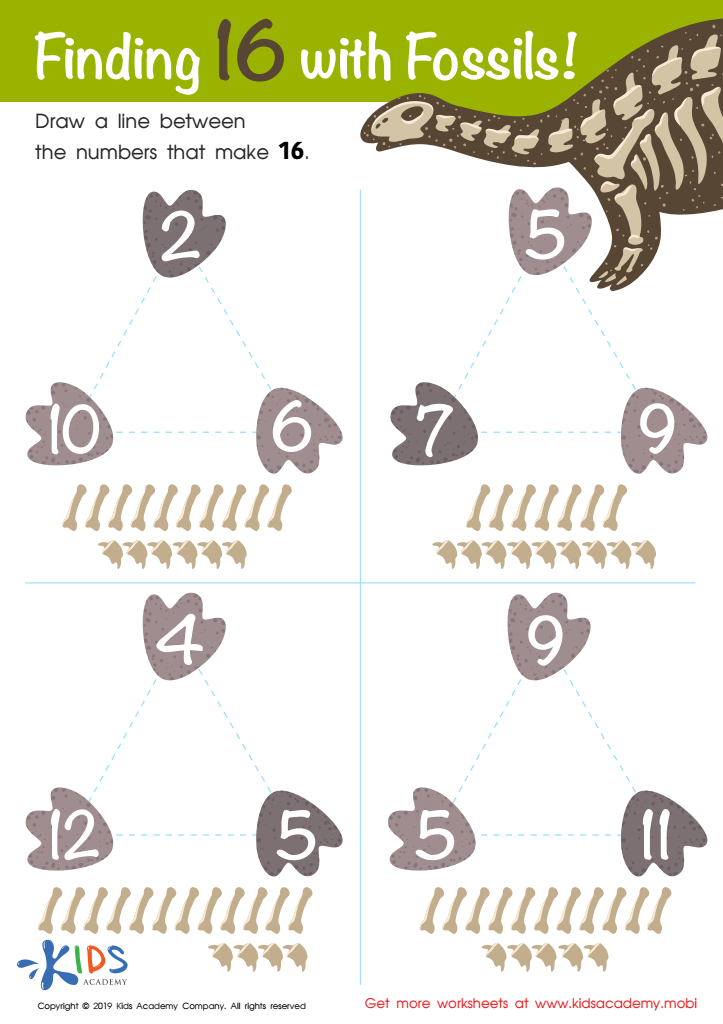
Finding 16 With Fossils Worksheet

Finding 16 With Fossils Worksheet

Experts hunt for fossils, dig them up, and study them to learn more about past life forms - how they lived, what they looked like, and when they lived. Show kids the picture in this worksheet and point out the fossils. Help them count the bones and draw a line between the numbers that add up to 16 in each triangle.
Finding 16 With Fossils Worksheet
Worksheet
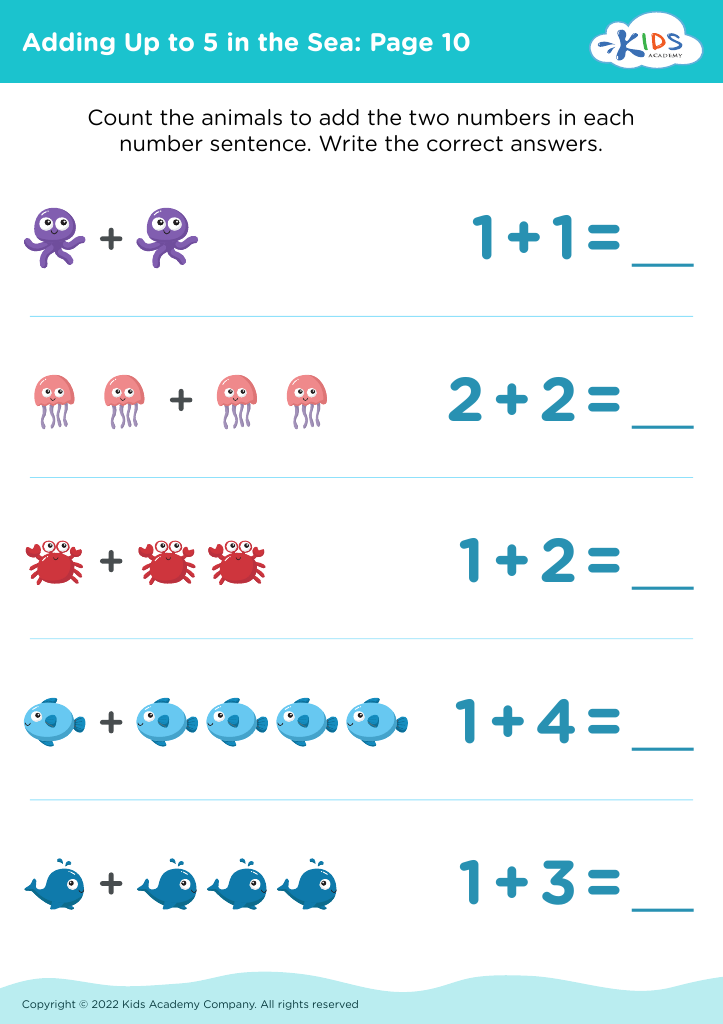
Adding Up to 5 in the Sea: Page 10
Worksheet
Counting Eggs Worksheet
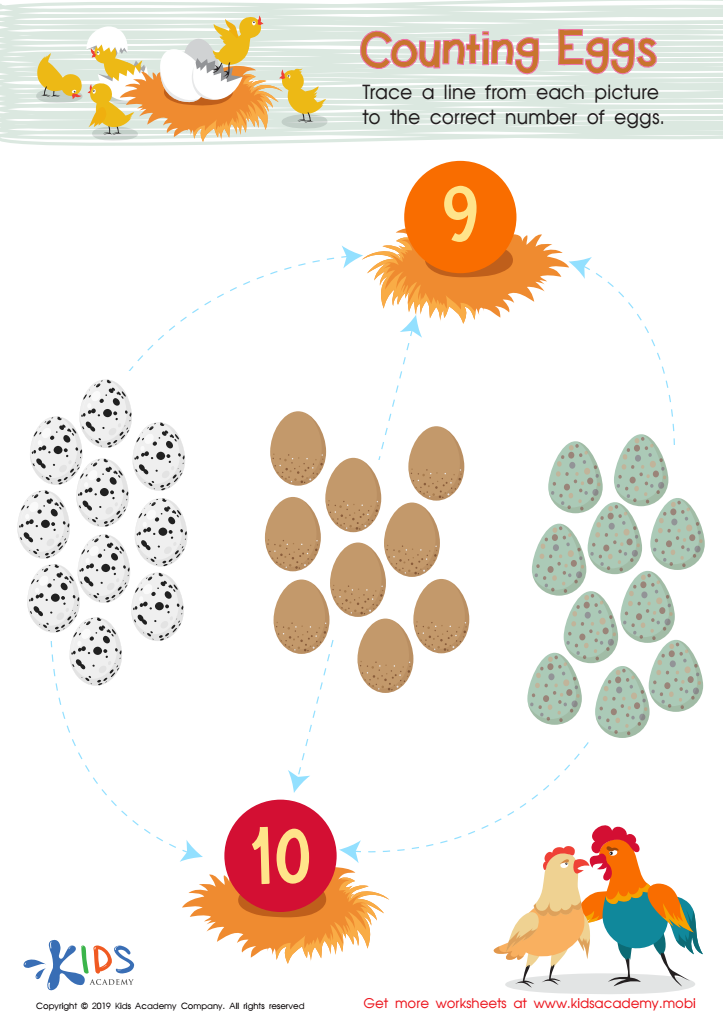
Counting Eggs Worksheet

This worksheet is great for teaching kindergarteners to count and add numbers. It includes colorful pictures of eggs with numbers to trace. Help students count the eggs and draw a line to the right number. This will make learning fun and easy!
Counting Eggs Worksheet
Worksheet
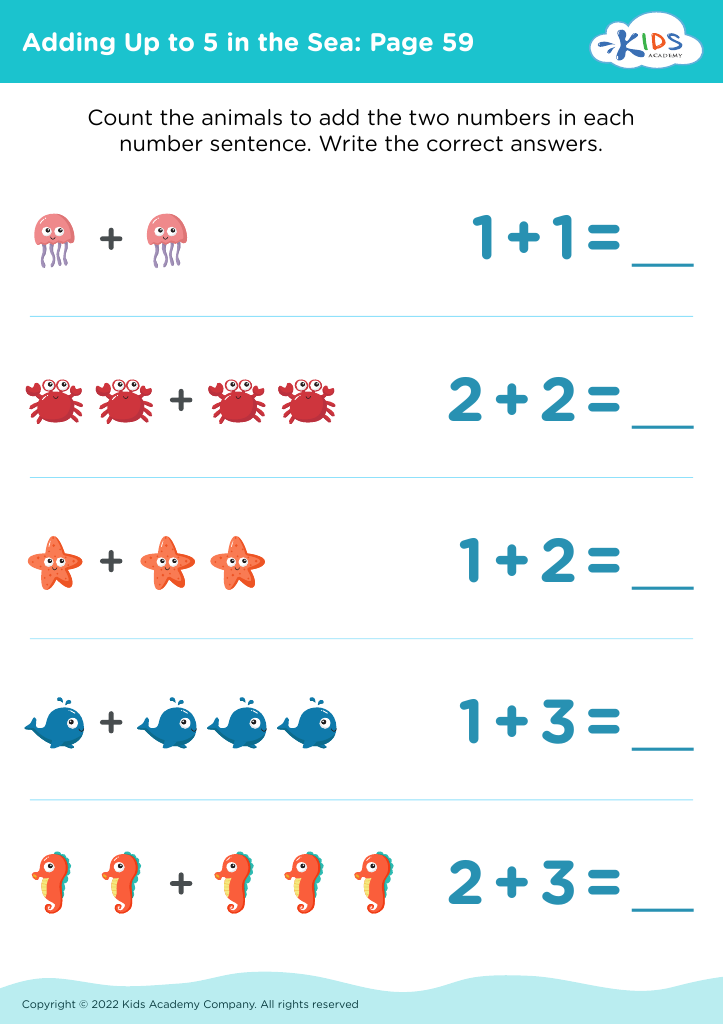
Adding Up to 5 in the Sea: Page 59
Worksheet
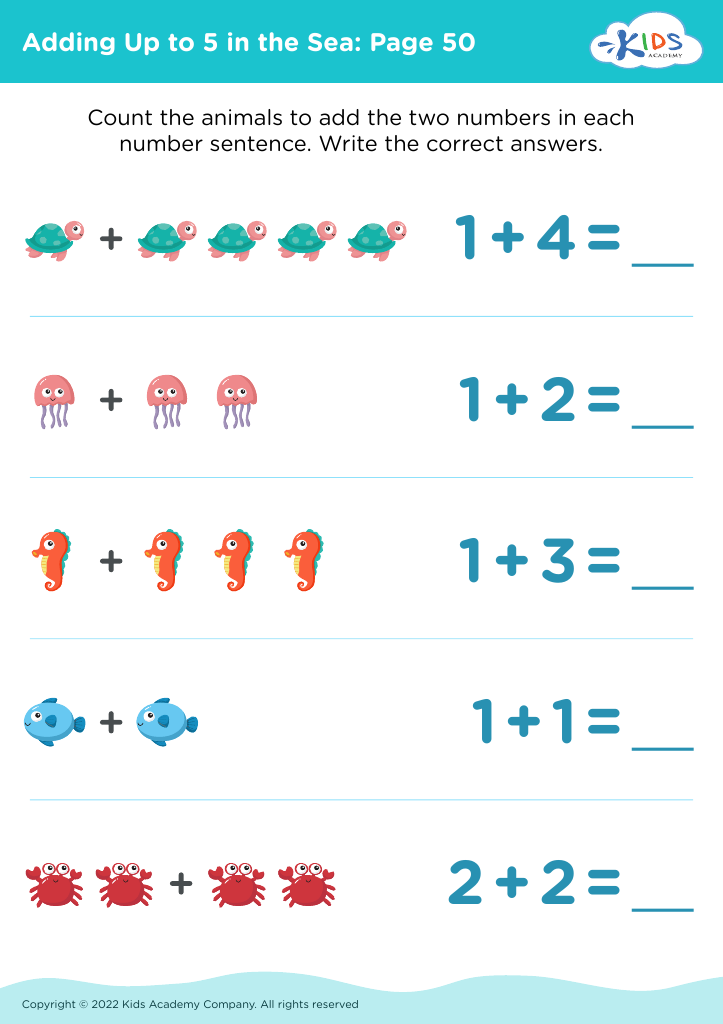
Adding Up to 5 in the Sea: Page 50
Worksheet
Australian Animal Subtraction Worksheet
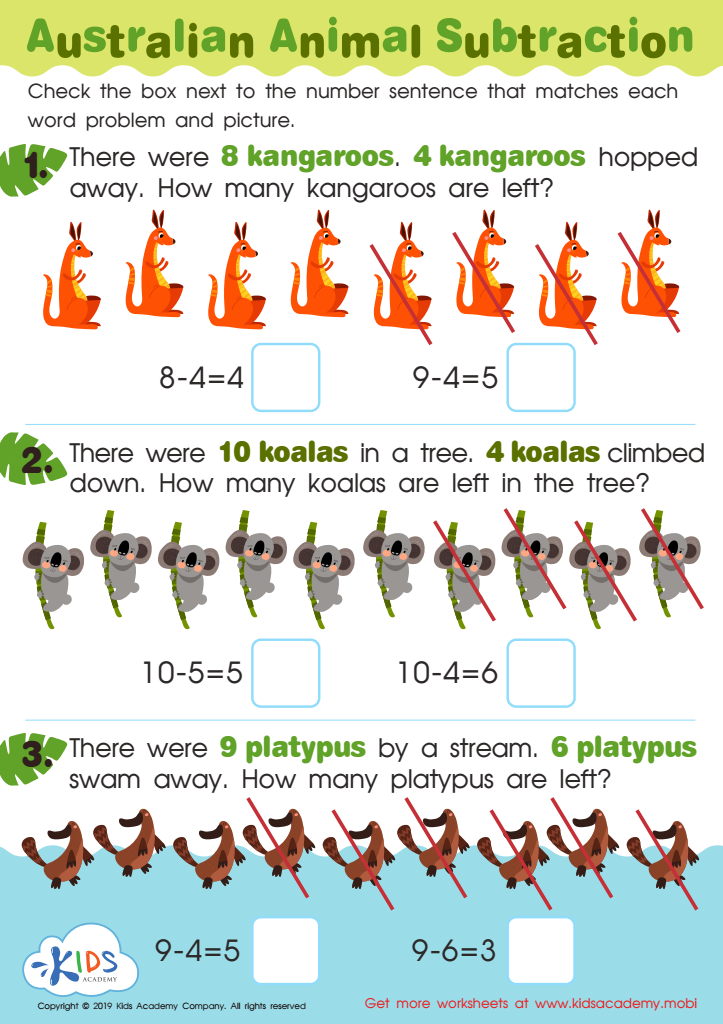
Australian Animal Subtraction Worksheet
Test your child's wildlife knowledge. Ask them to name animals indigenous to Australia or other countries. Show them the animals in this worksheet and have them match each word problem and picture with the correct number sentence.
Australian Animal Subtraction Worksheet
Worksheet
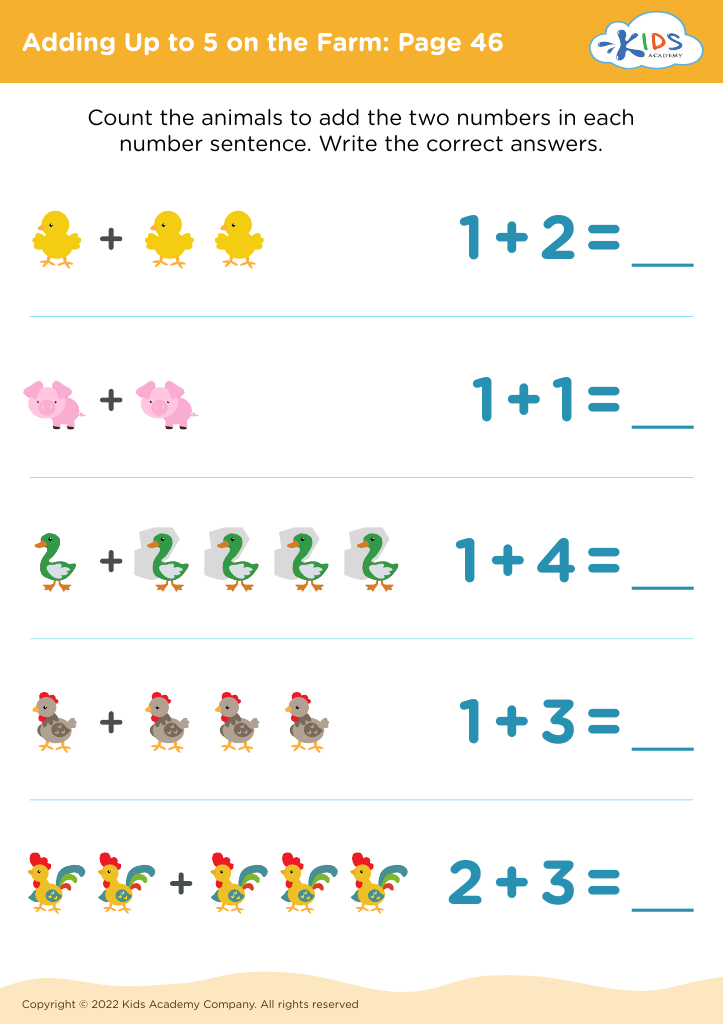
Adding Up to 5 on the Farm: Page 46
Worksheet
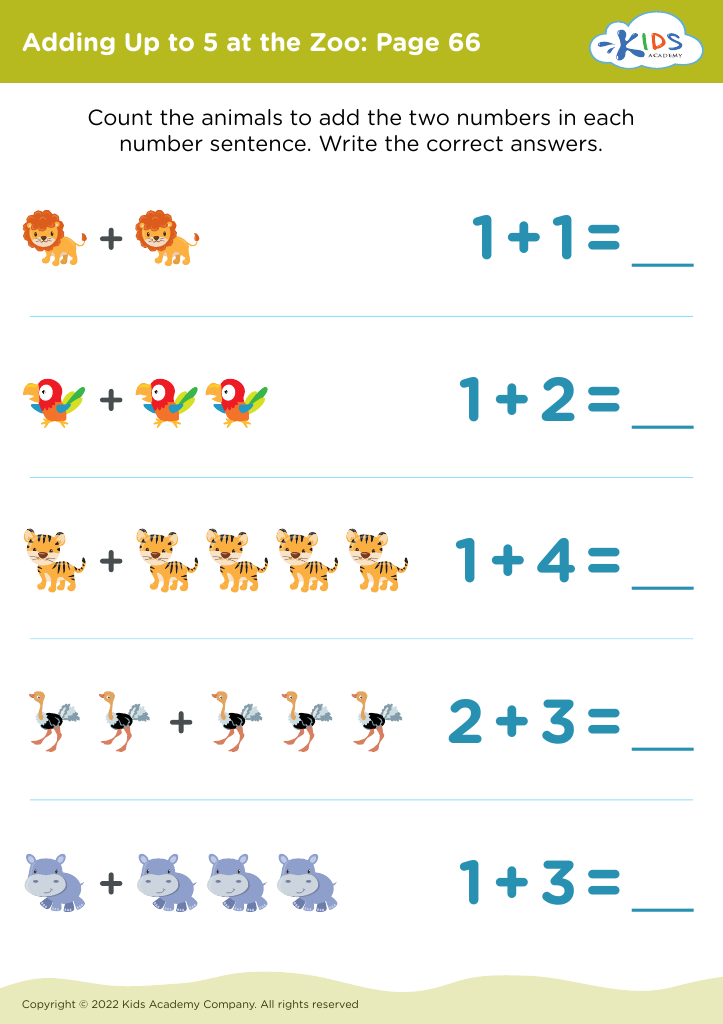
Adding Up to 5 at the Zoo: Page 66
Worksheet
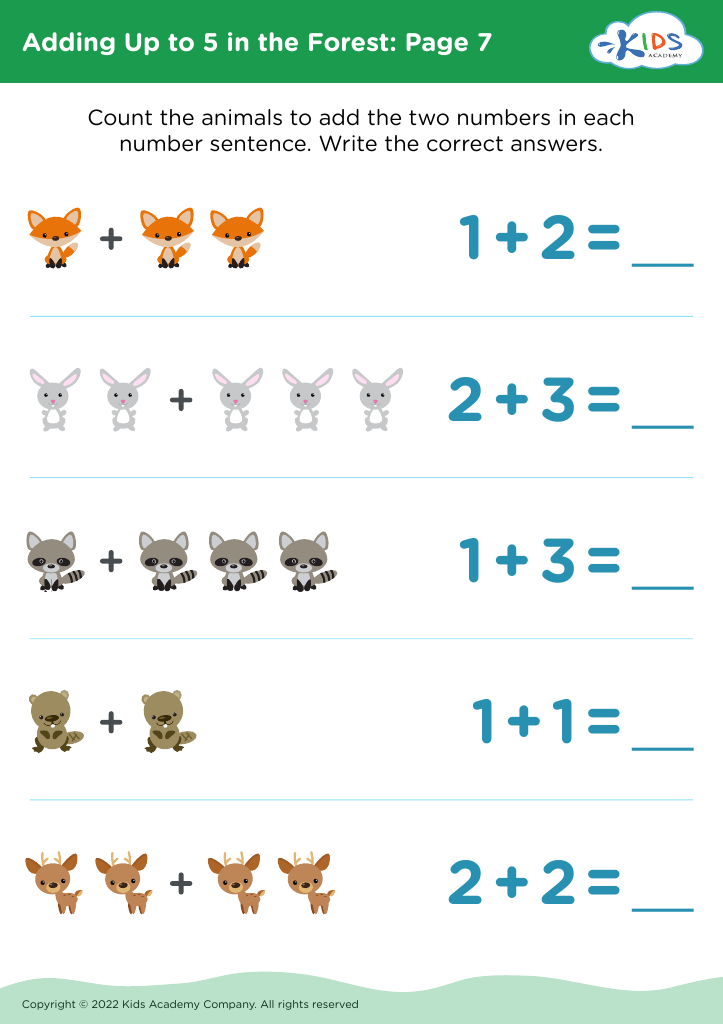
Adding Up to 5 in the Forest: Page 7
Worksheet
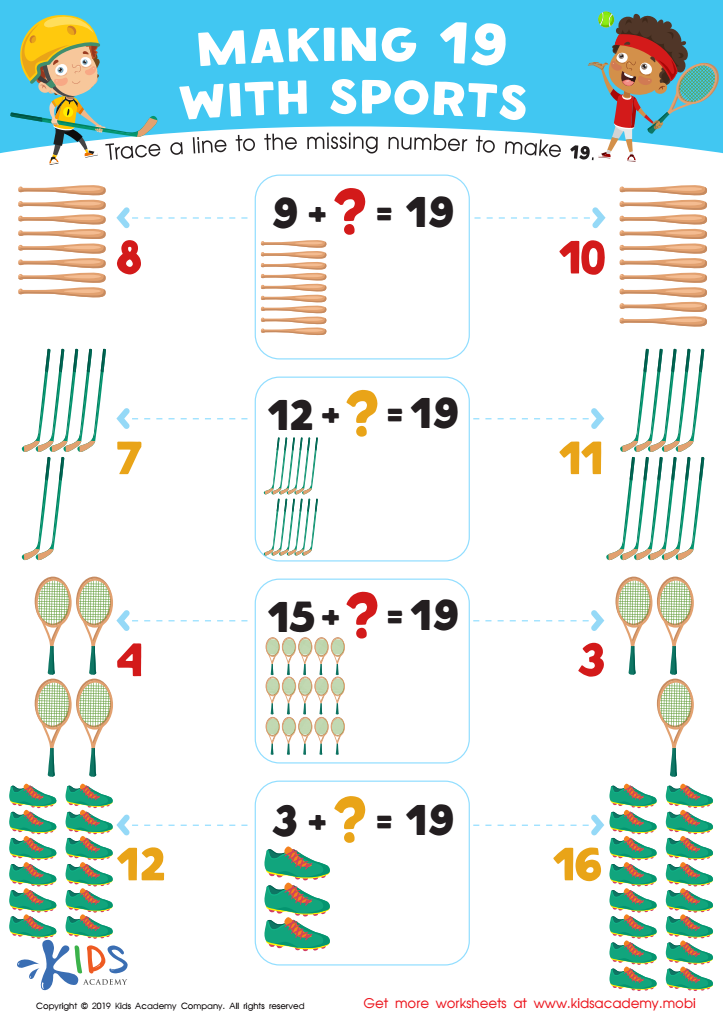
Making 19 with Sports Worksheet
Making 19 with Sports Worksheet
As kids grow, so does their learning. Help them master simple addition with four equations in the worksheet. By finding the missing numbers to make 19, and tracing a line to the answer, your kids will improve their math skills.
Making 19 with Sports Worksheet
Worksheet
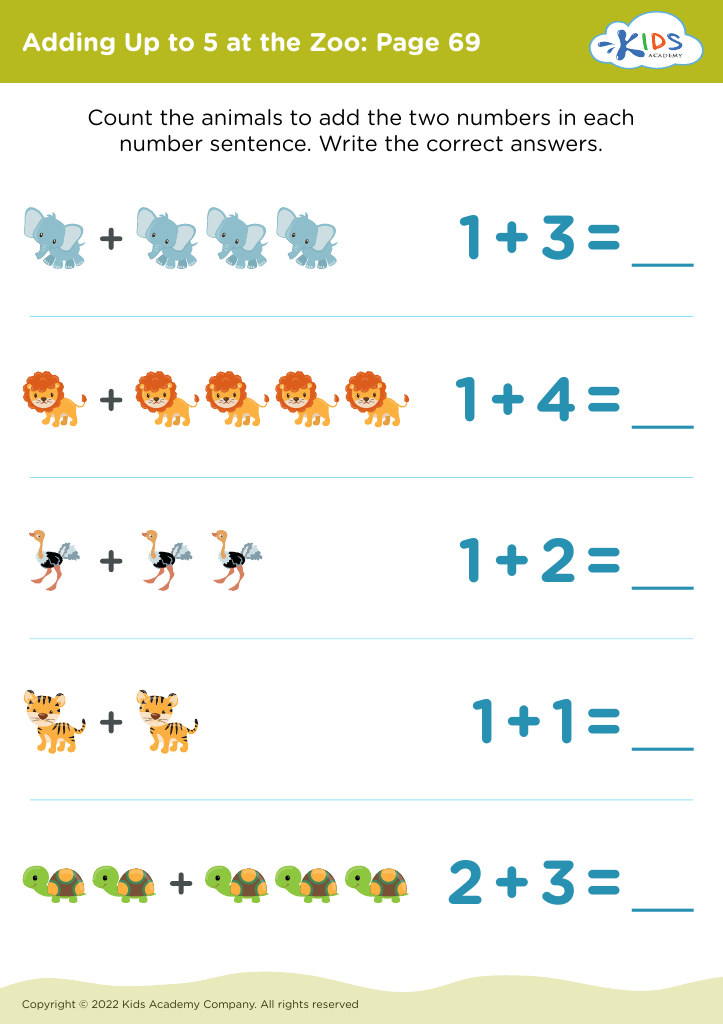
Adding Up to 5 at the Zoo: Page 69
Worksheet
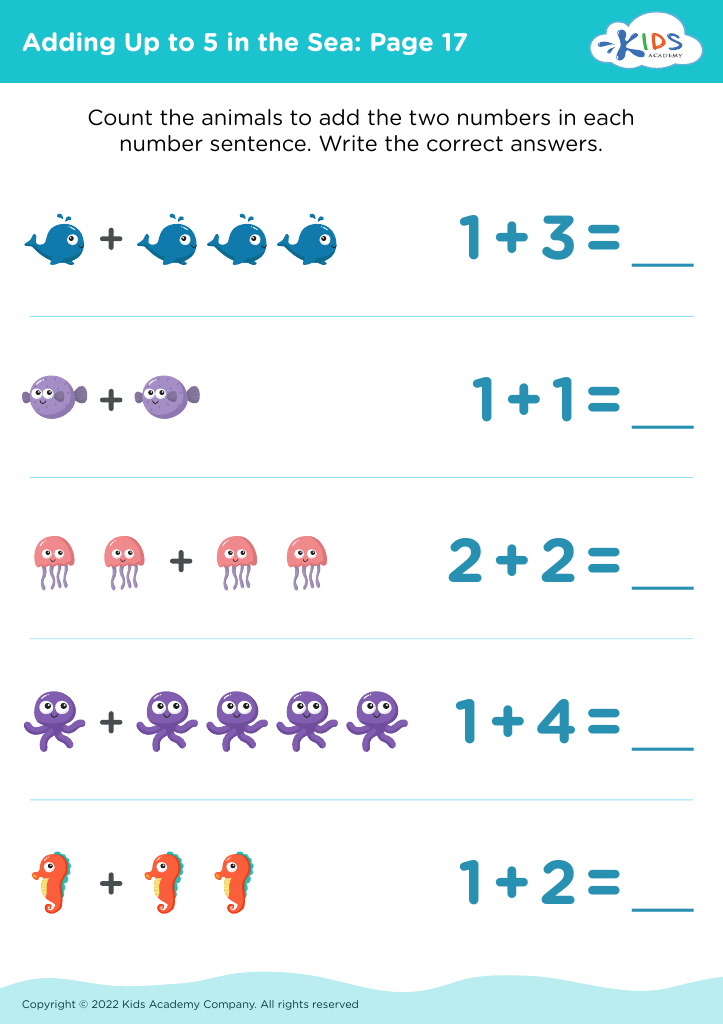
Adding Up to 5 in the Sea: Page 17
Worksheet
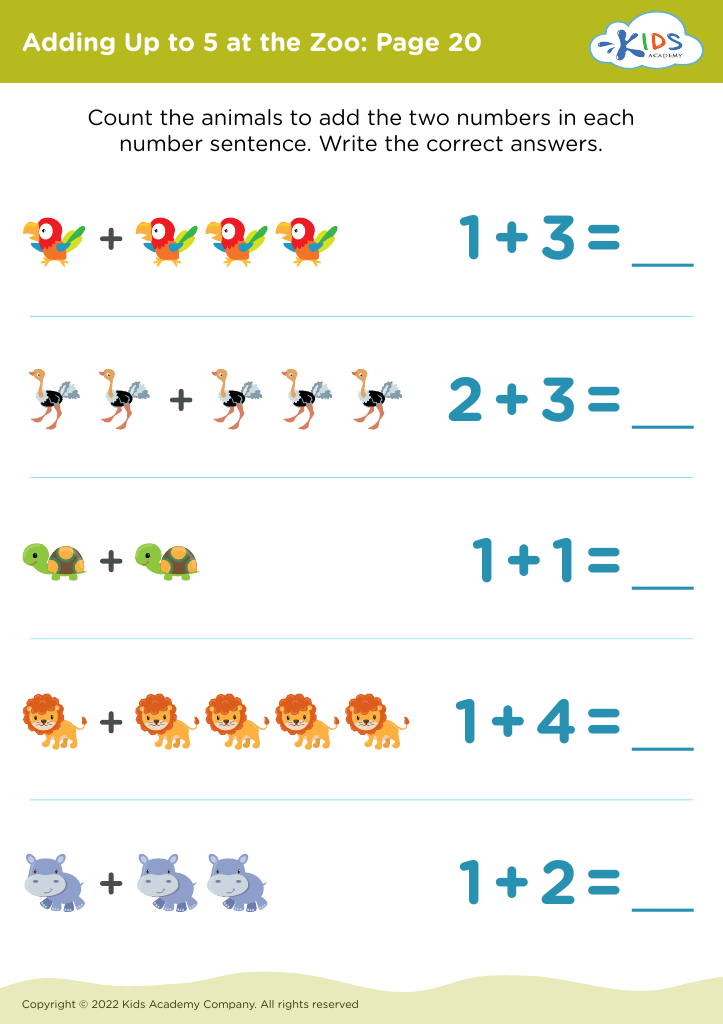
Adding Up to 5 at the Zoo: Page 20
Worksheet
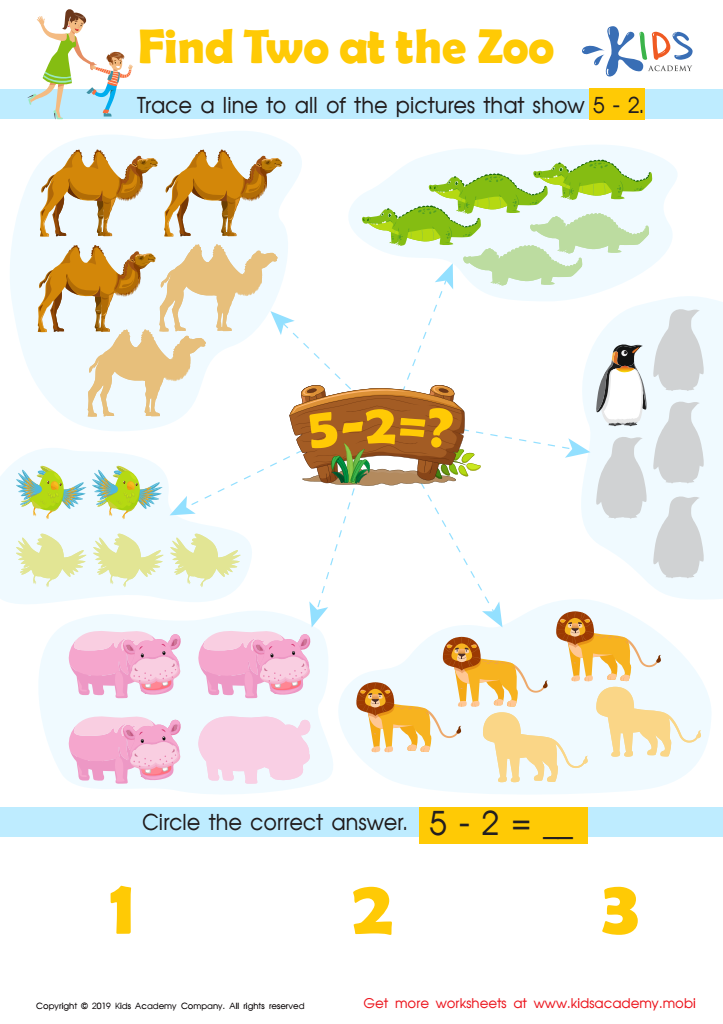
Find Two at the Zoo Worksheet
Find Two at the Zoo Worksheet

Help your kids overcome math fears and practice subtracting numbers with this traceable PDF. Ask them to identify the 6 groups of animals in the picture and count the animals in each group. Then, help them trace a line to all of the pictures that illustrate the equation 5-2.
Find Two at the Zoo Worksheet

Worksheet
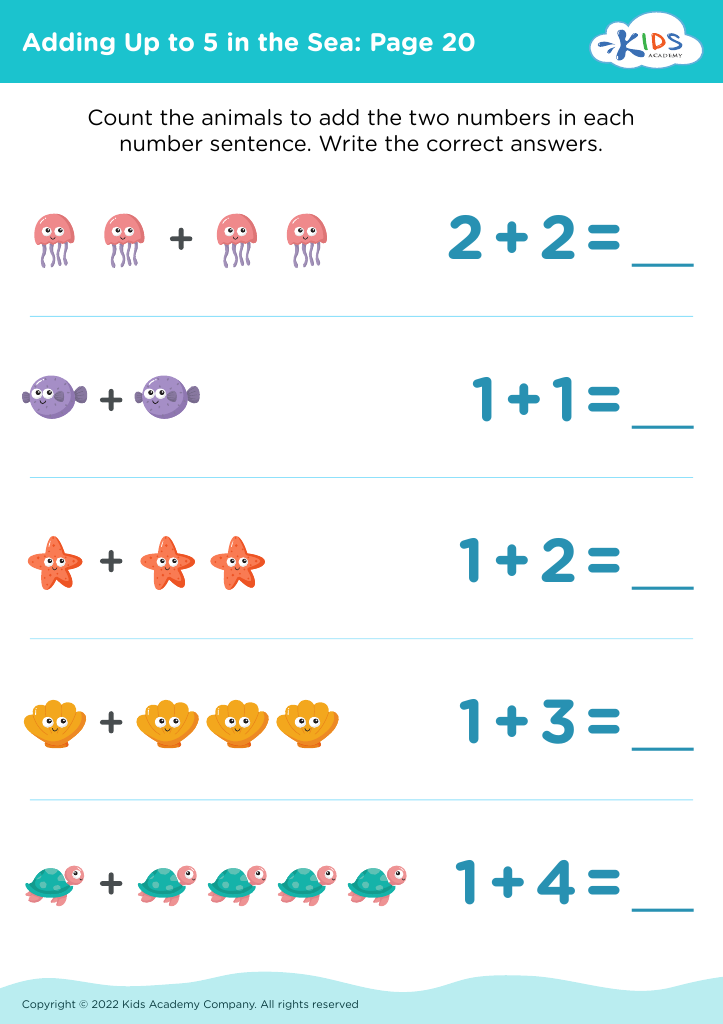
Adding Up to 5 in the Sea: Page 20
Worksheet
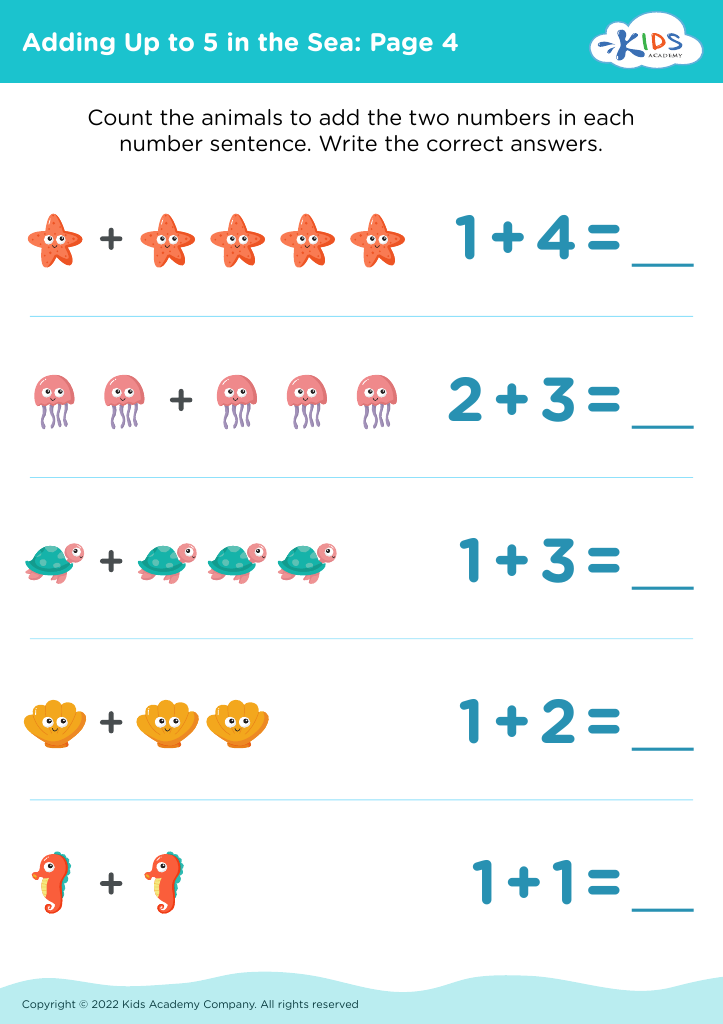
Adding Up to 5 in the Sea: Page 4

Adding Up to 5 in the Sea: Page 4

Adding Up to 5 in the Sea: Page 4
Worksheet


Counting skills, along with basic addition and subtraction, form foundational elements of a child's early mathematical understanding and cognitive development. For 4-year-olds, these skills are essential not just for academic success but also for everyday problem-solving and critical thinking.

Firstly, counting helps children grasp the concept of numbers, which is integral to recognizing patterns and sequences. This ability contributes to their capacity to learn more complex mathematical concepts later on. Furthermore, learning to add and subtract introduces them to the idea of quantifying and manipulating objects, honing their analytical skills.

Mathematical exercises, such as counting or simple arithmetic, also improve memory and attention span. Each practice session demands focus, sequential thinking, and often collaboration, fostering not only cognitive abilities but social skills as well. For instance, when kids count objects together or work in a group on basic problems, they learn essential communication and teamwork skills.

Moreover, early learners who develop confidence in math are more likely to have a positive attitude toward the subject moving forward. By caring about these skills, parents and teachers are not only setting up children for future academic success but also ensuring they possess vital life skills that apply beyond the classroom—like making fair deals, budgeting allowances, or sharing equally with friends.