Filters

142 filtered results

Clear all filters
Favorites
With answer key
Interactive

142 filtered results

Difficulty Level

Grade


Check out this FREE Trial Lesson on Addition & Subtraction for age 4!

2 Step Addition Word Problems Using Drawings

Favorites
With answer key
Interactive
  • 4
  • Counting skills
  • Addition & Subtraction
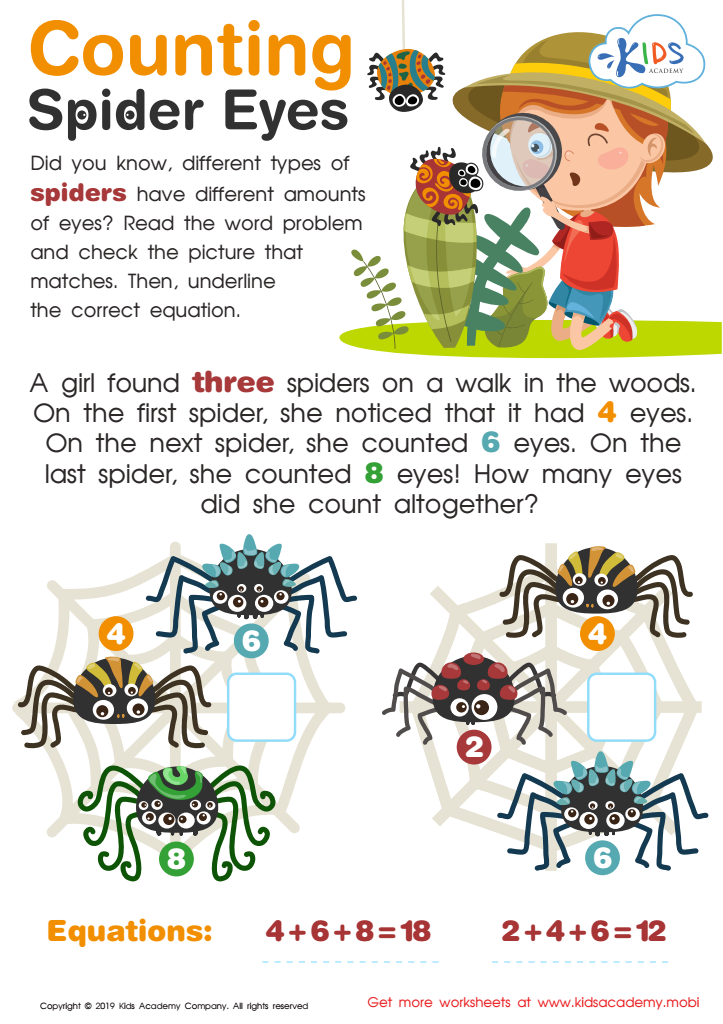
Counting Spider Eyes Worksheet

Counting Spider Eyes Worksheet

Did you know different spiders have different eye numbers? Kids will love learning this fact and solving the spider word problems on this free worksheet! Word problems promote a deeper understanding of the concept, plus they get to add up the spiders’ eyes while solving addition problems with more than one addend. Fun and math all in one!
Counting Spider Eyes Worksheet
Worksheet
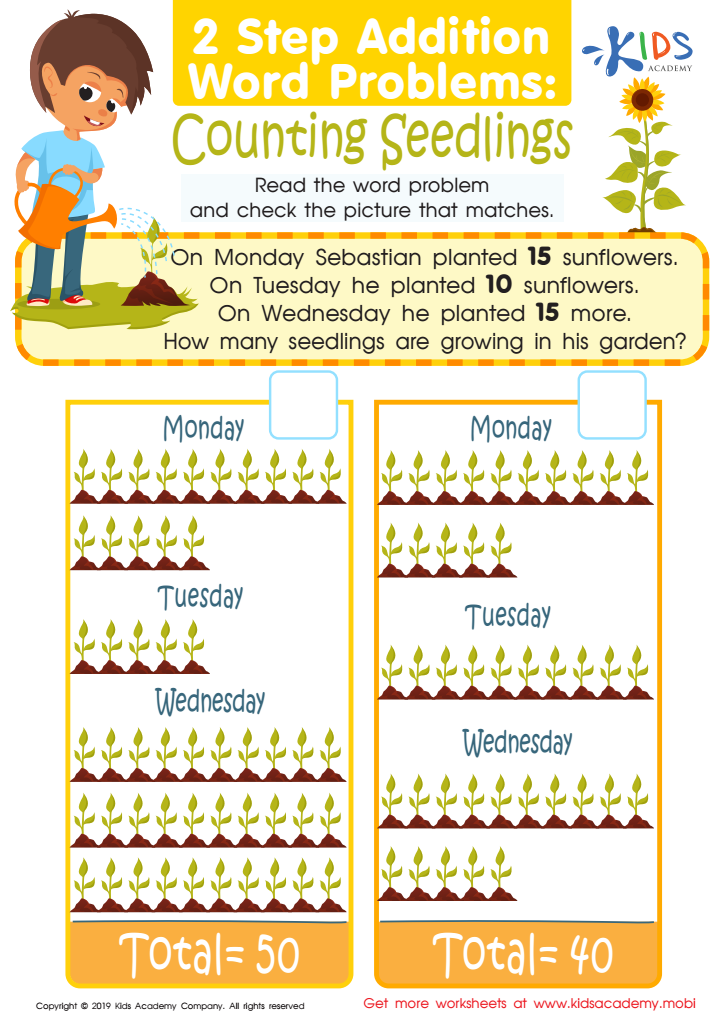
Counting Seedlings Worksheet
Counting Seedlings Worksheet
Understanding math word problems is key. Multiple steps can prove challenging - this free worksheet provides one-to-one picture representation to help kids solve multi-step addition word problems. Strengthen addition skills by choosing the matching picture to the answer.
Counting Seedlings Worksheet
Worksheet
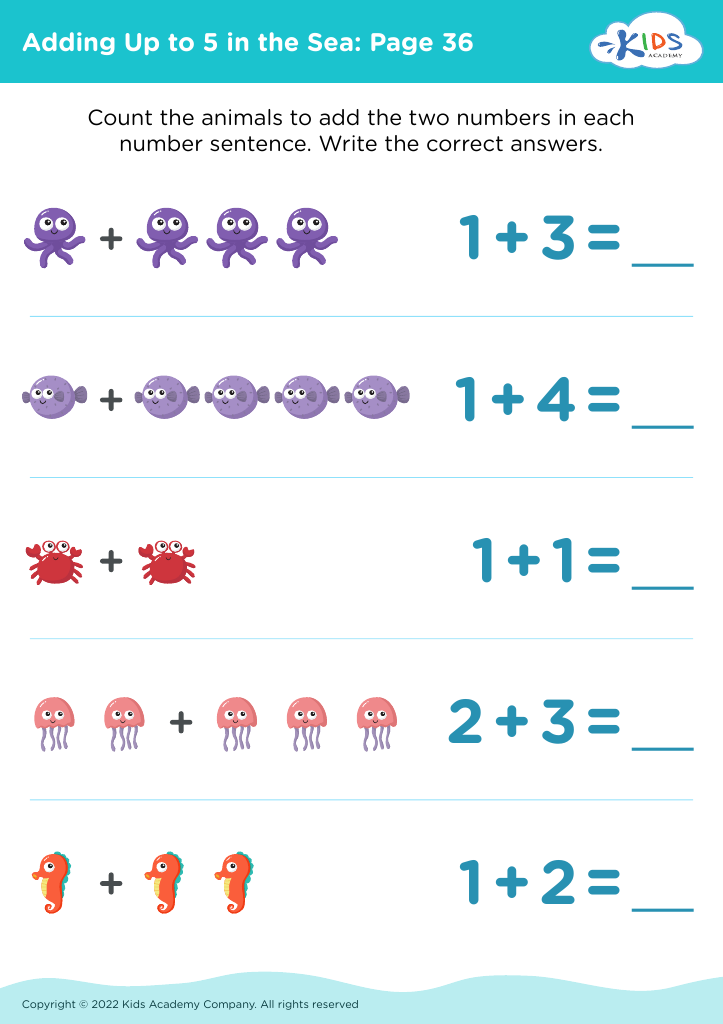
Adding Up to 5 in the Sea: Page 36
Worksheet
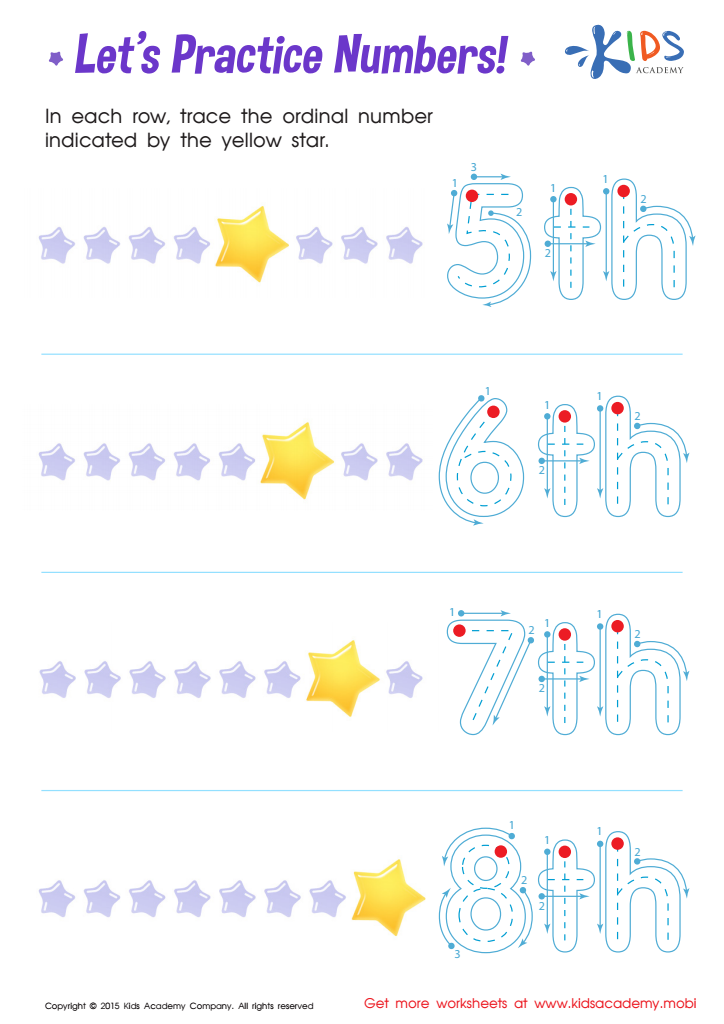
Practice Ordinal Numbers Worksheets PDF
Ordinal Numbers: Let's Practice Numbers Printable
Worksheet
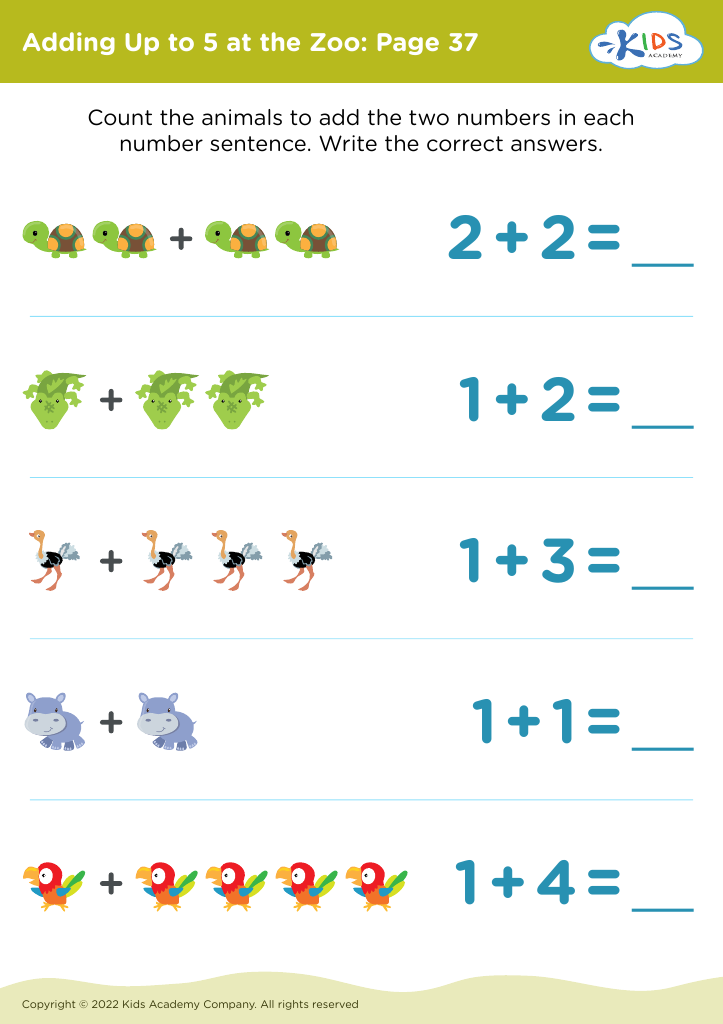
Adding Up to 5 at the Zoo: Page 37
Worksheet
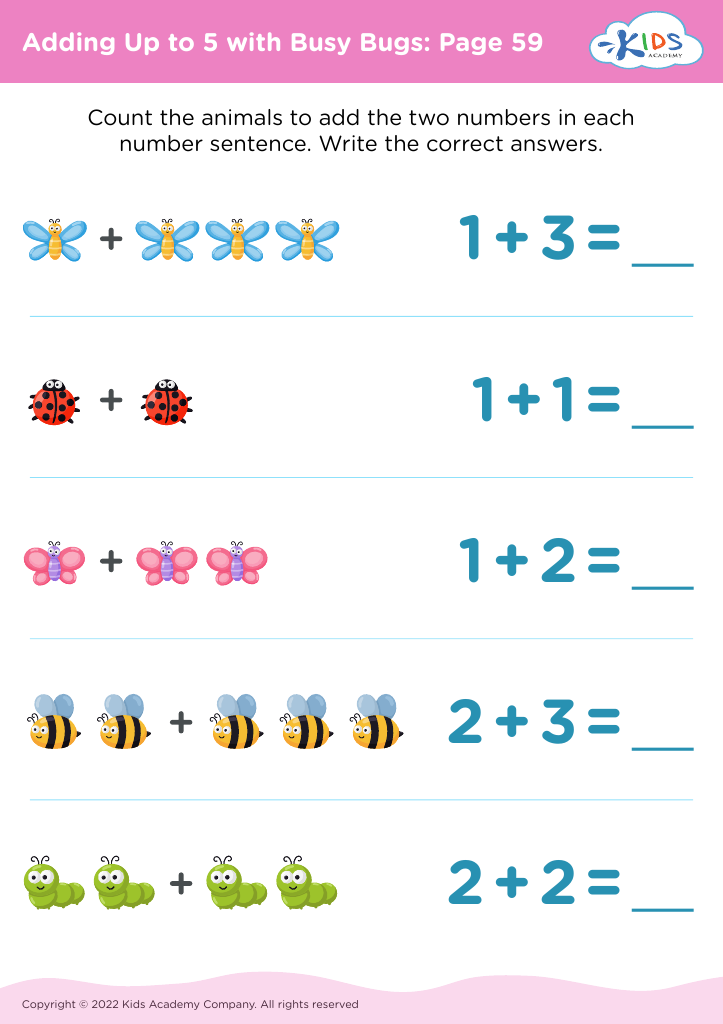
Adding Up to 5 with Busy Bugs: Page 59
Worksheet
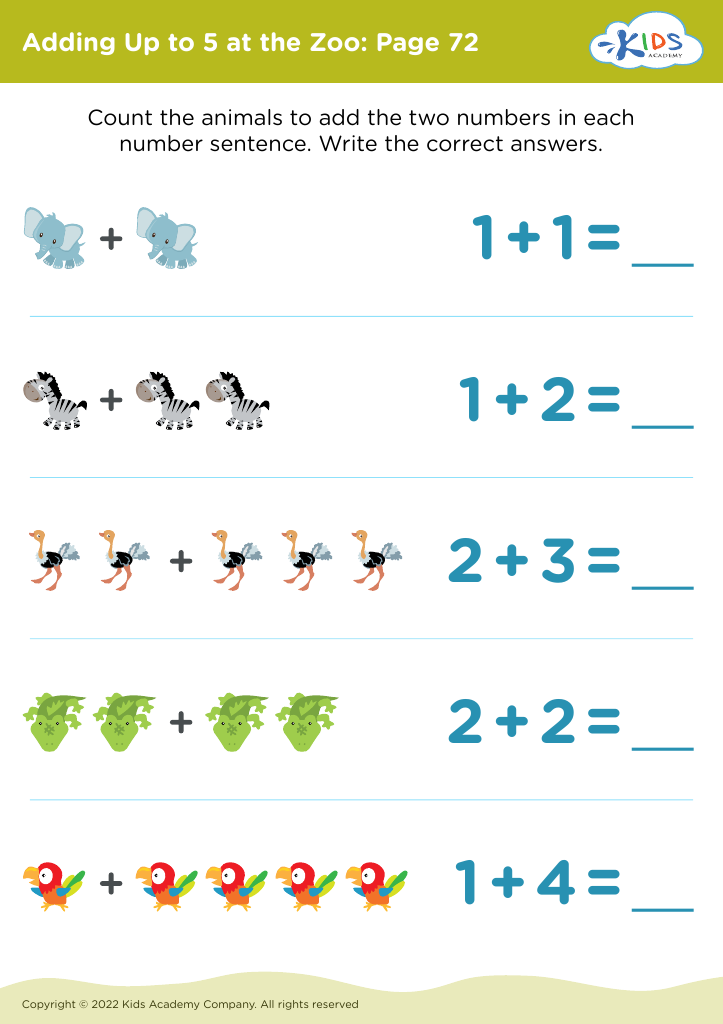
Adding Up to 5 at the Zoo: Page 72
Worksheet
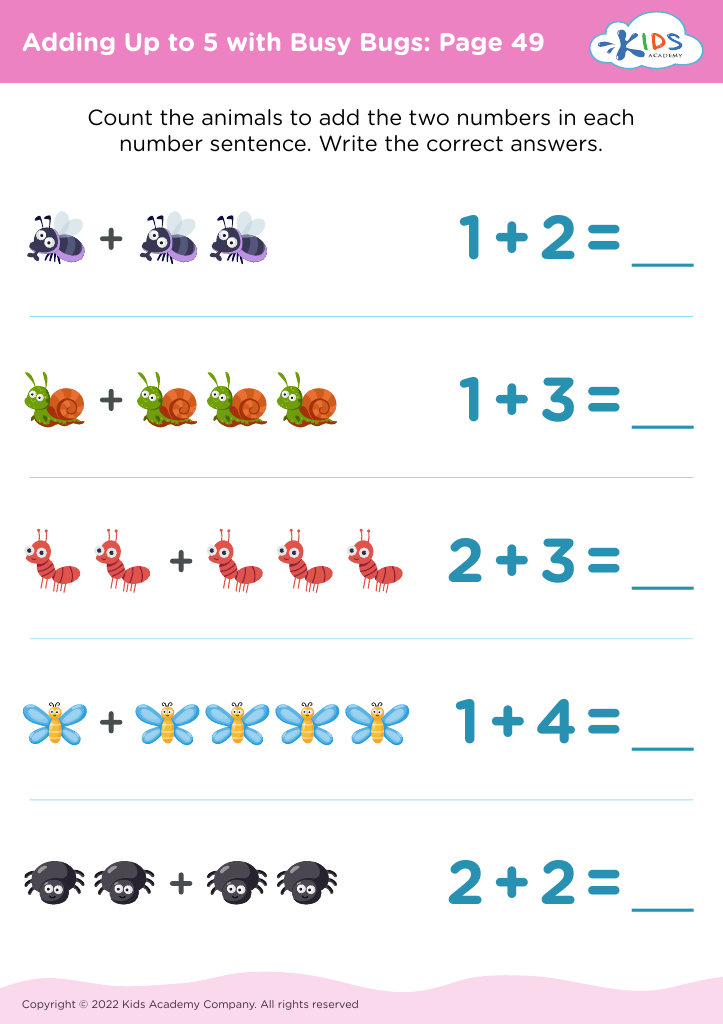
Adding Up to 5 with Busy Bugs: Page 49
Worksheet
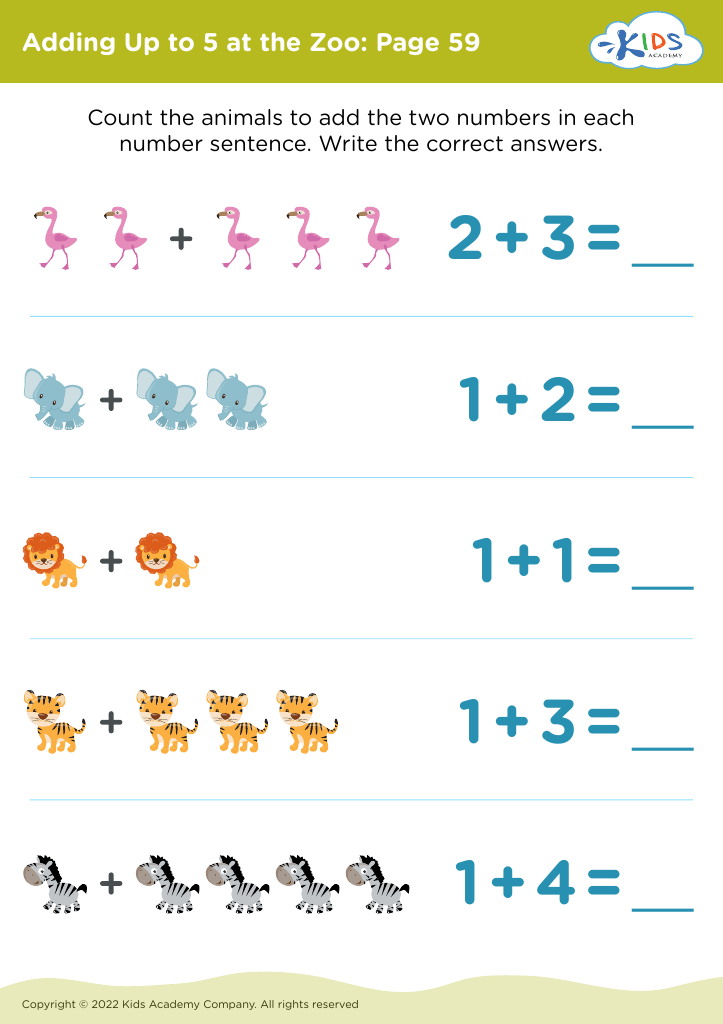
Adding Up to 5 at the Zoo: Page 59
Worksheet
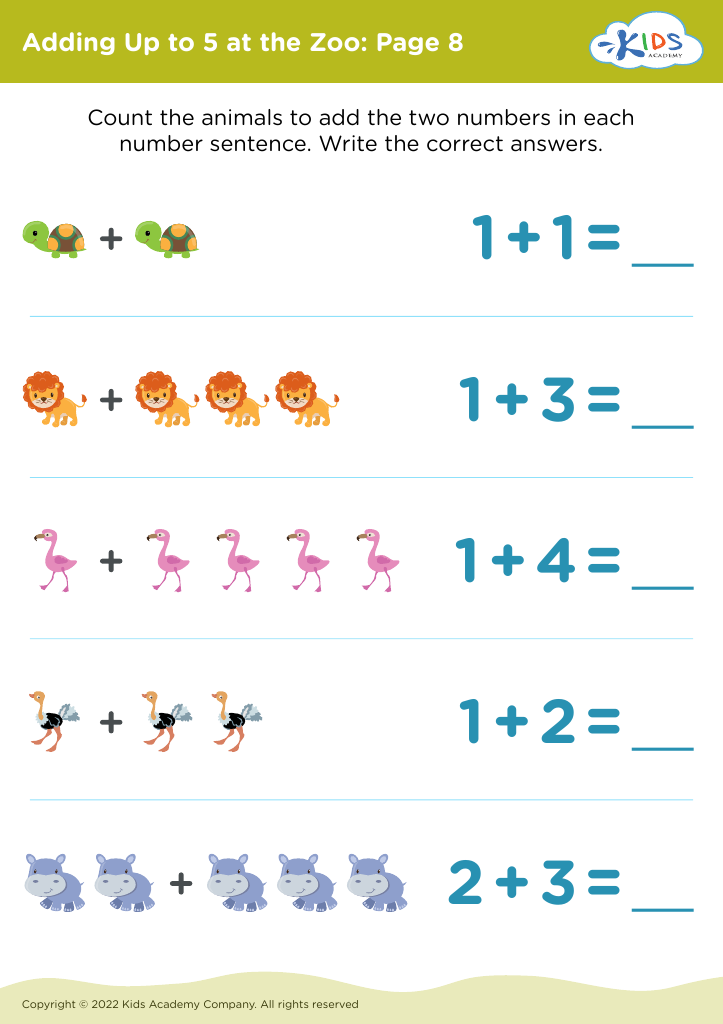
Adding Up to 5 at the Zoo: Page 8

Adding Up to 5 at the Zoo: Page 8

Adding Up to 5 at the Zoo: Page 8
Worksheet
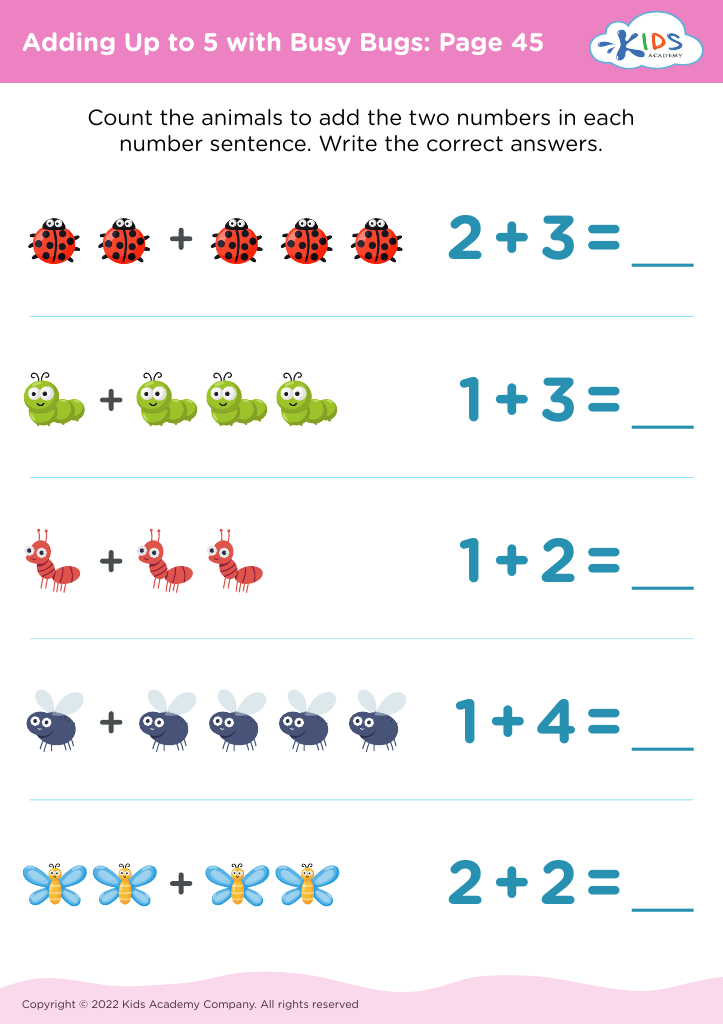
Adding Up to 5 with Busy Bugs: Page 45
Worksheet
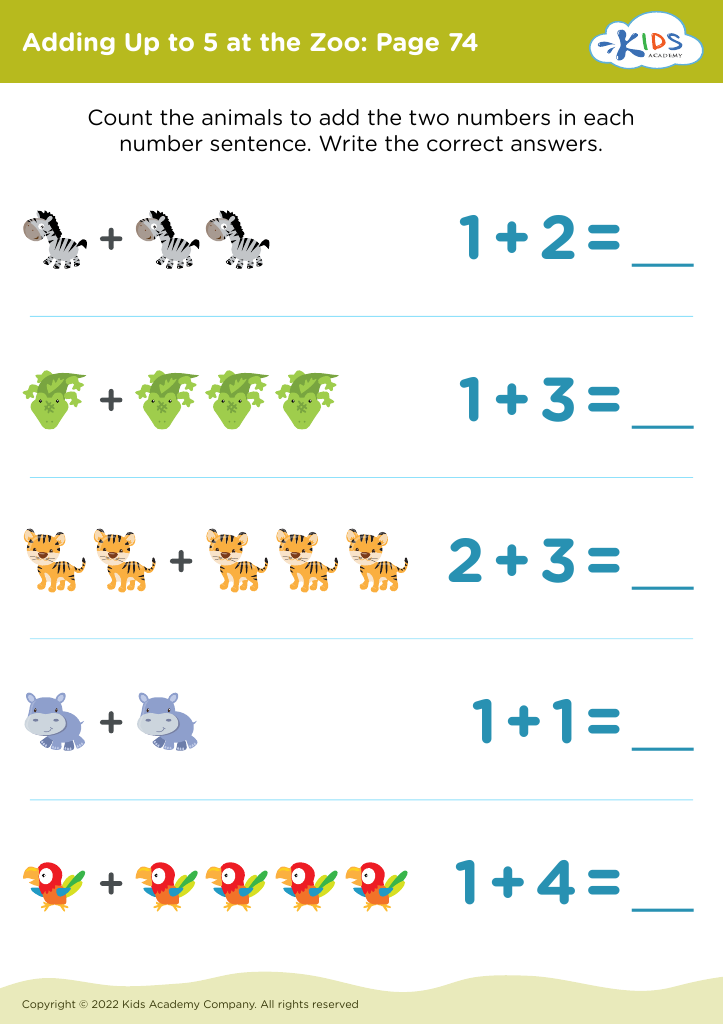
Adding Up to 5 at the Zoo: Page 74
Worksheet
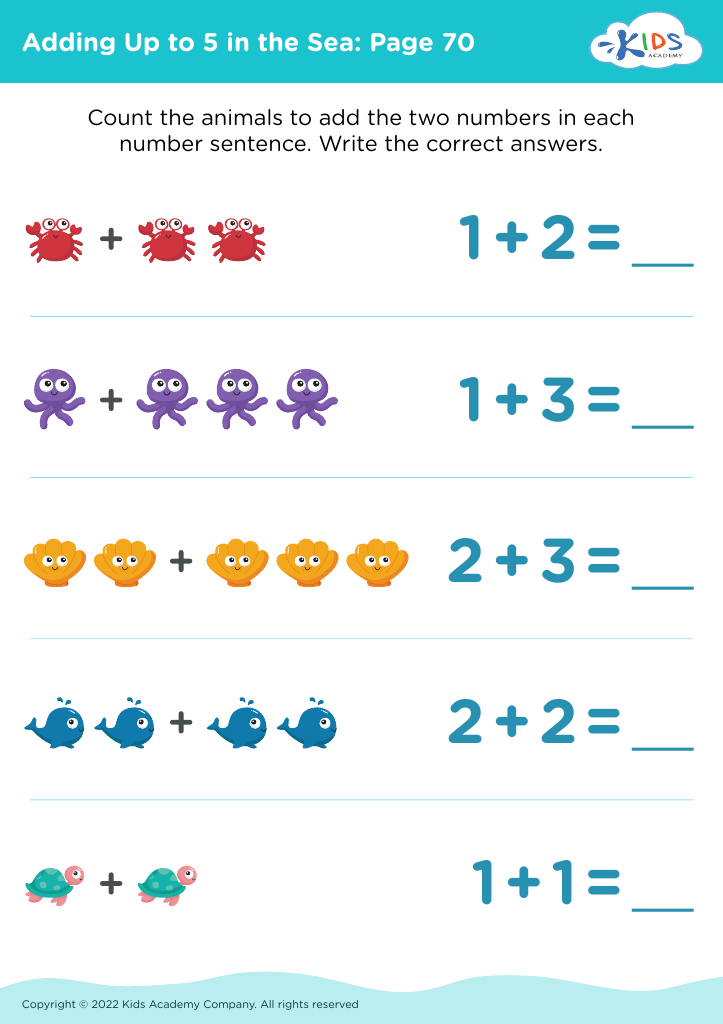
Adding Up to 5 in the Sea: Page 70
Worksheet
Adding Flower Petals Worksheet
Adding Flower Petals Worksheet
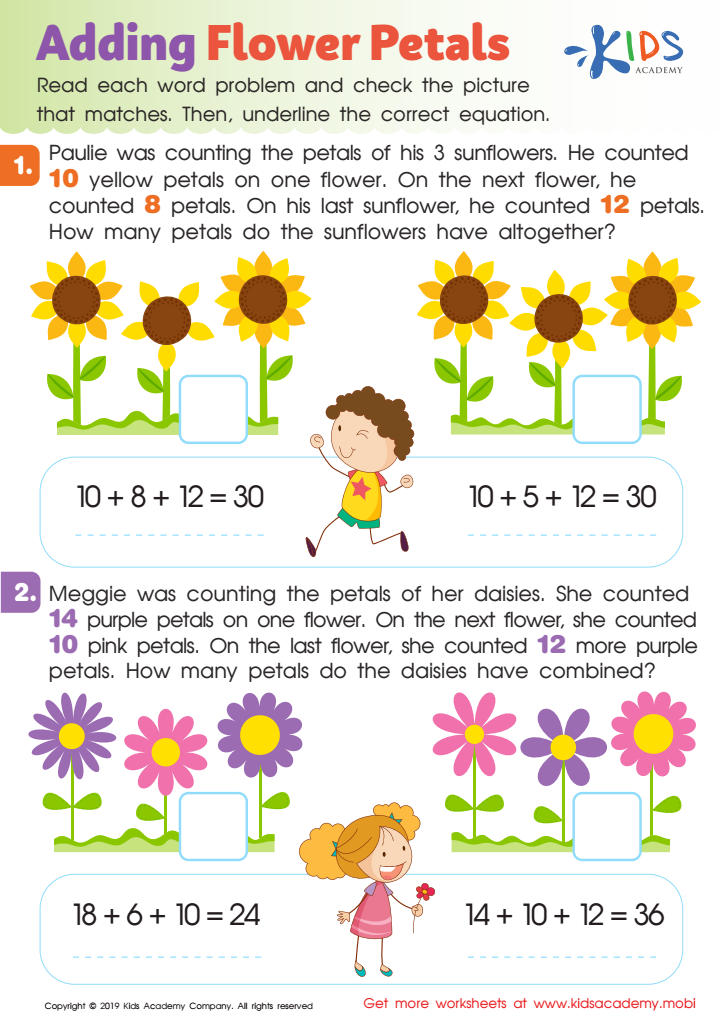
This free worksheet helps little mathematicians learn to understand word problems. They'll read each one and match it to the corresponding picture. Important info is highlighted, teaching kids to look for key info when solving problems. Then they'll underline the correct number equation that matches the picture. A great way to practice problem-solving skills!
Adding Flower Petals Worksheet
Worksheet
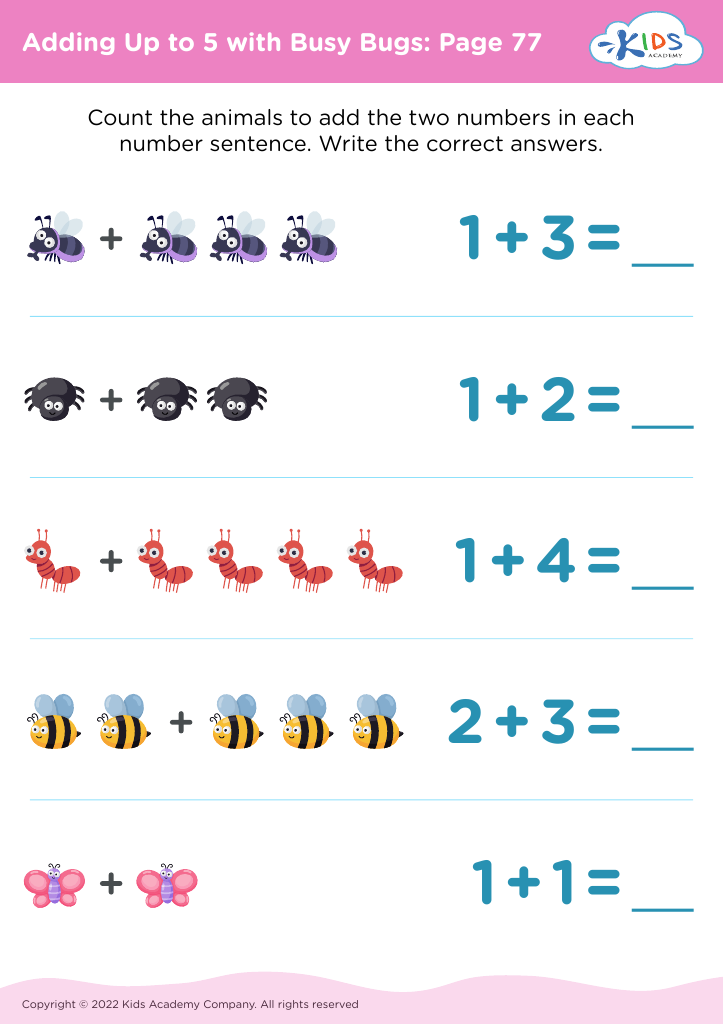
Adding Up to 5 with Busy Bugs: Page 77
Worksheet
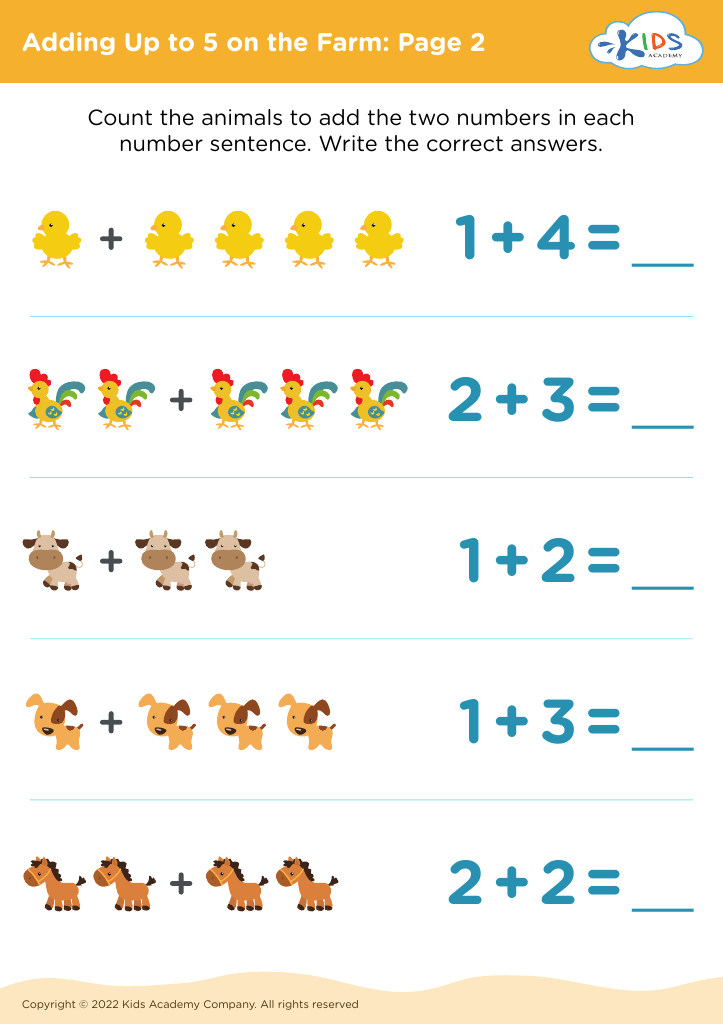
Adding Up to 5 on the Farm: Page 2
Worksheet
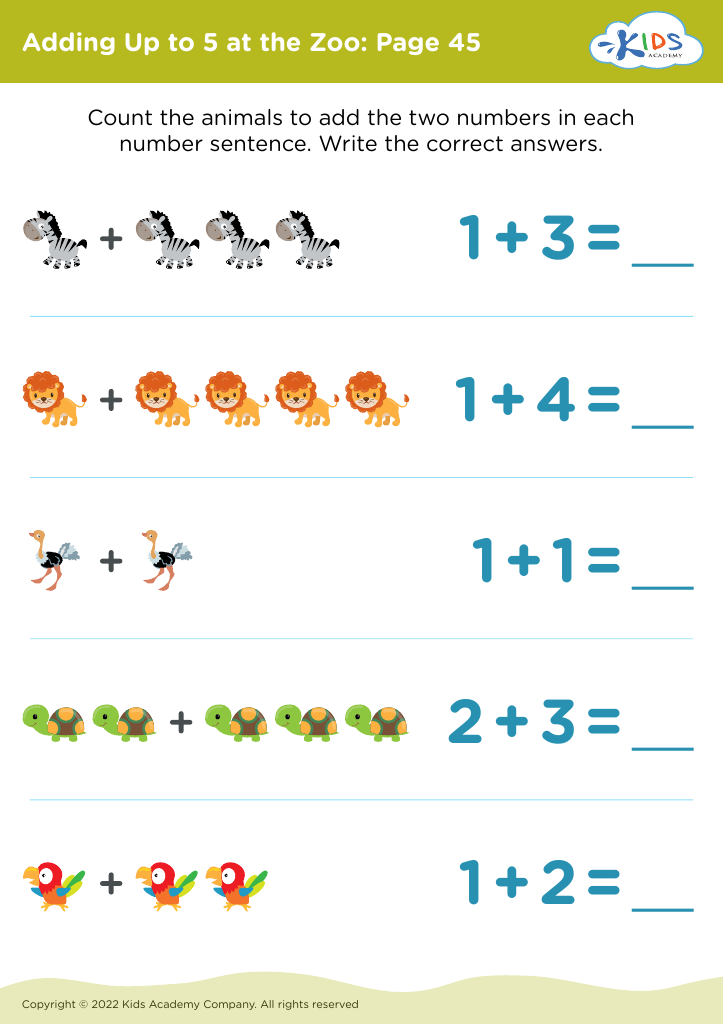
Adding Up to 5 at the Zoo: Page 45
Worksheet
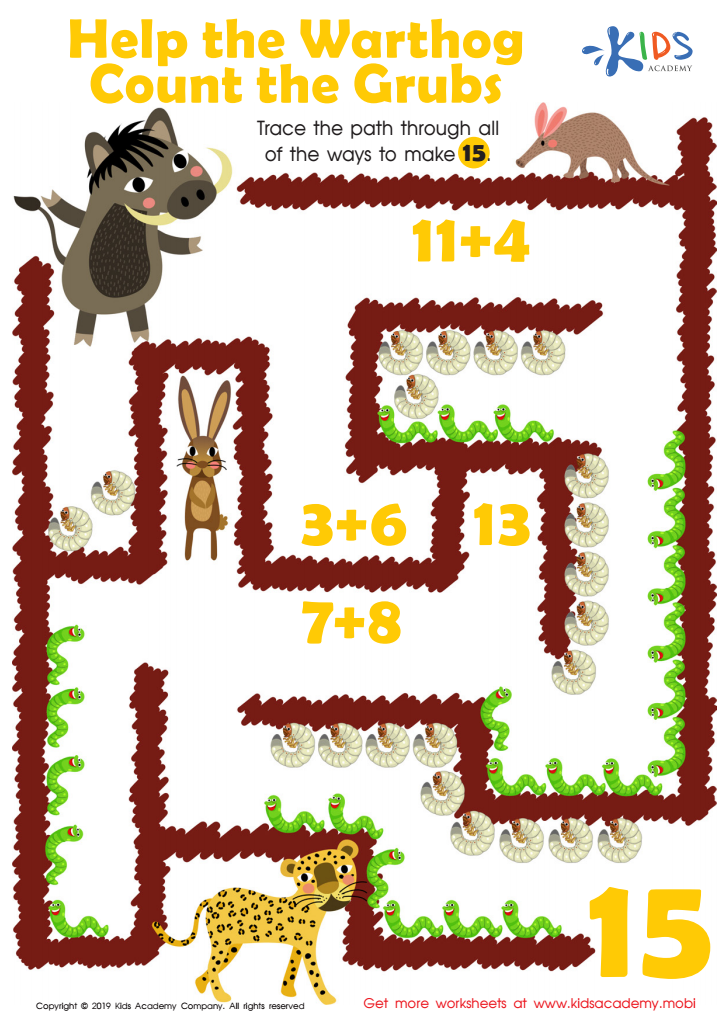
Help the Warthog Count the Grubs Worksheet
Help the Warthog Count the Grubs Worksheet
Test your kids' knowledge of wild animals. Ask them to name some they know, then have them identify the animals on this worksheet. If they can't, take the time to tell them the names. Finally, trace the warthog's path through the maze by solving the equations and going through paths that make 15.
Help the Warthog Count the Grubs Worksheet
Worksheet
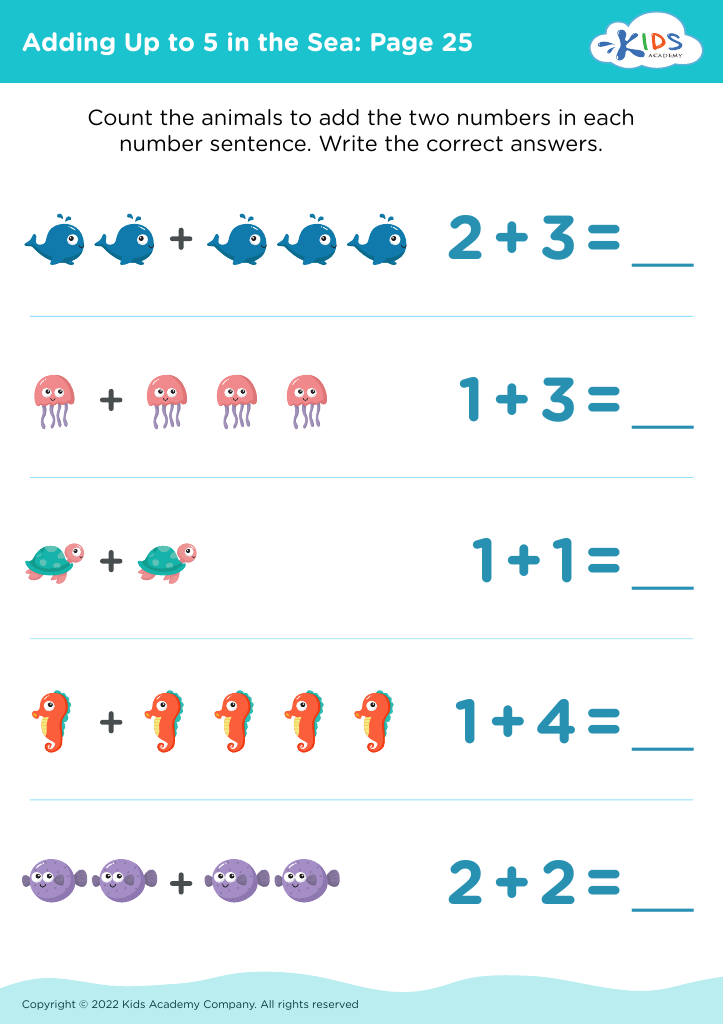
Adding Up to 5 in the Sea: Page 25
Worksheet
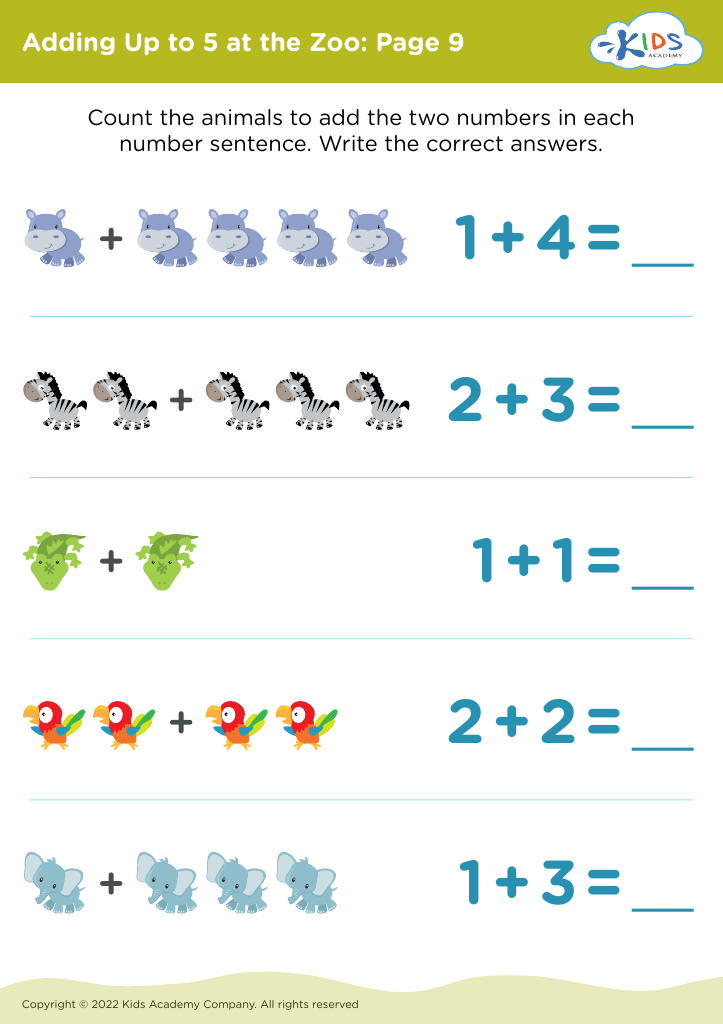
Adding Up to 5 at the Zoo: Page 9

Adding Up to 5 at the Zoo: Page 9

Adding Up to 5 at the Zoo: Page 9
Worksheet
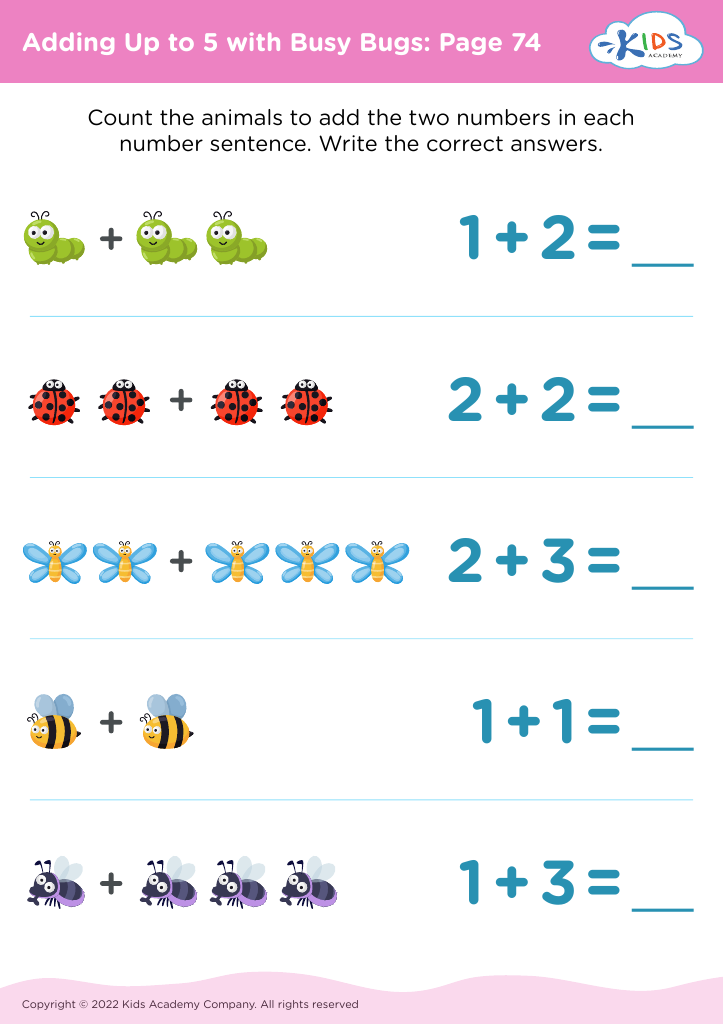
Adding Up to 5 with Busy Bugs: Page 74
Worksheet
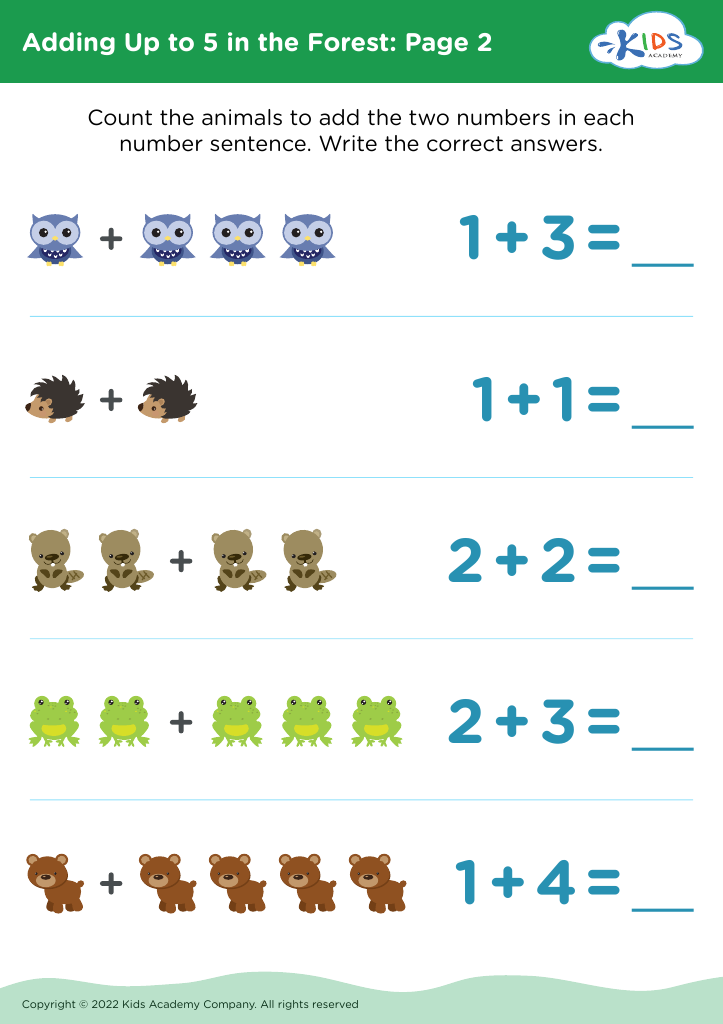
Adding Up to 5 in the Forest: Page 2
Worksheet
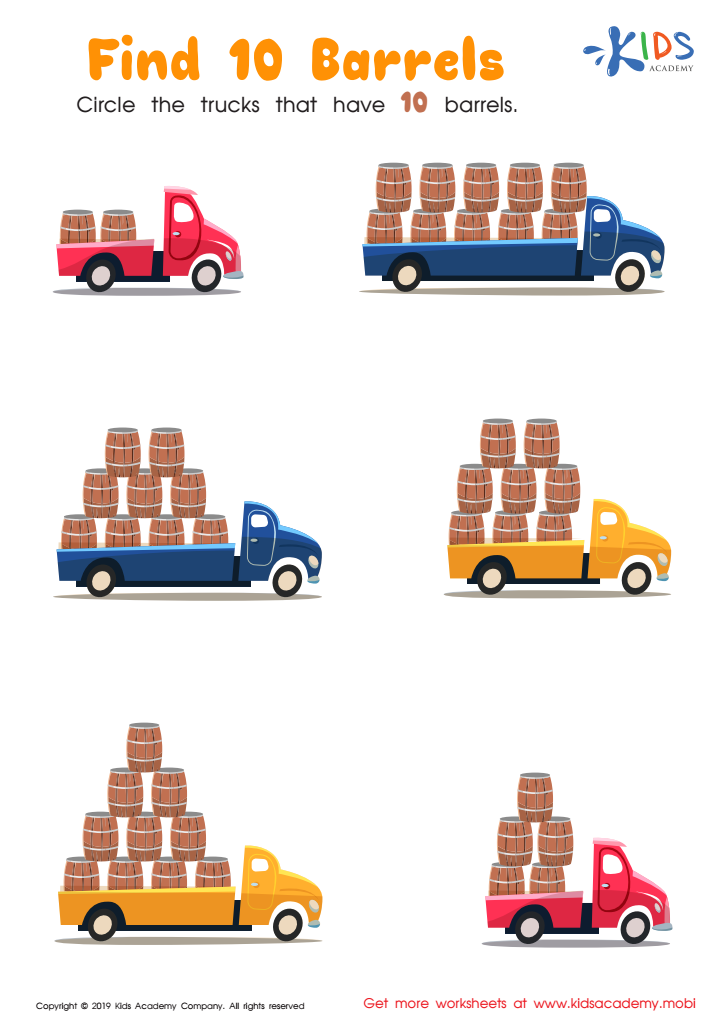
Find 10 Barrels Worksheet

Find 10 Barrels Worksheet

Help your kids learn to count with 1, 2 and 3, then progress to tens and hundreds. Supplied with educational materials and colorful worksheets, they'll be counting as high as they can. Together, count the barrels on the trucks in the printout and encourage them to circle the ones with 10 barrels.
Find 10 Barrels Worksheet

Worksheet
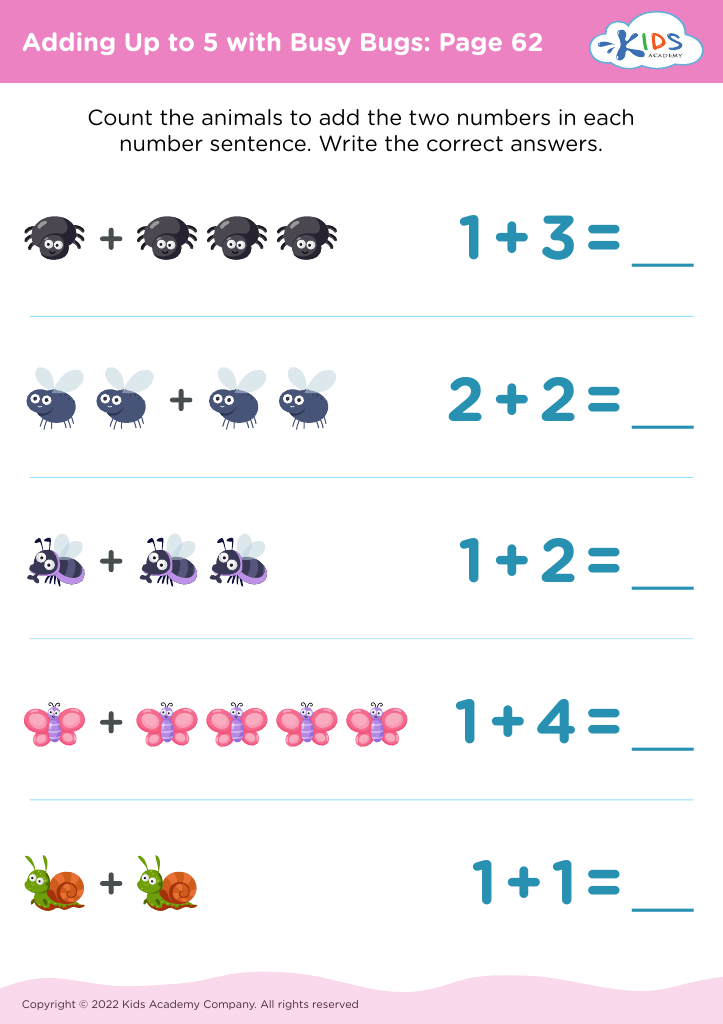
Adding Up to 5 with Busy Bugs: Page 62
Worksheet


Counting skills, along with basic addition and subtraction, form foundational elements of a child's early mathematical understanding and cognitive development. For 4-year-olds, these skills are essential not just for academic success but also for everyday problem-solving and critical thinking.

Firstly, counting helps children grasp the concept of numbers, which is integral to recognizing patterns and sequences. This ability contributes to their capacity to learn more complex mathematical concepts later on. Furthermore, learning to add and subtract introduces them to the idea of quantifying and manipulating objects, honing their analytical skills.

Mathematical exercises, such as counting or simple arithmetic, also improve memory and attention span. Each practice session demands focus, sequential thinking, and often collaboration, fostering not only cognitive abilities but social skills as well. For instance, when kids count objects together or work in a group on basic problems, they learn essential communication and teamwork skills.

Moreover, early learners who develop confidence in math are more likely to have a positive attitude toward the subject moving forward. By caring about these skills, parents and teachers are not only setting up children for future academic success but also ensuring they possess vital life skills that apply beyond the classroom—like making fair deals, budgeting allowances, or sharing equally with friends.