Filters

142 filtered results

Clear all filters
Favorites
With answer key
Interactive

142 filtered results

Difficulty Level

Grade


Check out this FREE Trial Lesson on Addition & Subtraction for age 4!

Adding with Objects from Stories

Favorites
With answer key
Interactive
  • 4
  • Counting skills
  • Addition & Subtraction
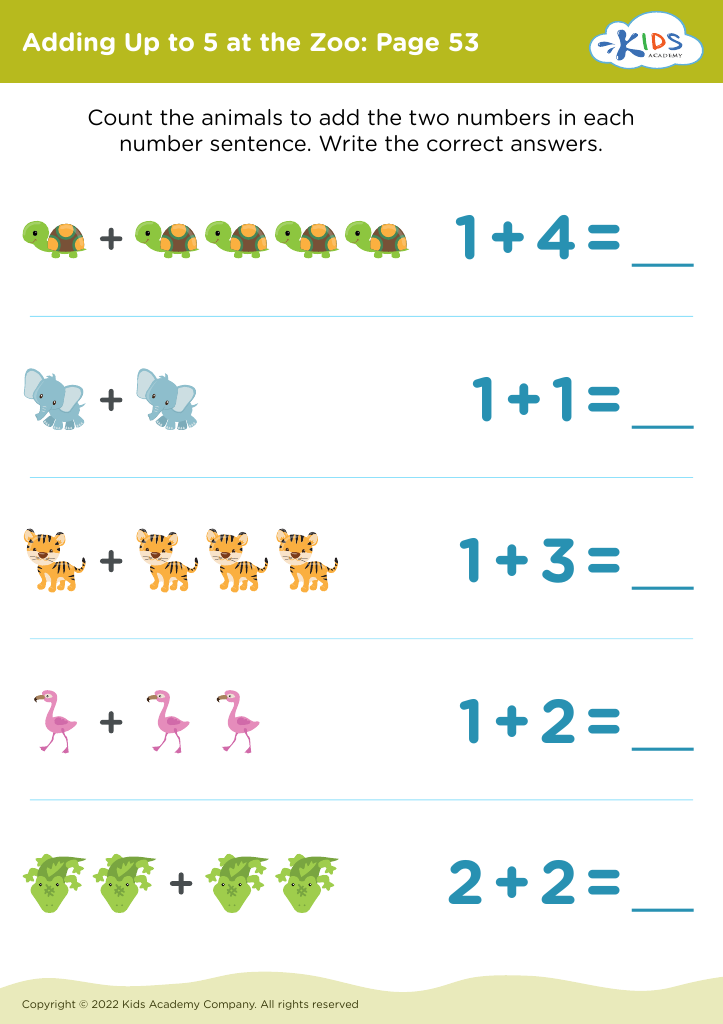
Adding Up to 5 at the Zoo: Page 53
Worksheet
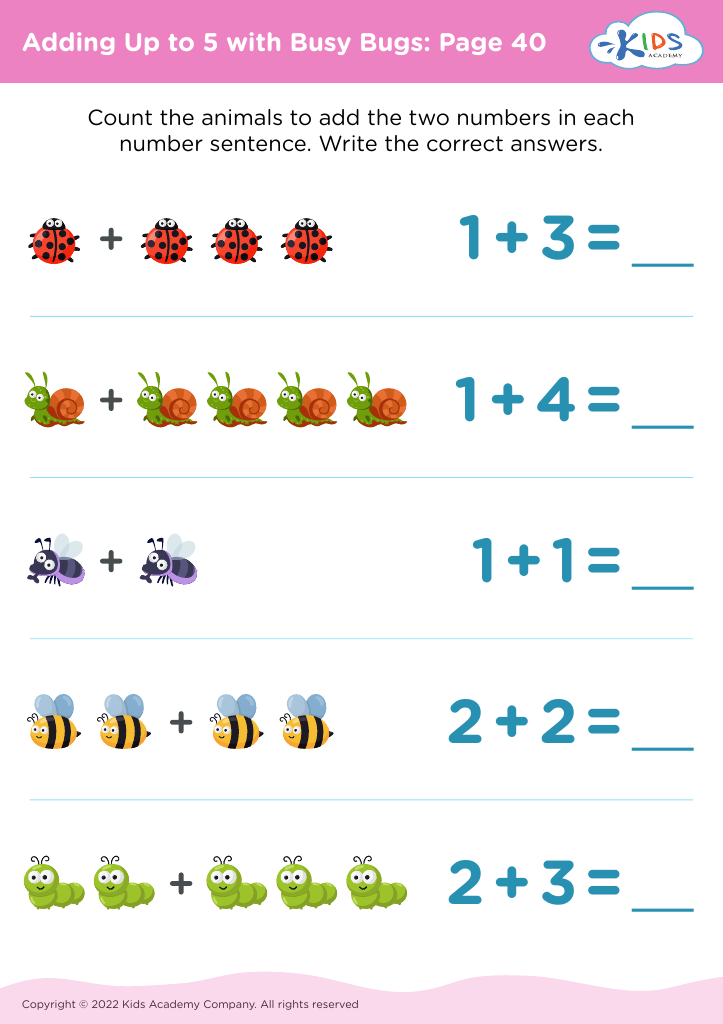
Adding Up to 5 with Busy Bugs: Page 40
Worksheet
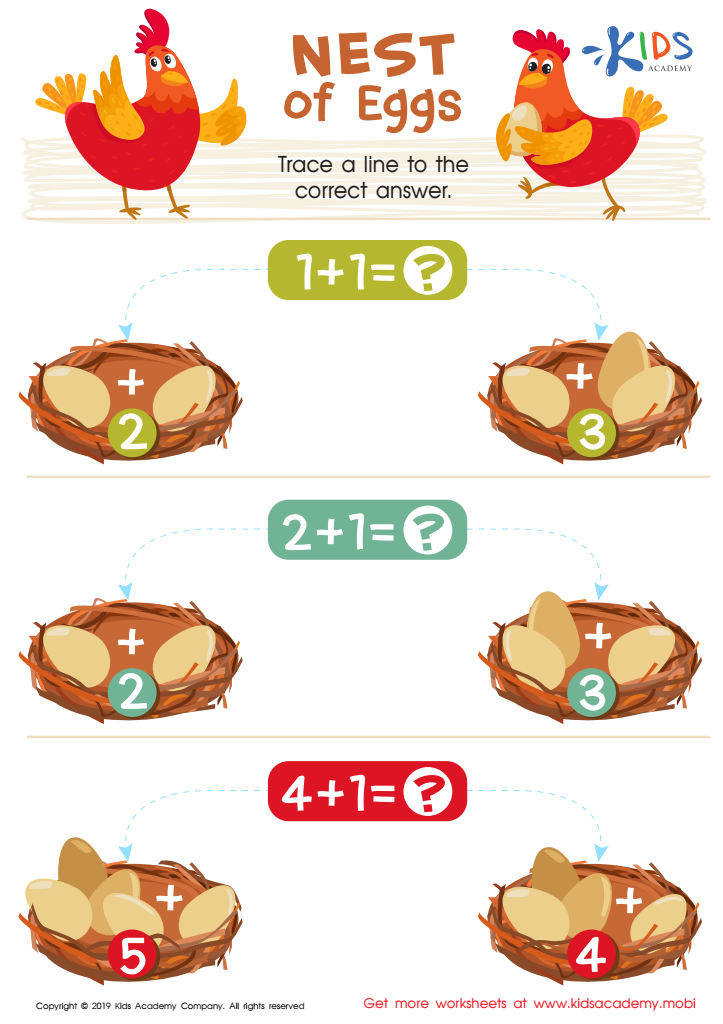
Nest of Eggs Worksheet

Nest of Eggs Worksheet

Help your kids learn math with this worksheet. First discuss the picture with them and then work through the three equations. Encourage them to trace the correct answer afterwards. With your assistance, they'll soon be able to confidently add numbers.
Nest of Eggs Worksheet
Worksheet
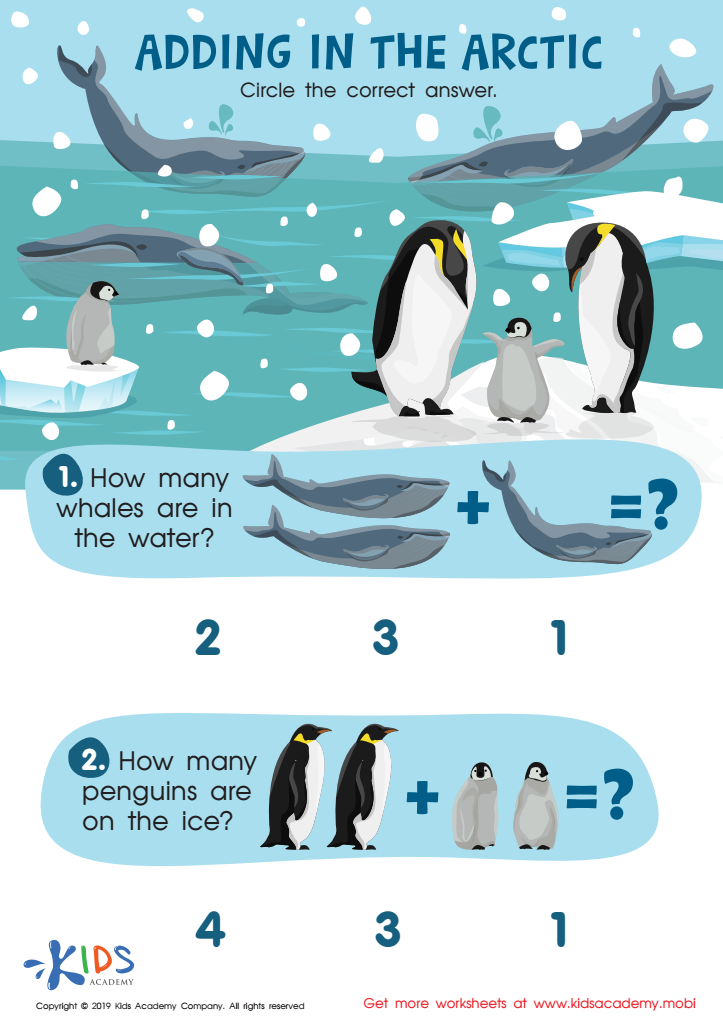
Adding in the Arctic Worksheet

Adding in the Arctic Worksheet

Introduce your kids to the Arctic with this worksheet. Let them look at the pictures, teach them the name of the animals, and help them add up the correct number. Ask your kids to tell you some of the animals found there and what the weather is like. It's a fun and educational way to learn more about the Arctic.
Adding in the Arctic Worksheet
Worksheet
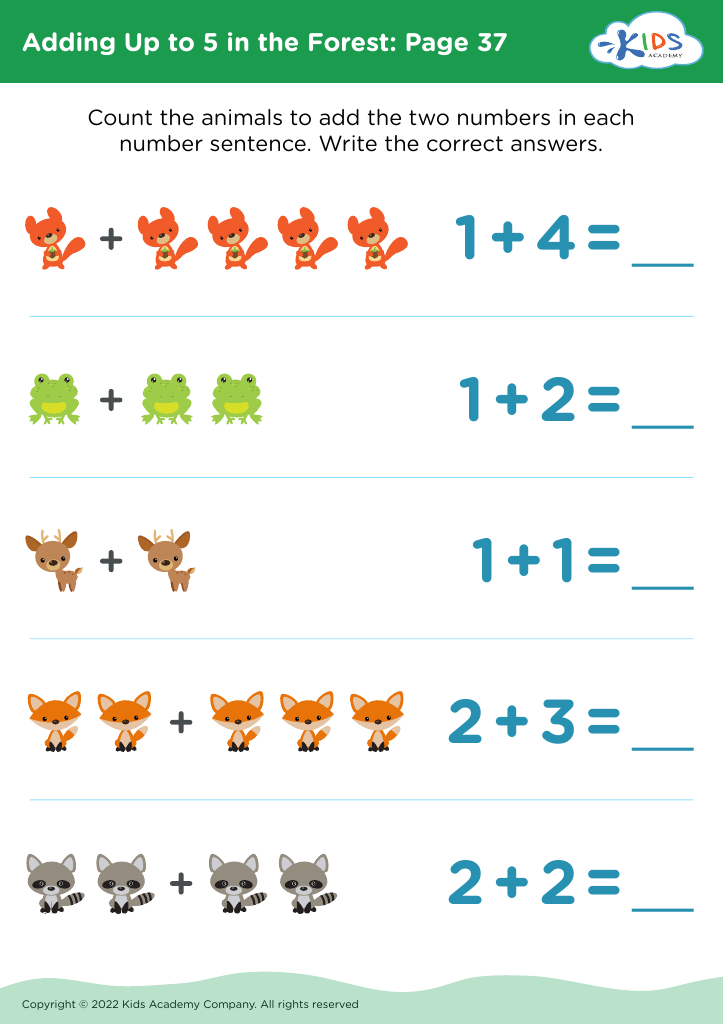
Adding Up to 5 in the Forest: Page 37
Worksheet
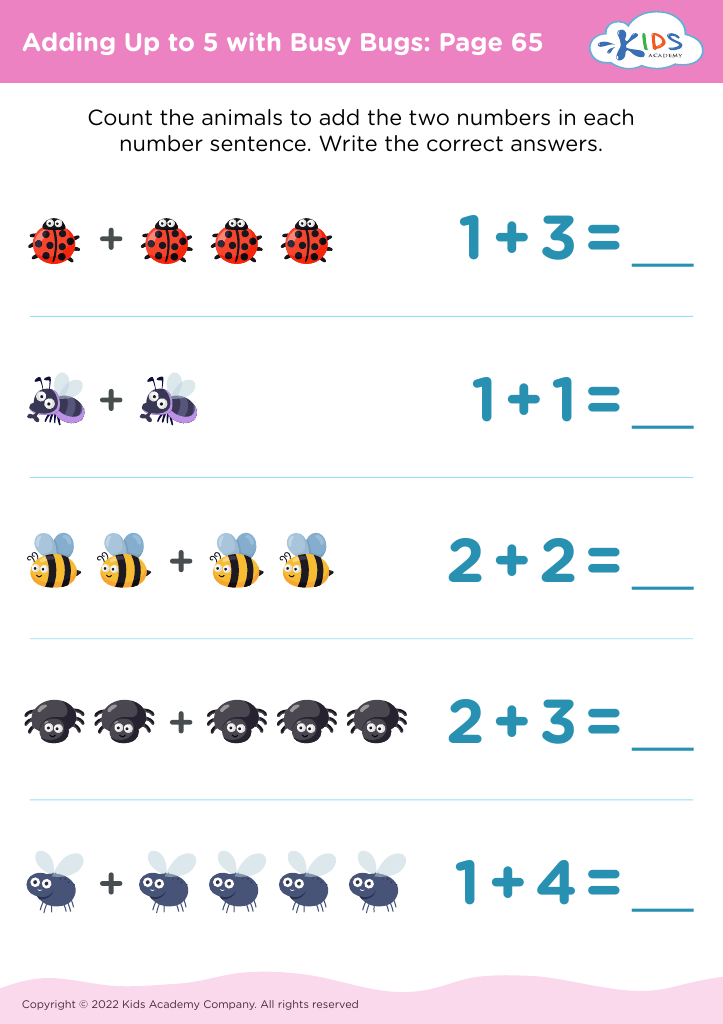
Adding Up to 5 with Busy Bugs: Page 65
Worksheet
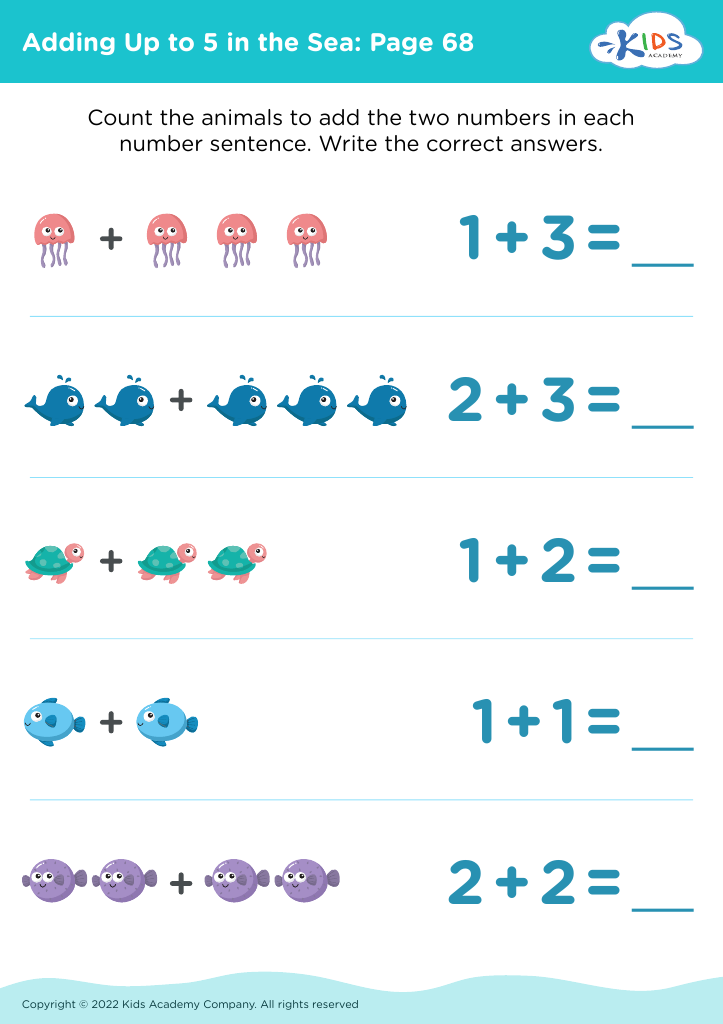
Adding Up to 5 in the Sea: Page 68
Worksheet
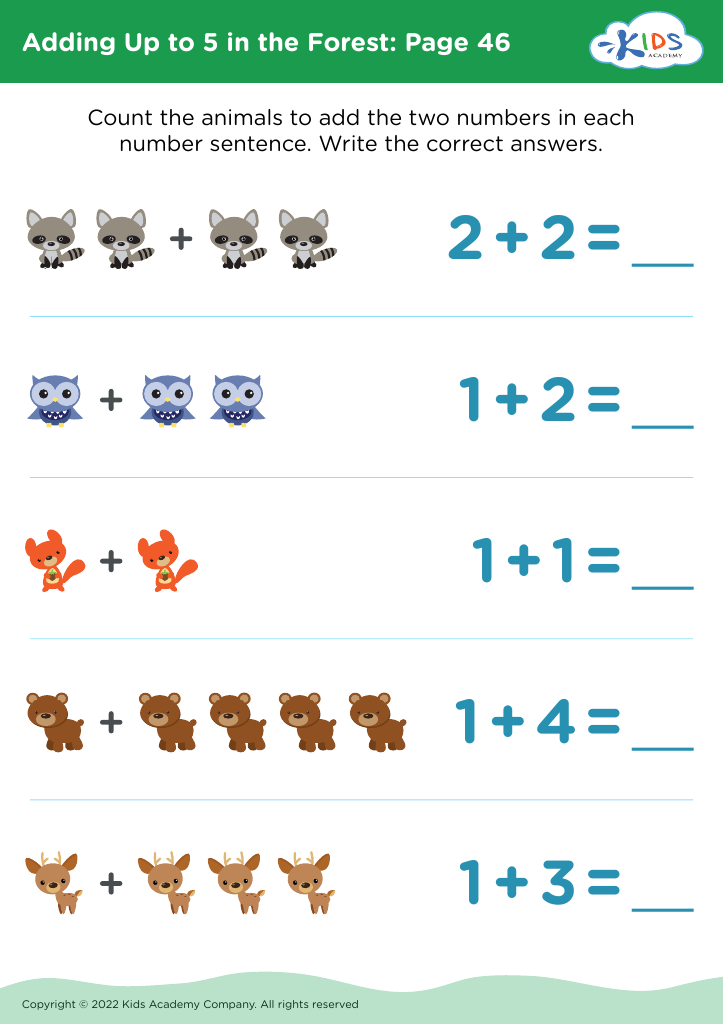
Adding Up to 5 in the Forest: Page 46
Worksheet
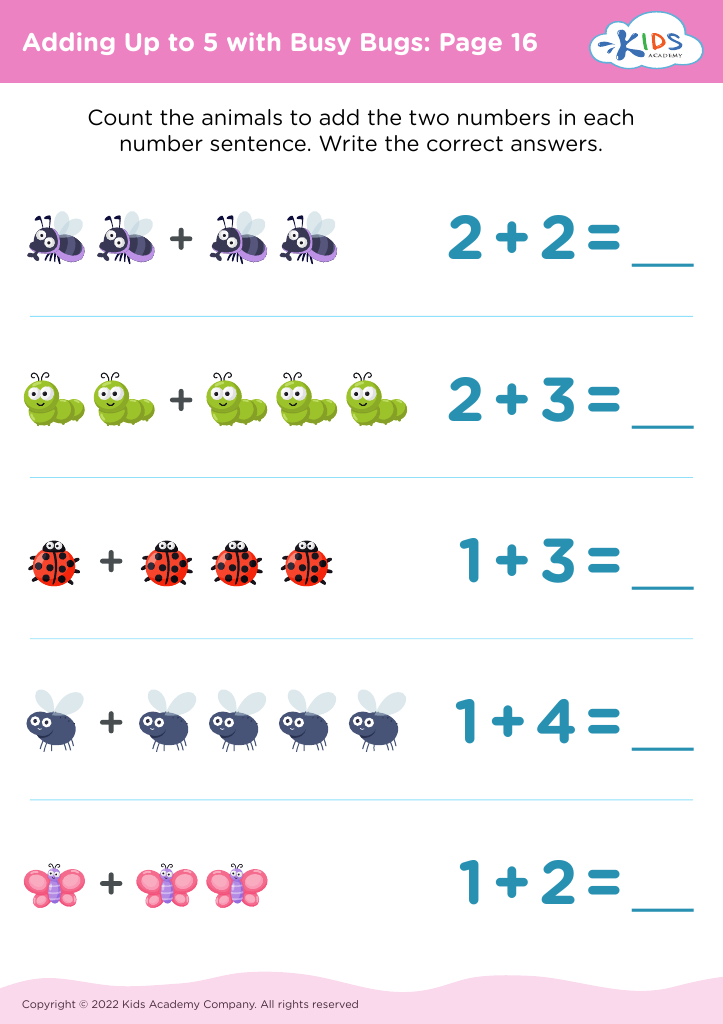
Adding Up to 5 with Busy Bugs: Page 16
Worksheet
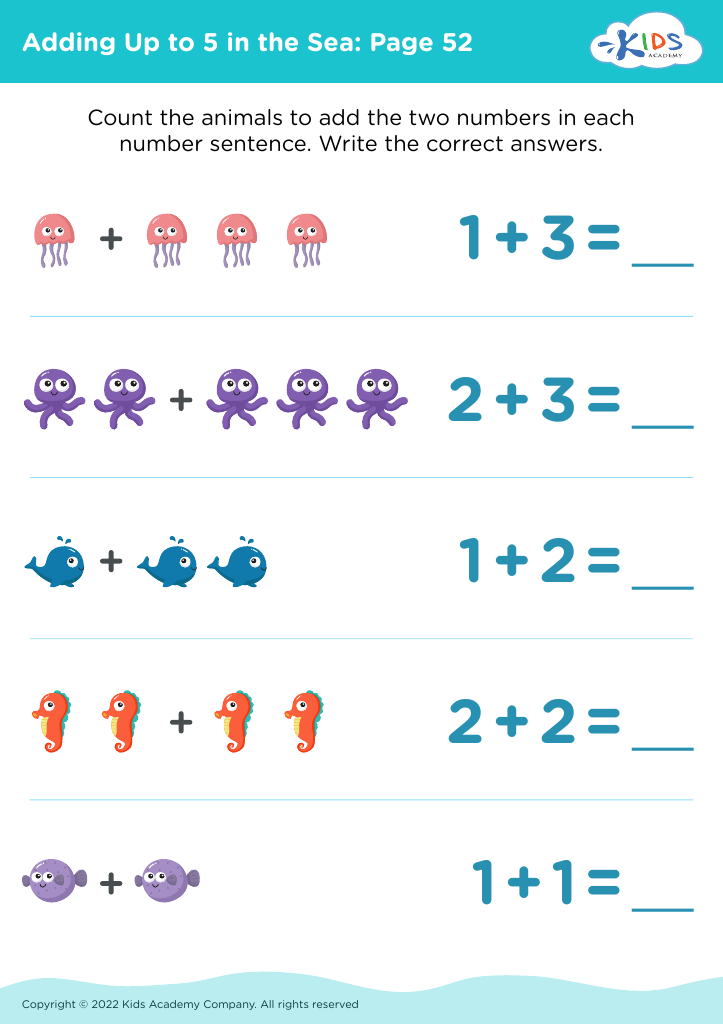
Adding Up to 5 in the Sea: Page 52
Worksheet
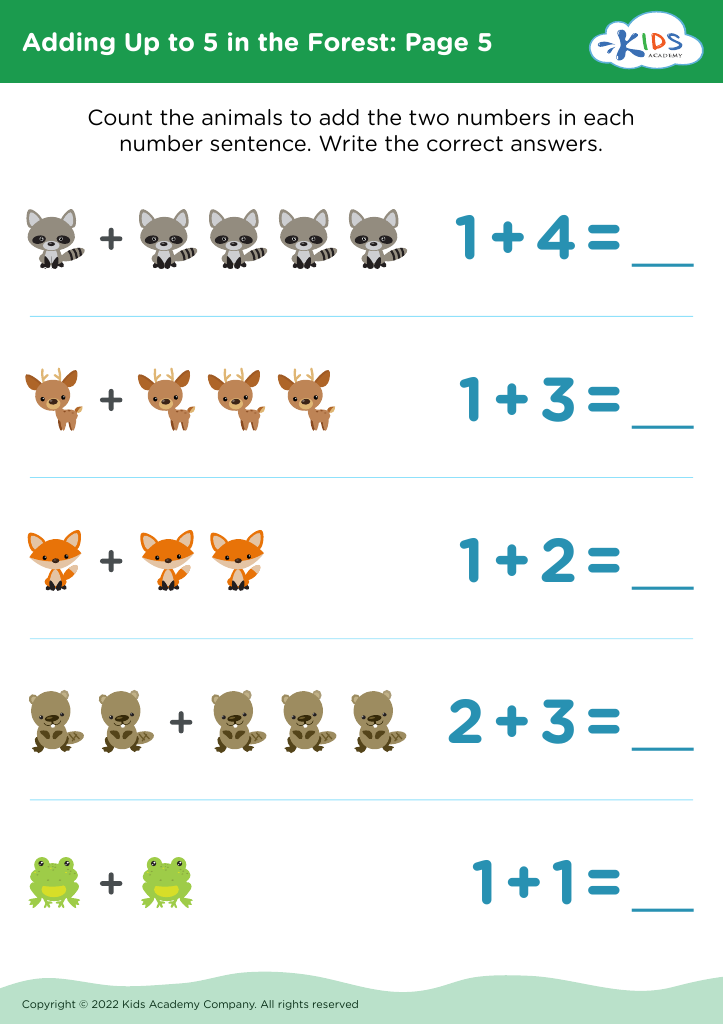
Adding Up to 5 in the Forest: Page 5
Worksheet
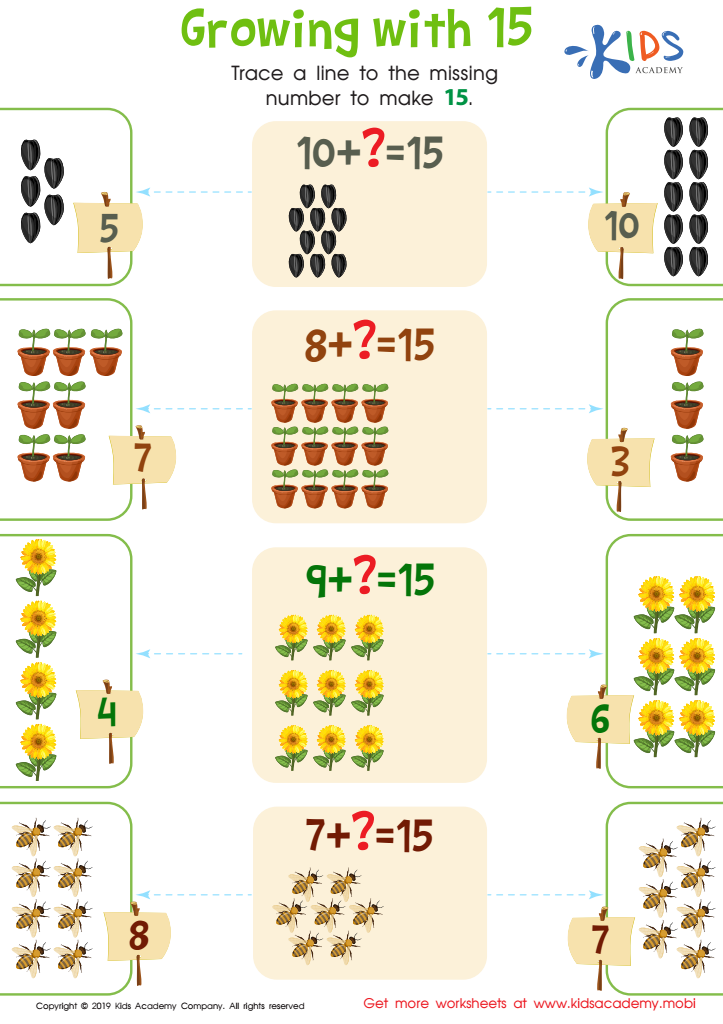
Growing with 15 Worksheet
Growing with 15 Worksheet

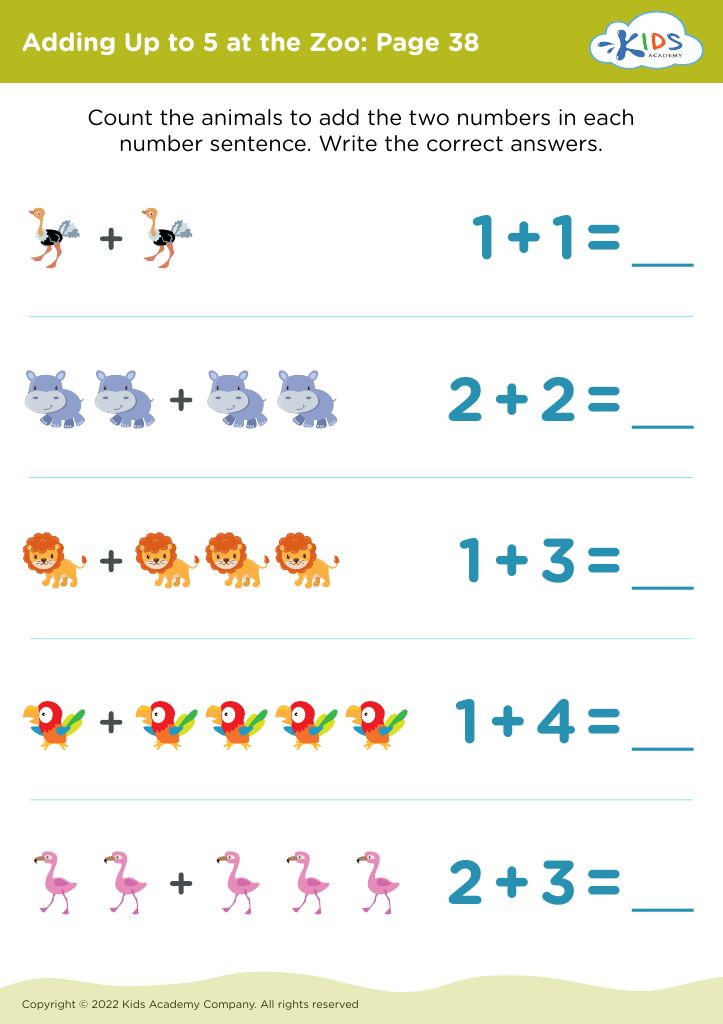
Remind your kids that adding different sets of numbers can give the same total (e.g. 2+3=5, 4+1=5). Test their understanding by asking them for more examples. Move onto the worksheet: count objects, then trace the line to the number making a total of 15.
Growing with 15 Worksheet
Worksheet
Adding Up to 5 at the Zoo: Page 38
Worksheet
One Less: Assessment 1 Worksheet
One Less: Assessment 1 Worksheet
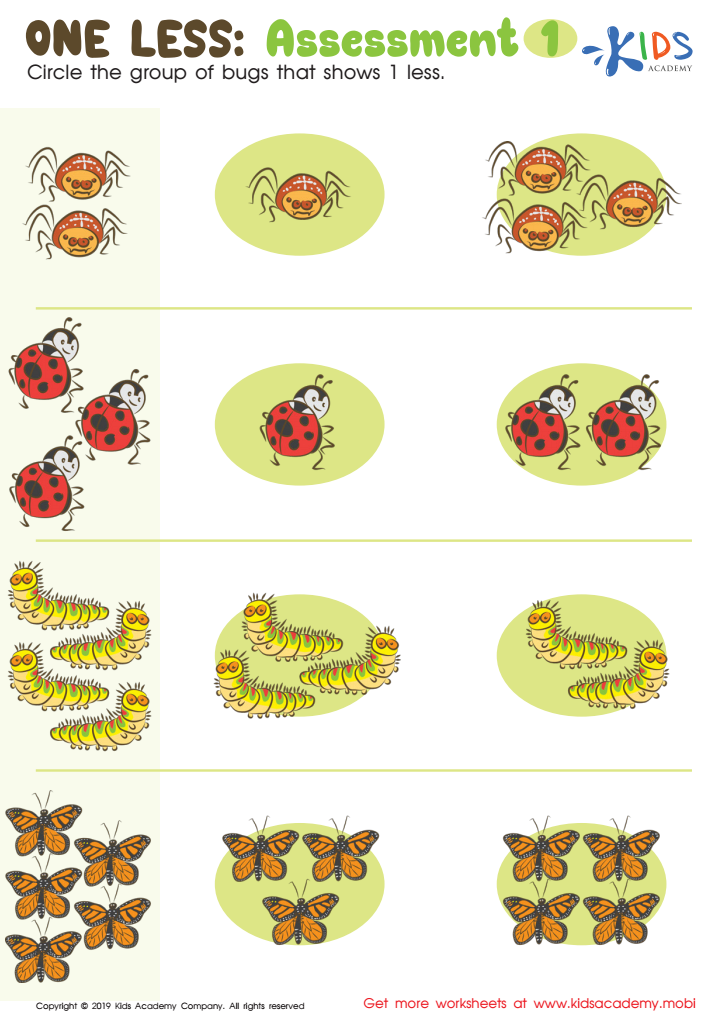
Help your kids with counting using this worksheet that has pictures of bugs! There are four different bugs and insects. Show them each one and ask them to count, then circle the group that has 1 less than the previous group. Don't worry if your kids don't like bugs - it's just a picture!
One Less: Assessment 1 Worksheet
Worksheet
Adding Up to 5 at the Zoo: Page 64
Worksheet
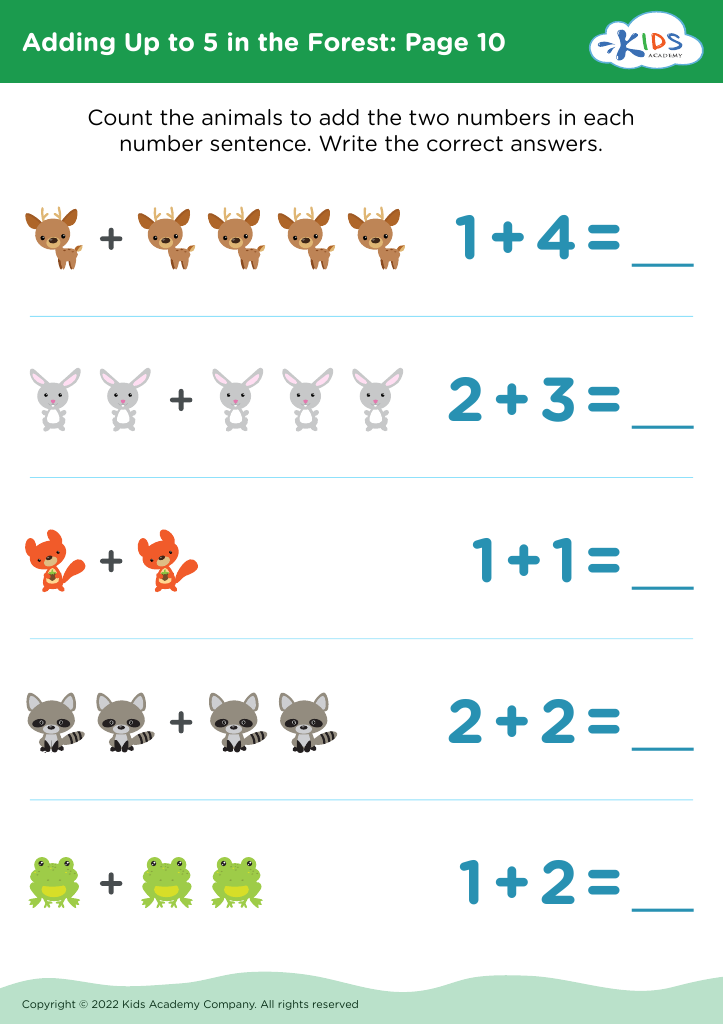
Adding Up to 5 in the Forest: Page 10
Worksheet
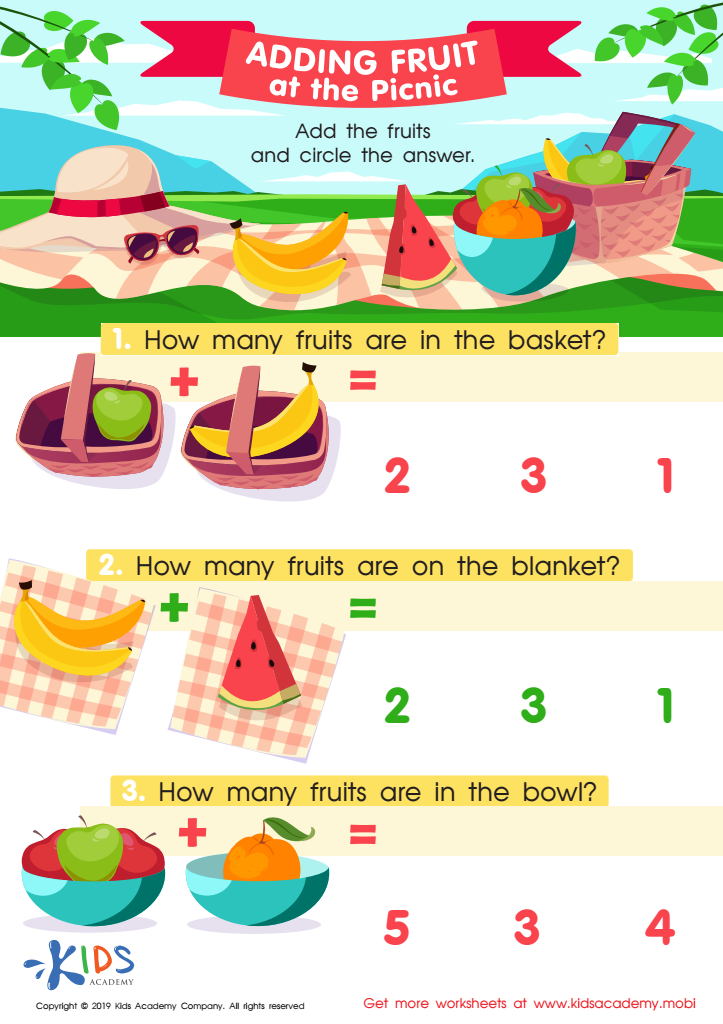
Adding Fruit at the Picnic Worksheet
Adding Fruit at the Picnic Worksheet
Picnics are a great way for the family to enjoy a fun day in the sun! Get your kids involved by having them help load the picnic basket and do this worksheet to practice their math skills while they get ready. Identify the fruits in the picture, add them up, and circle the correct answer.
Adding Fruit at the Picnic Worksheet
Worksheet
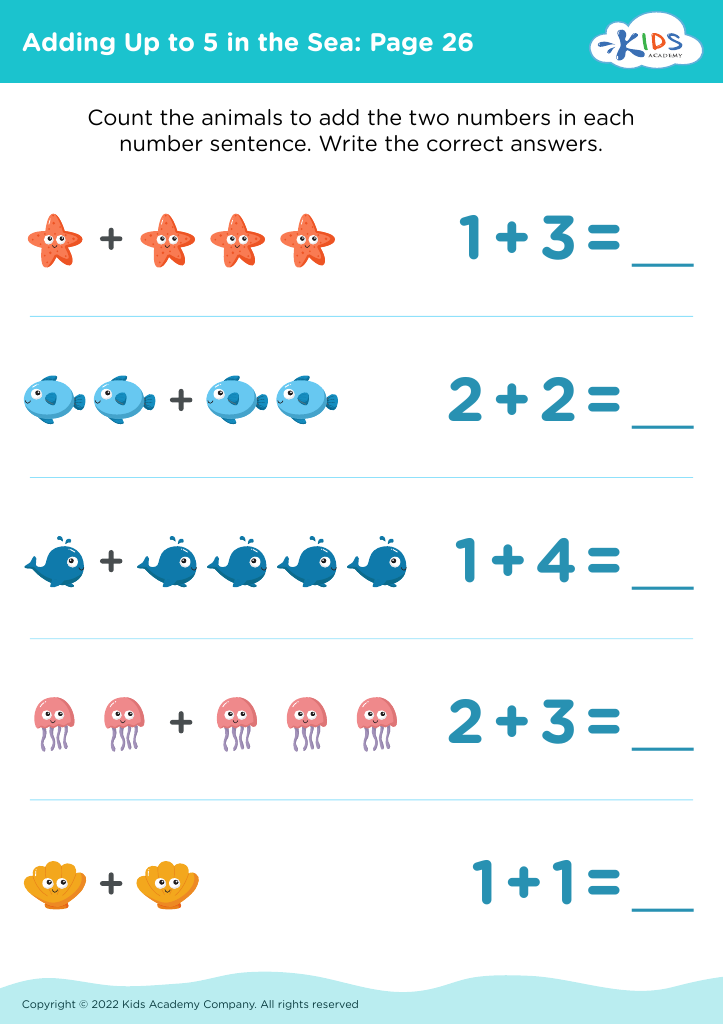
Adding Up to 5 in the Sea: Page 26
Worksheet
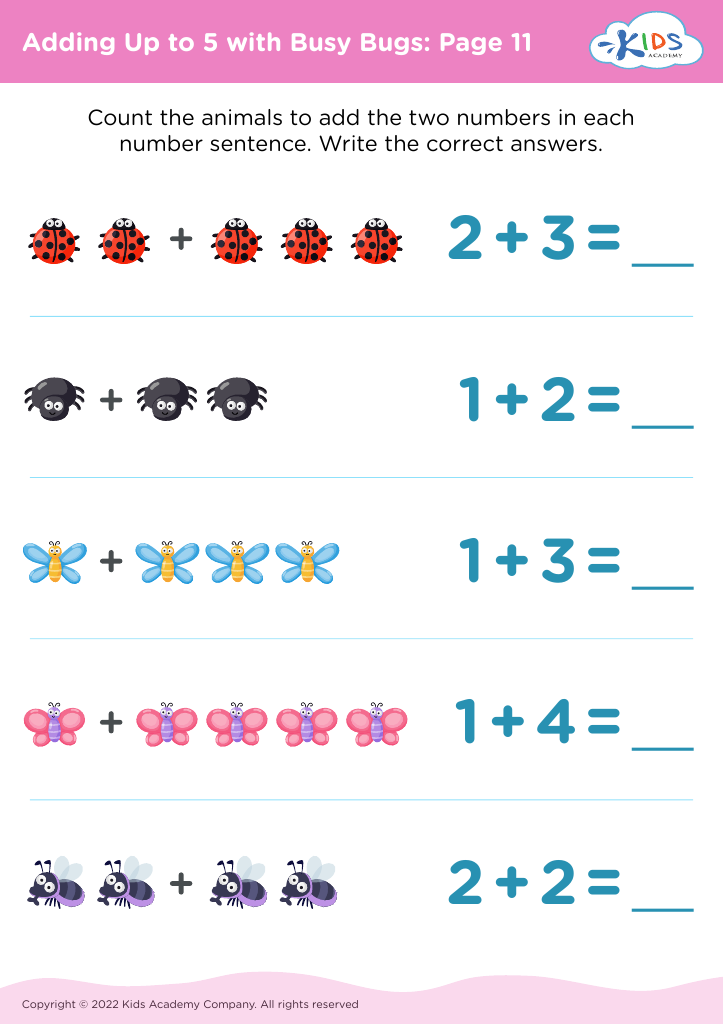
Adding Up to 5 with Busy Bugs: Page 11
Worksheet
One Less: Assessment 2 Worksheet
One Less: Assessment 2 Worksheet

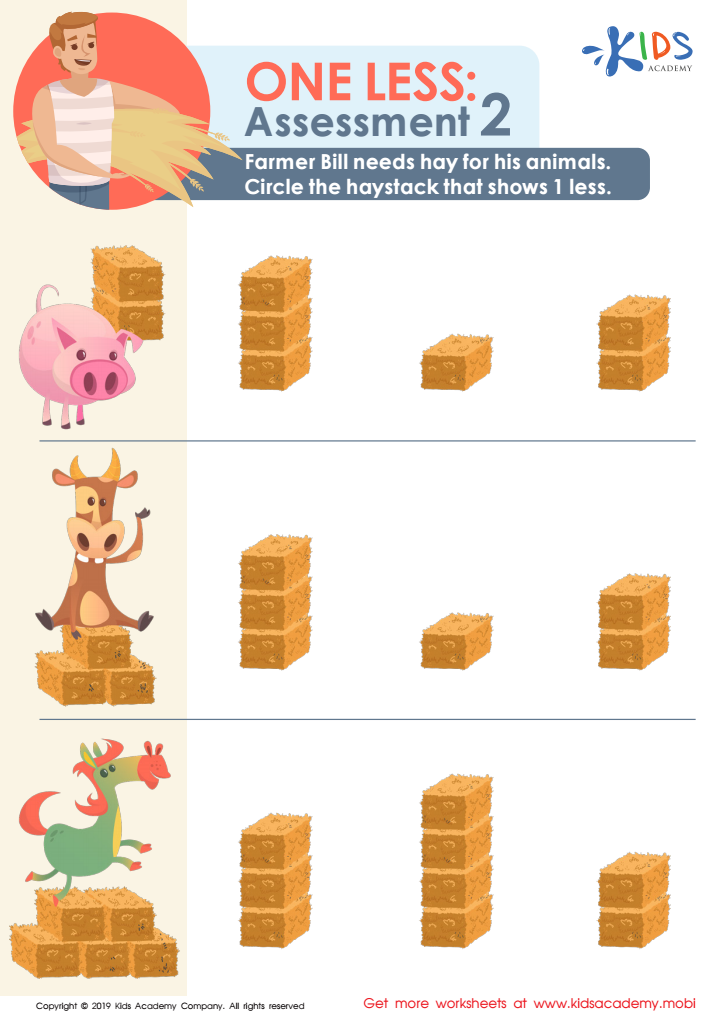
Farmers are vital to our community. They raise animals and crops which provide us with food. Kids can learn a lot by visiting a farm—ask them to name the animals and crops they saw! Farmer Bill in this worksheet needs hay. Point to the haystacks, and ask your child to circle the one with 1 less.
One Less: Assessment 2 Worksheet

Worksheet
Adding Up to 5 in the Forest: Page 57
Worksheet
Adding Up to 5 with Busy Bugs: Page 15
Worksheet


... 5 6

Counting skills, along with basic addition and subtraction, form foundational elements of a child's early mathematical understanding and cognitive development. For 4-year-olds, these skills are essential not just for academic success but also for everyday problem-solving and critical thinking.

Firstly, counting helps children grasp the concept of numbers, which is integral to recognizing patterns and sequences. This ability contributes to their capacity to learn more complex mathematical concepts later on. Furthermore, learning to add and subtract introduces them to the idea of quantifying and manipulating objects, honing their analytical skills.

Mathematical exercises, such as counting or simple arithmetic, also improve memory and attention span. Each practice session demands focus, sequential thinking, and often collaboration, fostering not only cognitive abilities but social skills as well. For instance, when kids count objects together or work in a group on basic problems, they learn essential communication and teamwork skills.

Moreover, early learners who develop confidence in math are more likely to have a positive attitude toward the subject moving forward. By caring about these skills, parents and teachers are not only setting up children for future academic success but also ensuring they possess vital life skills that apply beyond the classroom—like making fair deals, budgeting allowances, or sharing equally with friends.