Mental arithmetic Addition & Subtraction Worksheets for 4-Year-Olds
4 filtered results
-
From - To
Discover our engaging Mental Arithmetic Addition & Subtraction Worksheets designed specifically for 4-year-olds, perfect for nurturing early math skills in a fun way! These worksheets promote mental math fluency through exciting exercises that encourage children to solve simple addition and subtraction problems without relying solely on pencil-and-paper methods. Each activity supports the development of critical thinking and number recognition, making math a delightful experience. Ideal for parents and educators, these resources help to build a strong foundation in arithmetic while stimulating young minds. Explore our collection today to inspire your child's love for learning in mathematics!
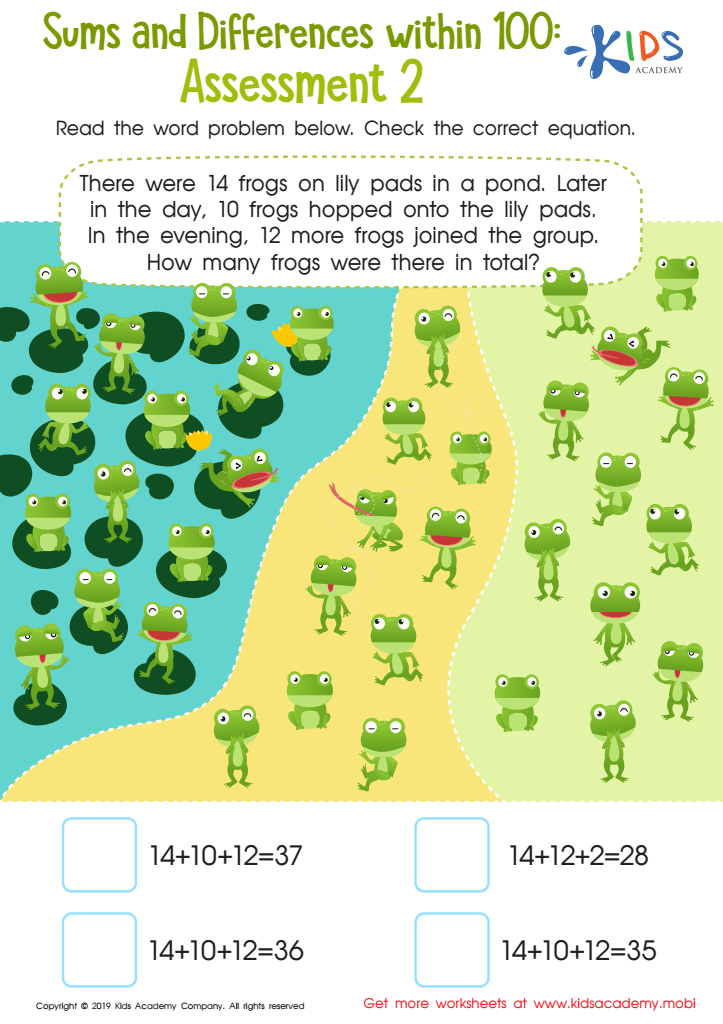
Sums and Differences Within 1 - Assessment 2 Worksheet
 Assign to My Students
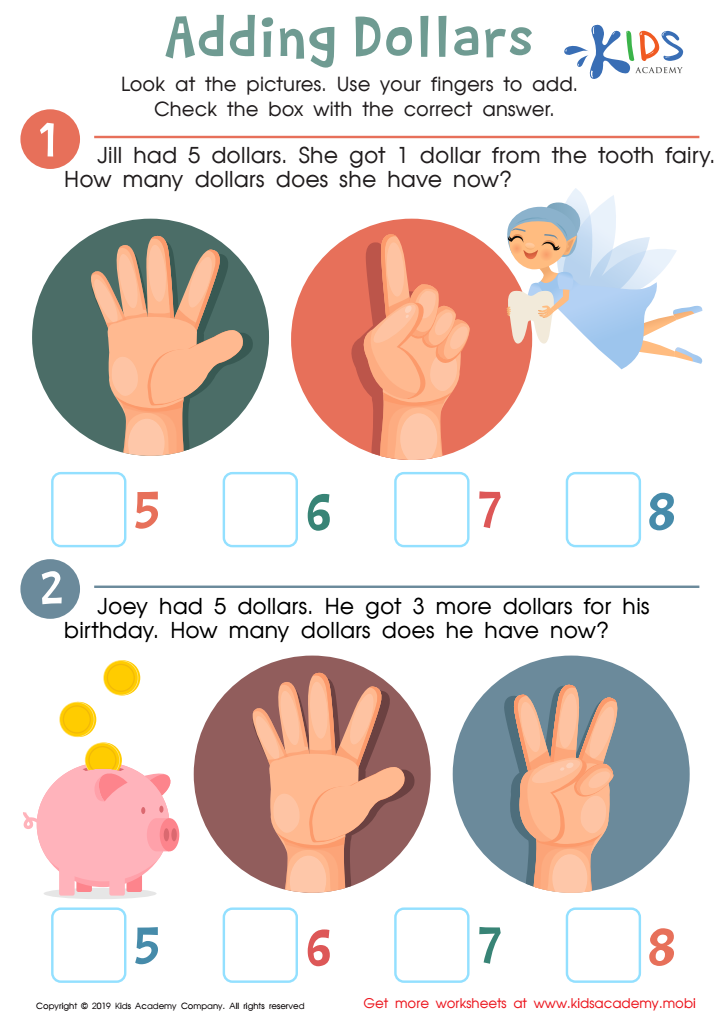
Tooth Fairy Addition Worksheet
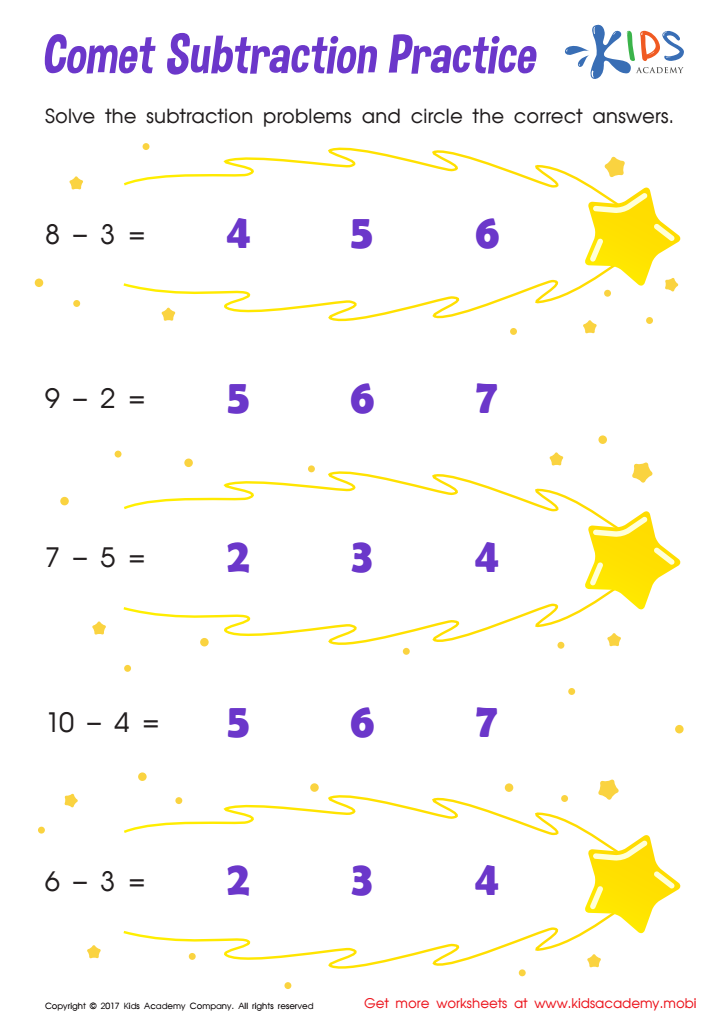
Comet Subtraction Practice Substraction Worksheet
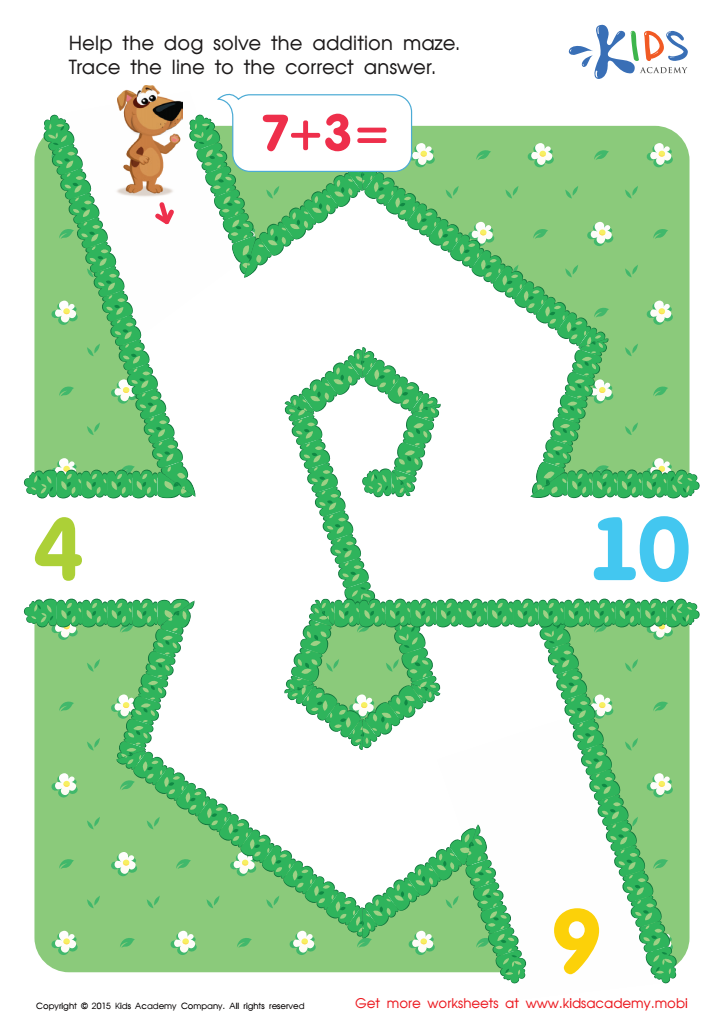
Seven Plus Three Worksheet








Mental arithmetic, particularly addition and subtraction, plays a crucial role in developing foundational math skills for 4-year-olds. Engaging young learners in these concepts fosters cognitive abilities essential for future academic success. Instead of relying solely on fingers or counting objects, encouraging mental calculation helps children develop number sense and improves their ability to visualize mathematical problems.
Moreover, practicing mental arithmetic promotes critical thinking and problem-solving skills. Children learn to manipulate numbers and think abstractly, which forms the basis for more complex mathematics later on. This not only enhances their mathematical understanding but also contributes to overall brain development.
Additionally, mental arithmetic boosts confidence. As children successfully perform simple addition and subtraction in their heads, they feel a sense of accomplishment, which motivates them to explore more challenging concepts. These skills also support social interaction, enabling children to engage in games and activities that involve counting, sharing, and comparing quantities.
In summary, fostering mental arithmetic in young learners sets the stage for future learning, enhances cognitive skills, and builds confidence, making it essential for parents and teachers to prioritize these activities in early childhood education.








