Nature awareness Addition & Subtraction Worksheets for 4-Year-Olds
8 filtered results
-
From - To
Enhance your child's math skills while fostering a love for nature with our Nature Awareness Addition & Subtraction Worksheets for 4-Year-Olds. These worksheets offer a unique blend of math practice and environmental education, captivating young learners with beautiful illustrations and engaging nature-themed problems. Children will practice basic addition and subtraction within a context that promotes nature awareness, such as counting animals, plants, or natural objects. Ideal for homeschool, classroom, or extra practice, our worksheets invite kids to explore and understand the world around them while mastering essential math skills. Cultivate curiosity, learning, and a connection to nature today!
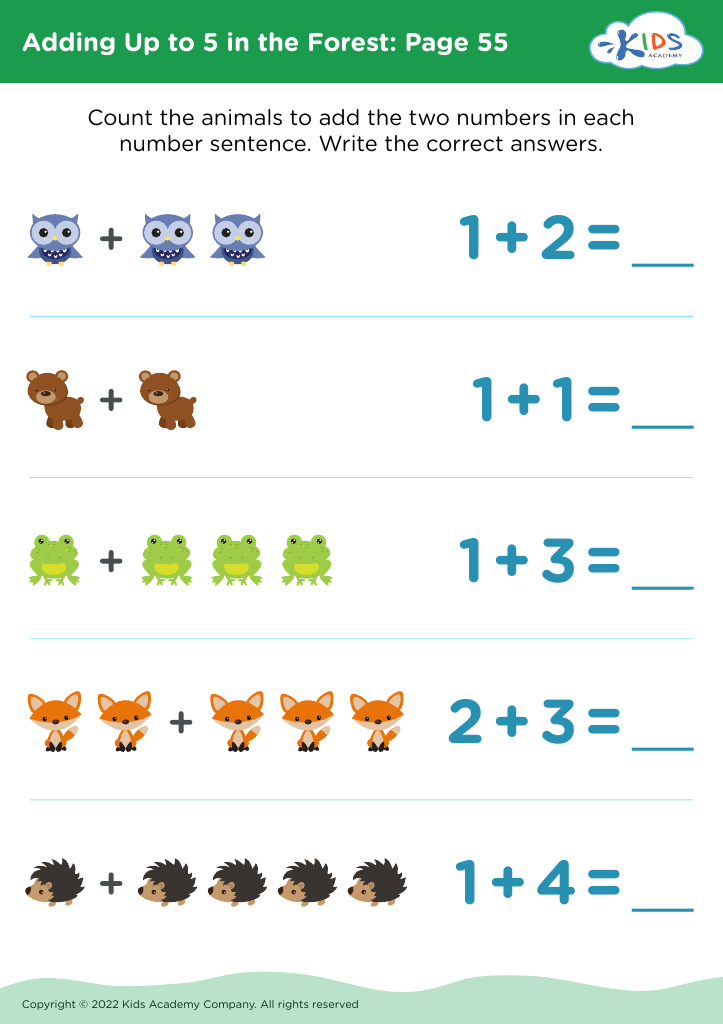
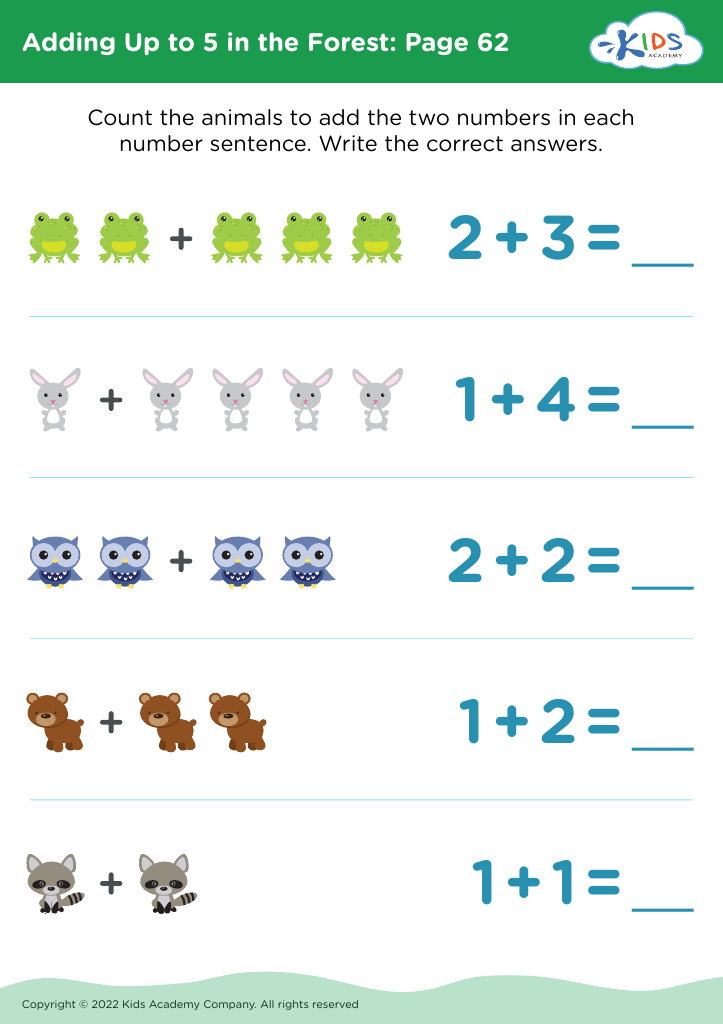
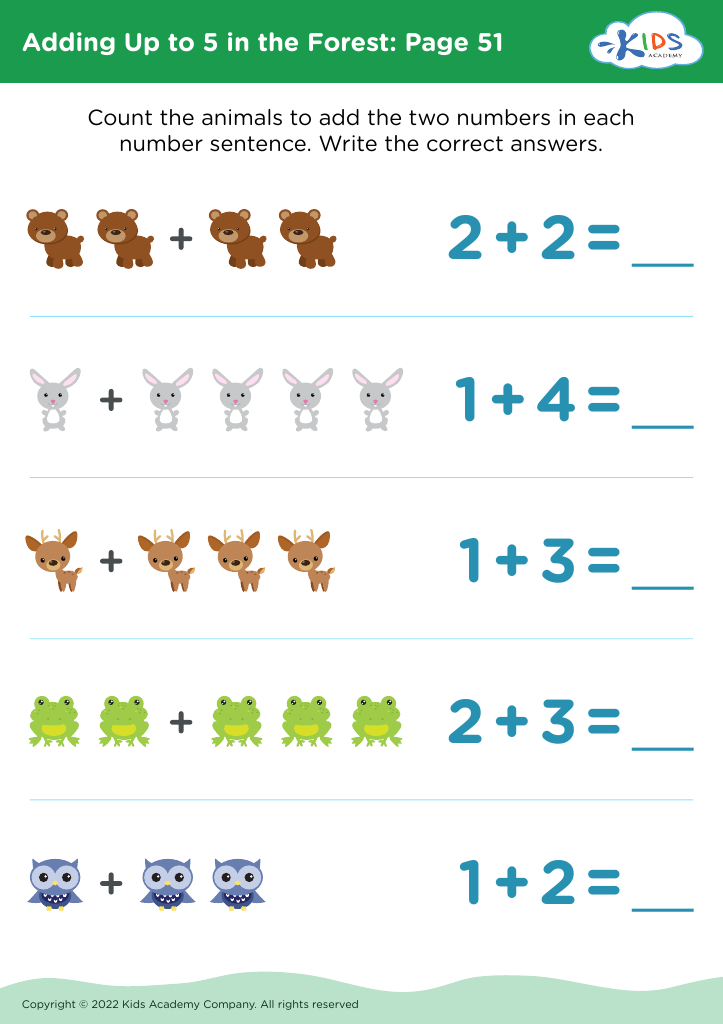
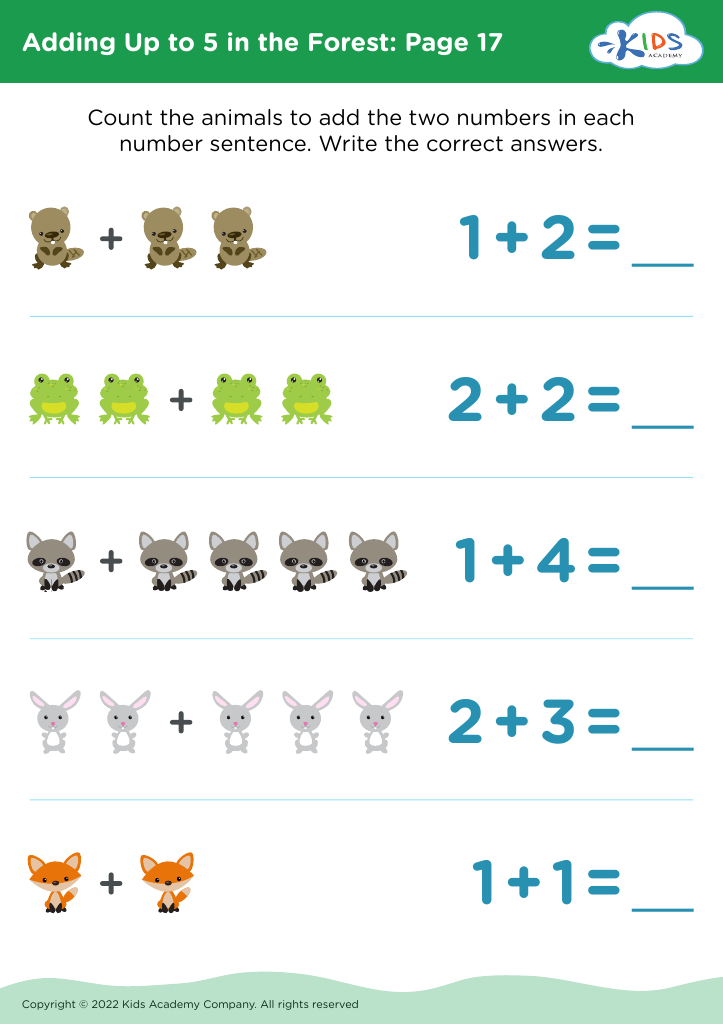
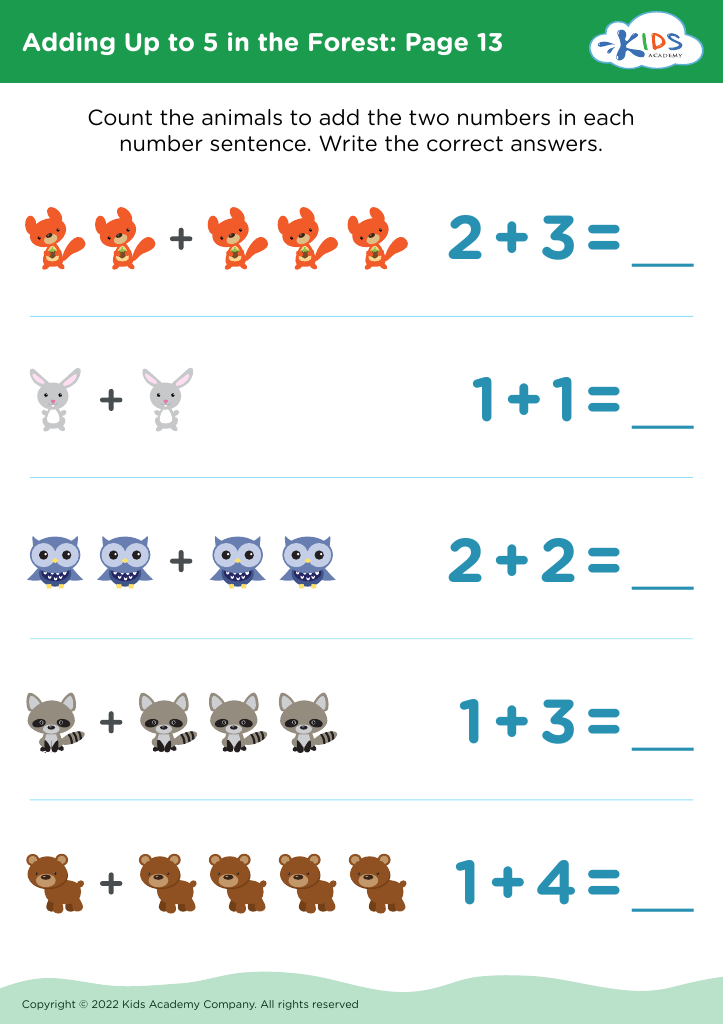
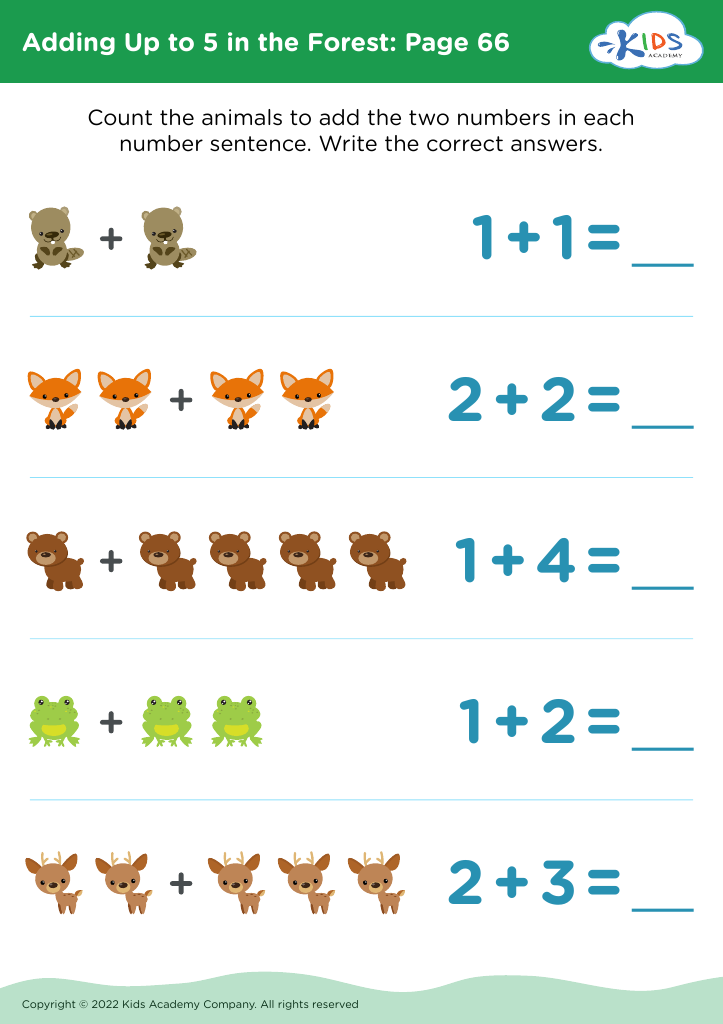
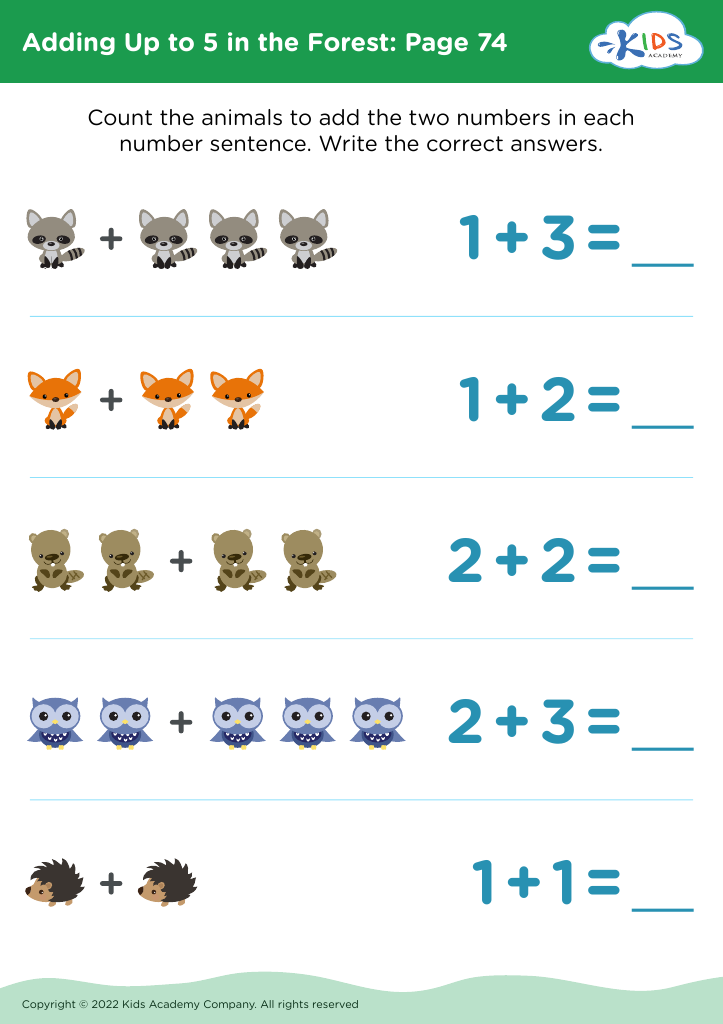
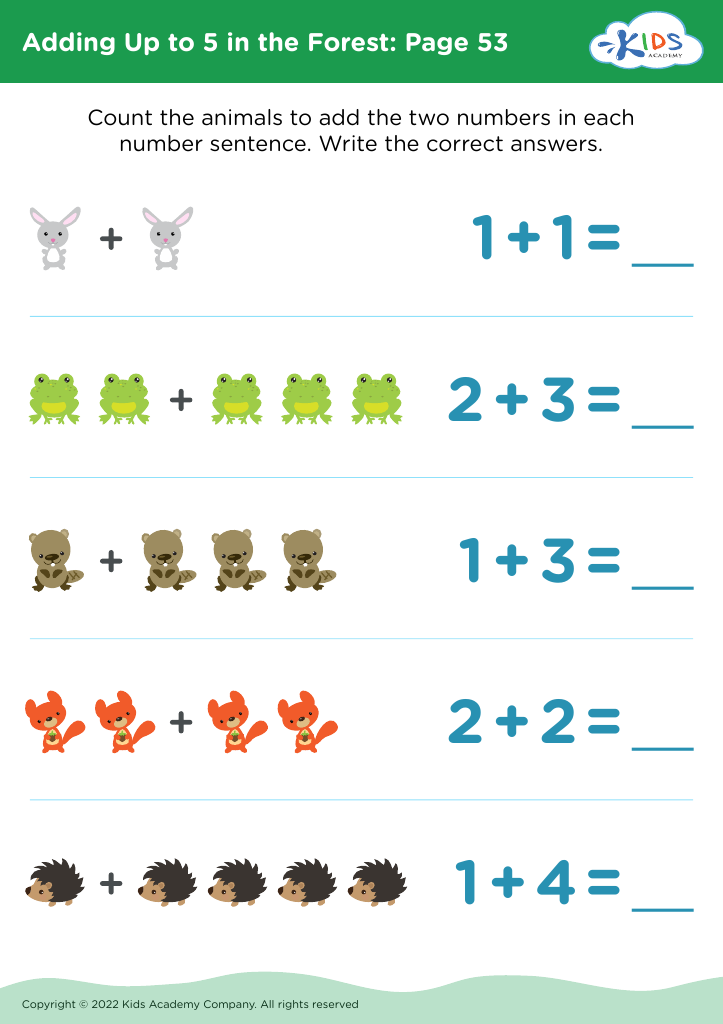








Introducing nature awareness alongside addition and subtraction to 4-year-olds is pivotal for holistic early childhood development. Firstly, nature serves as a dynamic, sensory-rich classroom that engages young children and makes learning enjoyable. Counting leaves, pebbles, or birds can turn abstract concepts of addition and subtraction into tangible, meaningful experiences. This practical application solidifies fundamental math skills, making them more memorable and less intimidating.
Moreover, combining nature with math promotes environmental stewardship early, instilling in young learners an appreciation for the world around them. This early exposure nurtures curiosity and respect for nature, ensuring they grow up to be more conscientious and responsible adults.
Additionally, nature-based learning fosters critical thinking and problem-solving skills. When children figure out how many petals are on a flower or compare the number of ants on different rocks, they are engaging in fundamental cognitive activities essential for broader academic success.
Finally, physical activity tied to outdoor learning contributes to better health and fitness. Running around the park and interacting with natural elements improve their motor skills and overall well-being, creating a strong mind-body connection critical for learning.
Thus, integrating nature awareness with basic math skills lays a multifaceted foundation that benefits young learners academically, personally, and environmentally.








