Check out this FREE Trial Lesson on Addition for age 4!

Short and Long Vowel Sort

Favorites
With answer key
Interactive
  • 4
  • Basic Addition Skills
  • Addition
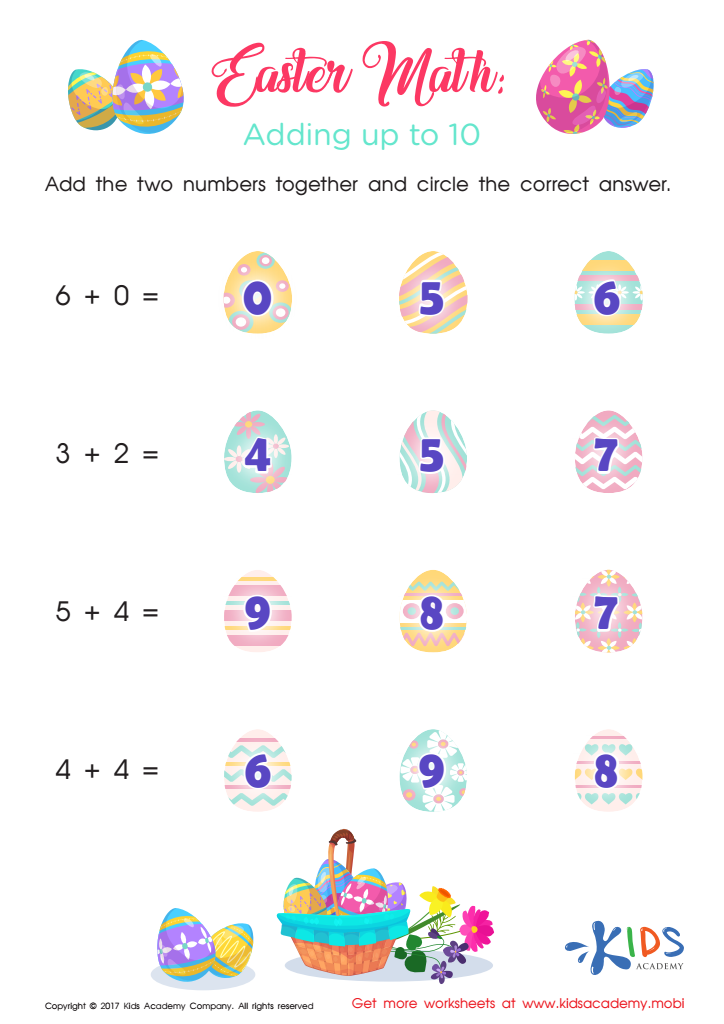
Addition up to 10 worksheet

Addition Up To 10 Worksheet

This spring-themed worksheet helps your child master addition up to 10. Its bright colors and fun activities make it an enjoyable way to improve math skills.
Addition Up To 10 Worksheet
Worksheet
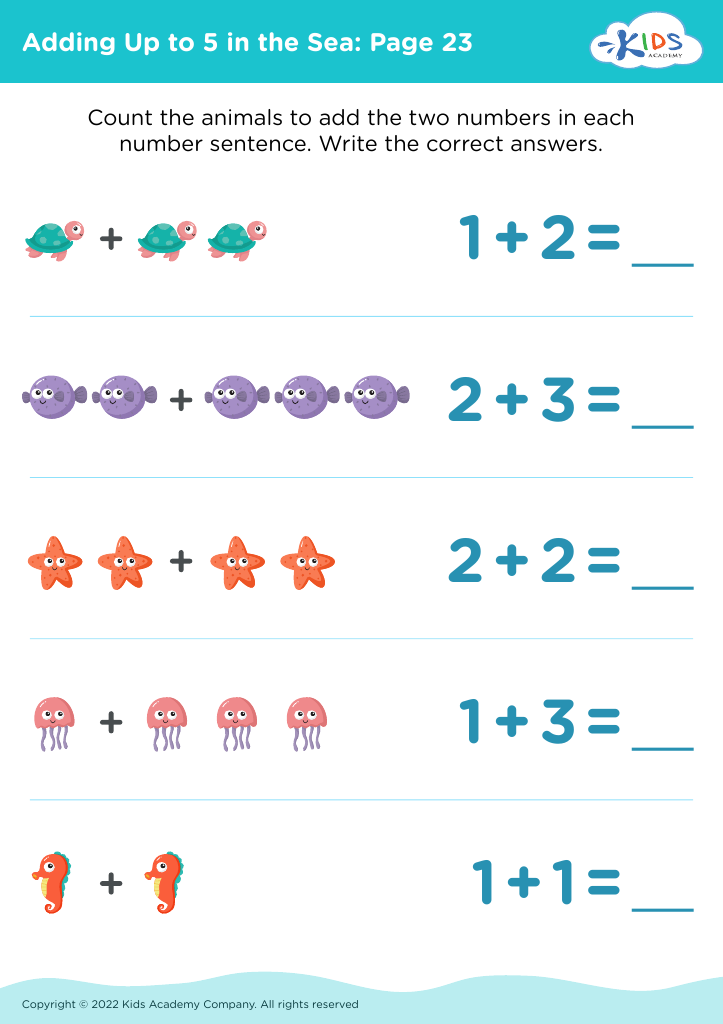
Adding Up to 5 in the Sea: Page 23
Worksheet
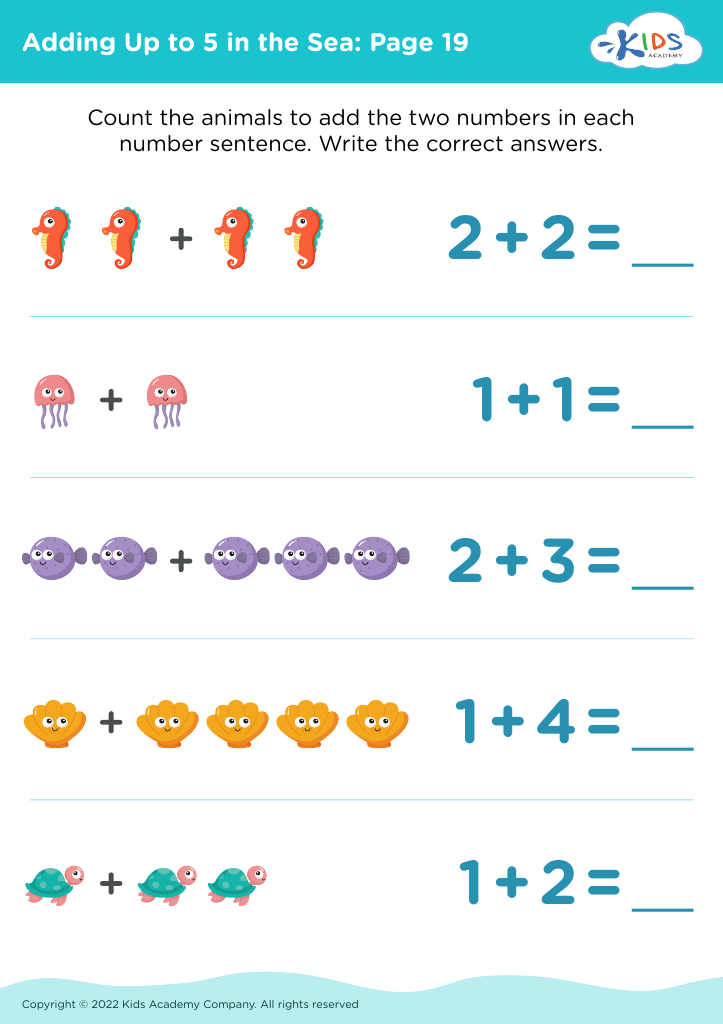
Adding Up to 5 in the Sea: Page 19
Worksheet
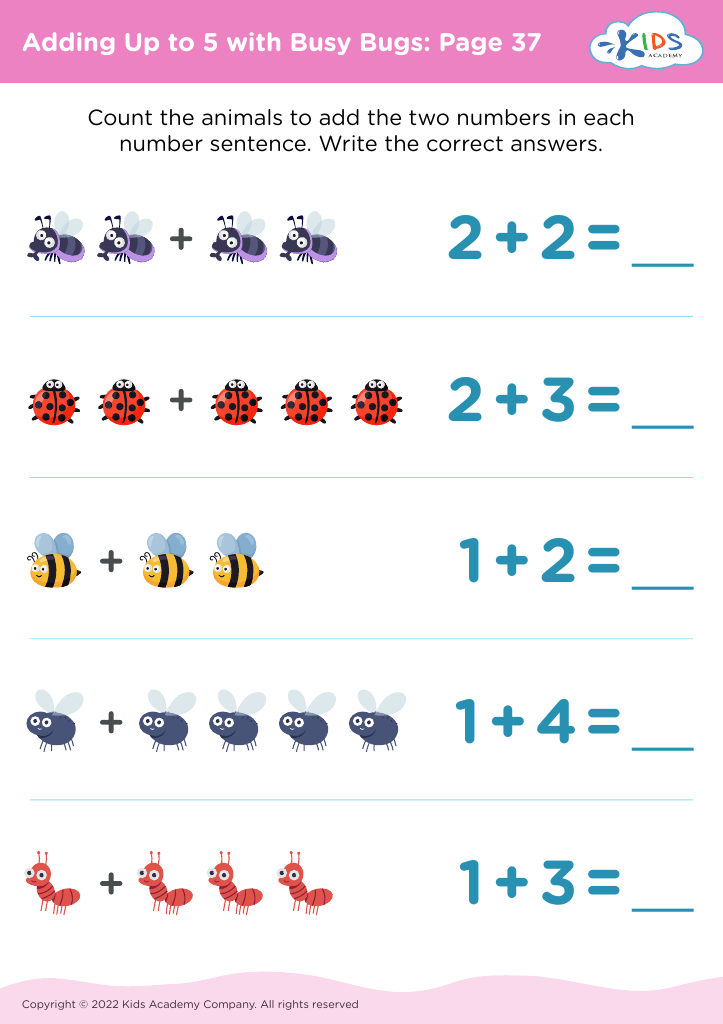
Adding Up to 5 with Busy Bugs: Page 37
Worksheet
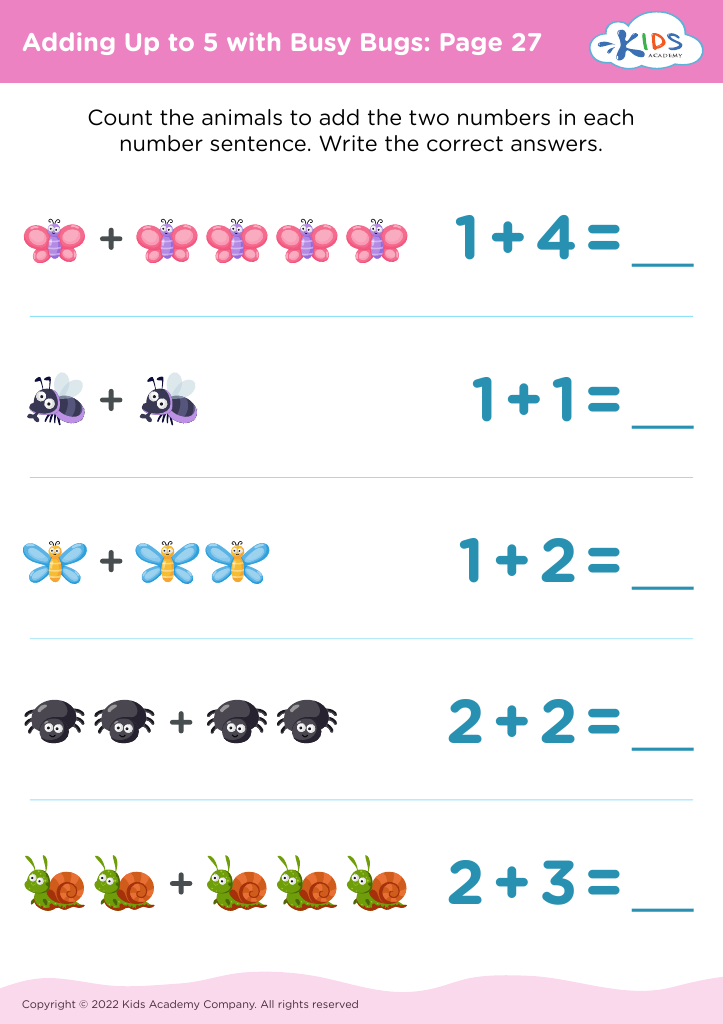
Adding Up to 5 with Busy Bugs: Page 27
Worksheet
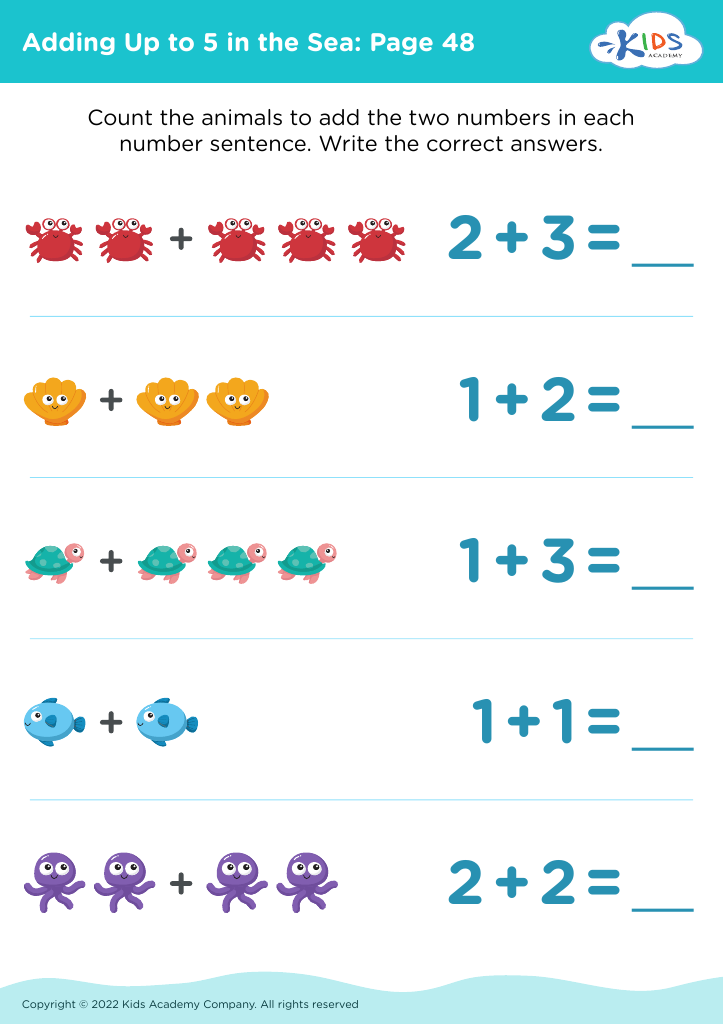
Adding Up to 5 in the Sea: Page 48
Worksheet
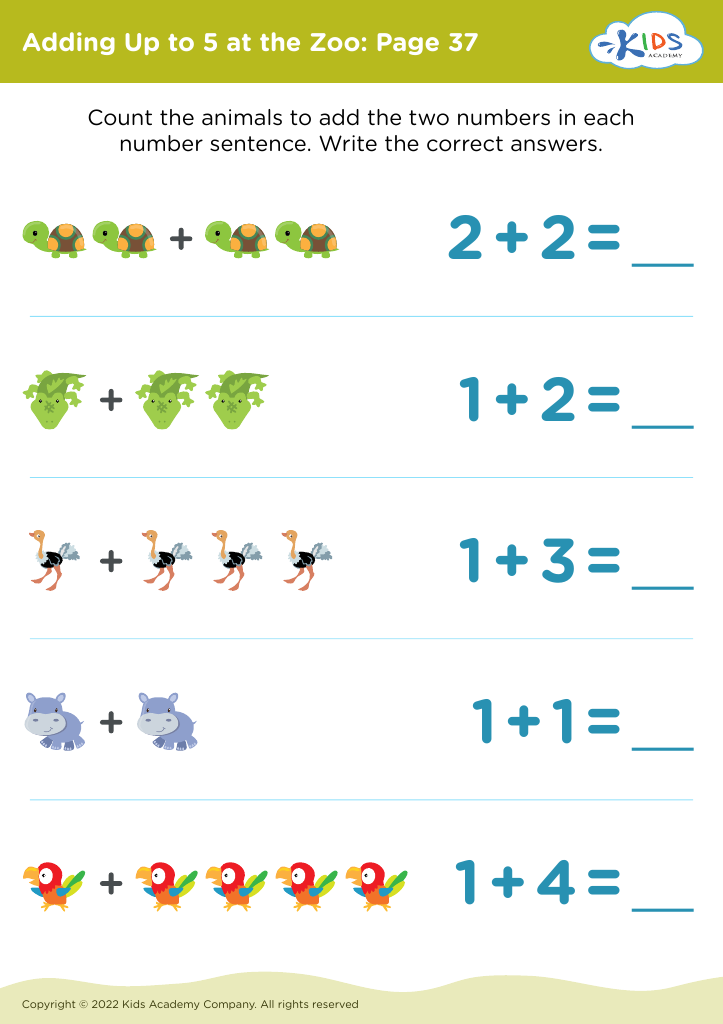
Adding Up to 5 at the Zoo: Page 37
Worksheet
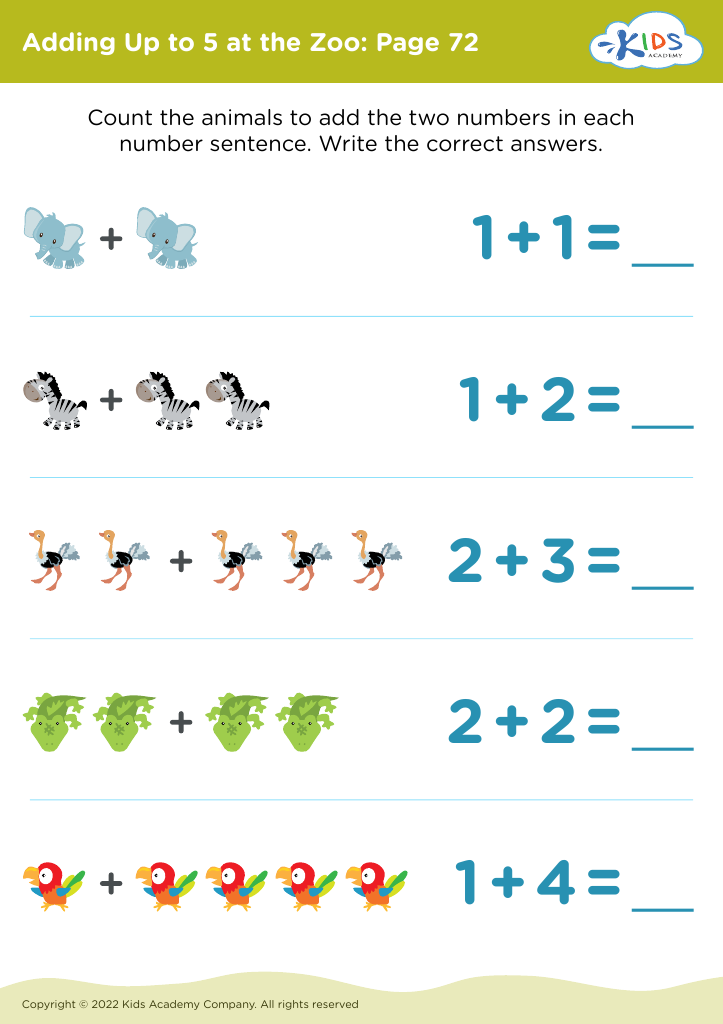
Adding Up to 5 at the Zoo: Page 72
Worksheet
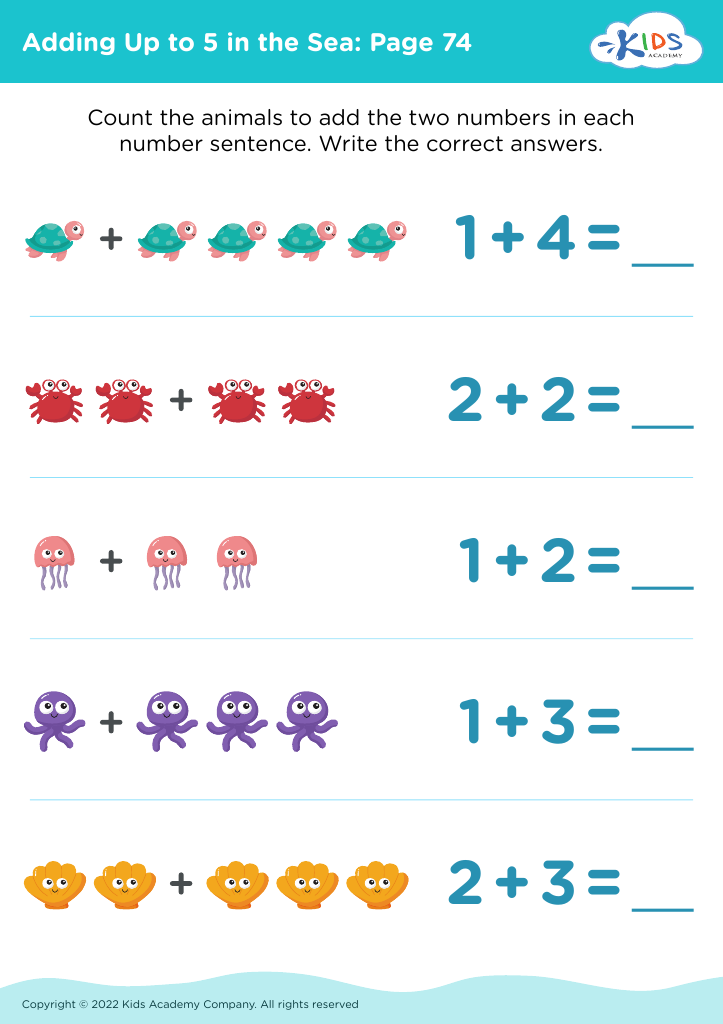
Adding Up to 5 in the Sea: Page 74
Worksheet
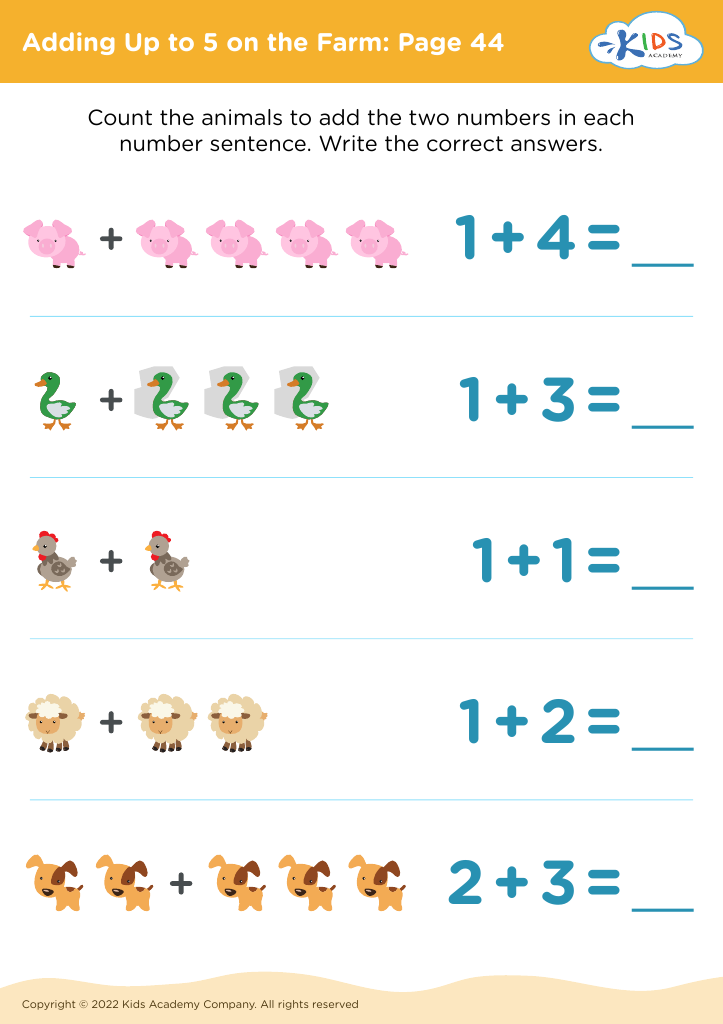
Adding Up to 5 on the Farm: Page 44
Worksheet
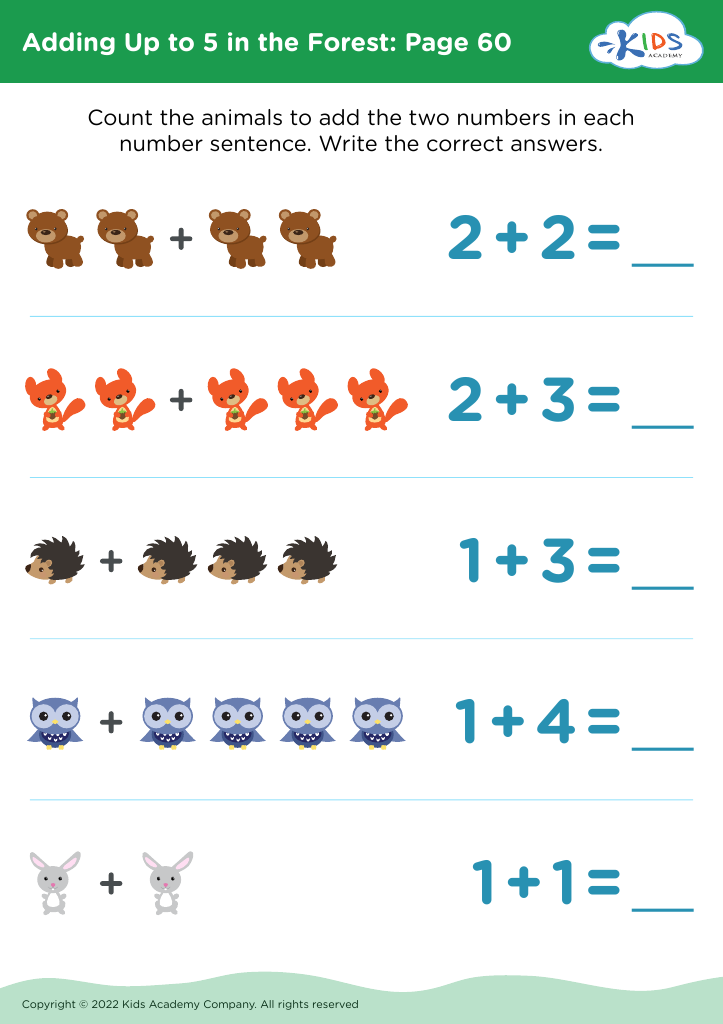
Adding Up to 5 in the Forest: Page 60
Worksheet
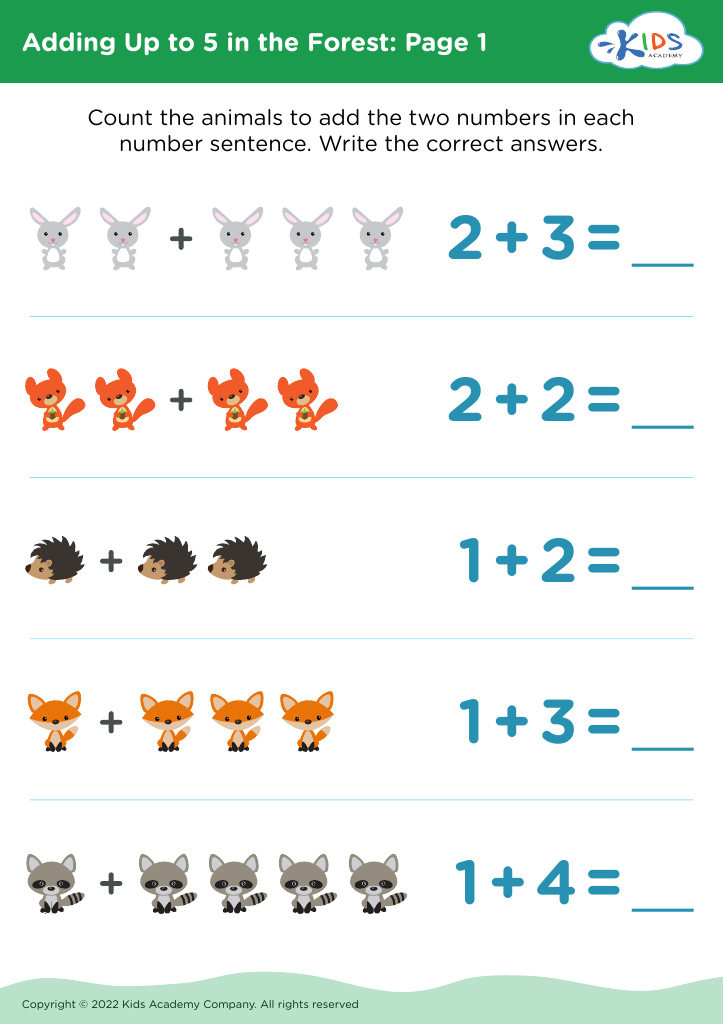
Adding Up to 5 in the Forest: Page 1
Worksheet
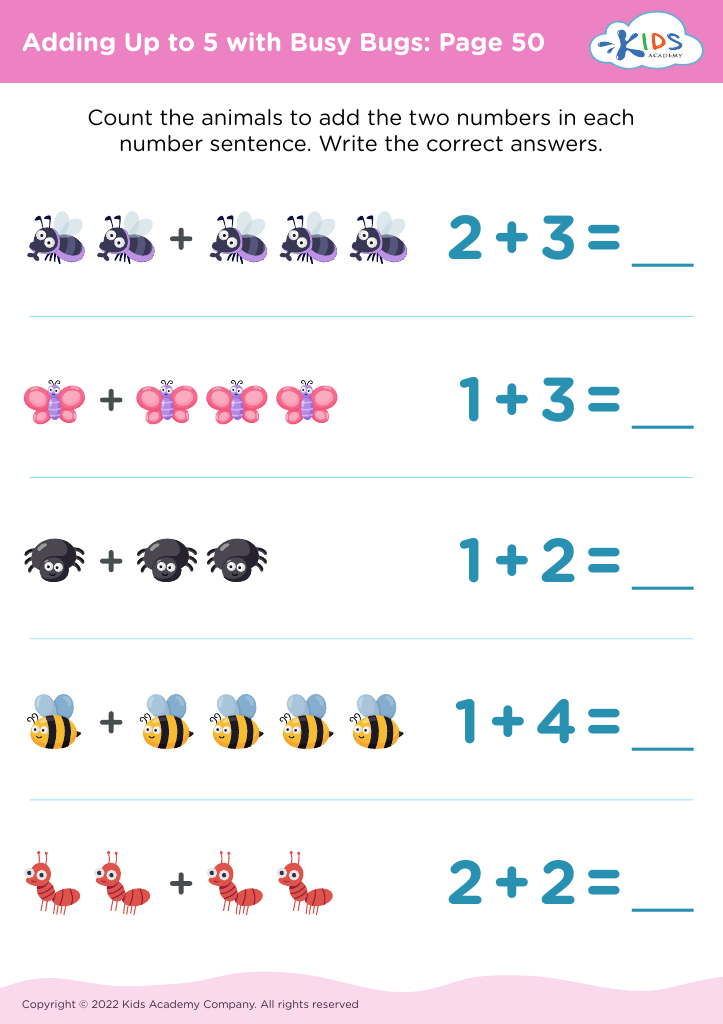
Adding Up to 5 with Busy Bugs: Page 50
Worksheet
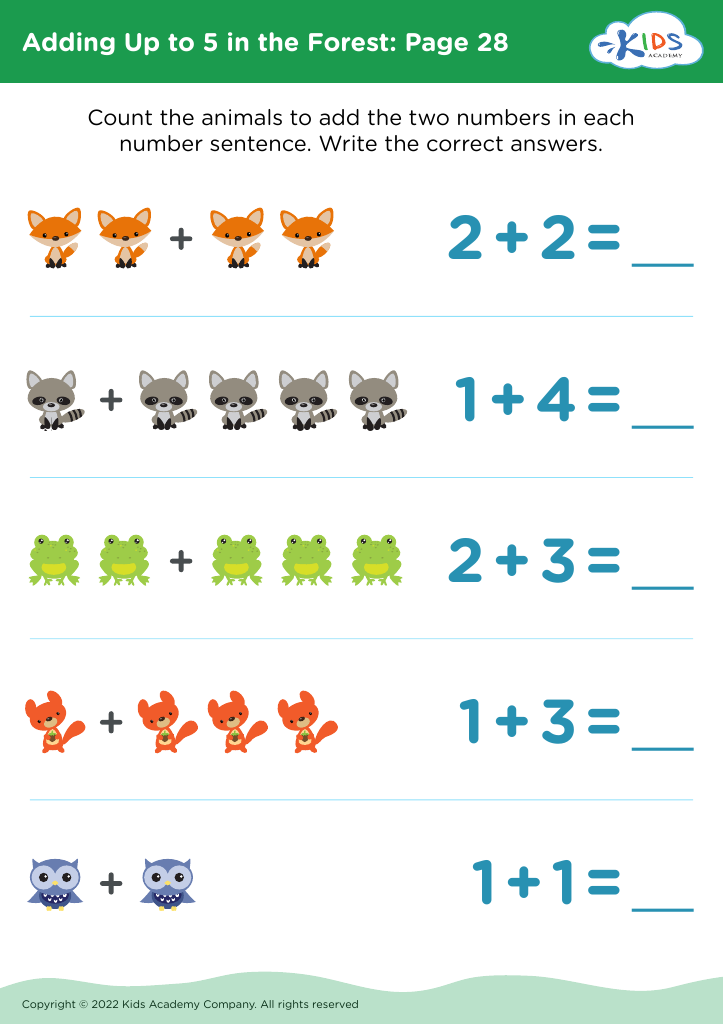
Adding Up to 5 in the Forest: Page 28
Worksheet
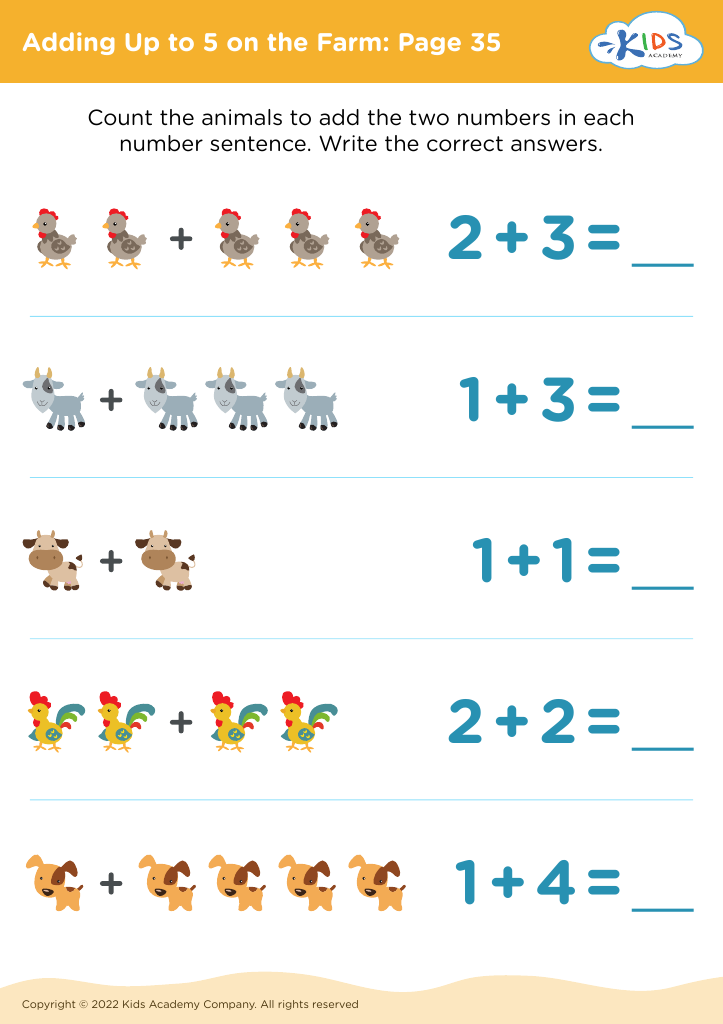
Adding Up to 5 on the Farm: Page 35
Worksheet
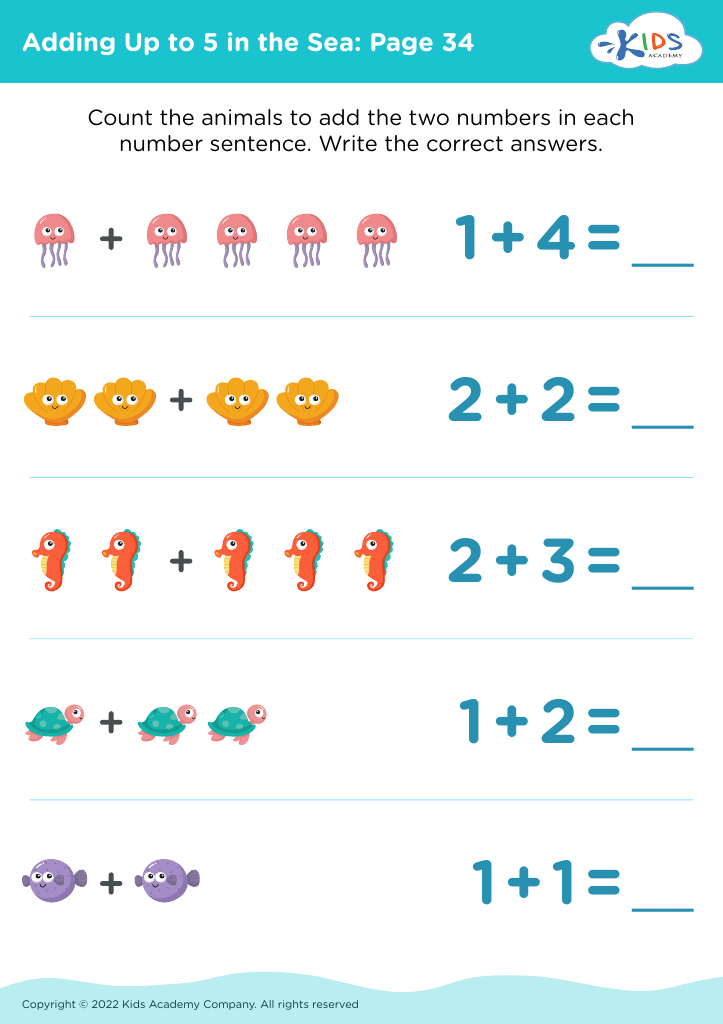
Adding Up to 5 in the Sea: Page 34
Worksheet
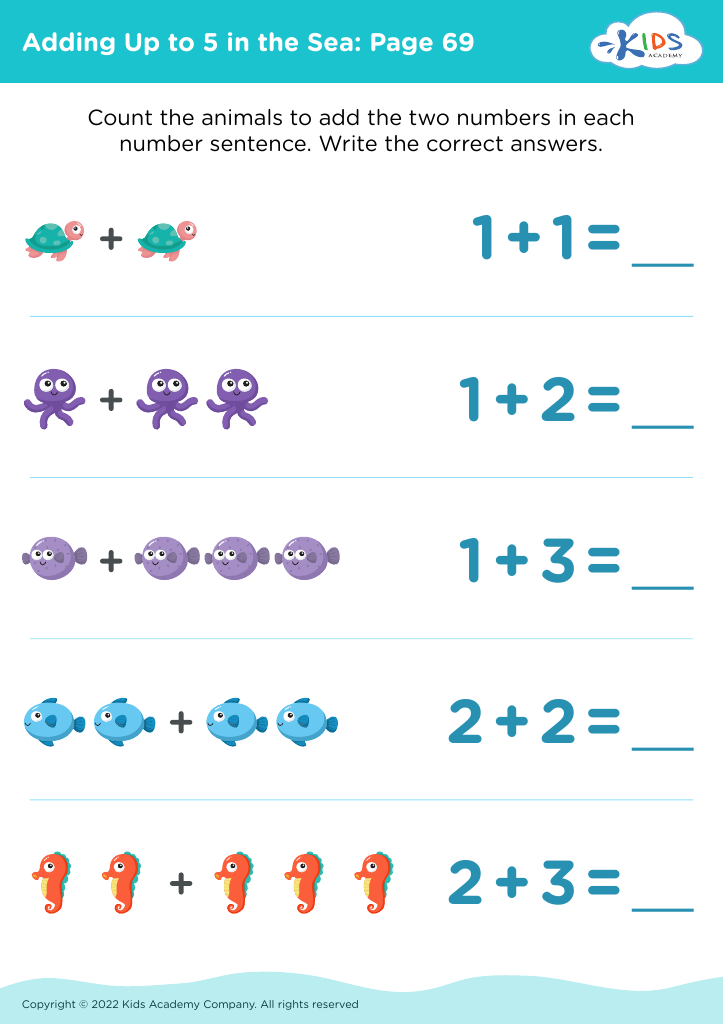
Adding Up to 5 in the Sea: Page 69
Worksheet
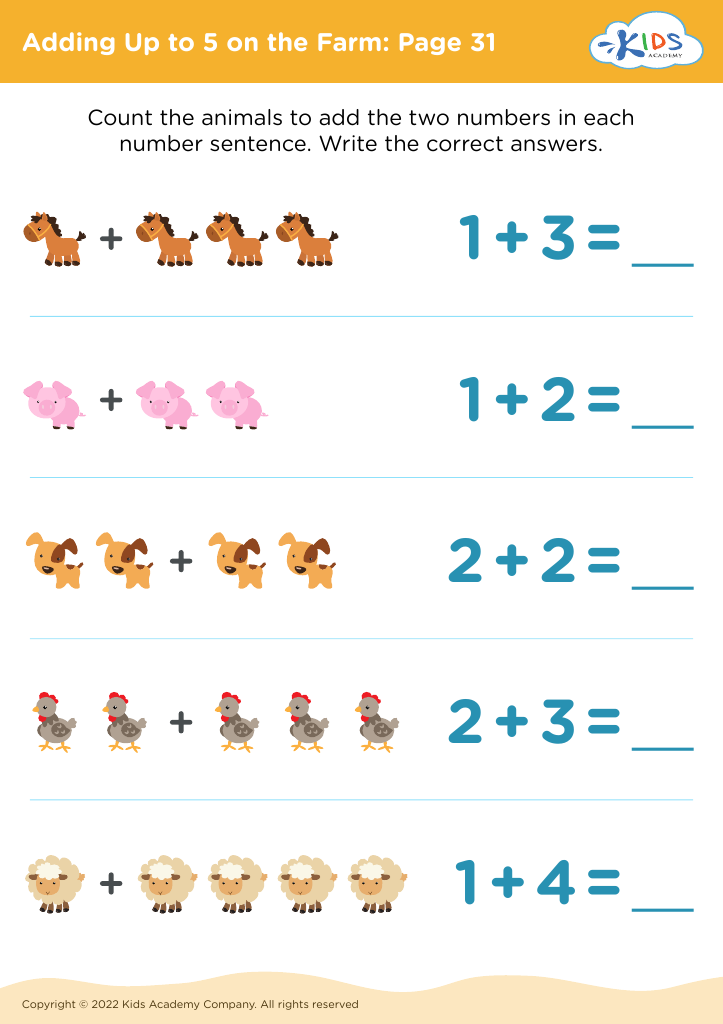
Adding Up to 5 on the Farm: Page 31
Worksheet
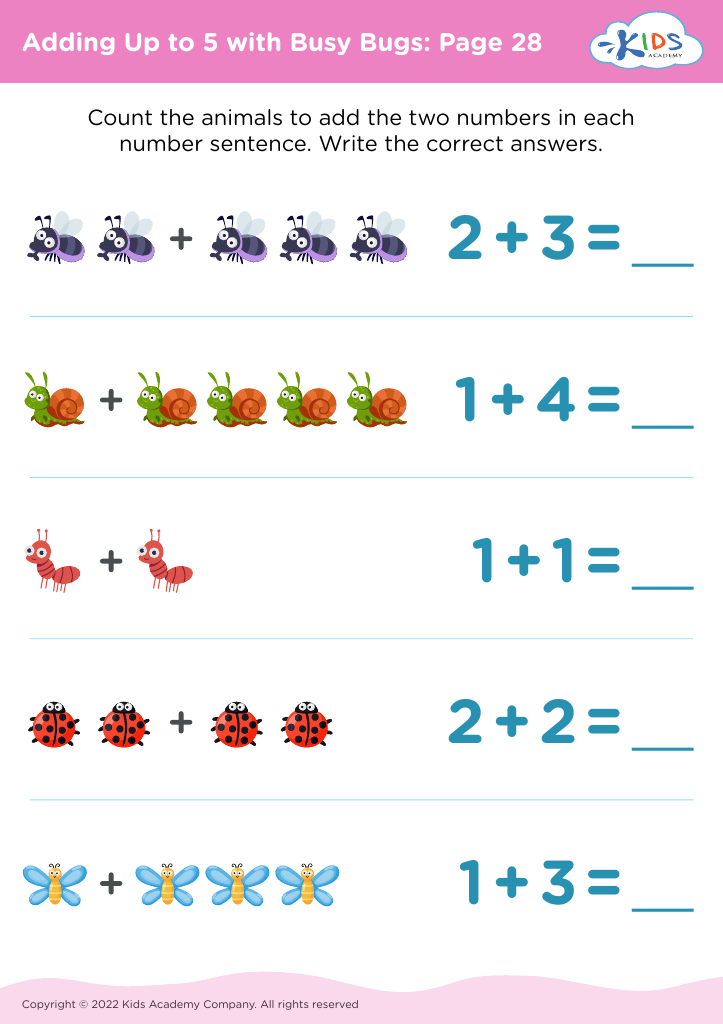
Adding Up to 5 with Busy Bugs: Page 28
Worksheet
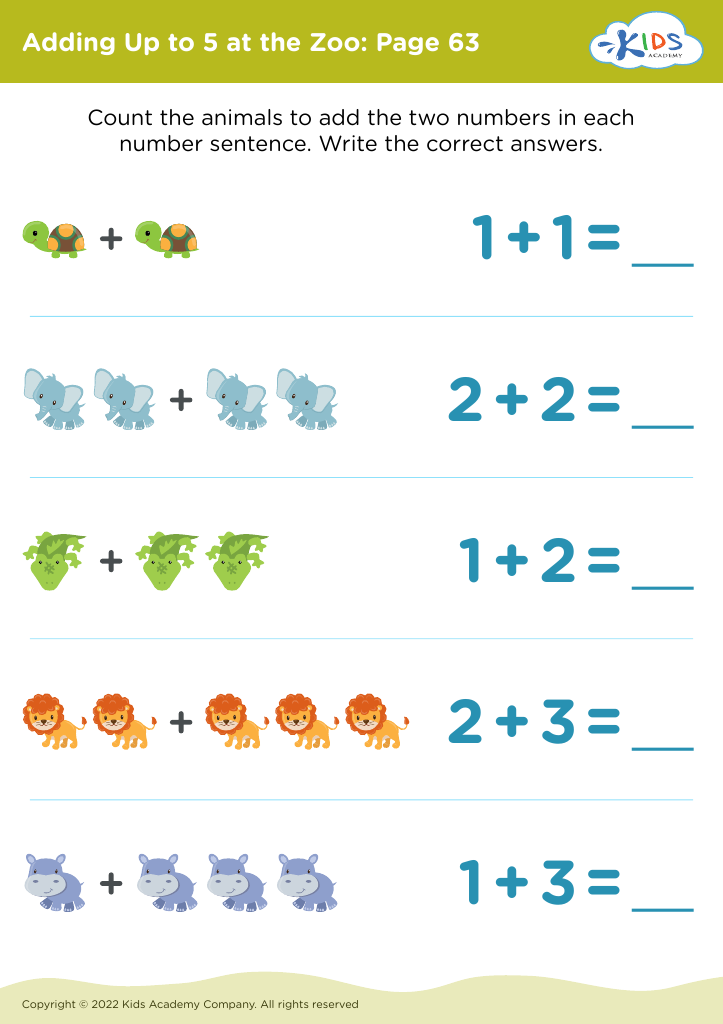
Adding Up to 5 at the Zoo: Page 63
Worksheet
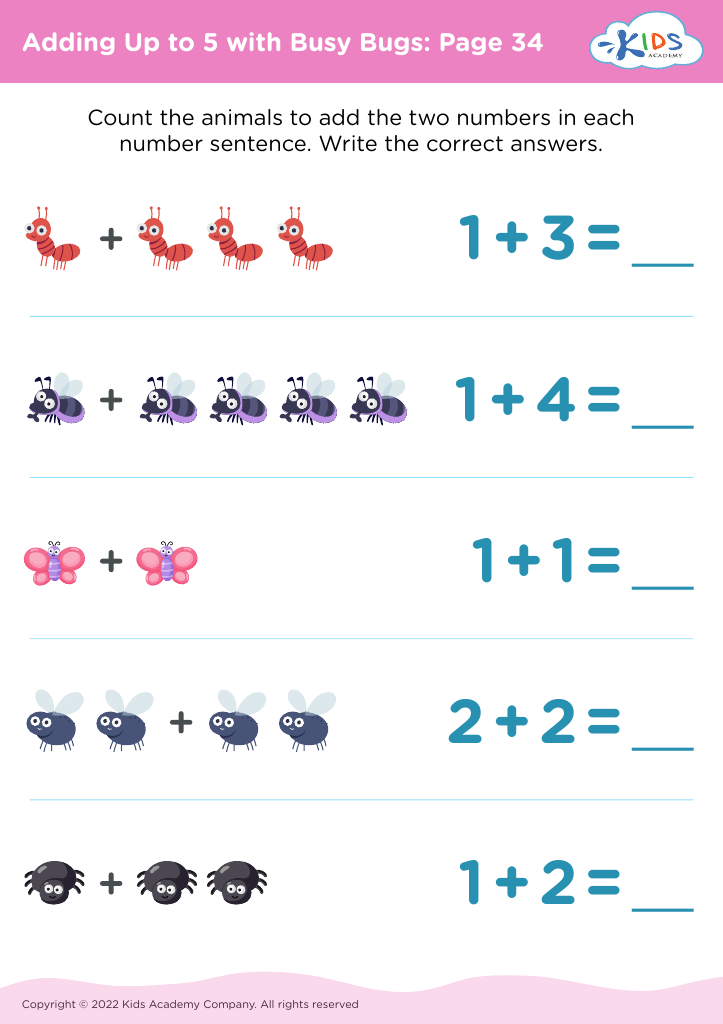
Adding Up to 5 with Busy Bugs: Page 34
Worksheet
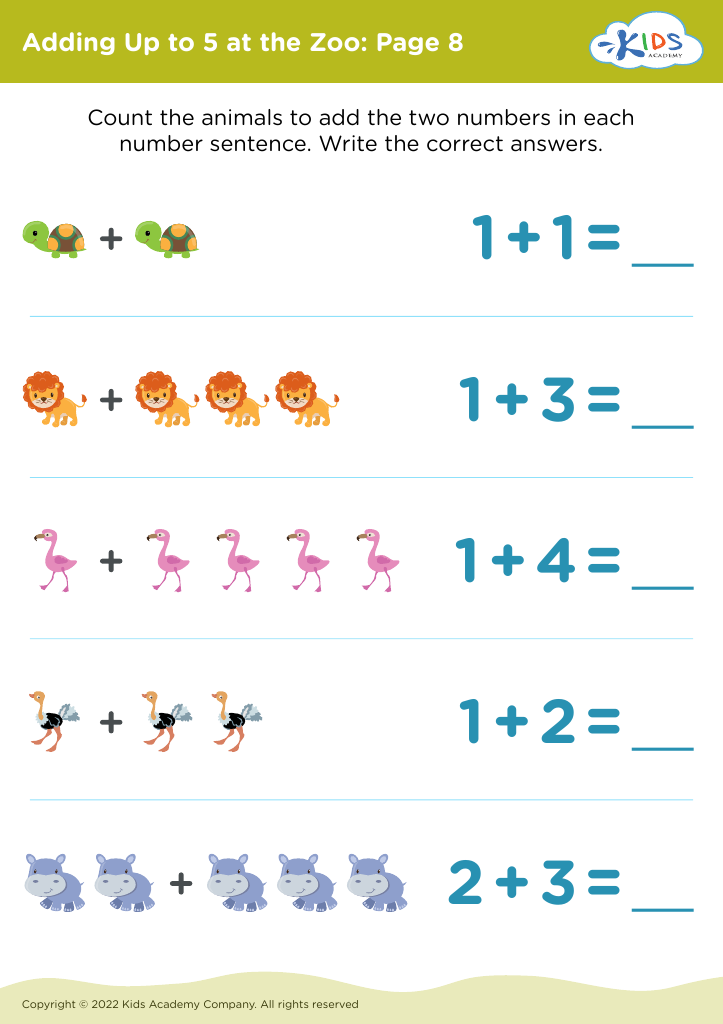
Adding Up to 5 at the Zoo: Page 8

Adding Up to 5 at the Zoo: Page 8

Adding Up to 5 at the Zoo: Page 8
Worksheet
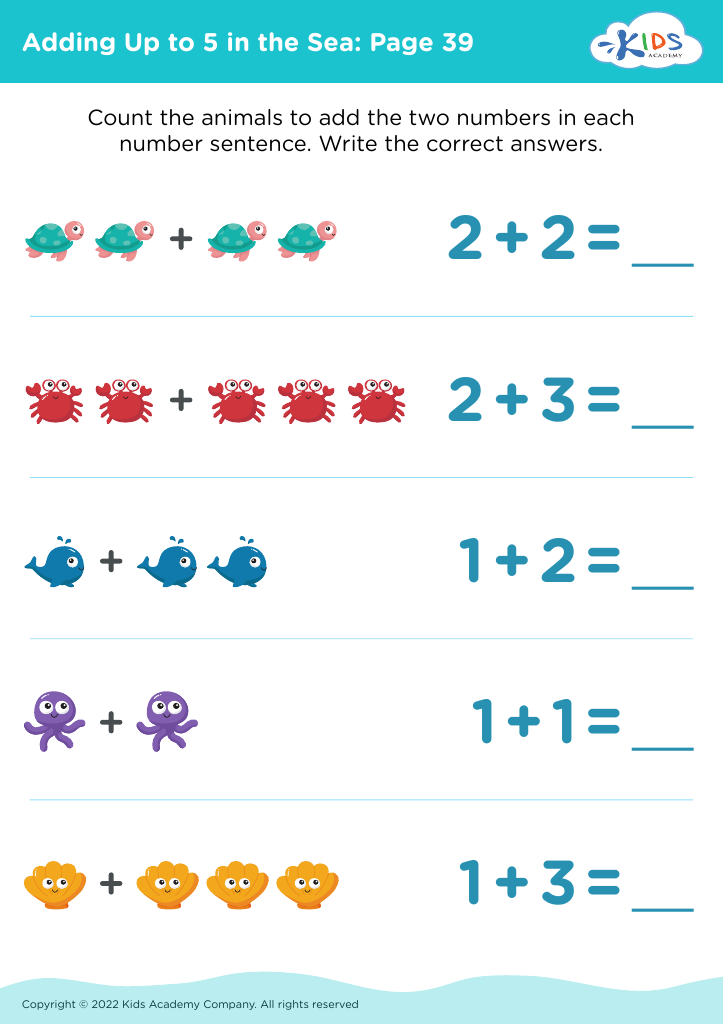
Adding Up to 5 in the Sea: Page 39
Worksheet
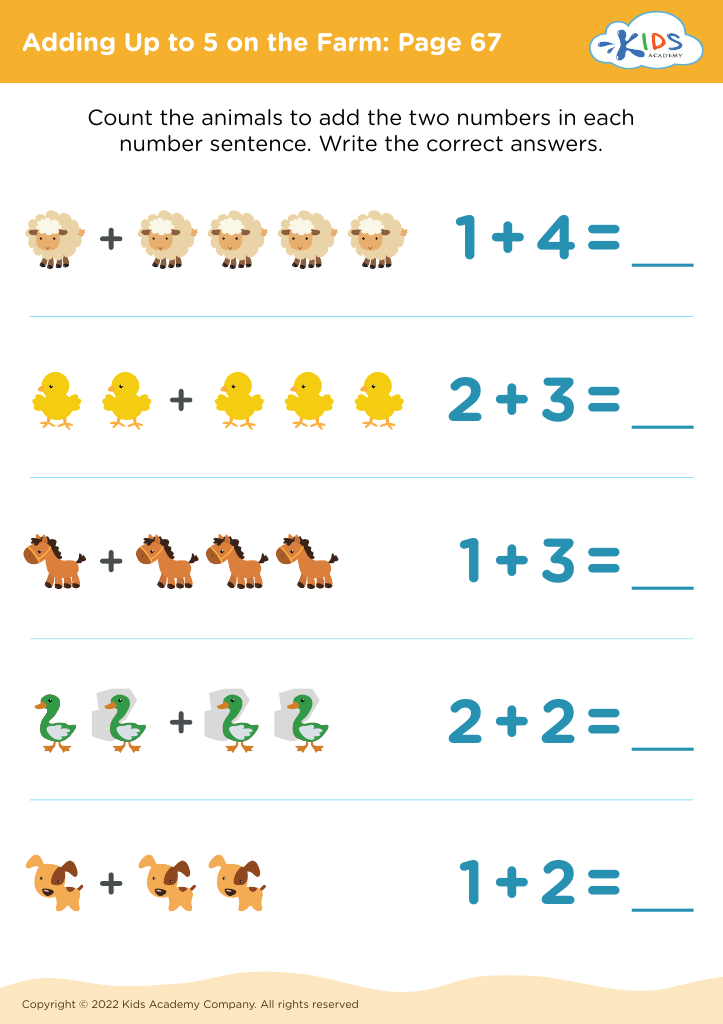
Adding Up to 5 on the Farm: Page 67
Worksheet


Parents and teachers should prioritize basic addition skills for 4-year-olds because these skills form the foundation for future mathematical understanding and overall cognitive development. Early exposure to math concepts enhances children's critical thinking, problem-solving abilities, and logical reasoning. Learning addition at this age fosters numbers sense, helping children comprehend relationships between quantities, which is essential as they progress in their education.

Moreover, basic addition builds confidence in young learners. When children grasp simple math concepts, they become more willing to tackle challenges and engage with more complex problems later on. Early math skills can also influence performance in other subjects, creating a holistic approach to learning.

Socially, engaging children with addition through games and interactive activities can help develop communication and cooperation skills. It provides opportunities for parents and teachers to connect with children, making learning a fun and collaborative experience.

Additionally, laying a groundwork for math skills early can lead to greater academic success in later years. Studies show that children who develop strong early math skills are more likely to excel in math and even have higher overall academic performance. Therefore, prioritizing basic addition at this age is not just about math; it’s about nurturing well-rounded, confident learners.