Check out this FREE Trial Lesson on Addition for age 4!

H

Favorites
With answer key
Interactive
  • 4
  • Basic Addition Skills
  • Addition
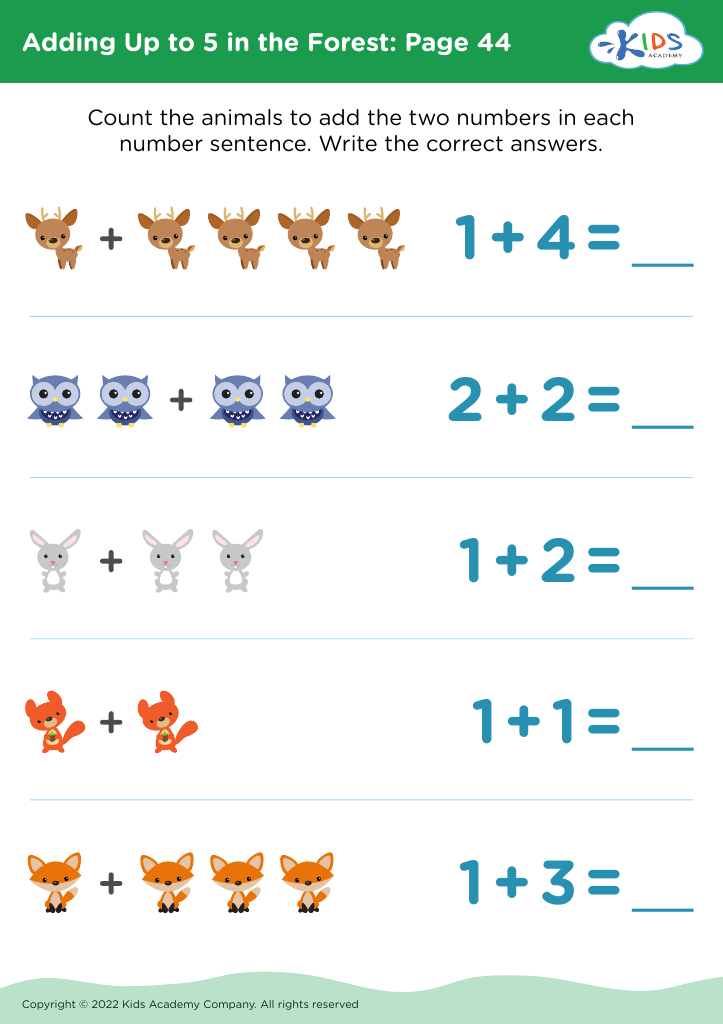
Adding Up to 5 in the Forest: Page 44
Worksheet
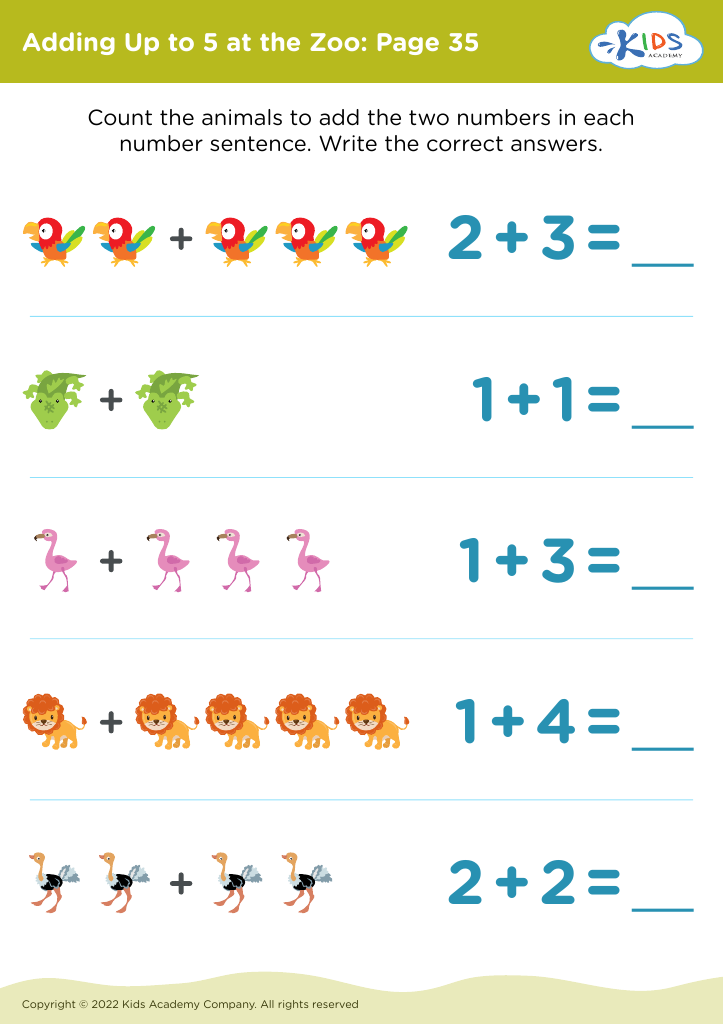
Adding Up to 5 at the Zoo: Page 35
Worksheet
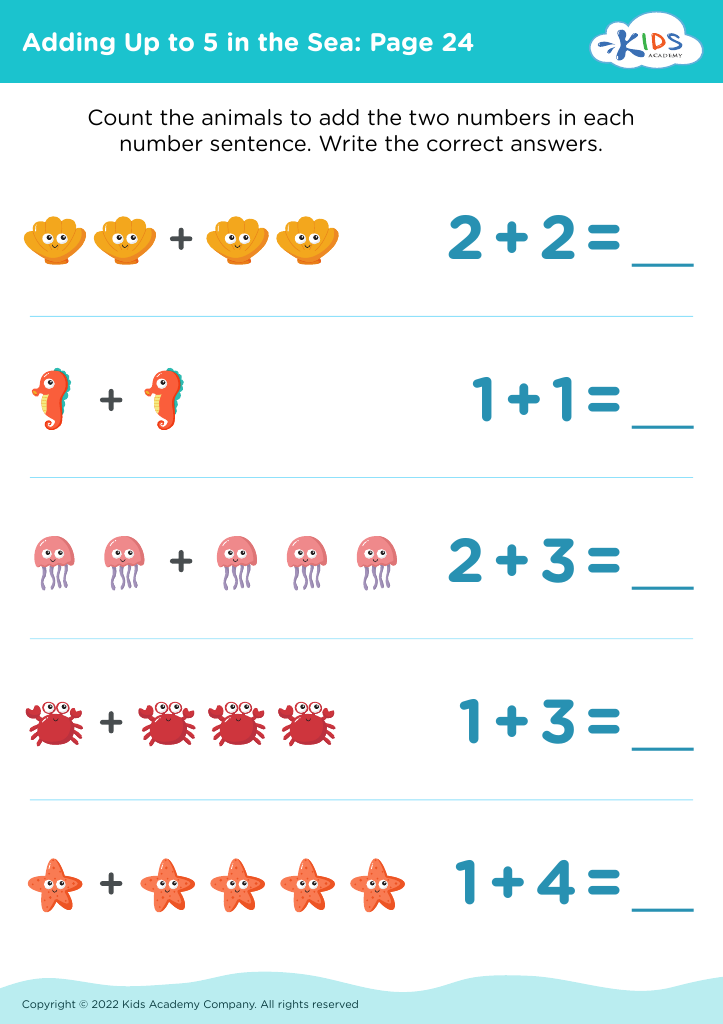
Adding Up to 5 in the Sea: Page 24
Worksheet
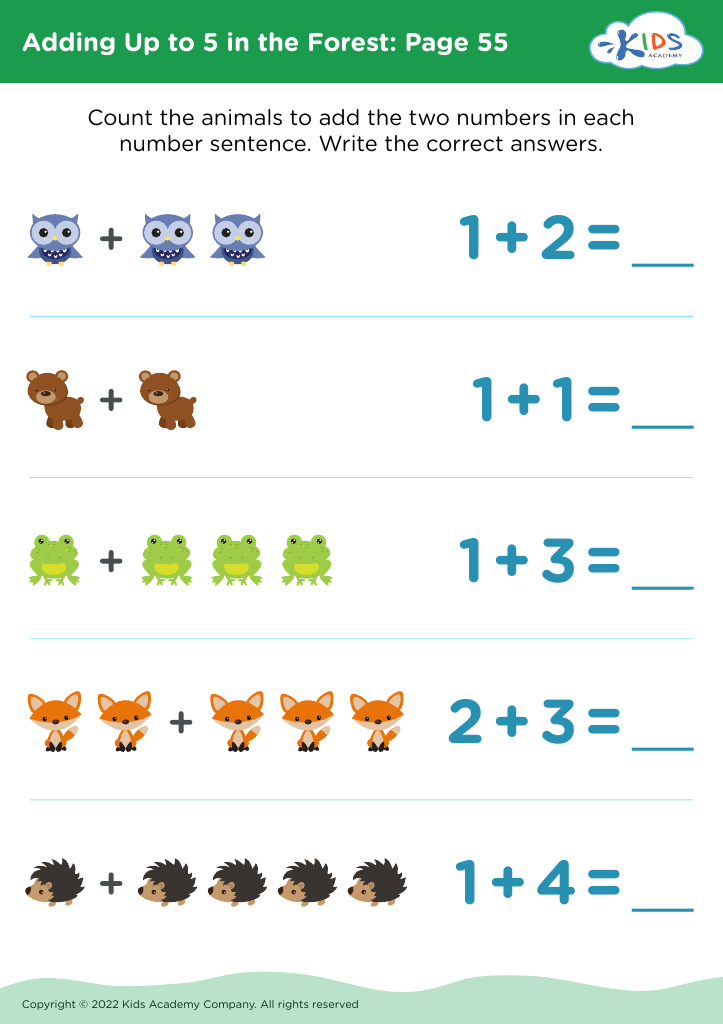
Adding Up to 5 in the Forest: Page 55
Worksheet
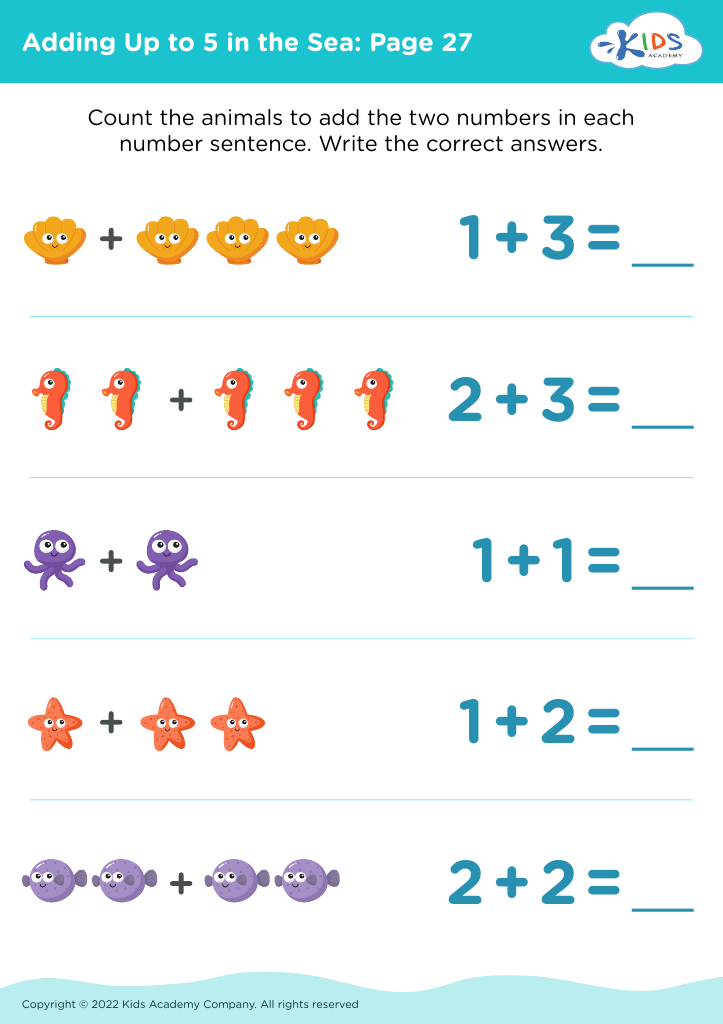
Adding Up to 5 in the Sea: Page 27
Worksheet
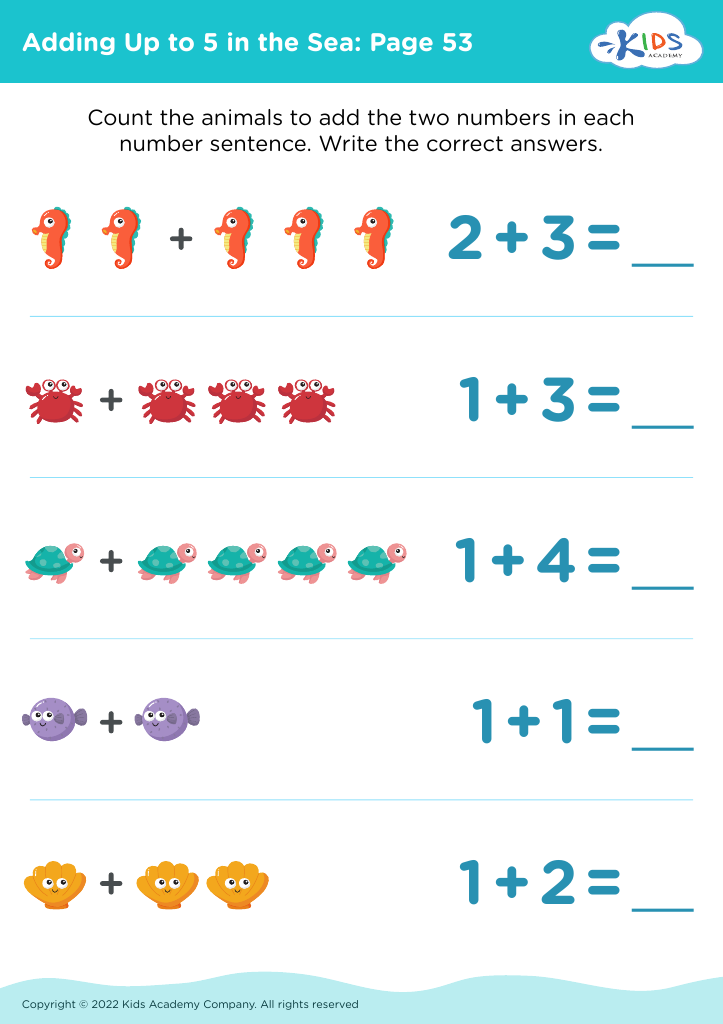
Adding Up to 5 in the Sea: Page 53
Worksheet
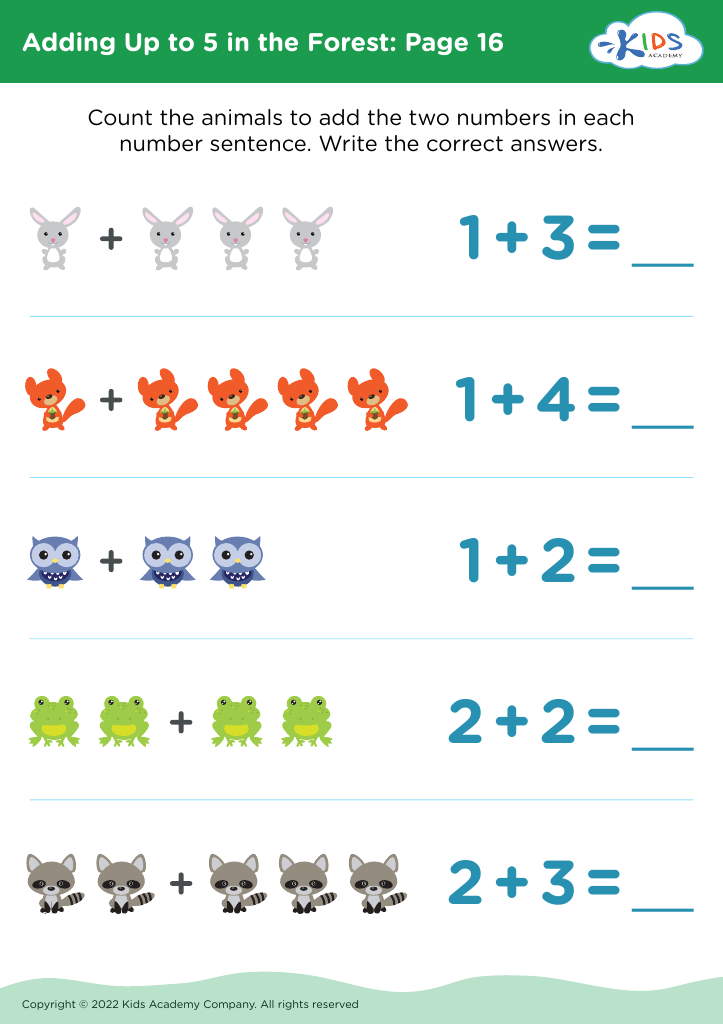
Adding Up to 5 in the Forest: Page 16
Worksheet
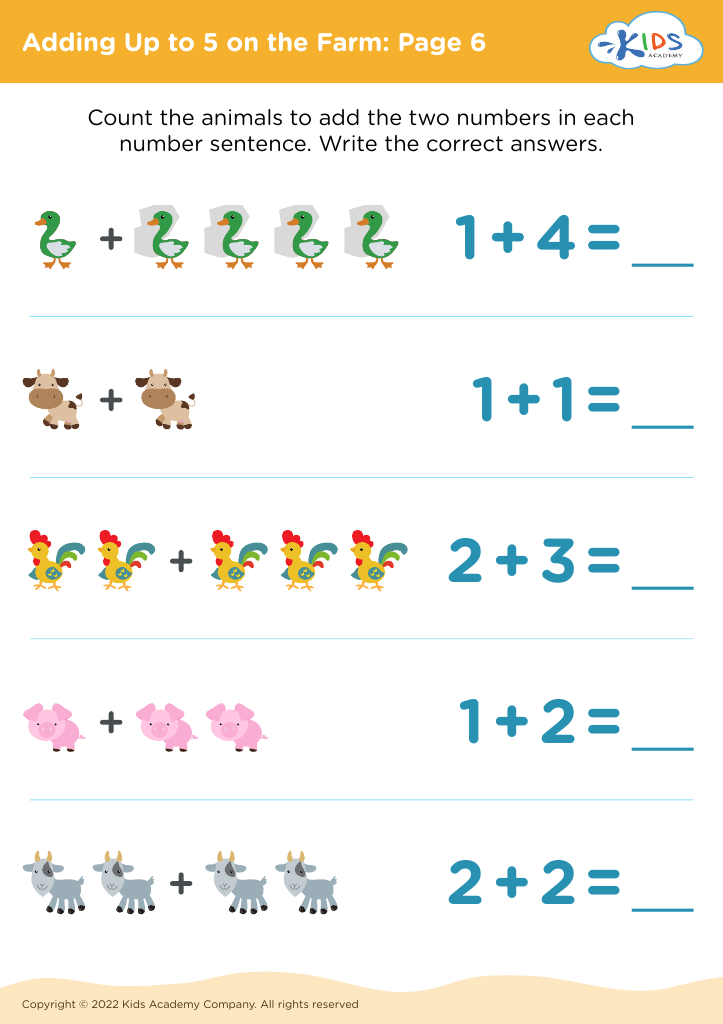
Adding Up to 5 on the Farm: Page 6
Worksheet
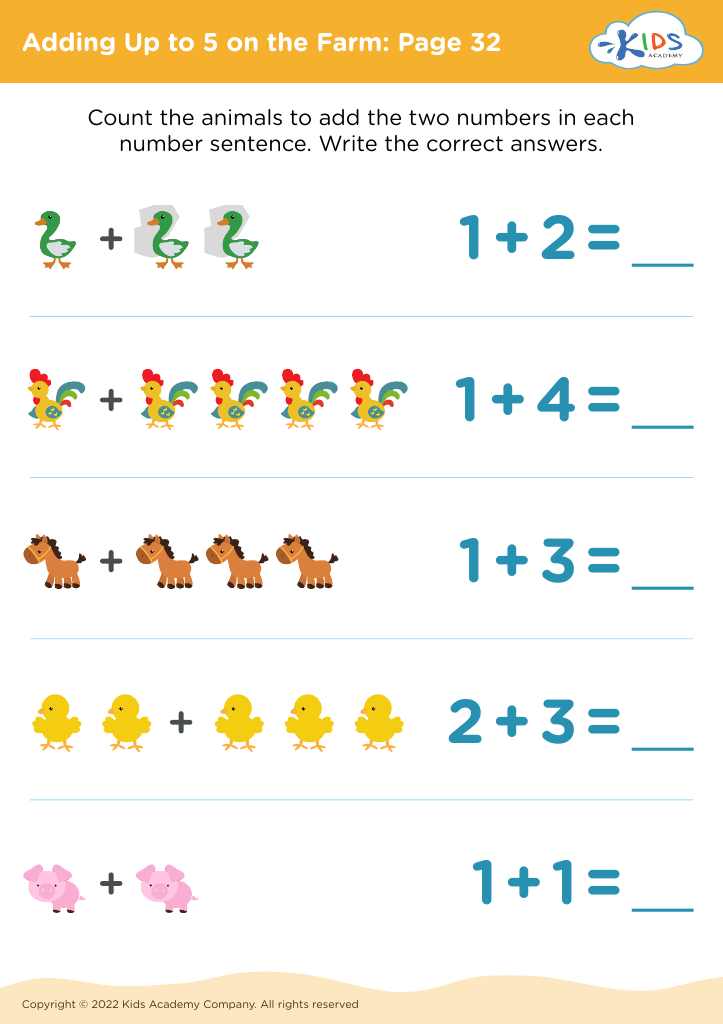
Adding Up to 5 on the Farm: Page 32
Worksheet
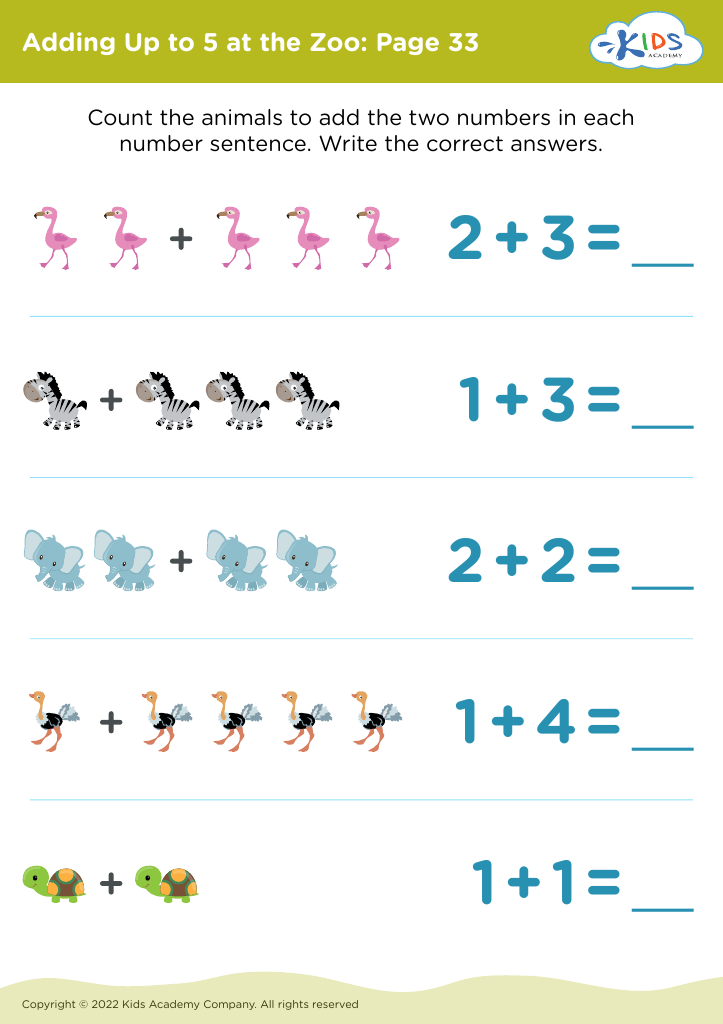
Adding Up to 5 at the Zoo: Page 33
Worksheet
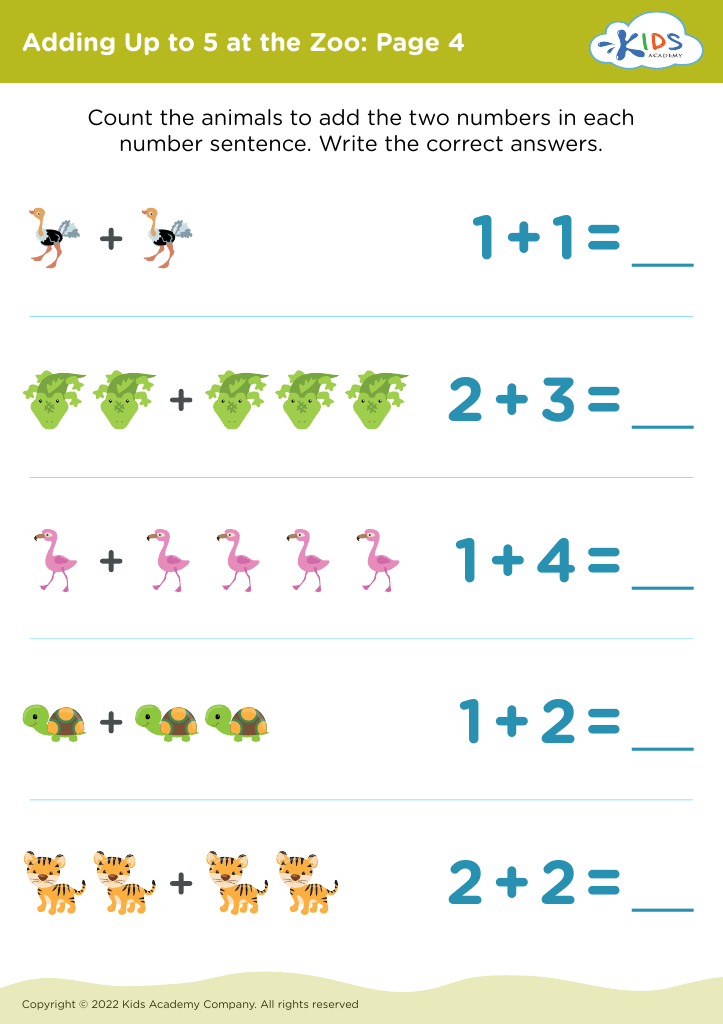
Adding Up to 5 at the Zoo: Page 4

Adding Up to 5 at the Zoo: Page 4

Adding Up to 5 at the Zoo: Page 4
Worksheet
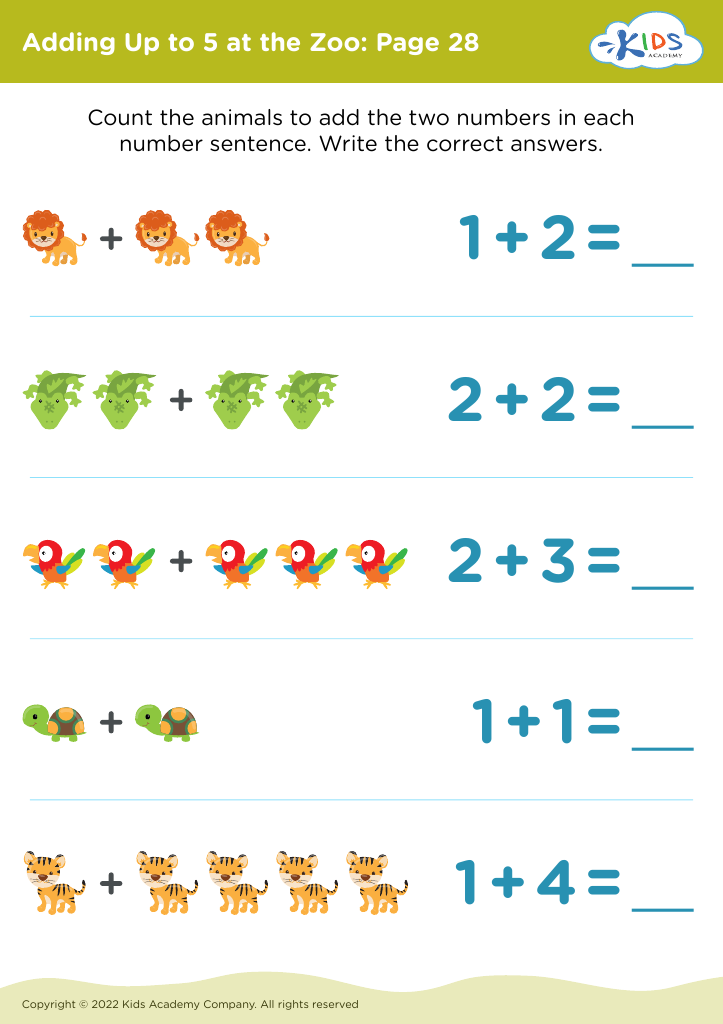
Adding Up to 5 at the Zoo: Page 28
Worksheet
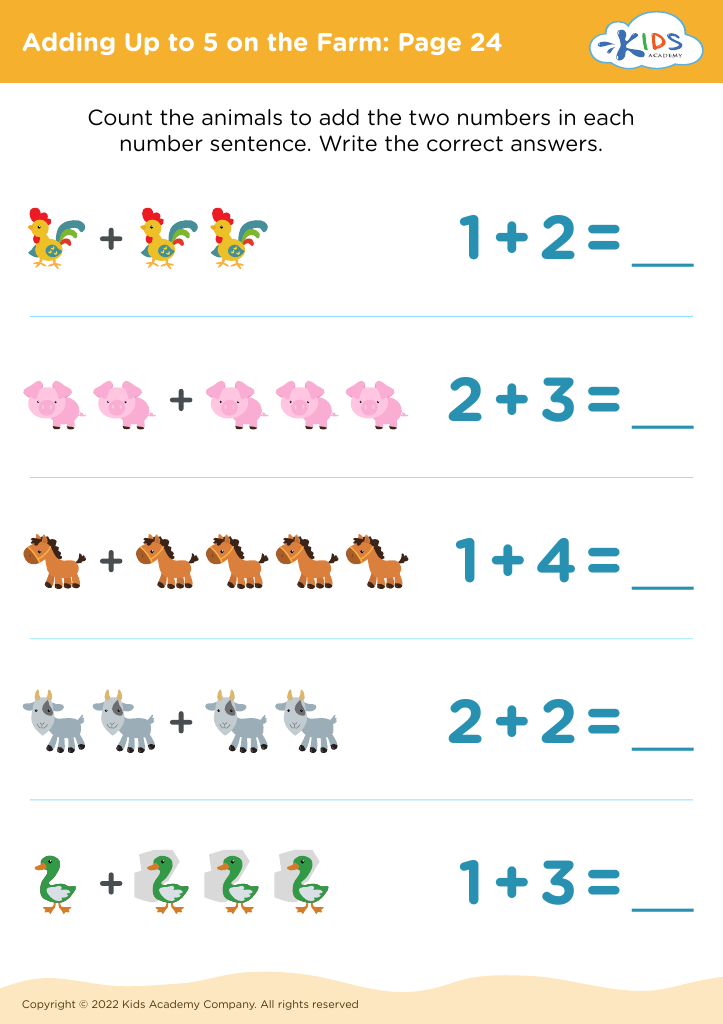
Adding Up to 5 on the Farm: Page 24
Worksheet
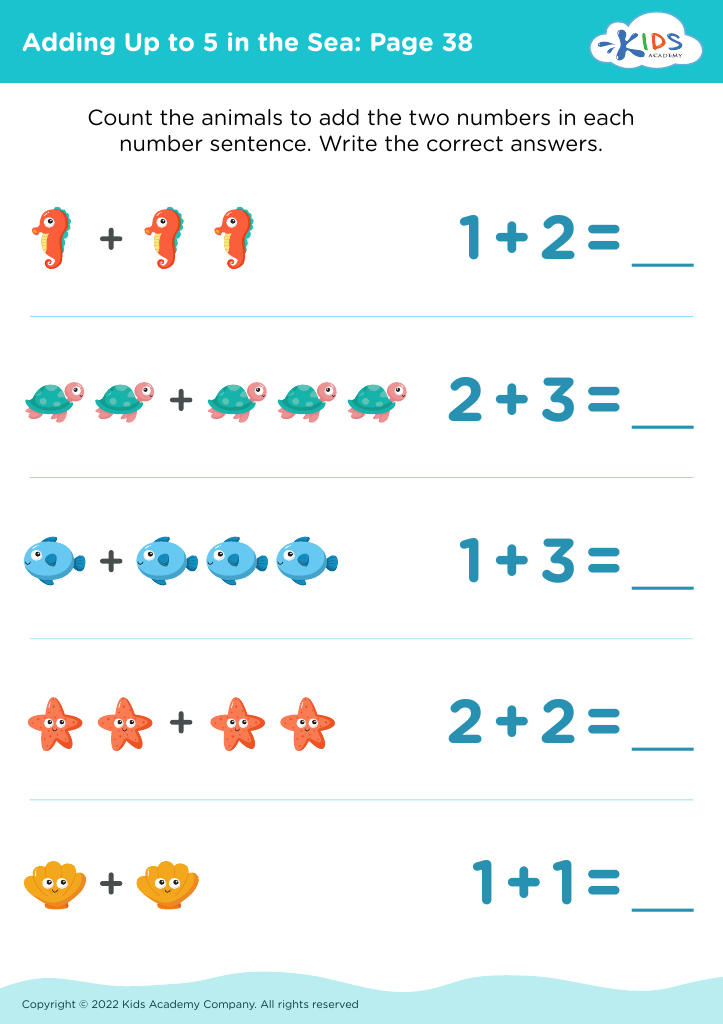
Adding Up to 5 in the Sea: Page 38
Worksheet
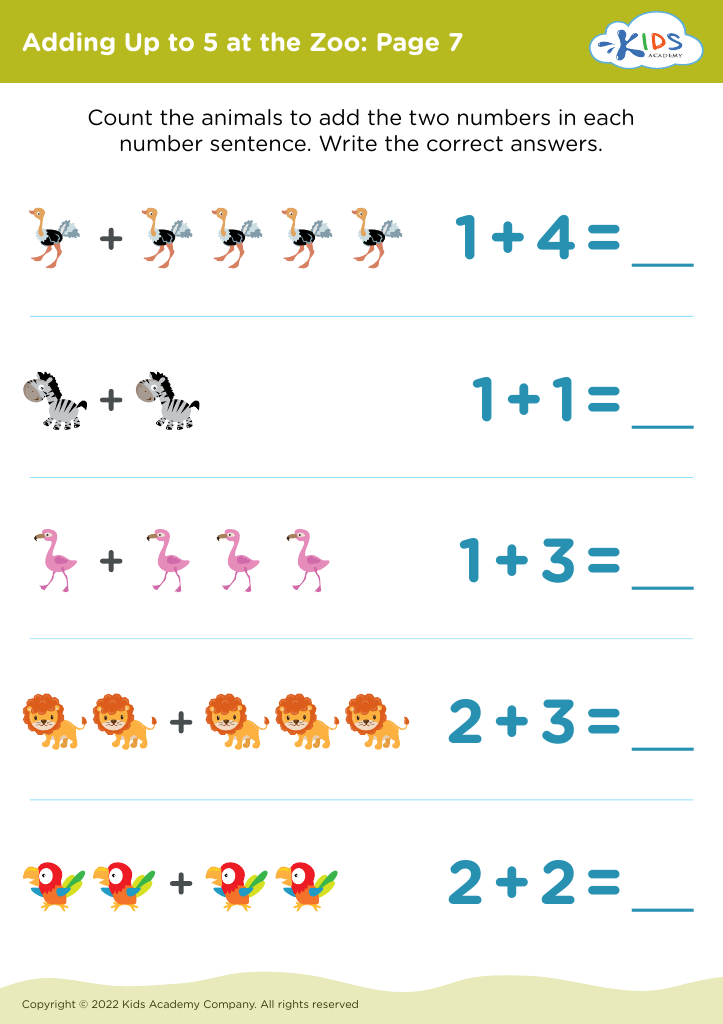
Adding Up to 5 at the Zoo: Page 7

Adding Up to 5 at the Zoo: Page 7

Adding Up to 5 at the Zoo: Page 7
Worksheet
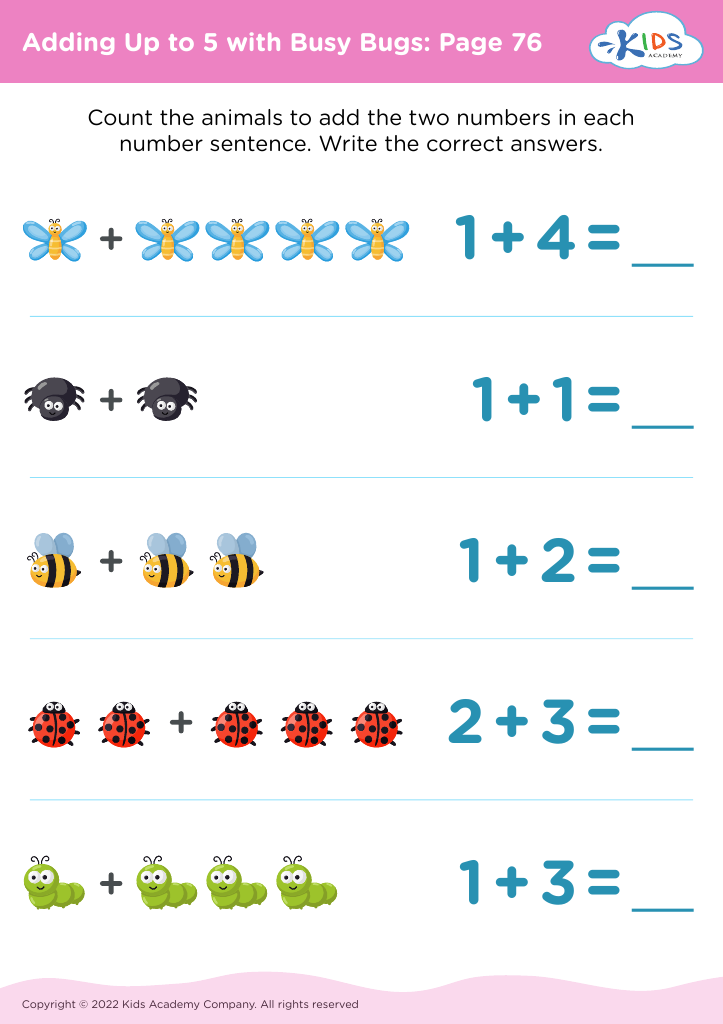
Adding Up to 5 with Busy Bugs: Page 76
Worksheet
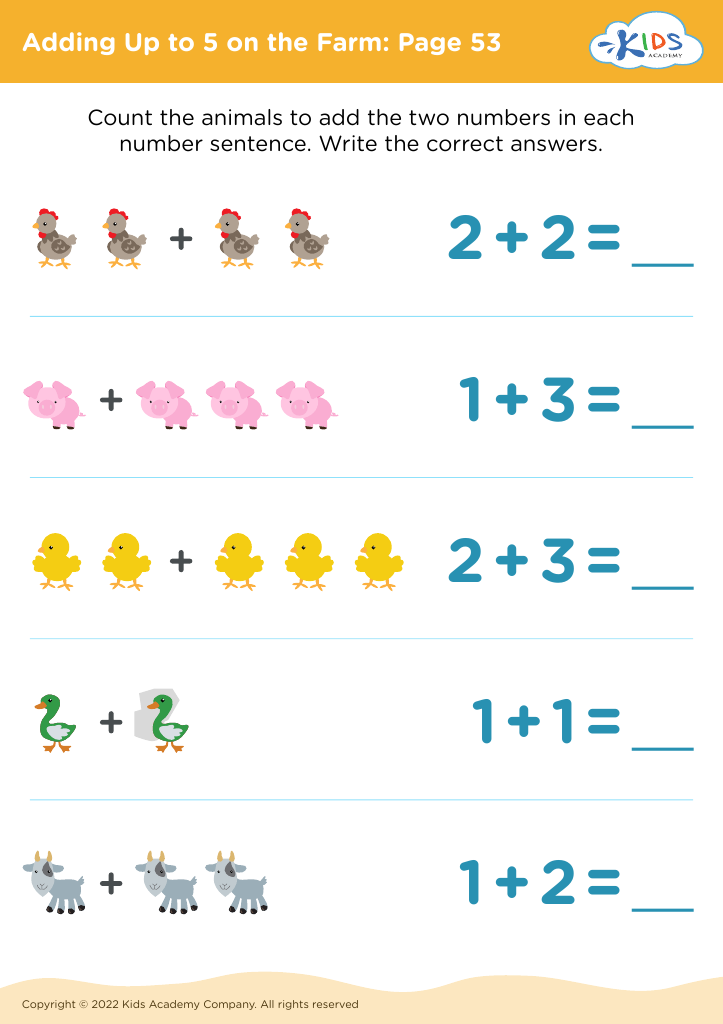
Adding Up to 5 on the Farm: Page 53
Worksheet
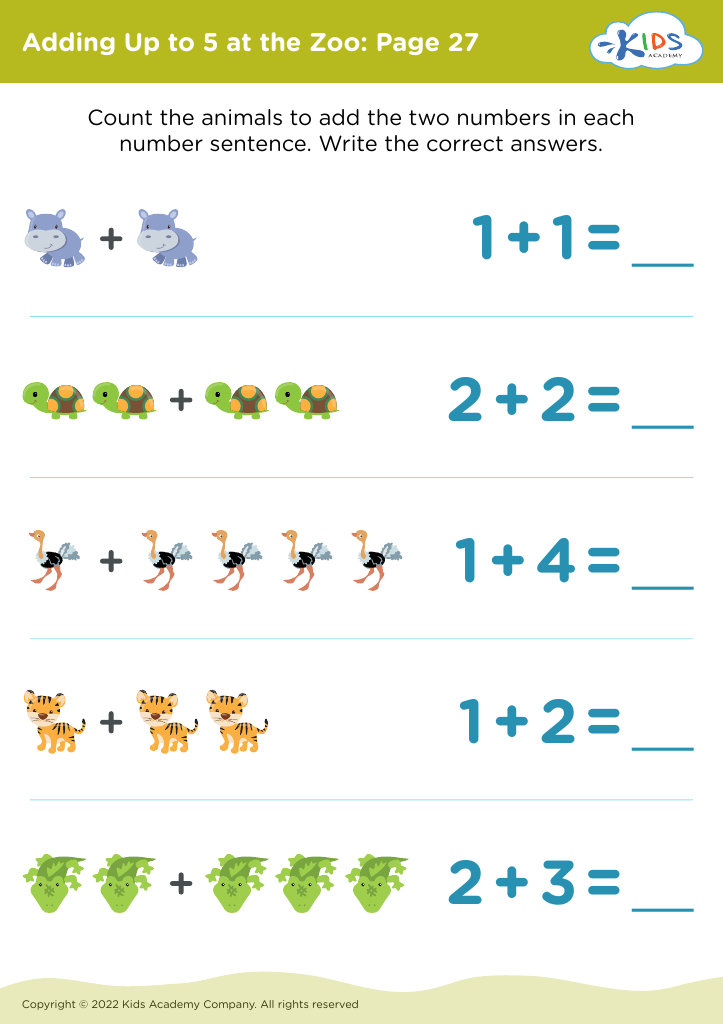
Adding Up to 5 at the Zoo: Page 27
Worksheet
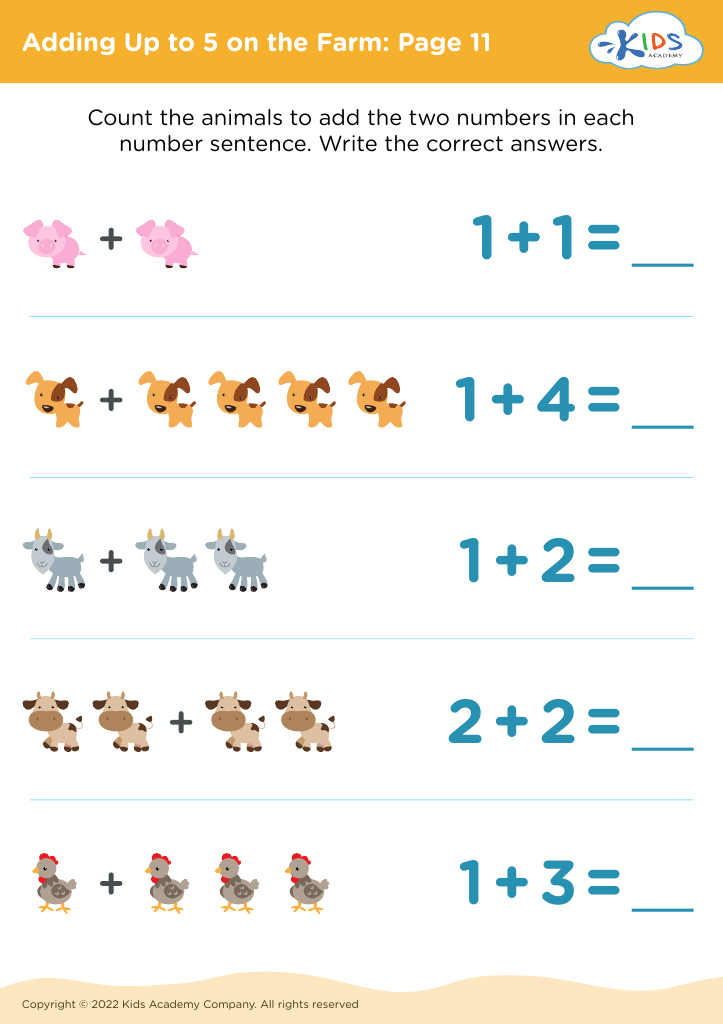
Adding Up to 5 on the Farm: Page 11
Worksheet
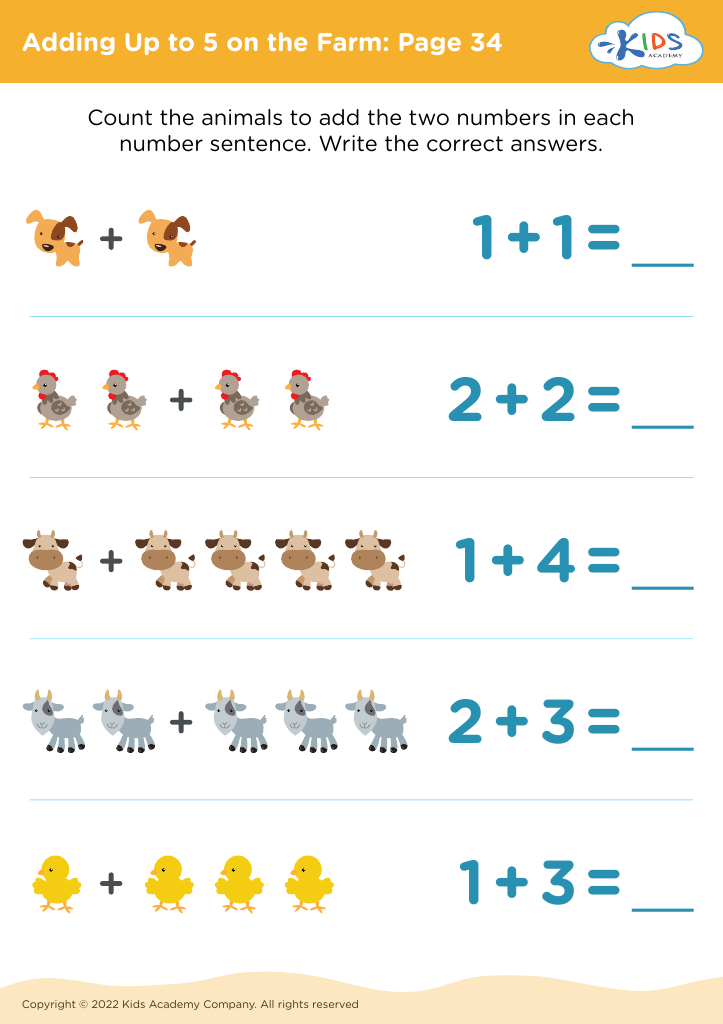
Adding Up to 5 on the Farm: Page 34
Worksheet
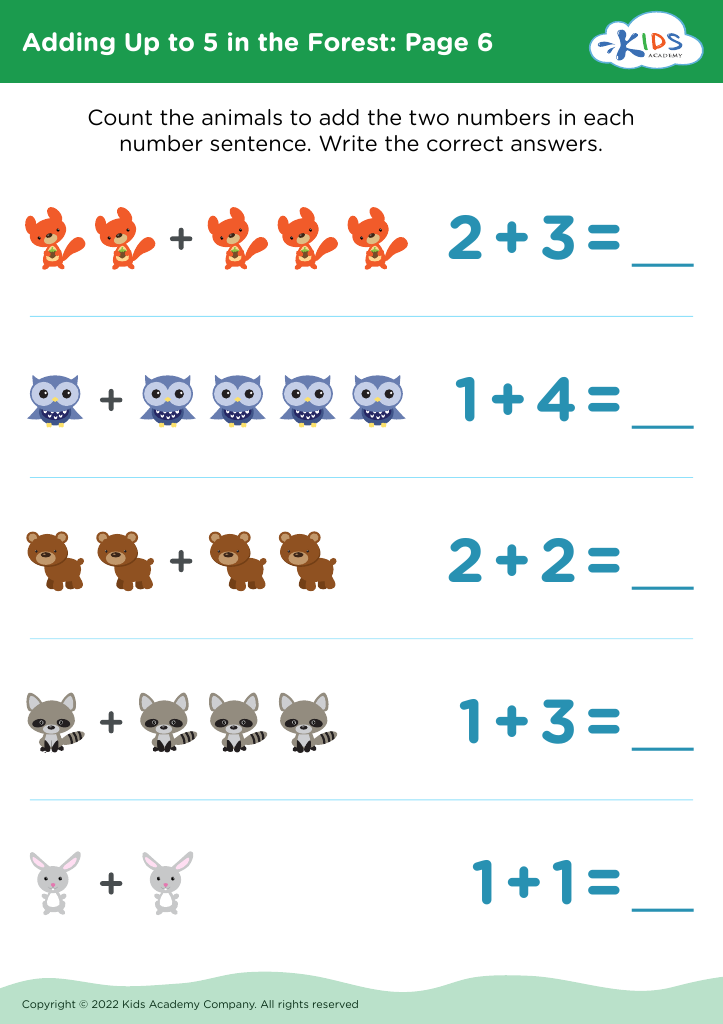
Adding Up to 5 in the Forest: Page 6
Worksheet
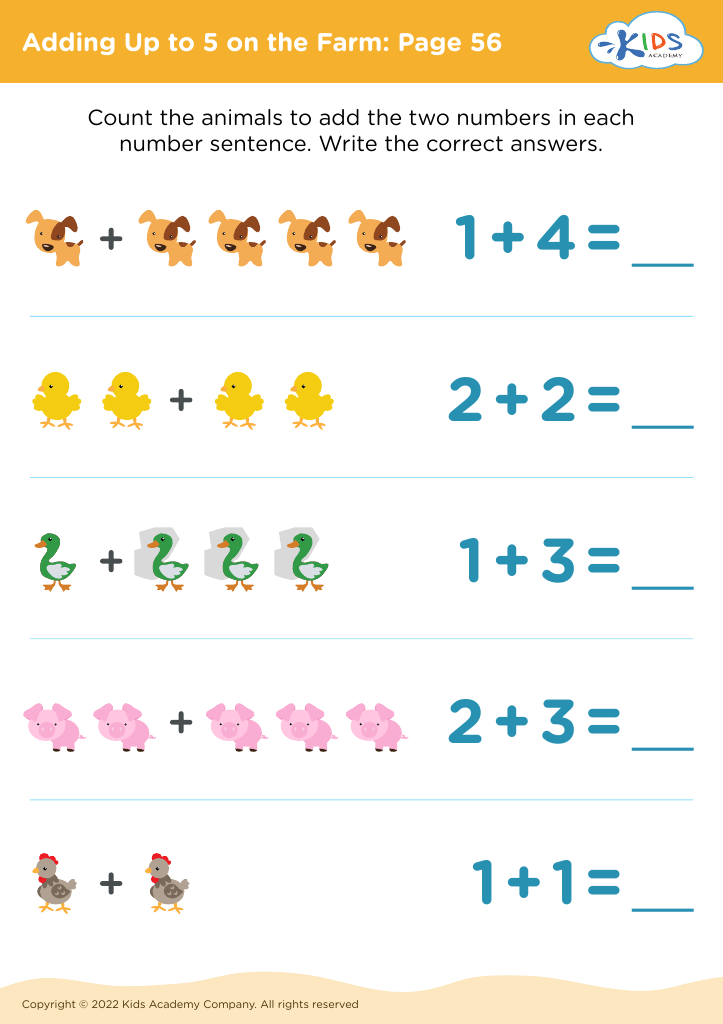
Adding Up to 5 on the Farm: Page 56
Worksheet
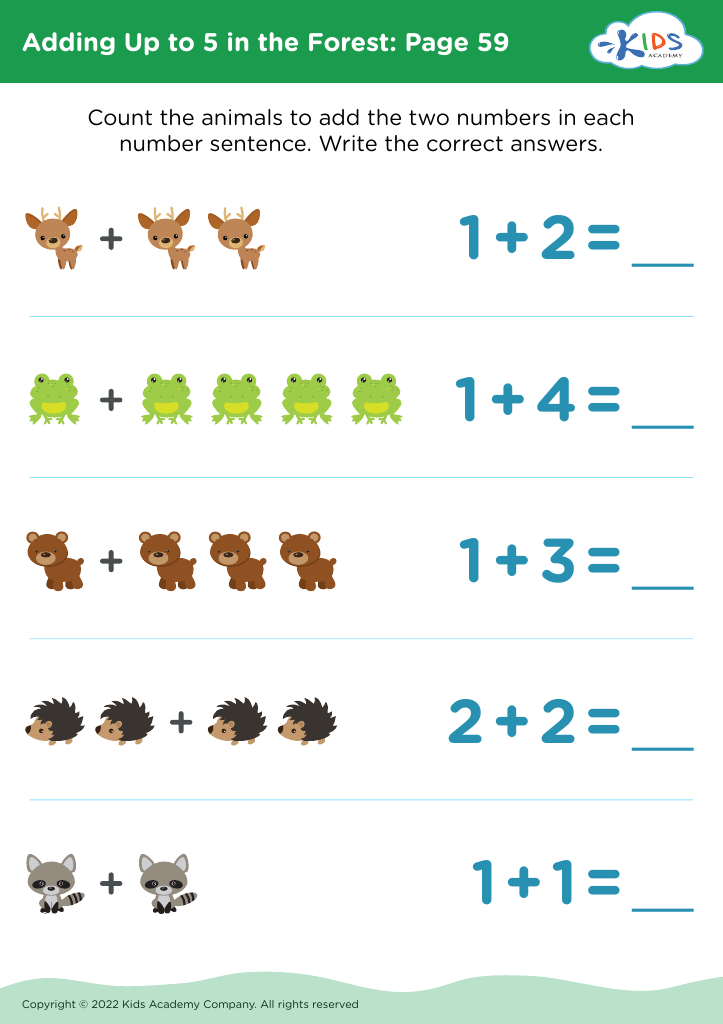
Adding Up to 5 in the Forest: Page 59
Worksheet
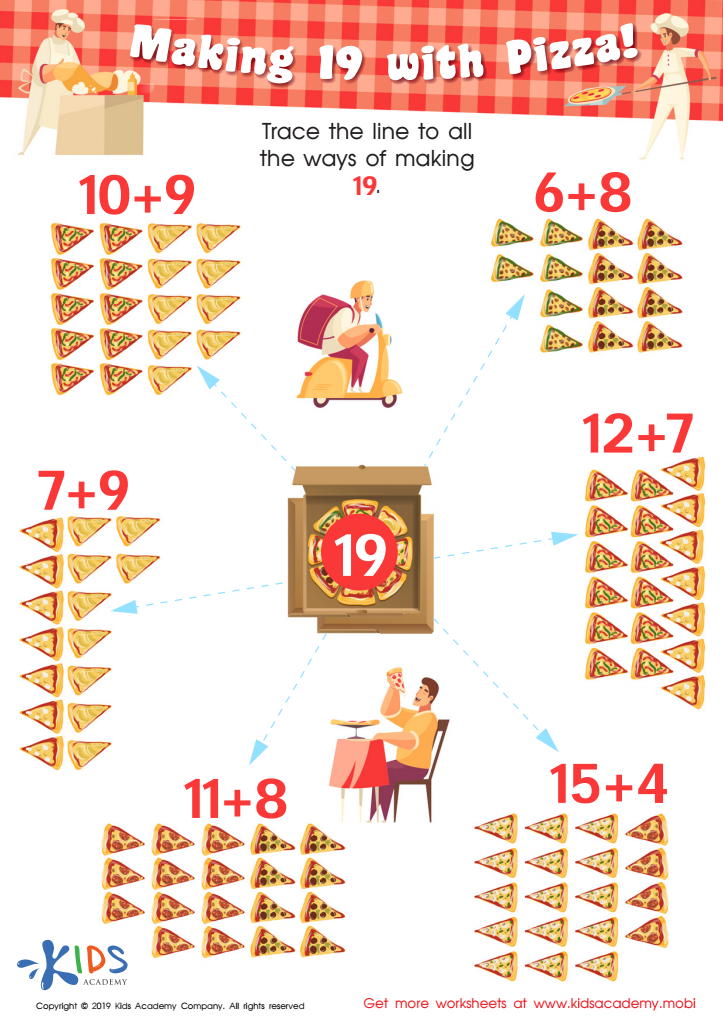
Making 19 with Pizza! Worksheet

Making 19 with Pizza! Worksheet

Who loves pizza? Your kids do! Next time you need to teach them math, make it fun by combining it with something they enjoy. This worksheet uses a pizza-themed problem to help them practice solving equations. Have them trace the line to figure out how to make 19. It's a great way to make learning math fun!
Making 19 with Pizza! Worksheet
Worksheet


Parents and teachers should prioritize basic addition skills for 4-year-olds because these skills form the foundation for future mathematical understanding and overall cognitive development. Early exposure to math concepts enhances children's critical thinking, problem-solving abilities, and logical reasoning. Learning addition at this age fosters numbers sense, helping children comprehend relationships between quantities, which is essential as they progress in their education.

Moreover, basic addition builds confidence in young learners. When children grasp simple math concepts, they become more willing to tackle challenges and engage with more complex problems later on. Early math skills can also influence performance in other subjects, creating a holistic approach to learning.

Socially, engaging children with addition through games and interactive activities can help develop communication and cooperation skills. It provides opportunities for parents and teachers to connect with children, making learning a fun and collaborative experience.

Additionally, laying a groundwork for math skills early can lead to greater academic success in later years. Studies show that children who develop strong early math skills are more likely to excel in math and even have higher overall academic performance. Therefore, prioritizing basic addition at this age is not just about math; it’s about nurturing well-rounded, confident learners.