Filters

101 filtered results

Clear all filters
Favorites
With answer key
Interactive

101 filtered results

Difficulty Level

Grade


Check out this FREE Trial Lesson on Addition for age 4!

Match Objects that Fit Together

Favorites
With answer key
Interactive
  • 4
  • Cognitive Development
  • Addition
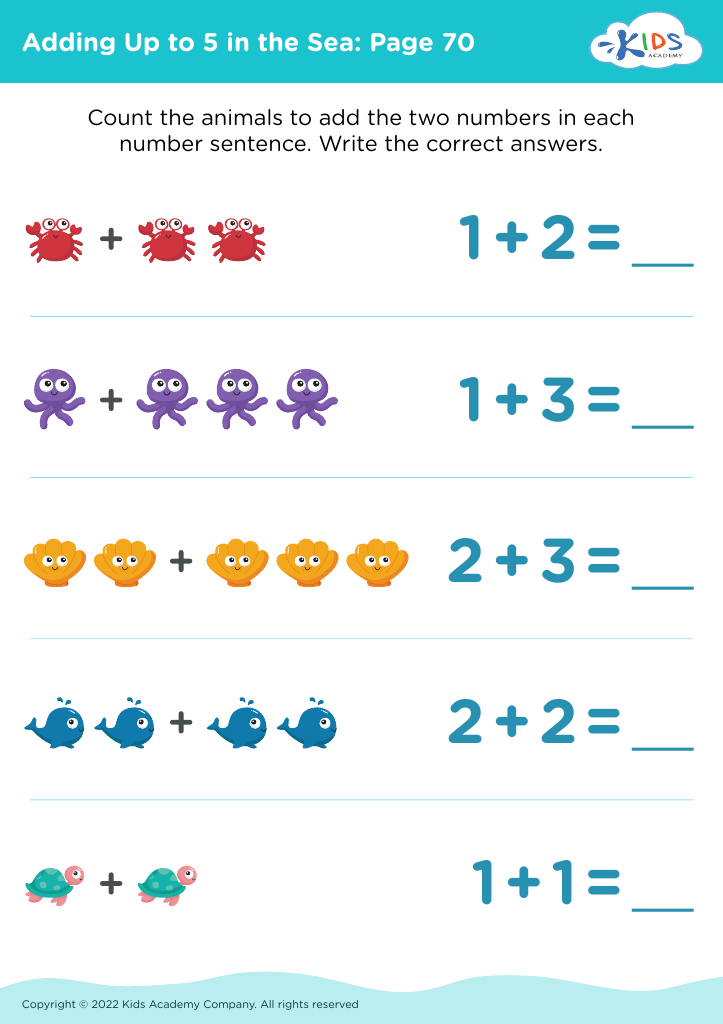
Adding Up to 5 in the Sea: Page 70
Worksheet
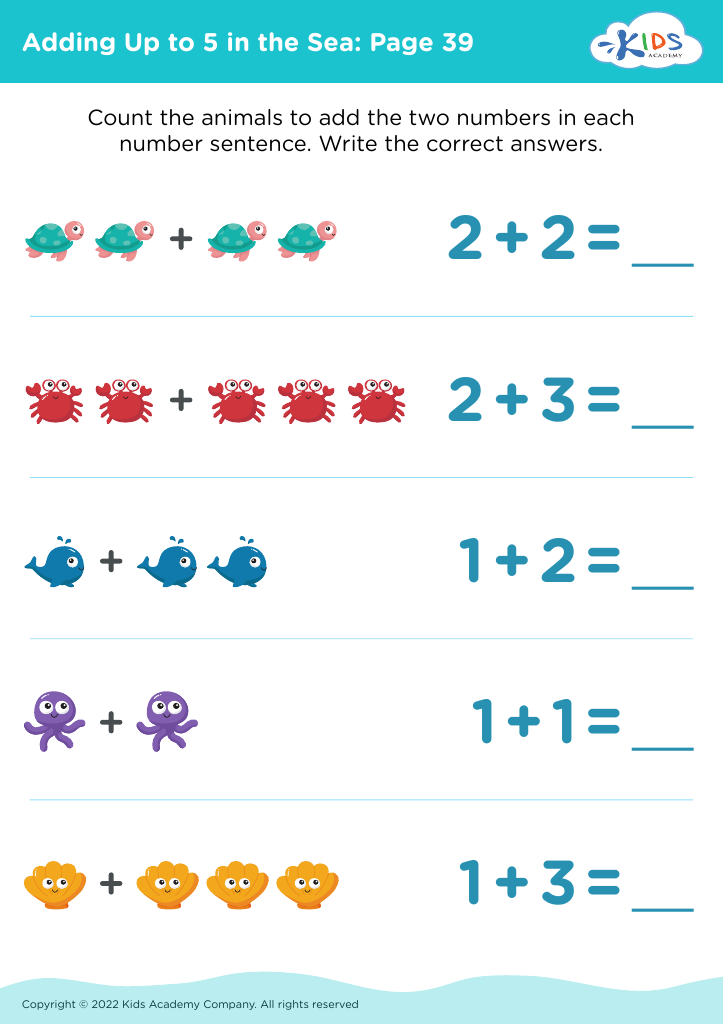
Adding Up to 5 in the Sea: Page 39
Worksheet
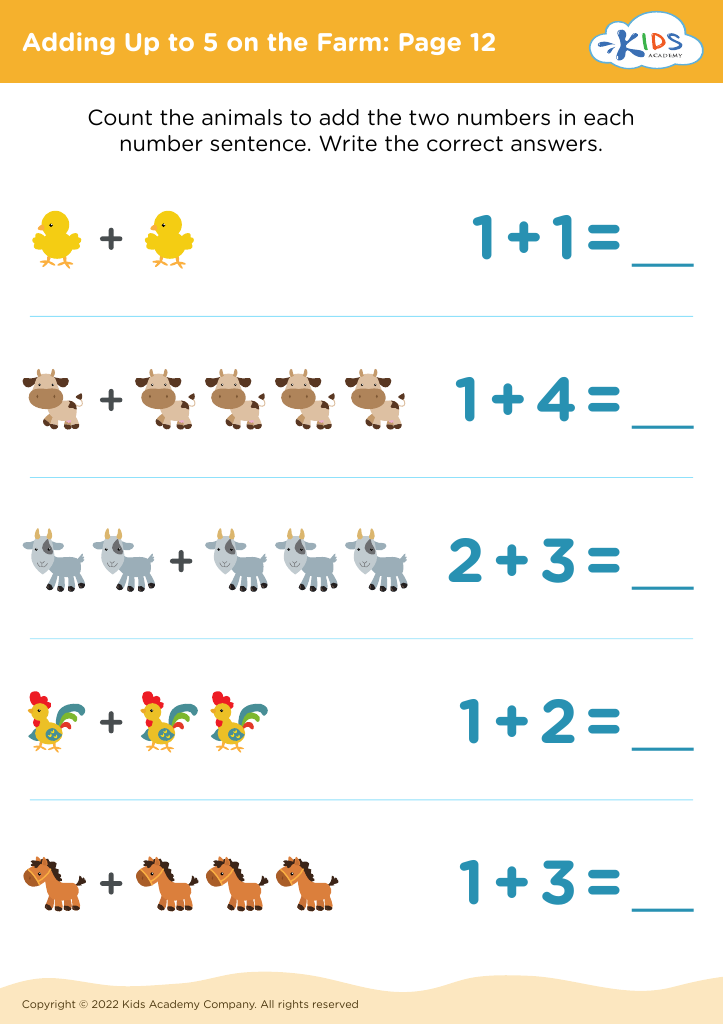
Adding Up to 5 on the Farm: Page 12
Worksheet
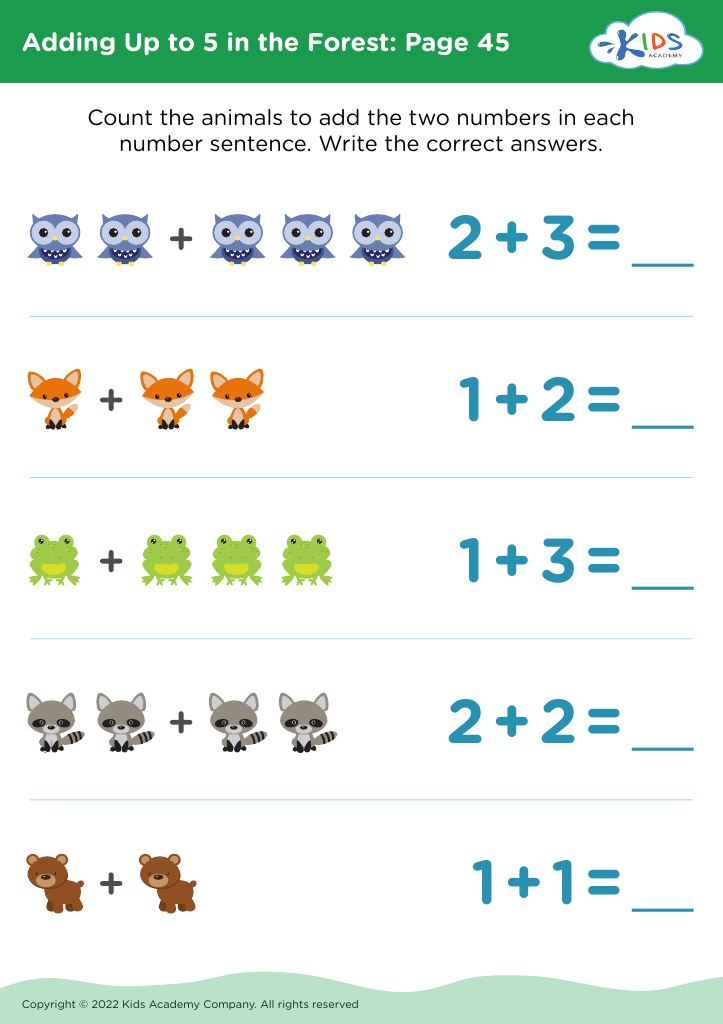
Adding Up to 5 in the Forest: Page 45
Worksheet
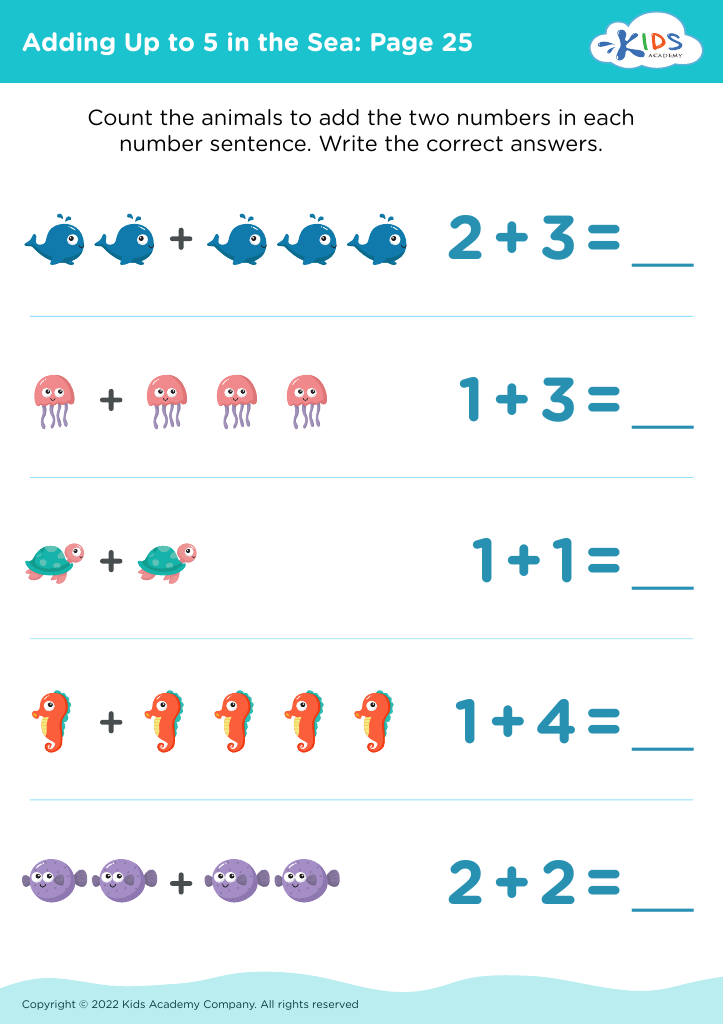
Adding Up to 5 in the Sea: Page 25
Worksheet
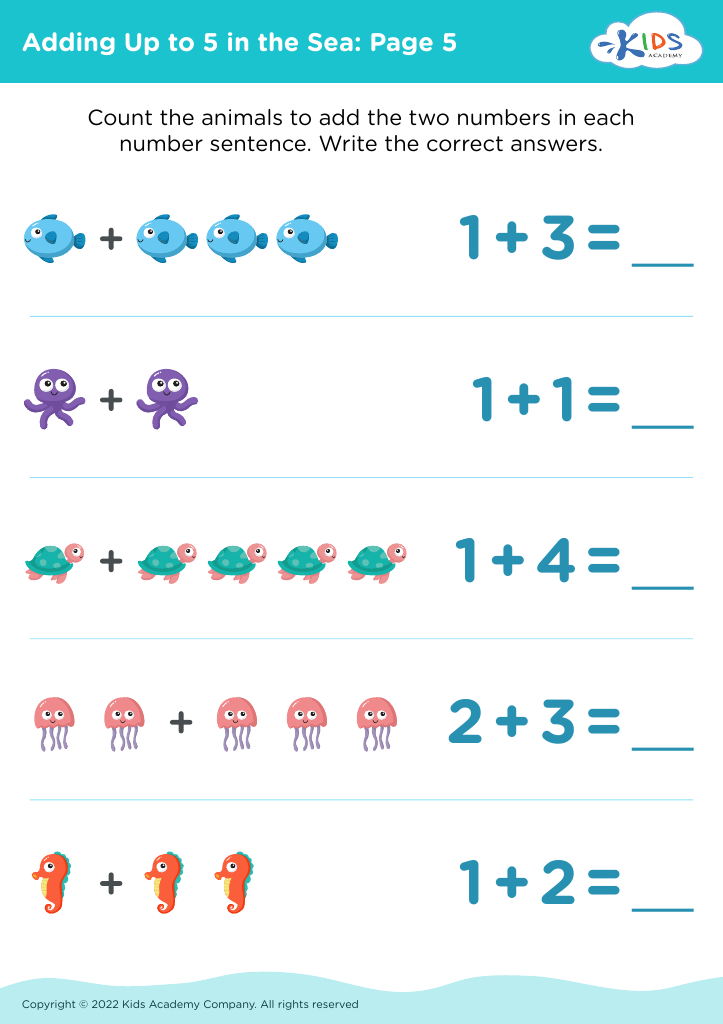
Adding Up to 5 in the Sea: Page 5

Adding Up to 5 in the Sea: Page 5

Adding Up to 5 in the Sea: Page 5
Worksheet
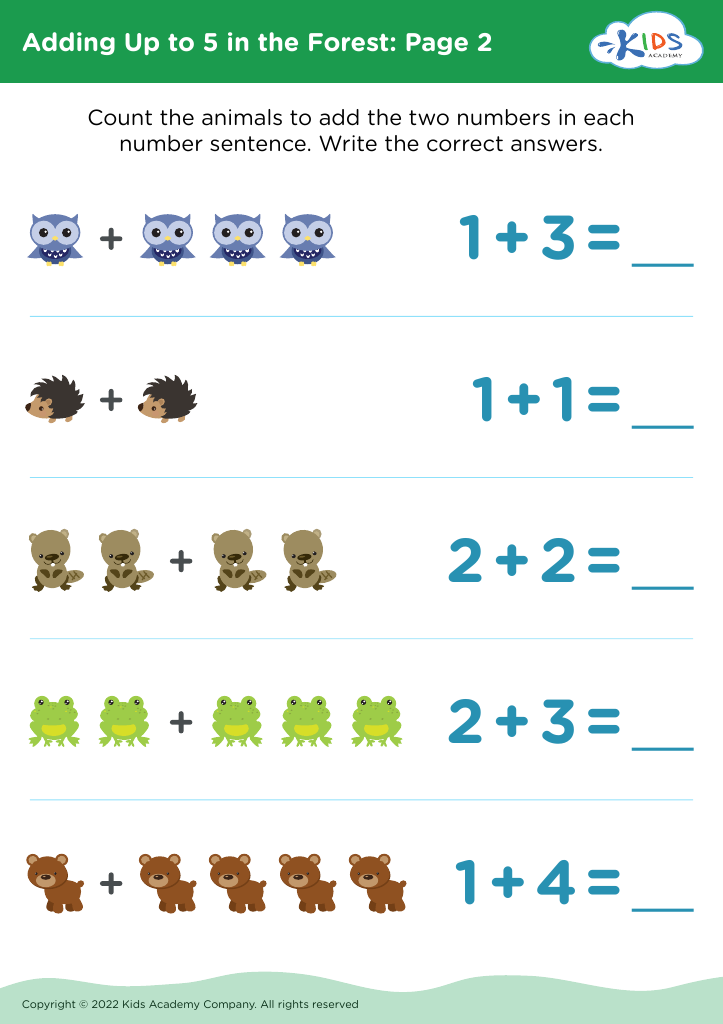
Adding Up to 5 in the Forest: Page 2
Worksheet
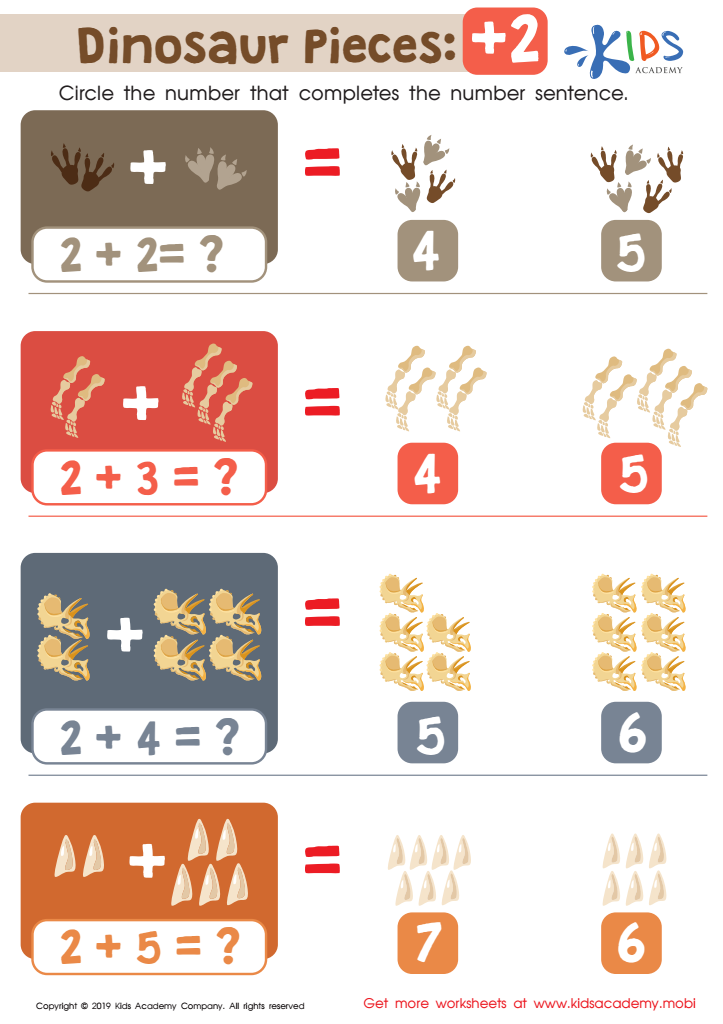
Dinosaur Pieces: +2 Worksheet

Dinosaur Pieces: +2 Worksheet

Kids love dinosaurs! See if your kids can solve these three equations featuring the mysterious creatures. Download the PDF and have them circle the number that completes each equation. Dinosaurs are extinct, not seen for thousands of years, but they can still help kids work on their math skills!
Dinosaur Pieces: +2 Worksheet
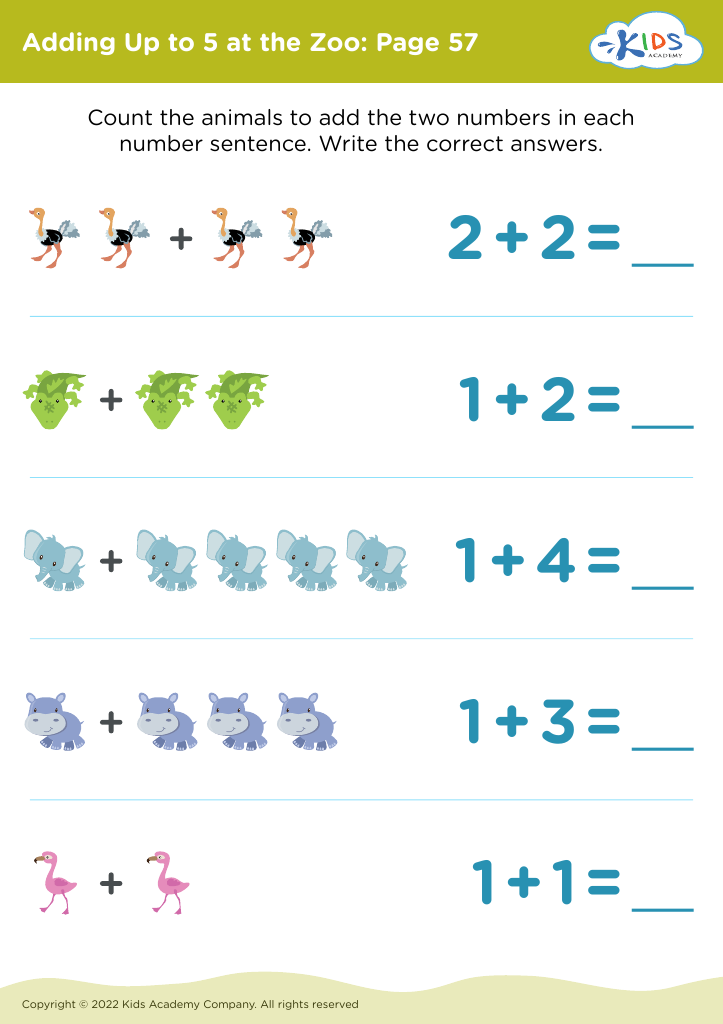
Worksheet
Adding Up to 5 at the Zoo: Page 57
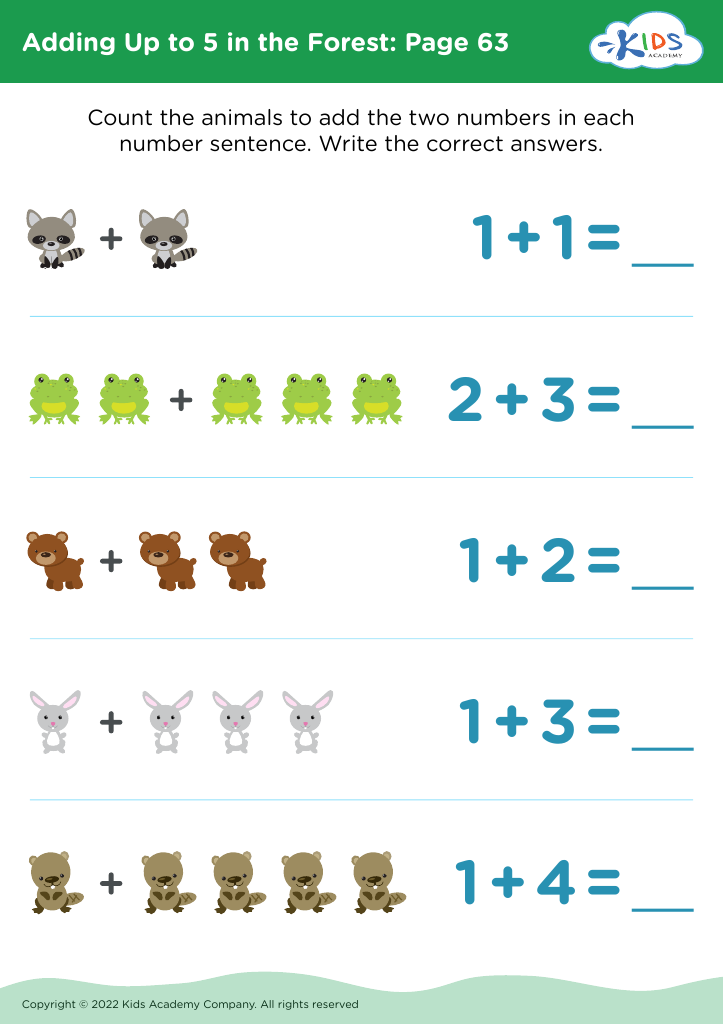
Worksheet
Adding Up to 5 in the Forest: Page 63
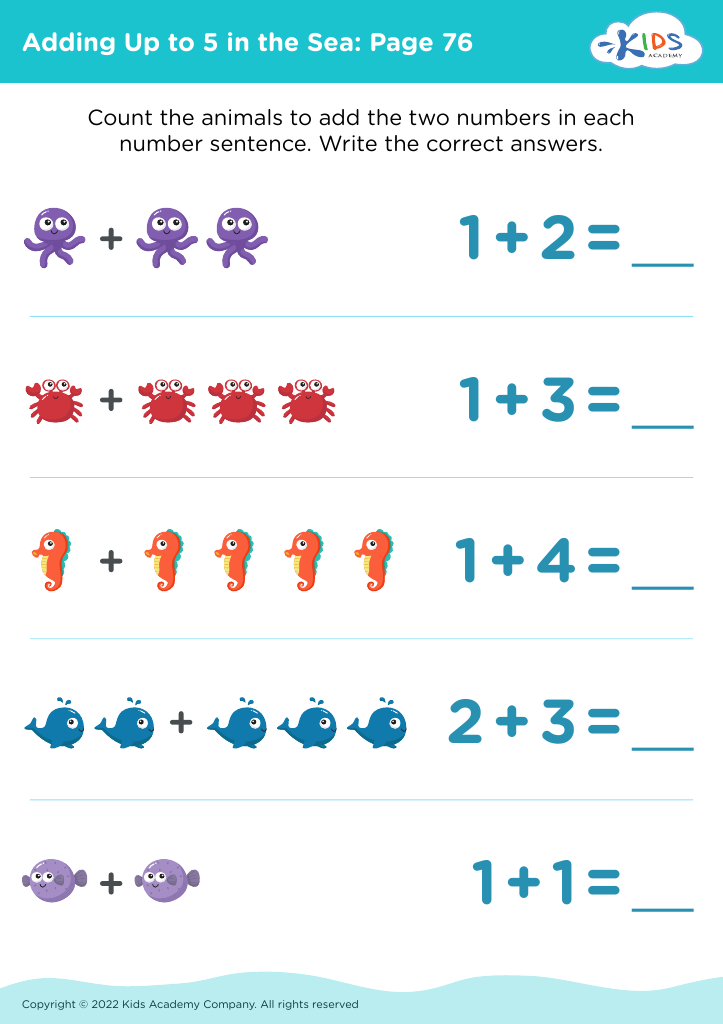
Worksheet
Adding Up to 5 in the Sea: Page 76
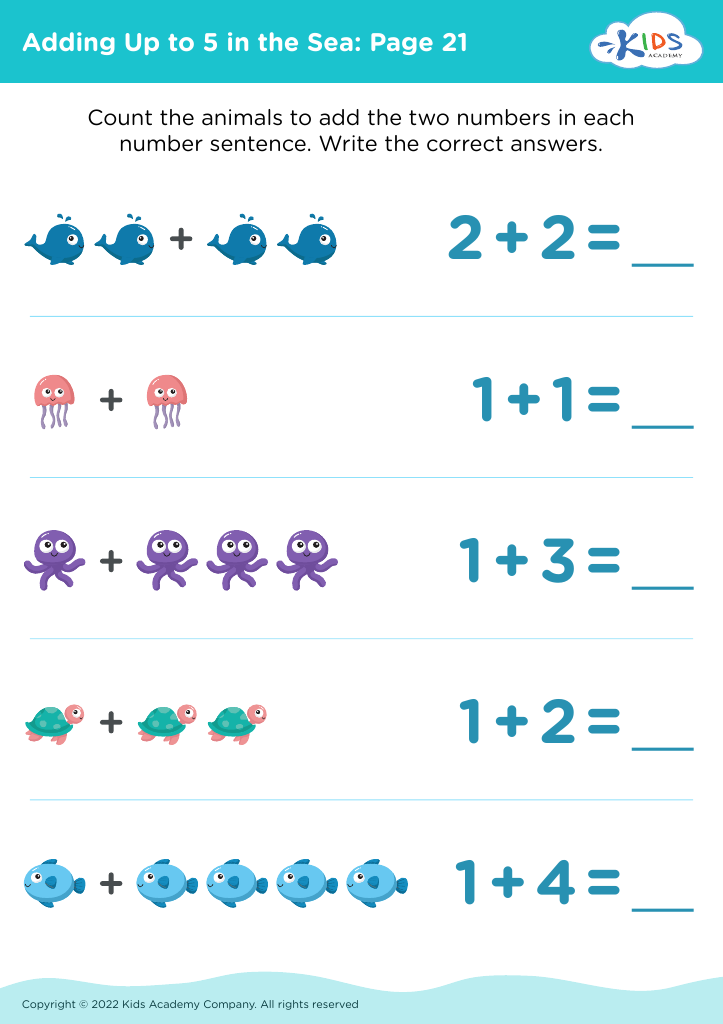
Worksheet
Adding Up to 5 in the Sea: Page 21
Worksheet
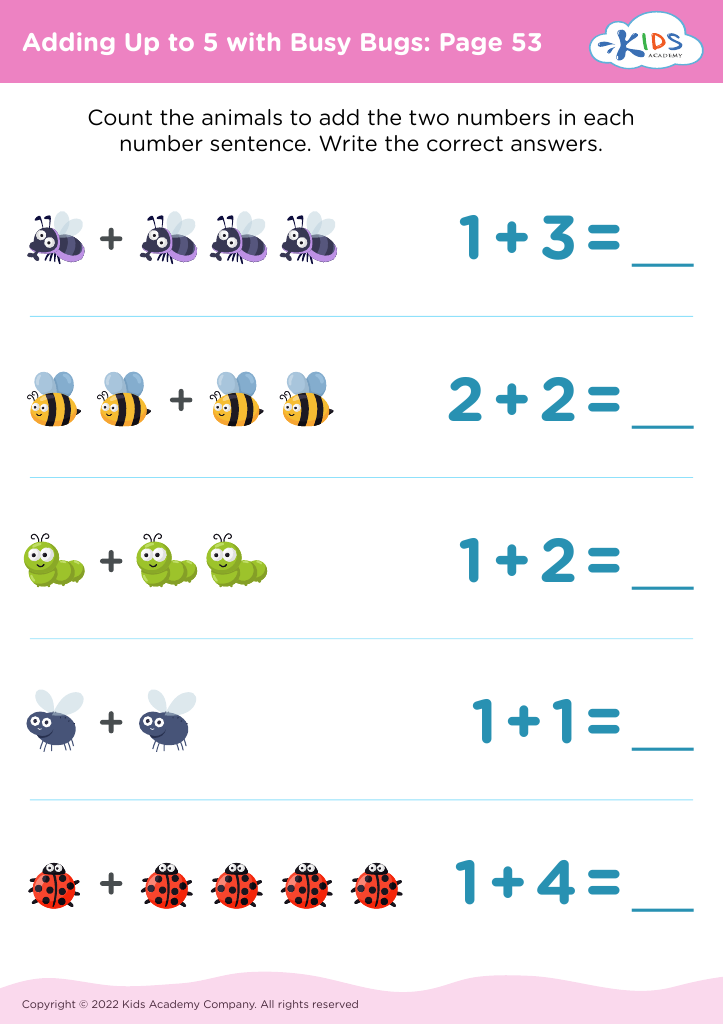
Adding Up to 5 with Busy Bugs: Page 53
Worksheet
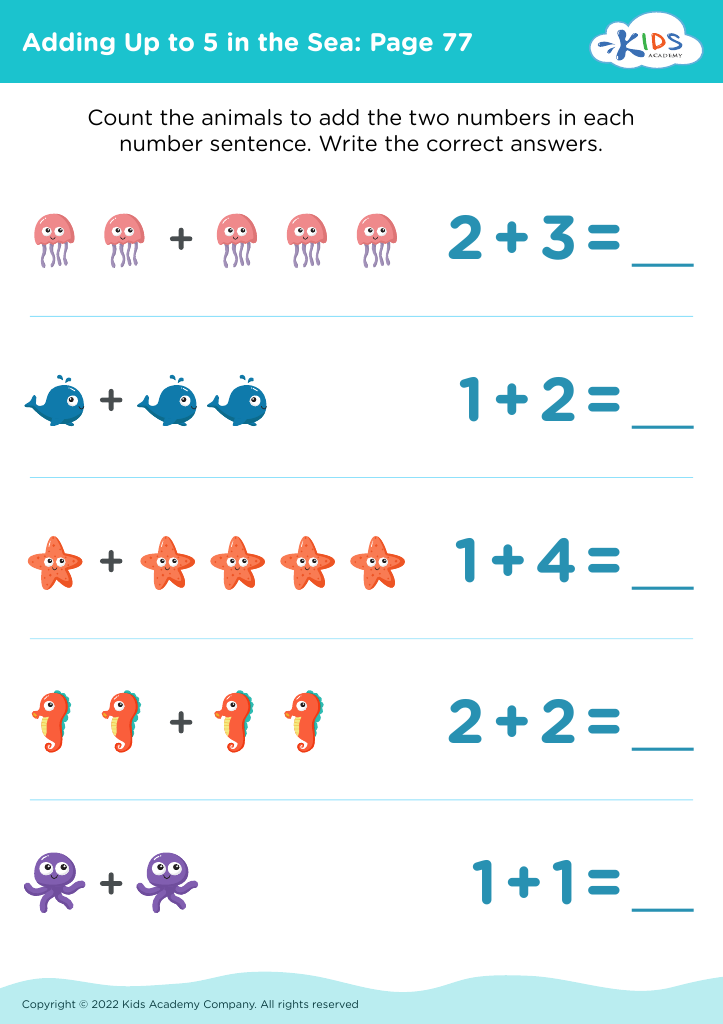
Adding Up to 5 in the Sea: Page 77
Worksheet
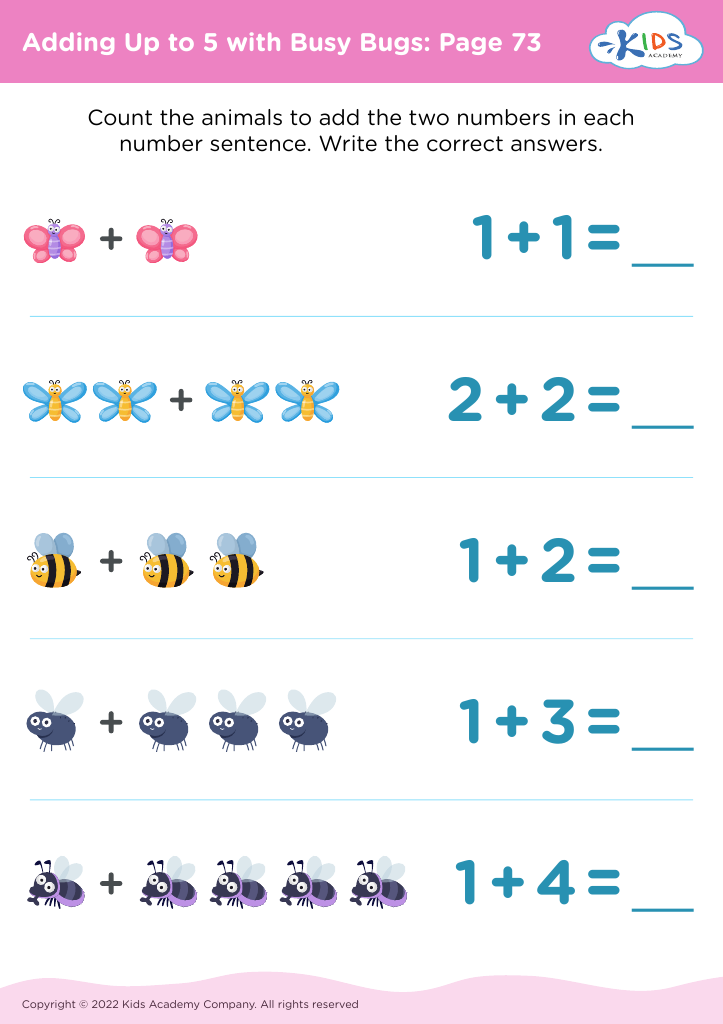
Adding Up to 5 with Busy Bugs: Page 73
Worksheet
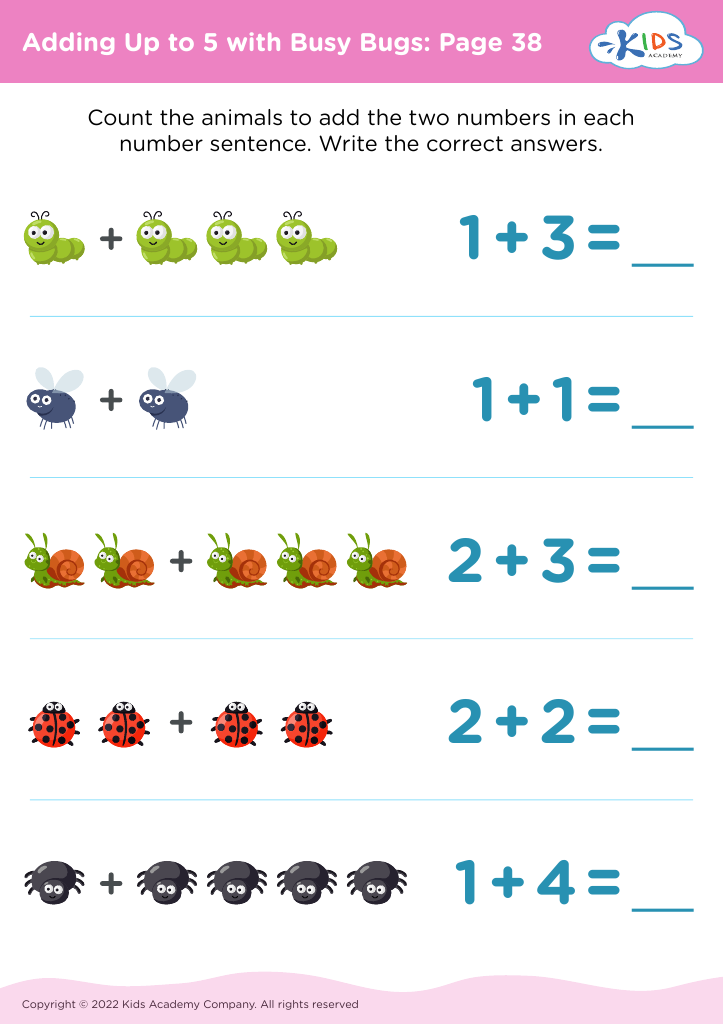
Adding Up to 5 with Busy Bugs: Page 38
Worksheet
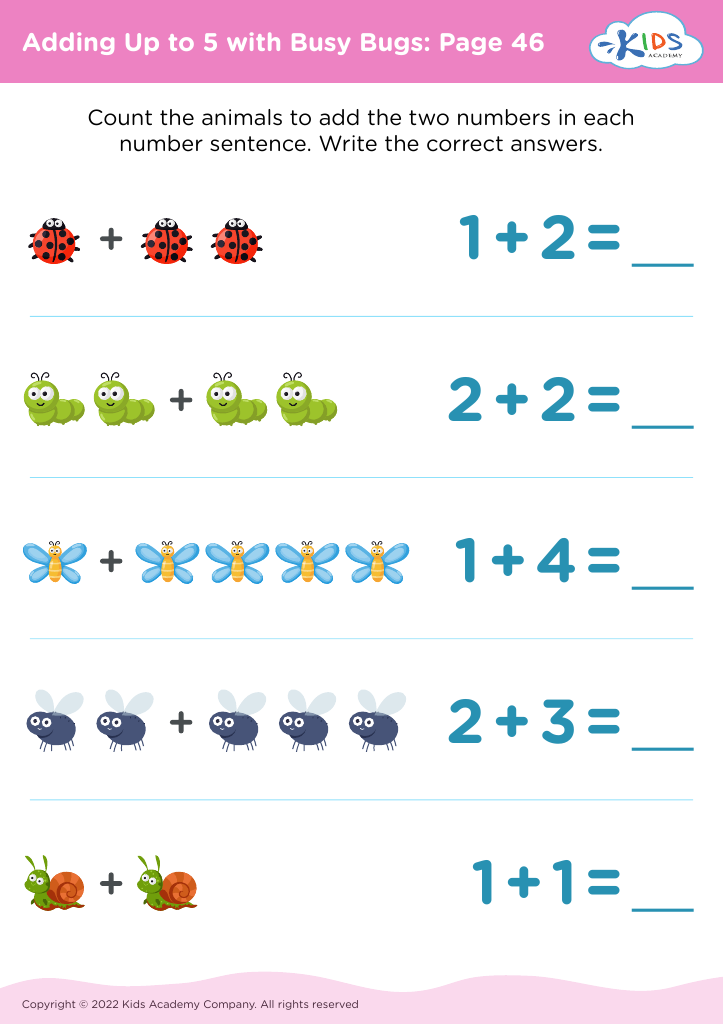
Adding Up to 5 with Busy Bugs: Page 46
Worksheet
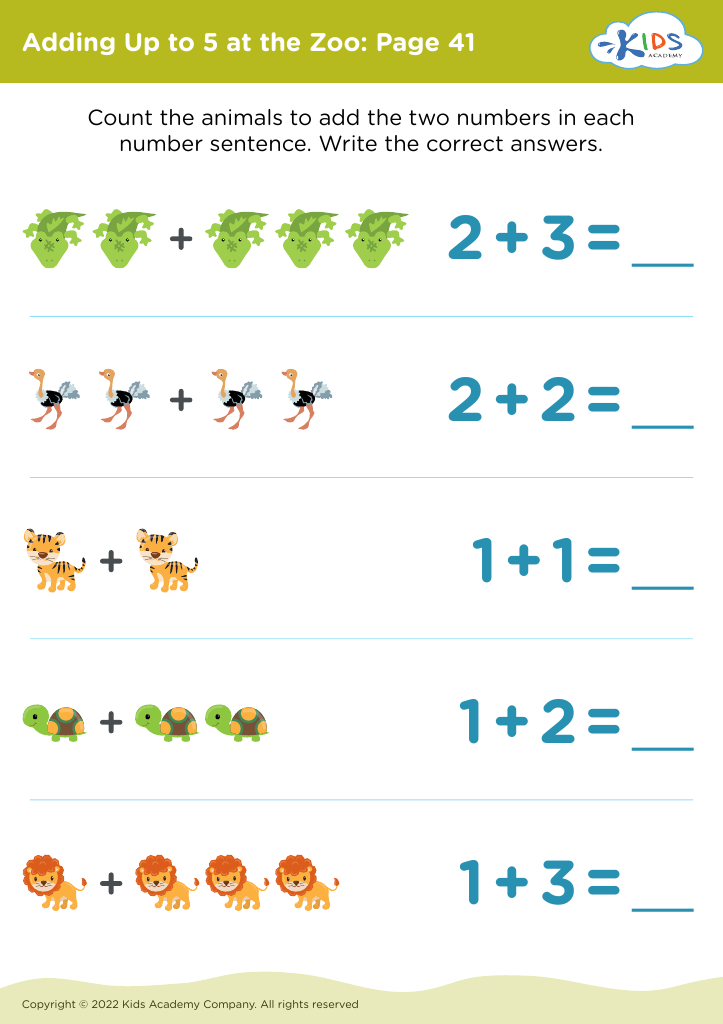
Adding Up to 5 at the Zoo: Page 41
Worksheet
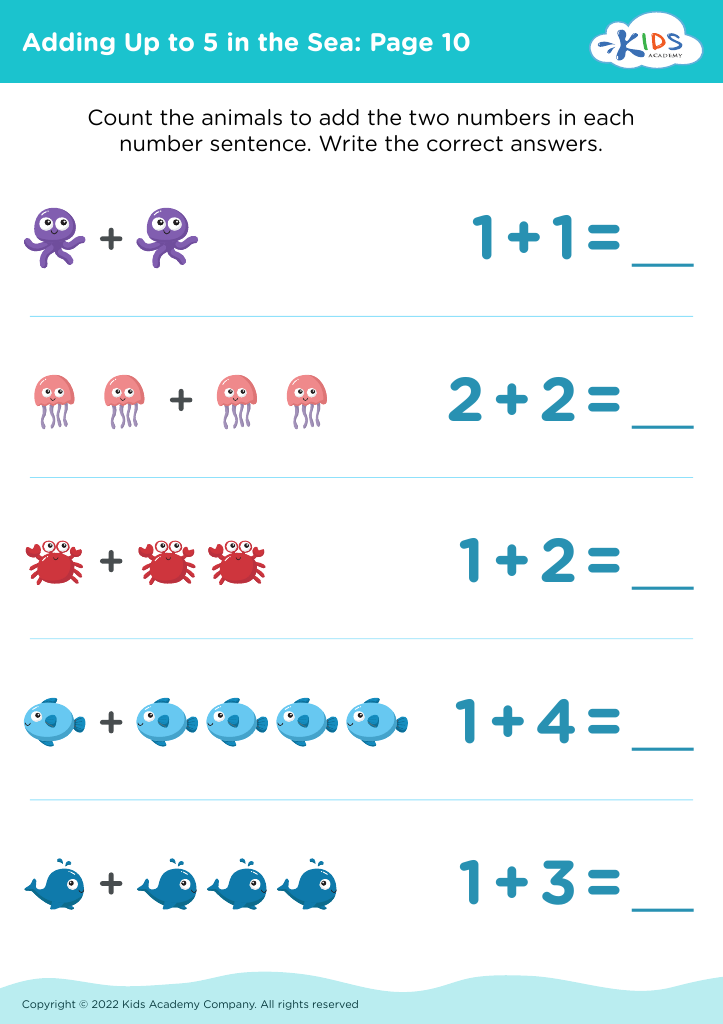
Adding Up to 5 in the Sea: Page 10
Worksheet
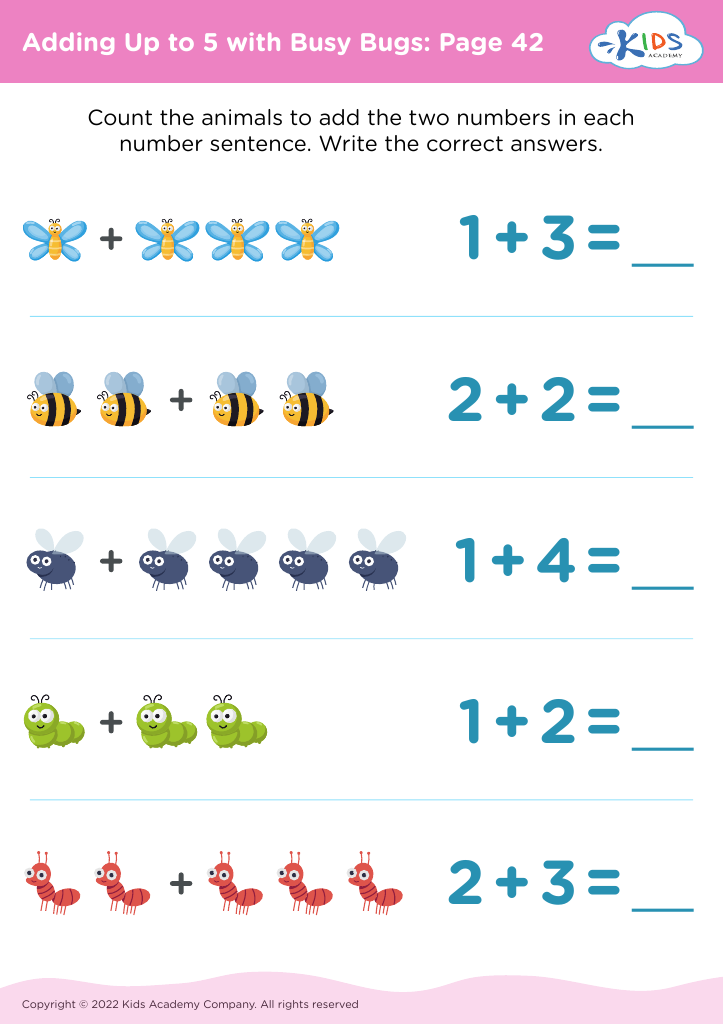
Adding Up to 5 with Busy Bugs: Page 42
Worksheet
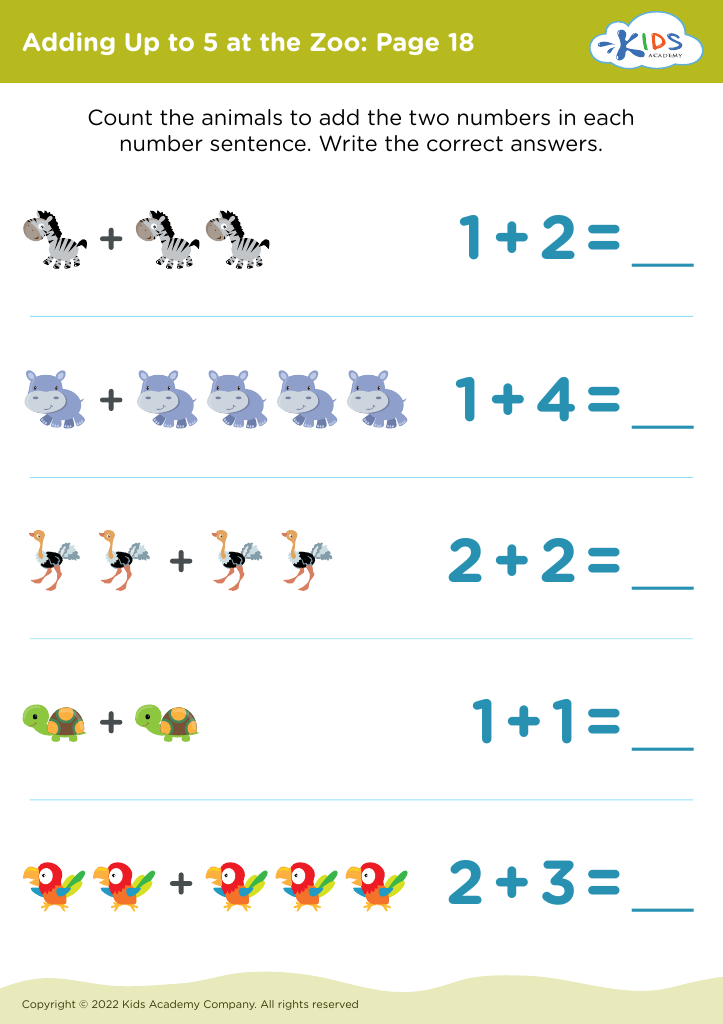
Adding Up to 5 at the Zoo: Page 18
Worksheet
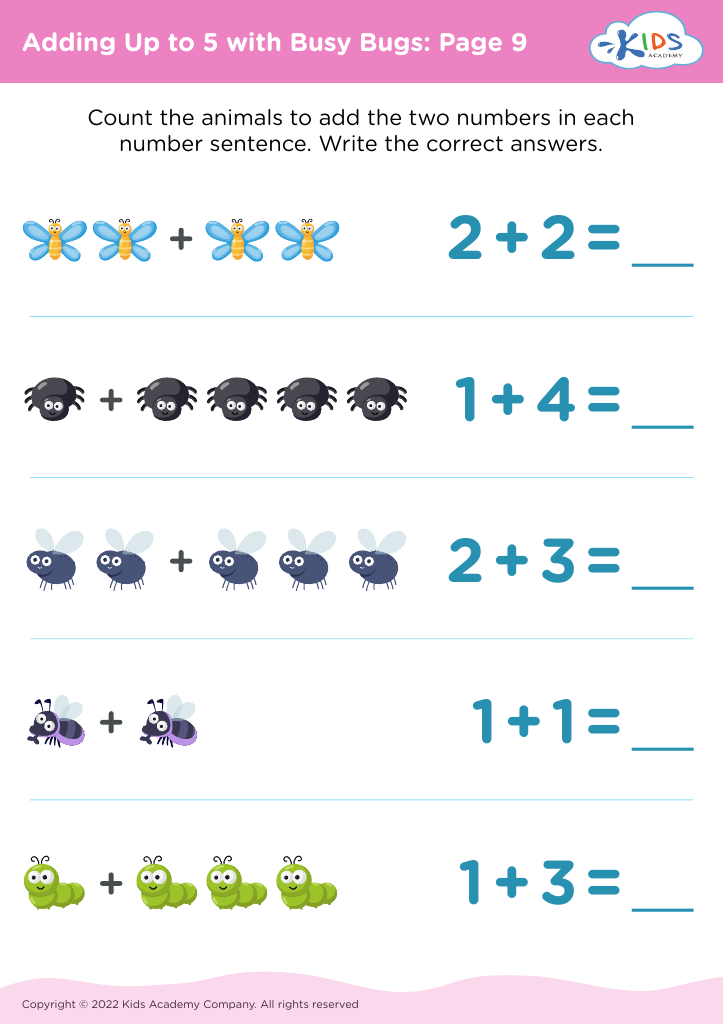
Adding Up to 5 with Busy Bugs: Page 9
Worksheet
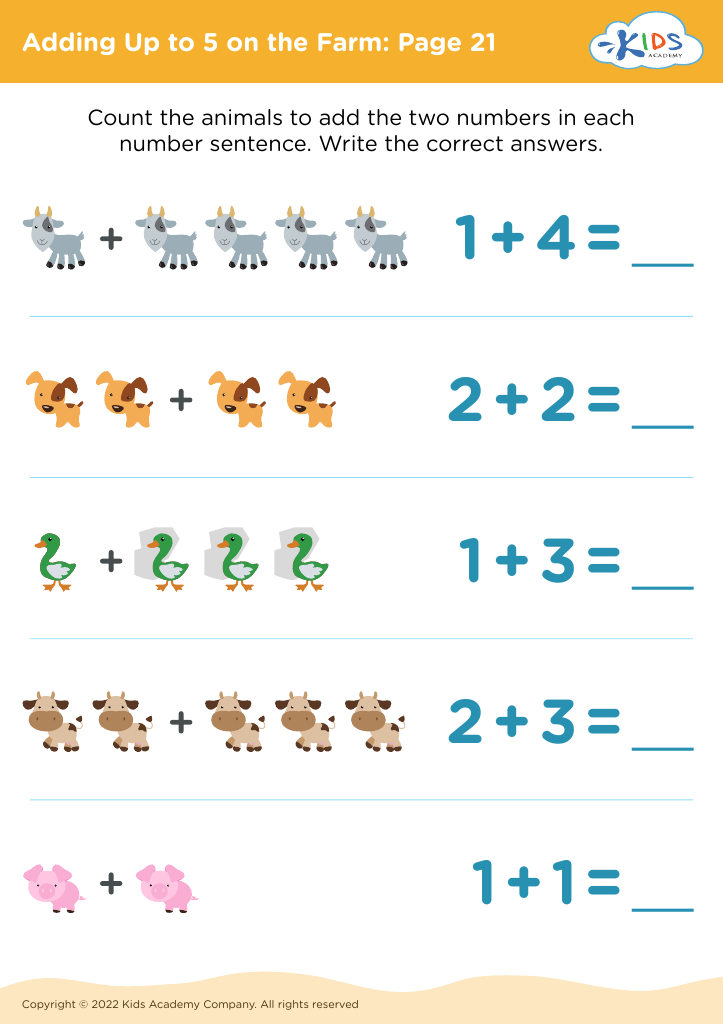
Adding Up to 5 on the Farm: Page 21
Worksheet
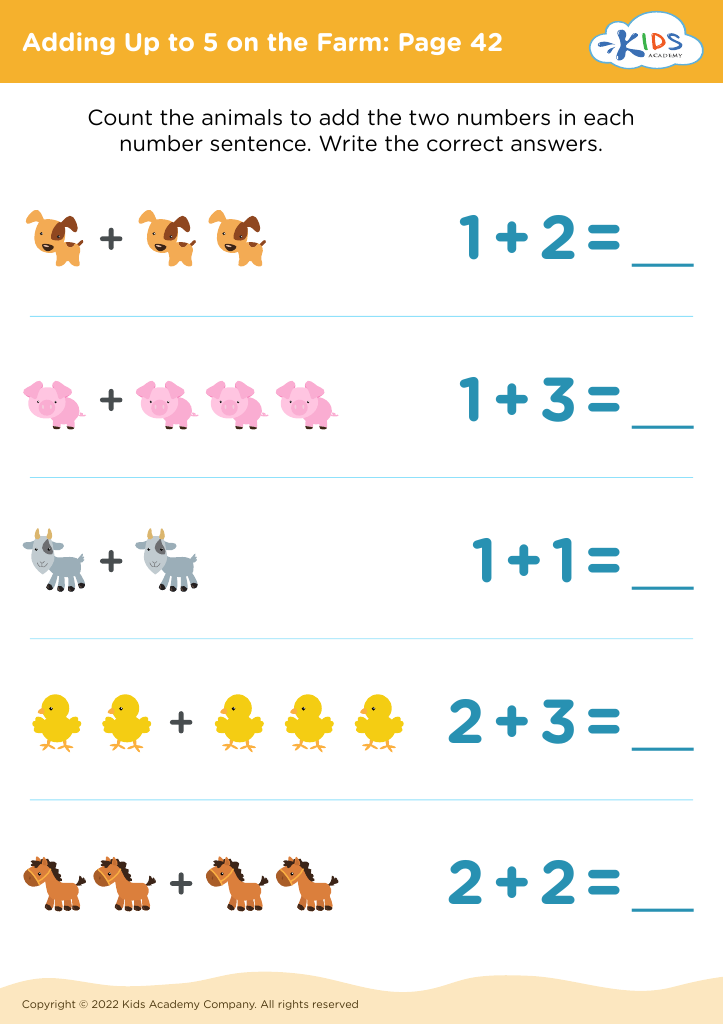
Adding Up to 5 on the Farm: Page 42
Worksheet


Cognitive development in 4-year-olds is a critical phase that lays the foundation for lifelong learning, problem-solving, and social interaction. During this period, children's brains are incredibly receptive and capable of absorbing new information quickly. Parents and teachers play a pivotal role in nurturing this growth, particularly in areas like addition, fundamental for later mathematical skills.

Addition is not just about numbers; it's a cognitive exercise that enhances memory, concentration, and logical thinking. By introducing addition activities early on, children develop a strong number sense, which is crucial for understanding more complex math concepts in the future. For instance, learning to combine groups or count objects not only hones their math skills but also bolsters their ability to make connections and recognize patterns.

Moreover, fostering cognitive development through addition promotes confidence and a growth mindset. As children master new challenges, they build self-esteem and resilience, essential traits for academic success and personal growth. Activities involving addition also encourage social interaction when done in group settings, teaching children about cooperation, turn-taking, and effective communication.

In essence, focusing on cognitive development through early addition enriches a child's intellectual toolkit, providing a robust basis for future academic and social success. Parents and teachers who invest time and resources into this aspect of development are setting children on a path toward lifelong achievement and fulfillment.