Problem-solving practice Addition Worksheets for 4-Year-Olds
3 filtered results
-
From - To
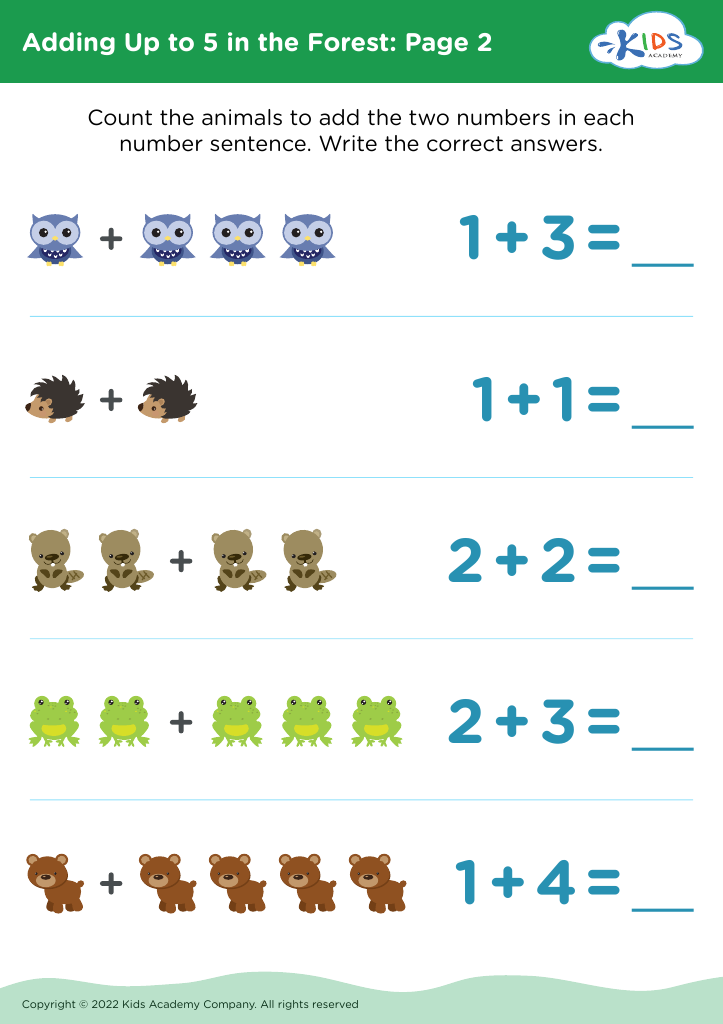
Discover engaging Problem-Solving Practice Addition Worksheets designed specifically for 4-year-olds! These vibrant and interactive worksheets boost early math skills by introducing addition concepts in a fun and approachable way. Perfect for preschoolers, our resources encourage critical thinking and foster a love for learning through creative problems that children can relate to. Each worksheet promotes hands-on practice, helping young learners build confidence while exploring simple addition scenarios. Enhance your child's problem-solving abilities and number recognition today! With these thoughtfully crafted materials, your child will enjoy learning the foundation of math through play and exploration. Start their math journey now!
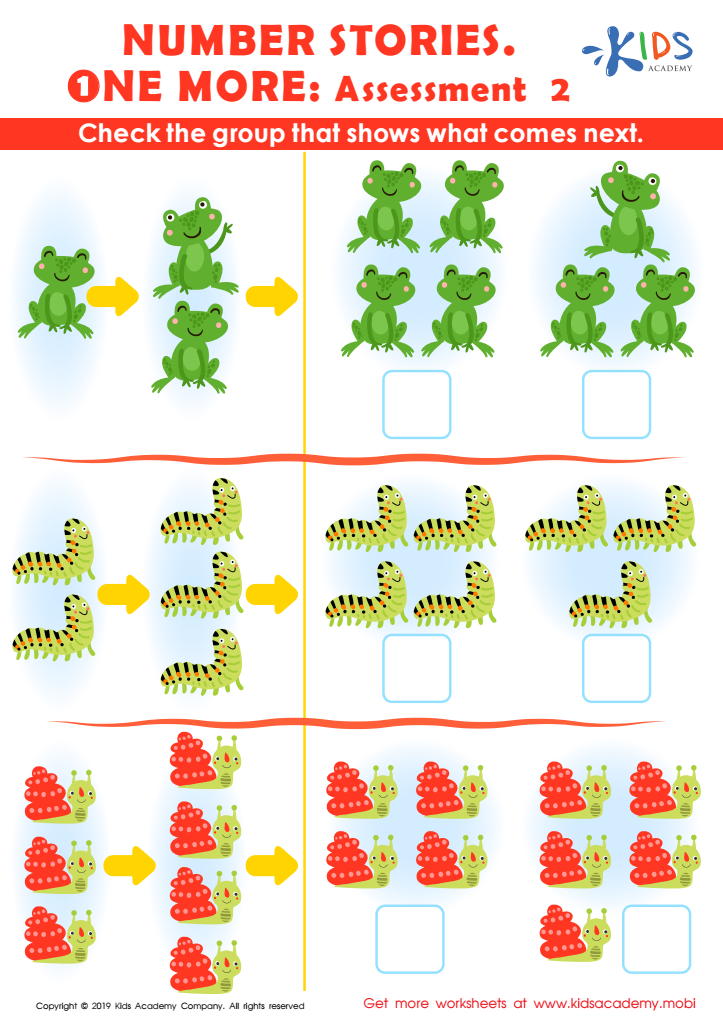
Number Stories One More – Assessment 2 Worksheet
 Assign to My Students
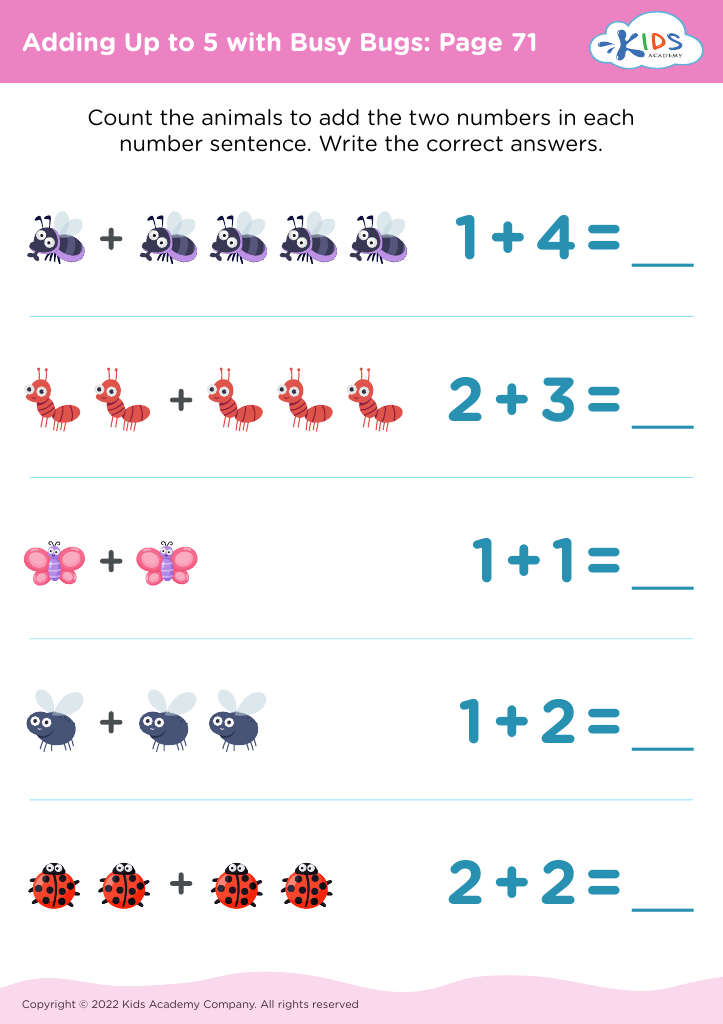








Problem-solving practice in addition for 4-year-olds is crucial for fostering early mathematical understanding and cognitive development. At this age, children are naturally curious and enjoy exploring patterns and relationships, laying a solid foundation for later math skills. By engaging in simple addition activities, children learn to recognize numbers, understand quantity, and develop counting skills in a fun and engaging manner.
Moreover, practicing addition through problem-solving enhances critical thinking and reasoning abilities. It encourages young learners to think creatively as they explore different ways to arrive at a solution, fostering resilience and persistence in the face of challenges. This interdisciplinary approach not only promotes mathematical skills but also nurtures social and emotional development, as children often collaborate during group activities.
For parents and teachers, incorporating problem-solving addition activities reinforces the importance of early math education. These interactions help to create a positive learning environment, where children feel confident to express their ideas and learn from mistakes. Ultimately, through consistent practice, children build a strong mathematical foundation that supports their future academic success and lifelong learning while gaining essential problem-solving skills applicable beyond the classroom. Encouraging this practice enables parents and teachers to play a pivotal role in a child's educational journey.








