Understanding number values Addition Worksheets for 4-Year-Olds
3 filtered results
-
From - To
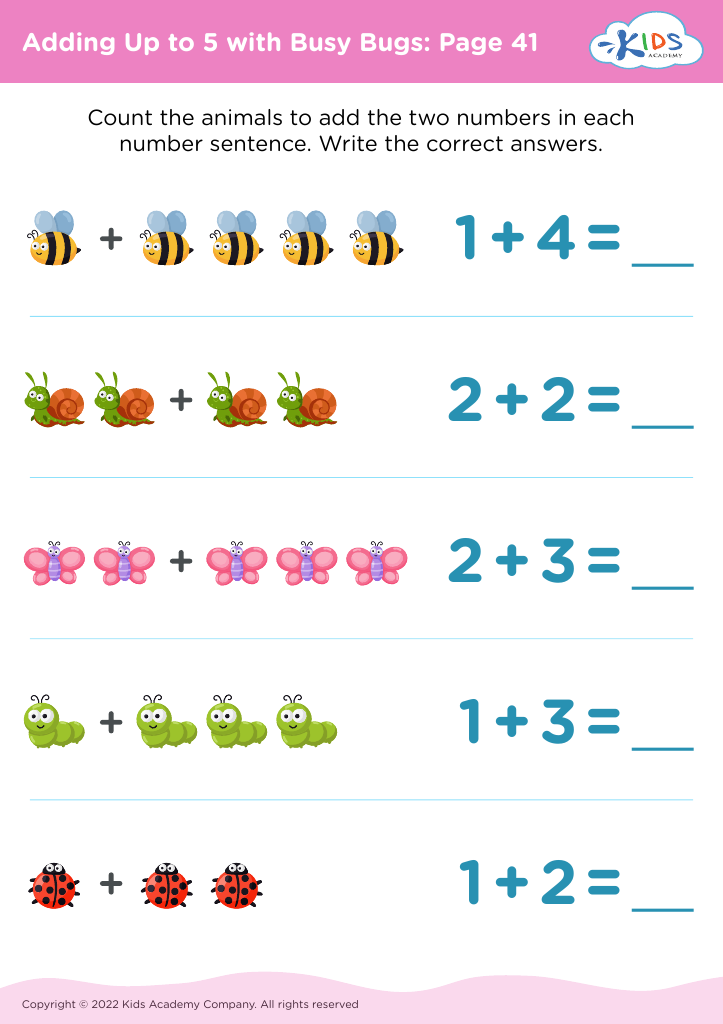
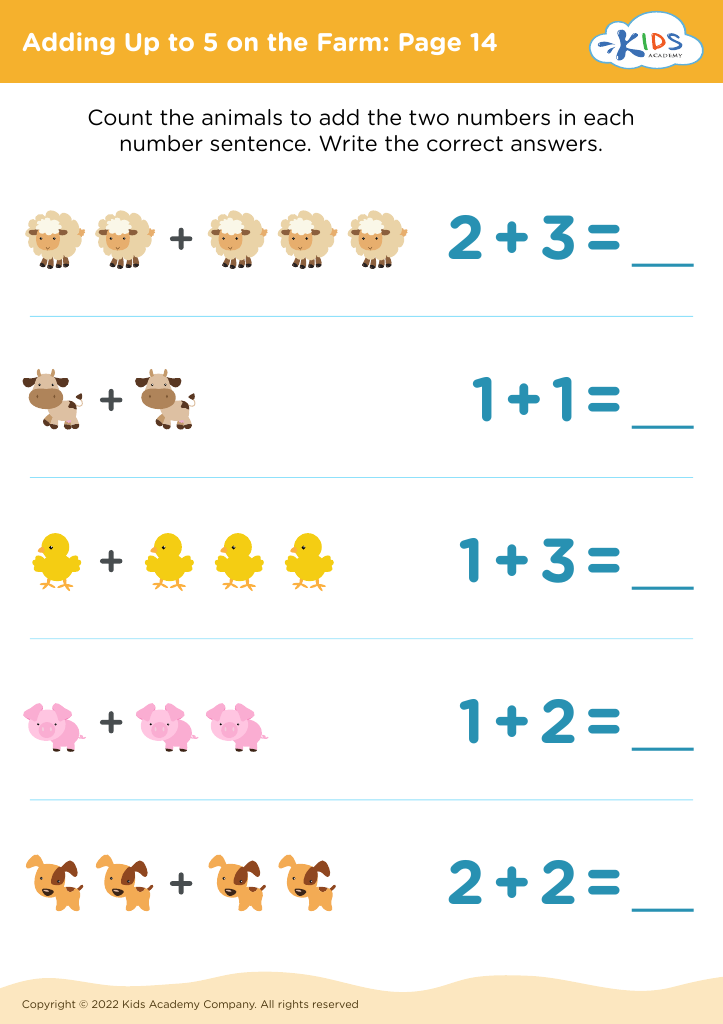
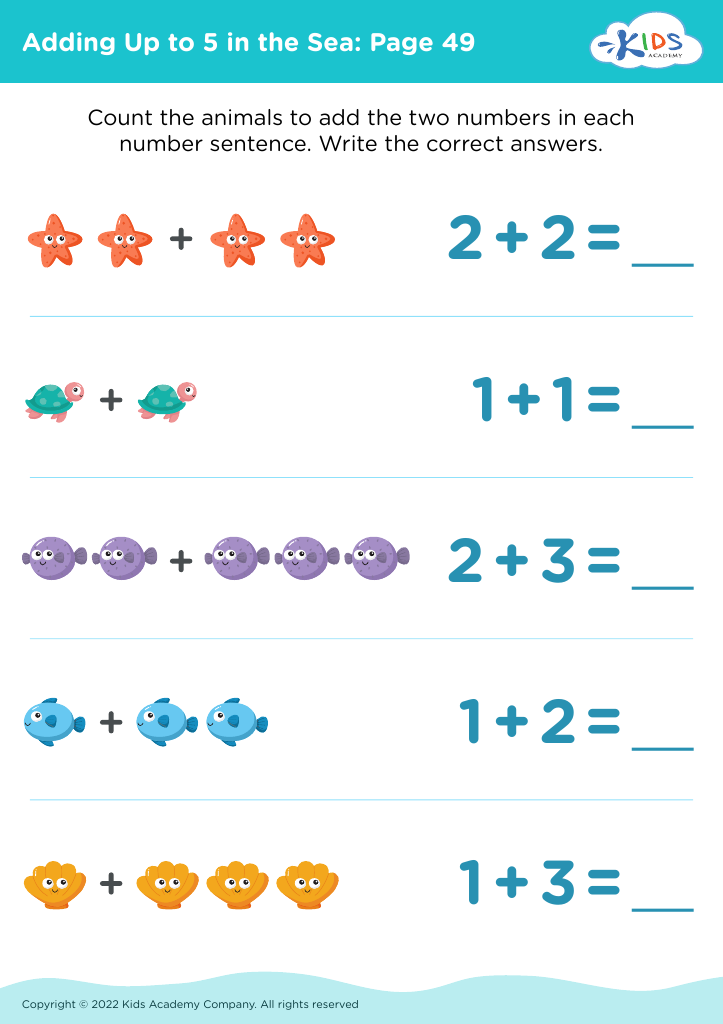
Enhance your 4-year-old's math skills with our "Understanding Number Values Addition Worksheets"! These engaging, interactive worksheets introduce young learners to the concept of number values while making addition fun and approachable. Designed with colorful visuals and age-appropriate exercises, our worksheets help children grasp foundational math concepts in a playful manner. As they complete the activities, kids will gain confidence in recognizing numbers, counting, and performing simple addition tasks. Perfect for at-home learning or classroom use, these resources foster a love for math and encourage critical thinking. Start your child's journey to becoming a math whiz today with our thoughtfully crafted worksheets!







Understanding number values and basic addition is crucial for 4-year-olds as it lays a solid foundation for their future mathematical skills. At this age, children's cognitive abilities are rapidly developing, and introducing them to simple math concepts can enhance their problem-solving skills, reinforce their understanding of patterns, and improve their critical thinking.
Parents and teachers play a significant role in nurturing a child's curiosity and understanding of numbers. When children grasp number values, they fulfill essential developmental milestones, fostering their confidence in handling math-related tasks as they grow. Moreover, early exposure to addition boosts their enthusiasm for learning, making math feel more engaging and less intimidating.
These foundational skills also have broader benefits. Research shows that early math skills are linked to later academic success, making it vital for children to feel comfortable with numbers. Furthermore, engaging with number values can be seamlessly integrated into everyday activities, such as counting fruits during snack time or setting the table together. This approach not only makes learning fun but also helps children apply math in real-world contexts. Ultimately, prioritizing foundational math skills in early childhood education shapes confident learners prepared to tackle more complex subjects in the future.








