Visual comprehension Addition Worksheets for 4-Year-Olds
7 filtered results
-
From - To
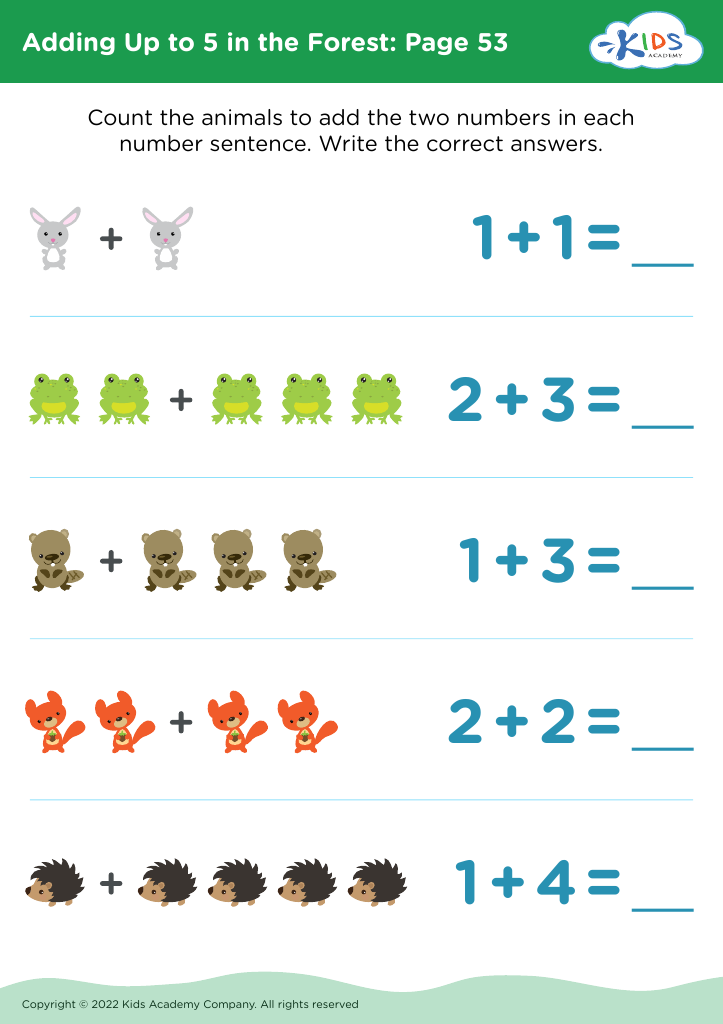
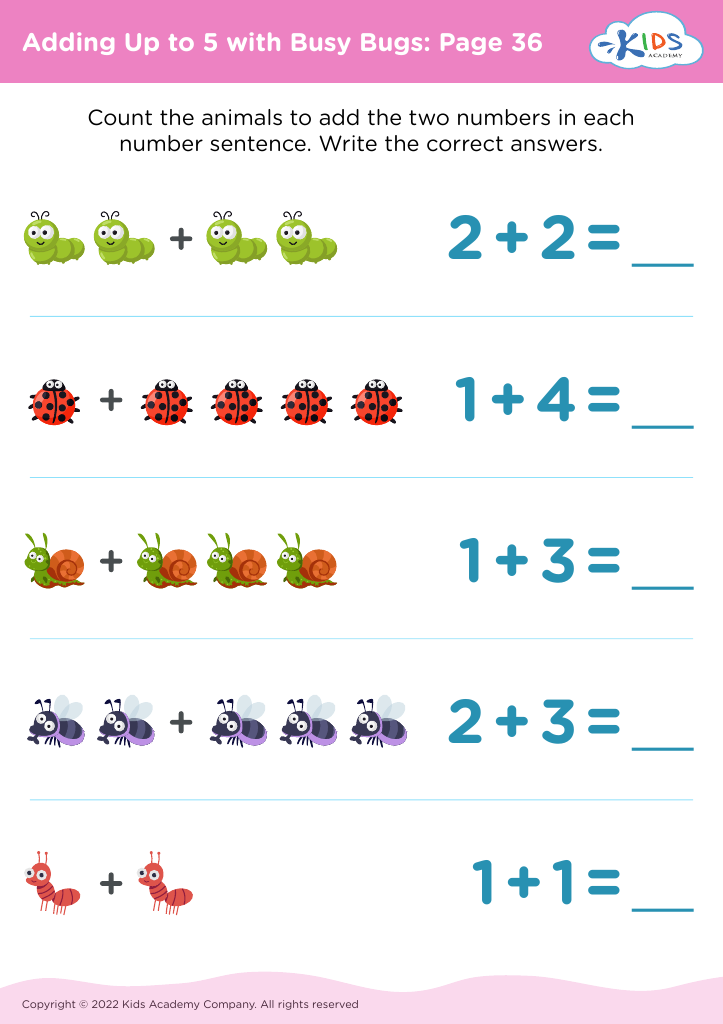
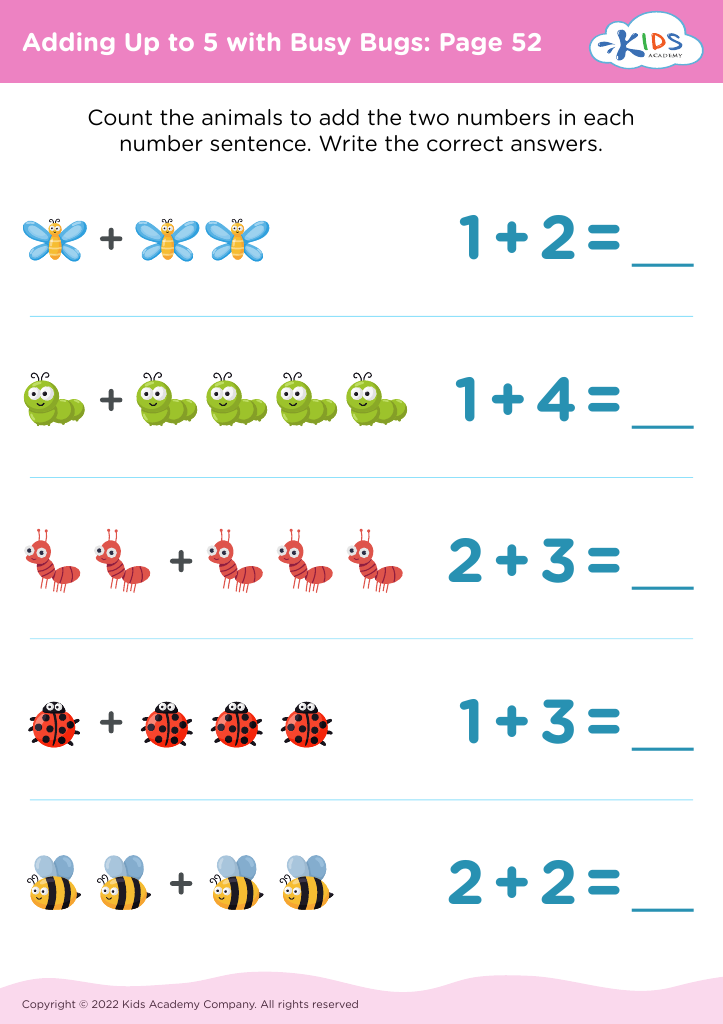
Discover engaging and educational Visual Comprehension Addition Worksheets tailored for 4-year-olds at Kids Academy. Our expertly designed worksheets help young learners enhance their visual comprehension and addition skills through fun, colorful exercises. Each worksheet features vibrant images and enticing activities that make learning addition a delightful experience. These activities not only promote mathematical proficiency but also support cognitive development and critical thinking. Perfect for early learners, our worksheets ensure a solid foundation in math. Boost your child's confidence and competence in addition with our captivating resources. Visit Kids Academy to download your free Visual Comprehension Addition Worksheets today!
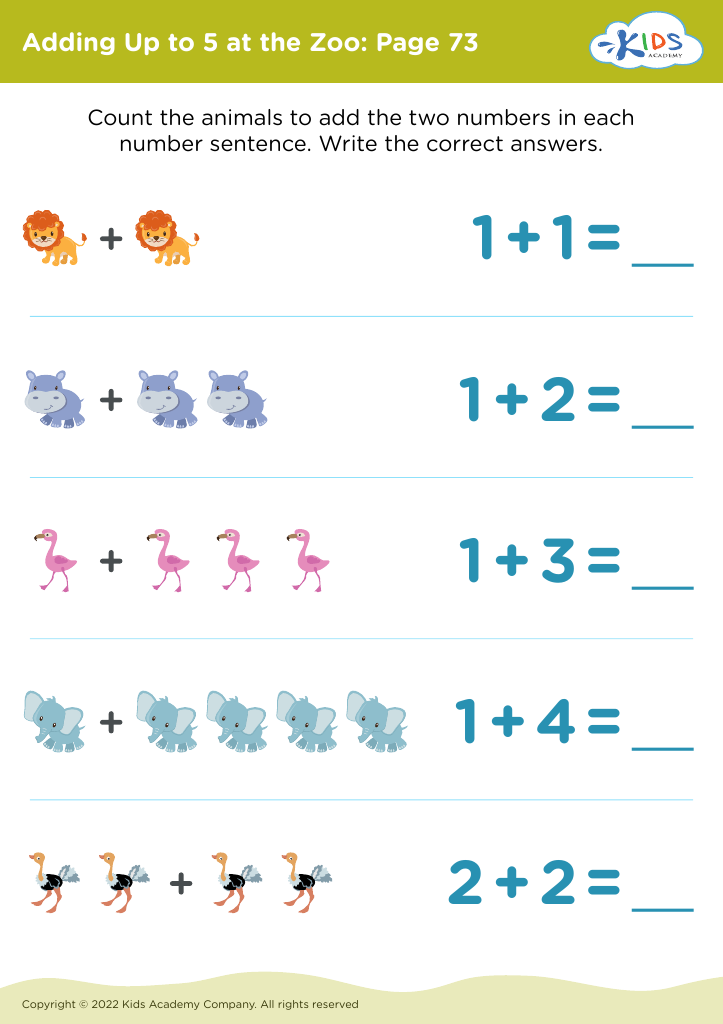
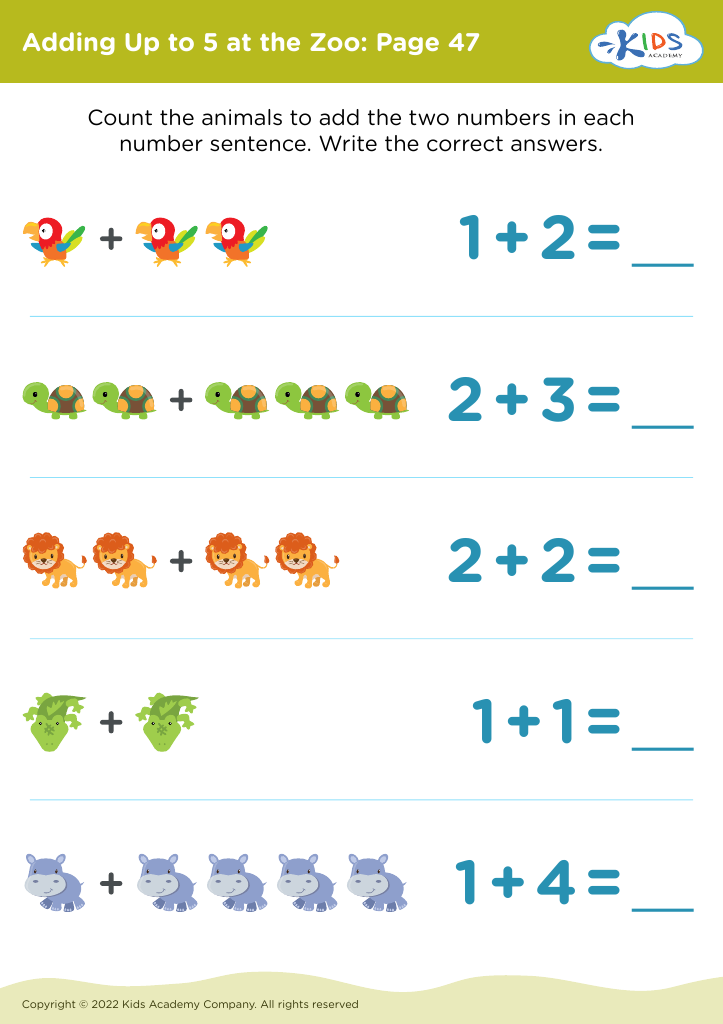
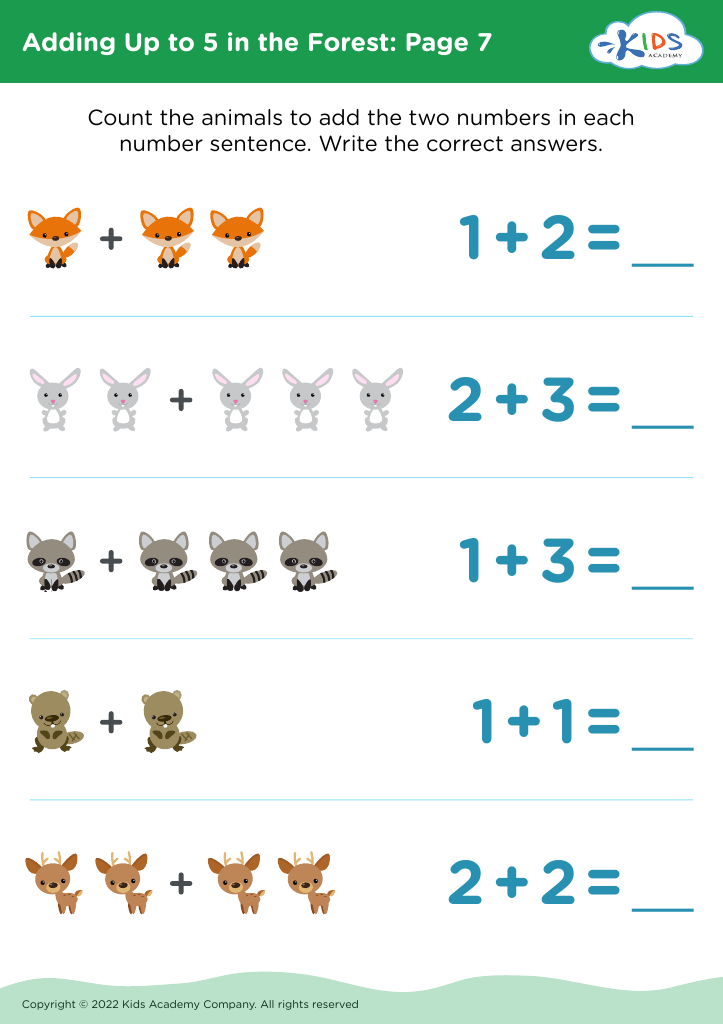
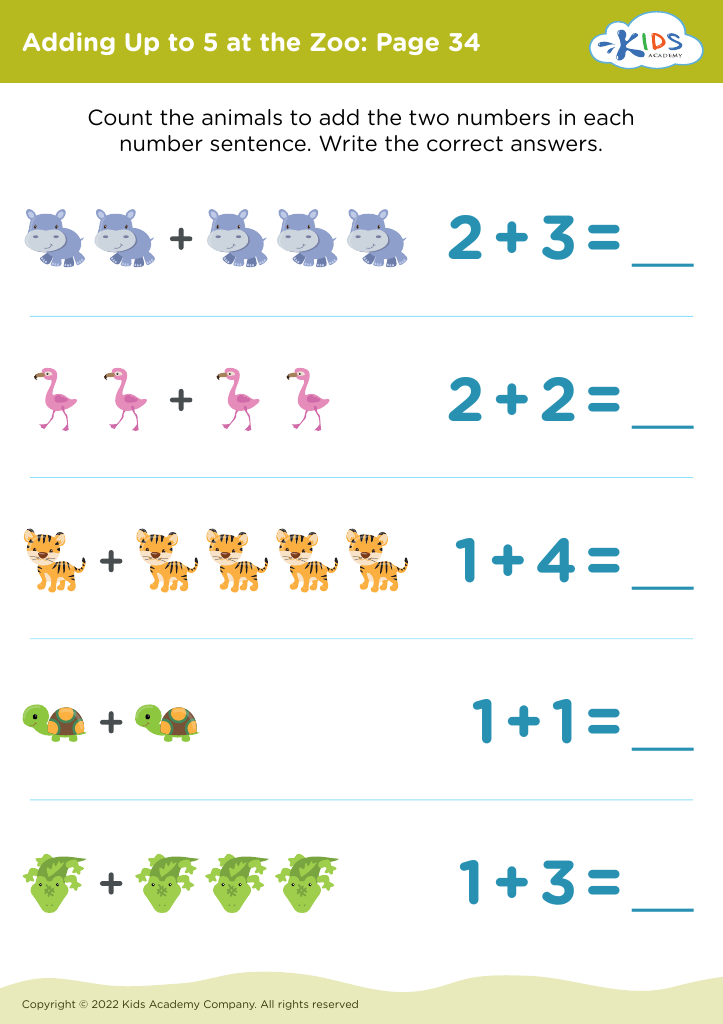







.jpg)
Visual comprehension addition for 4-year-olds is a foundational skill that parents and teachers should prioritize due to its numerous developmental benefits. At this age, children's brains are exceptionally receptive to learning basic math concepts, and integrating visual comprehension engages their natural curiosity and visual learning strengths.
First, introducing visual addition helps solidify the understanding of quantity and number relationships. By using objects, pictures, or manipulatives, children can see the direct physical representation of mathematical operations, making abstract concepts more tangible and understandable.
Second, visual comprehension exercises can enhance critical thinking and problem-solving skills. Observing images and deducing patterns or differences boosts cognitive capacities, aiding in overall academic performance later on.
Third, these activities support fine motor skills through the handling of objects and tools. Such hands-on experiences inadvertently prepare children for writing and other essential school tasks.
Lastly, fostering positive early experiences with math through visual supports builds confidence and interest. When children successfully complete tasks, it creates a sense of accomplishment and eagerness to tackle more advanced challenges.
In summary, parents and teachers should care about visual comprehension addition as it nurtures cognitive development, motor skills, and fosters a positive attitude towards learning, laying strong groundwork for future educational success.








