Counting practice Geometry Worksheets for 4-Year-Olds
5 filtered results
-
From - To
Our "Counting Practice Geometry Worksheets for 4-Year-Olds" blend fun and learning, helping your little one master early math skills effortlessly. These delightful printables are designed to introduce young learners to basic shapes and counting through engaging activities. From tracing and identifying shapes to counting sides and corners, each worksheet builds foundational skills in a playful manner. Perfect for preschoolers, these educational resources support developmental milestones and encourage a love for math. Ideal for at-home practice or classroom use, these worksheets make learning math concepts like geometry and counting an enjoyable adventure for your child.
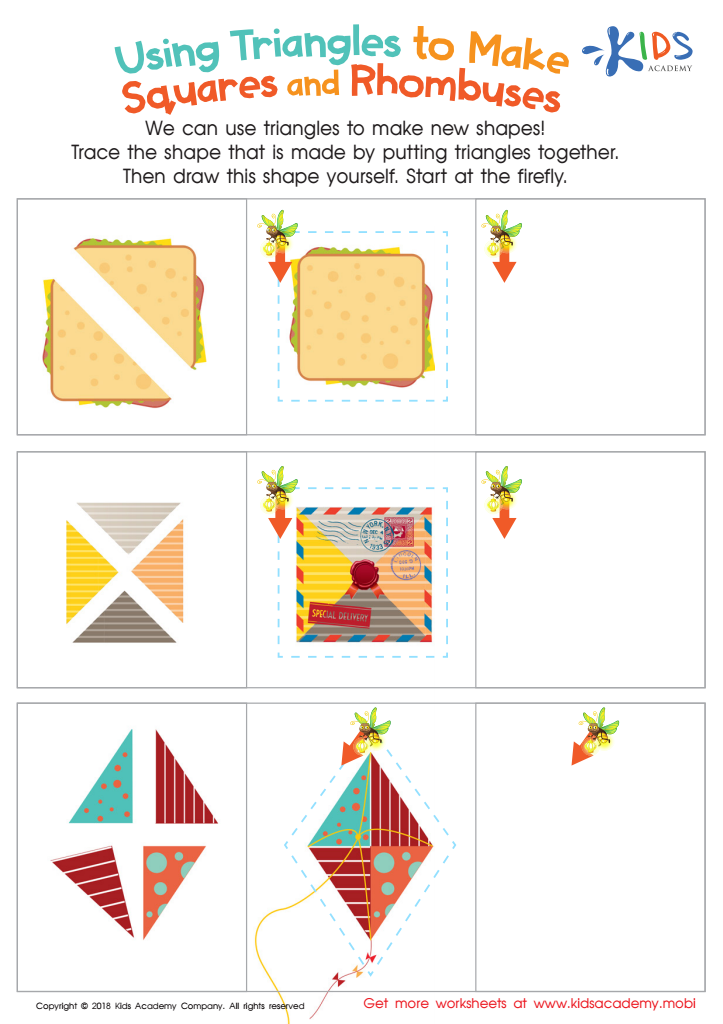
Using Triangles to Make Squares and Rhombuses Worksheet











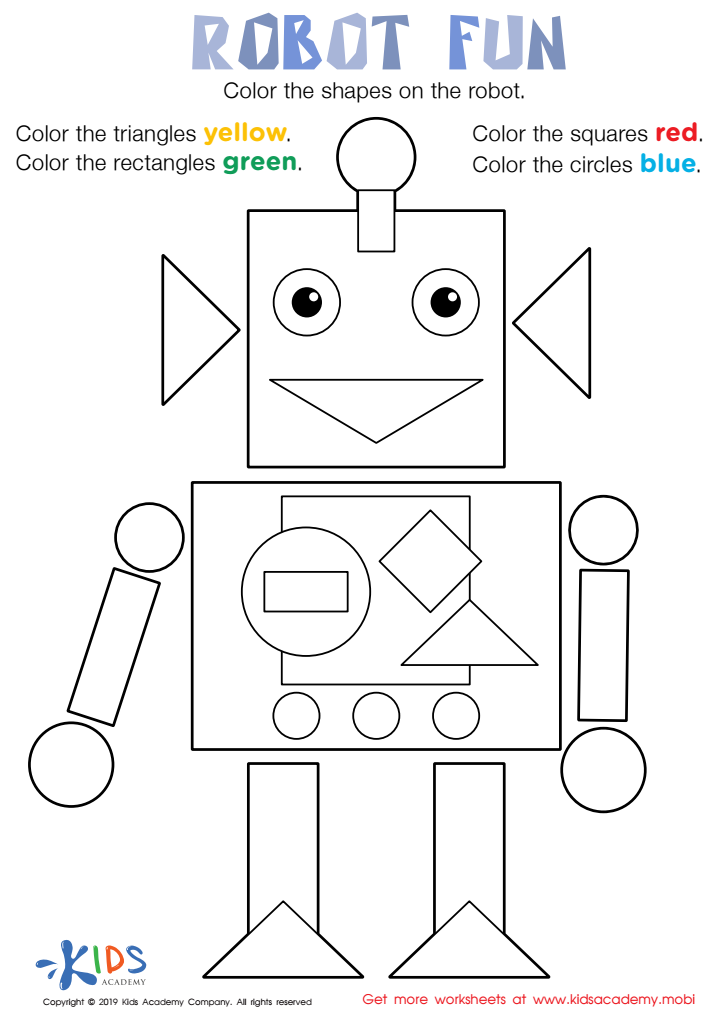
Robot Fun Worksheet
 Assign to My Students
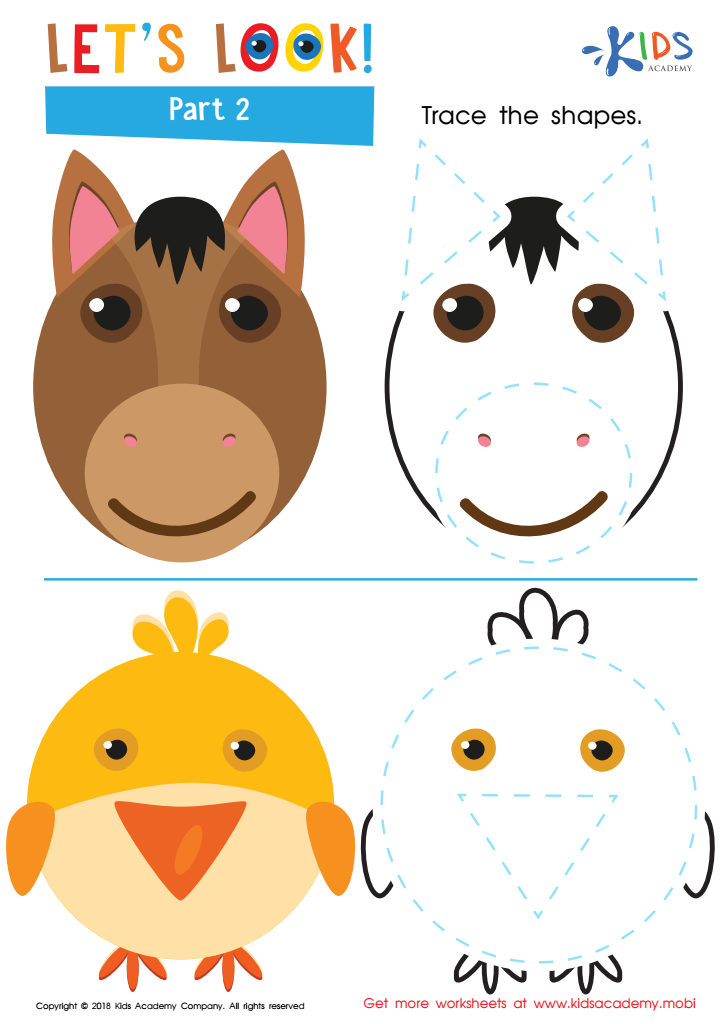
Let's Look! Part 2 Worksheet
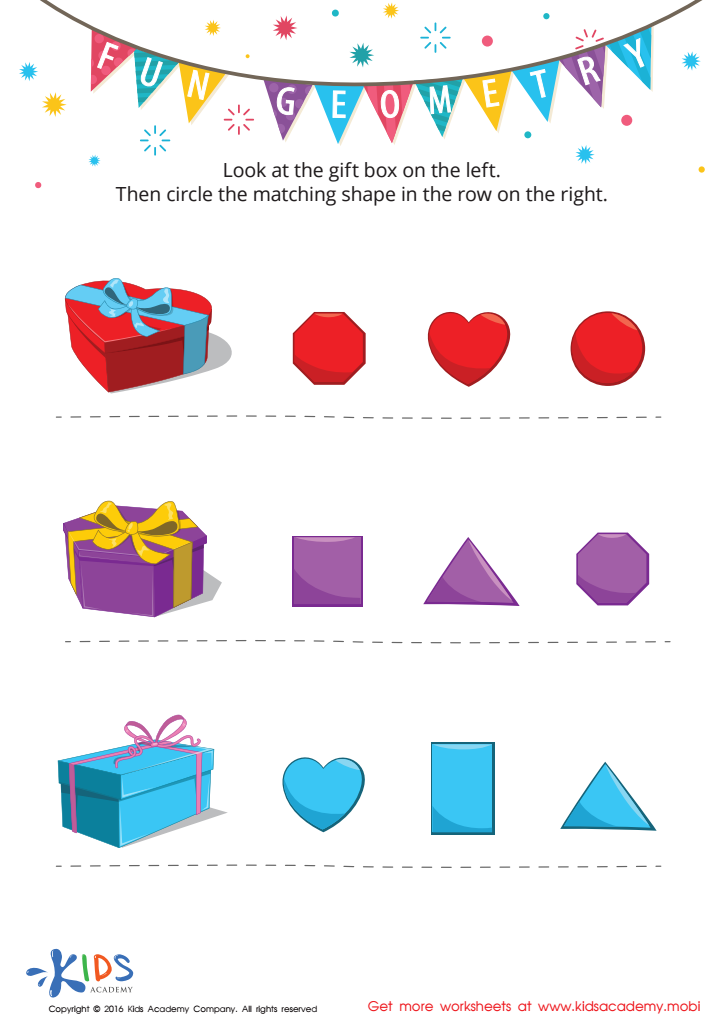
Fun Geometry Worksheet
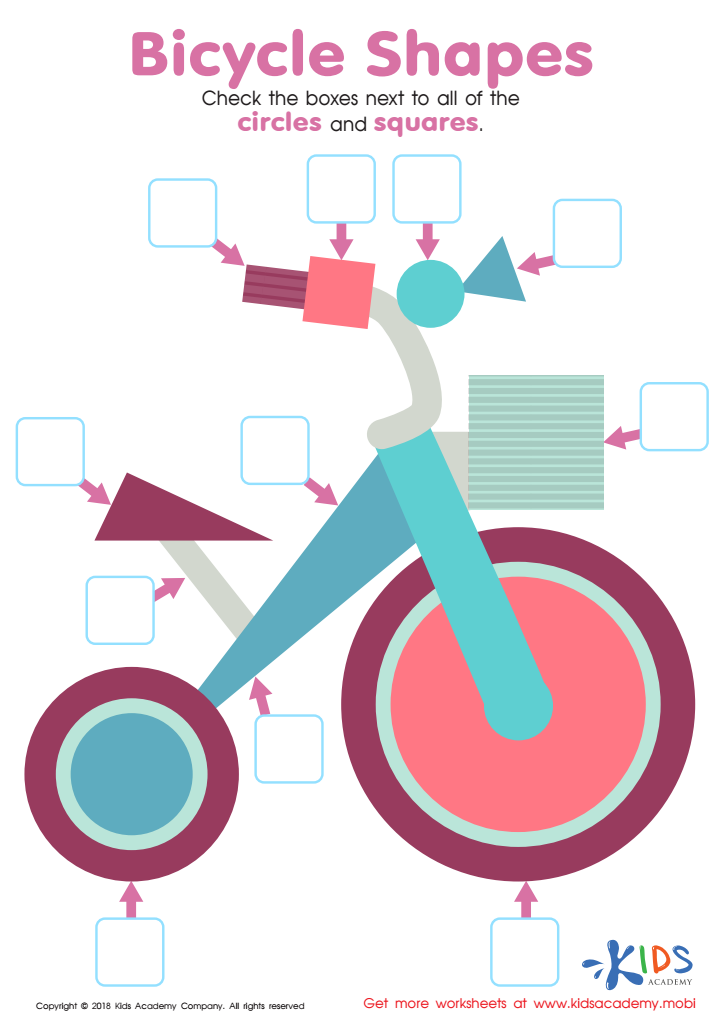
Bicycle Shapes Worksheet








Counting practice and introductory geometry for 4-year-olds are crucial elements in early childhood development. At this age, children are rapidly developing cognitive, motor, and social skills, and early exposure to basic mathematical concepts can offer profound long-term benefits.
First, counting practice helps young children grasp the fundamental concept of numbers and their sequence, which is a foundational skill for all future math learning. It enhances their memory, attention to detail, and number sense—understanding that numbers correspond to specific quantities.
Geometry, even in its simplest form like recognizing shapes, is equally important. It helps children develop spatial awareness, a critical skill that underpins much of everyday problem-solving and later academic success. By identifying and playing with shapes, children learn to observe and describe the world around them with precision, categorizing and comparing different objects.
Moreover, integrating counting and geometry into play-based activities can improve fine motor skills as children manipulate objects, draw shapes, or count items. Socially and emotionally, these activities promote persistence, concentration, and a sense of achievement, all of which are vital for a well-rounded educational experience.
In summary, incorporating counting and basic geometry into a 4-year-old's learning ensures a strong start to their academic journey and supports their overall cognitive and social development.








