Spatial reasoning Geometry Worksheets for 4-Year-Olds
4 filtered results
-
From - To
Discover our engaging Spatial Reasoning Geometry Worksheets for 4-year-olds, designed to ignite young minds with fun and interactive learning! These worksheets encourage critical thinking and problem-solving as children explore shapes, patterns, and spatial relationships. Tailored for preschoolers, our worksheets enhance cognitive skills through lively activities that promote creativity and observational abilities. Featuring vibrant illustrations and age-appropriate challenges, these resources make learning geometry an enjoyable experience. By focusing on spatial reasoning, children develop foundational skills that support later mathematics success. Dive into our collection and watch your little ones grow their love for shapes while preparing them for future learning adventures!
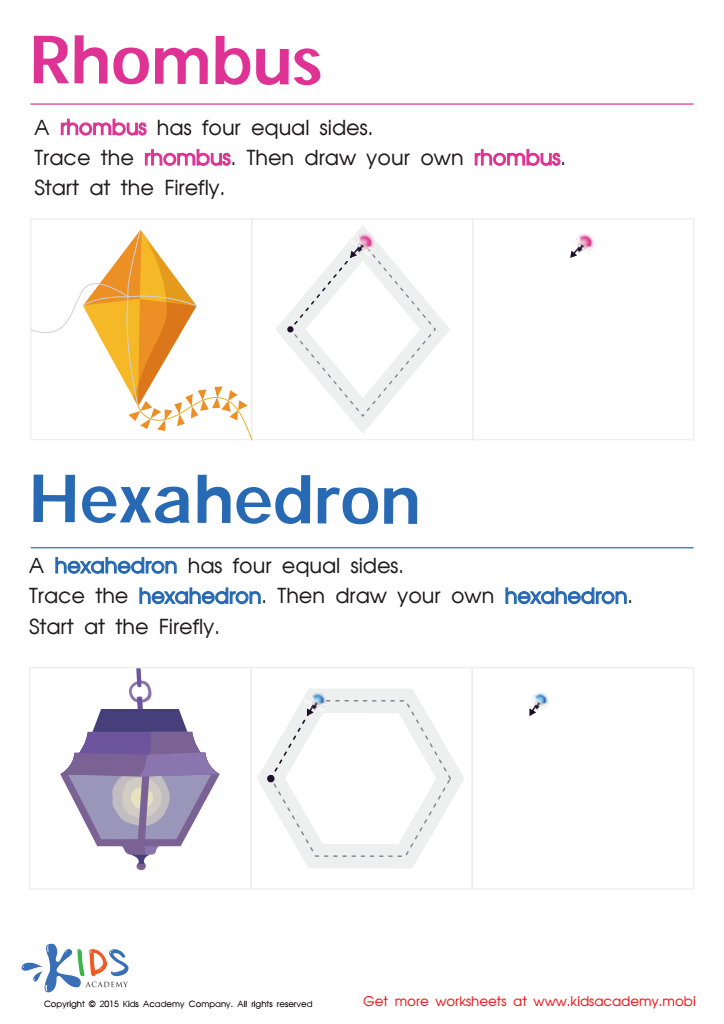
Draw a Rhombus And a Hexahedron Printable
 Assign to My Students











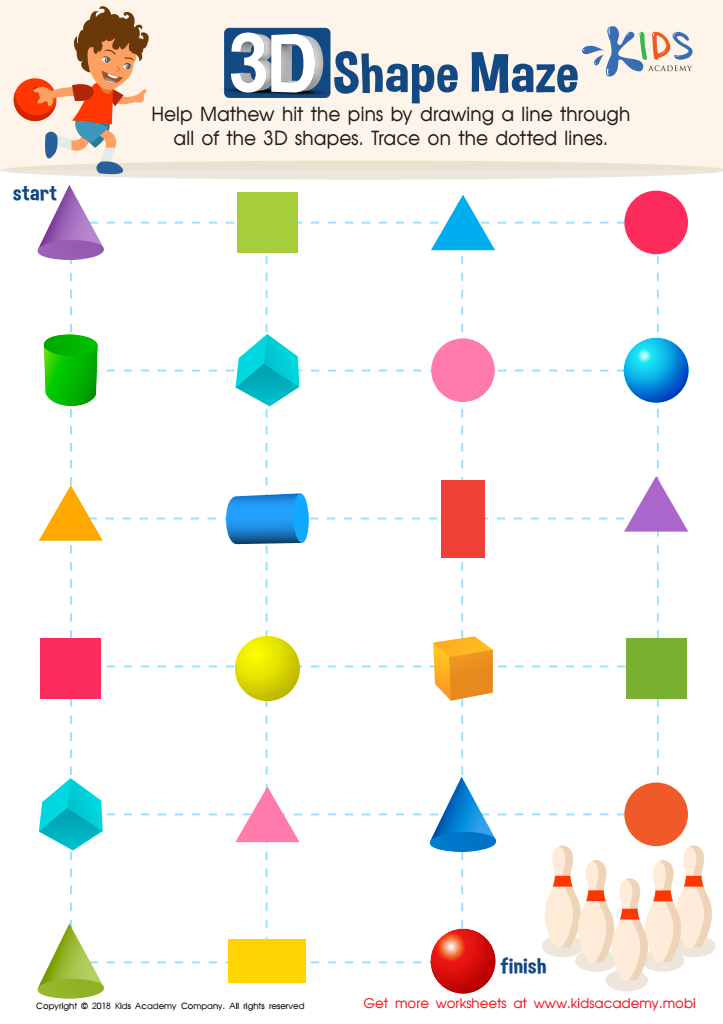
Shapes Maze Geometry Worksheet
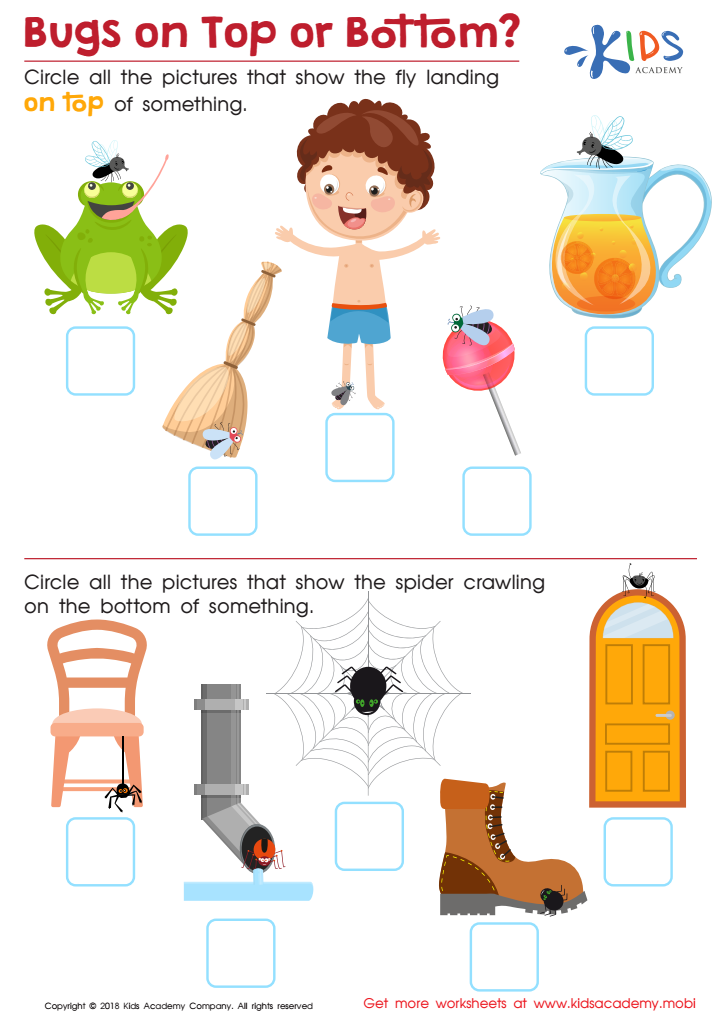
Bugs on Top or Bottom? Worksheet
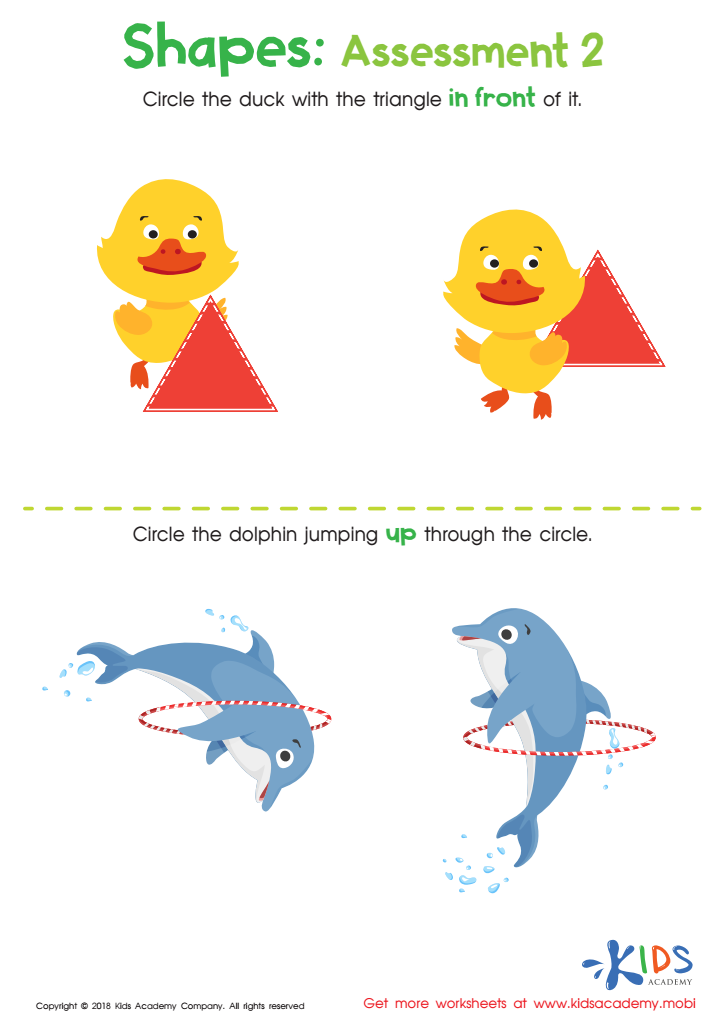
Geometry – Assessment 2 Worksheet








Spatial reasoning and geometry are crucial for 4-year-olds as they lay the foundation for future mathematical understanding and cognitive development. At this age, children are naturally curious and begin to explore their world, making it the perfect time to introduce spatial concepts. Engaging in activities that promote spatial awareness – such as puzzles, building blocks, and shape recognition – fosters essential skills like problem-solving and critical thinking.
Parents and teachers should care about spatial reasoning because it supports not only math skills but also enhances overall cognitive abilities. Recognizing shapes, understanding spatial relationships, and visualizing movements are vital skills that transcend mathematics. These abilities contribute to a child's overall academic success and improve their spatial memory and coordination.
Moreover, integrating spatial reasoning into everyday play helps in nurturing creative thinking and imagination. Engaging children in hands-on activities encourages them to think outside the box, paving the way for innovative ideas in later years. As children grow, strong spatial reasoning skills are linked to success in STEM subjects and various fields, such as engineering, architecture, and science. Thus, fostering these competencies during early childhood is imperative for holistic development and future academic success.








