
Attention to Detail Math Worksheets for 4-Year-Olds
6 filtered results
Difficulty Level
Grade
Age
-
From - To
Subject
Activity
Standards
Boost your child's analytical skills with our "Attention to Detail Math Worksheets for 4-Year-Olds." Specially crafted to engage young minds, these worksheets enhance focus, concentration, and precision. With fun, interactive activities tailored to early learners, kids can explore basic math concepts while improving their observational abilities. Each worksheet is designed to be both entertaining and educational, ensuring that learning is a delightful experience. Perfect for preschoolers, these worksheets lay the foundation for excellent numerical skills and critical thinking. Visit Kids Academy to download printable worksheets and give your child a head start in their educational journey today!
Favorites
With answer key
Interactive
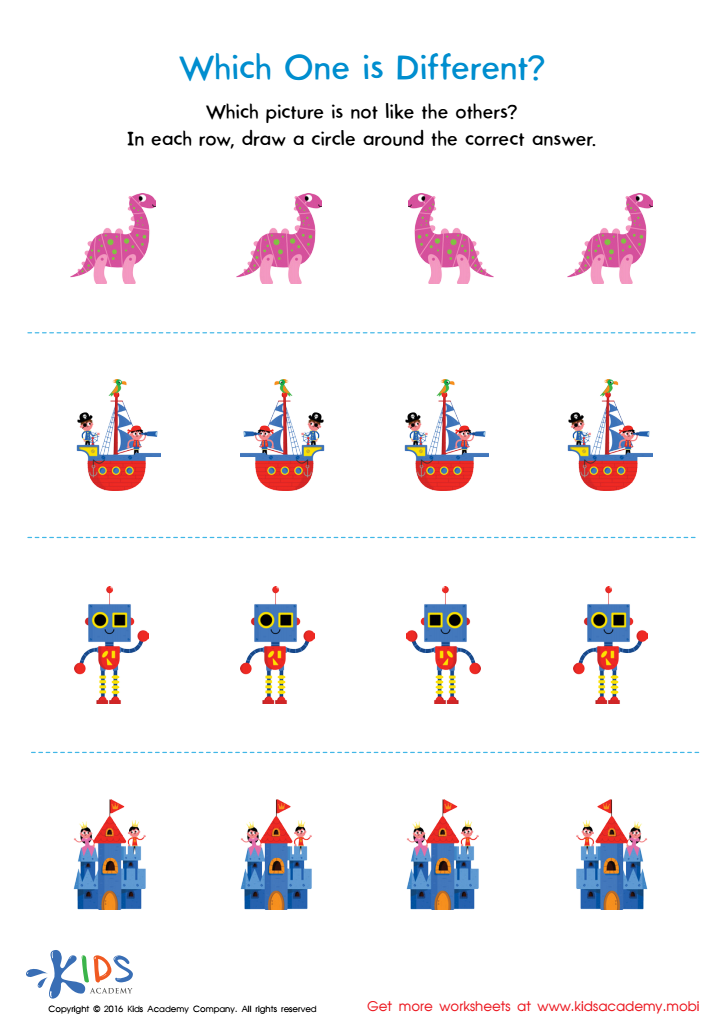
Which One Is Different Worksheet
Preschoolers can hone logical reasoning and critical analysis skills with this "Which one is Different?" worksheet. Kids must look closely and pick out unique attributes of objects and images. It's a skill that can serve them throughout their lifetime.
 Assign to My Students
Which One Is Different Worksheet
Worksheet
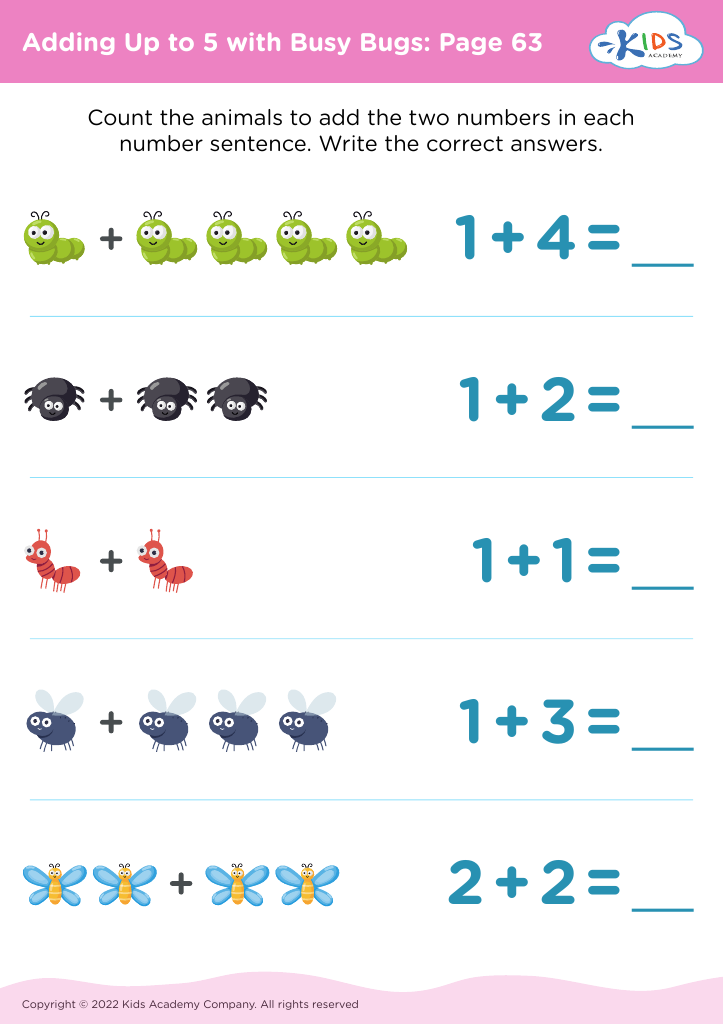
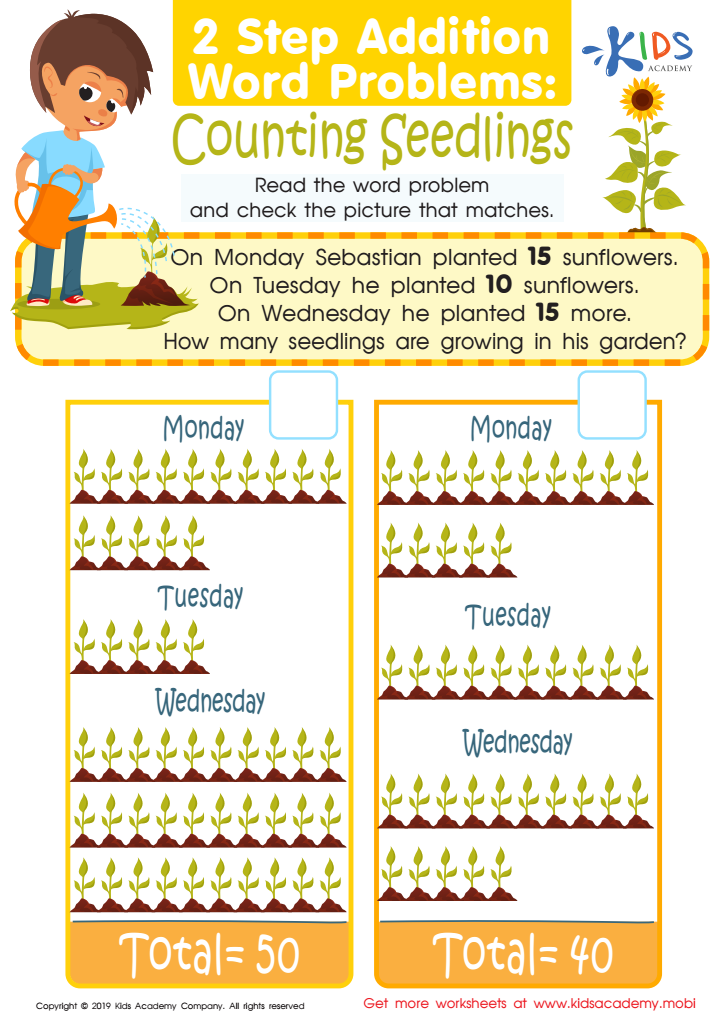
Counting Seedlings Worksheet
Understanding math word problems is key. Multiple steps can prove challenging - this free worksheet provides one-to-one picture representation to help kids solve multi-step addition word problems. Strengthen addition skills by choosing the matching picture to the answer.
Counting Seedlings Worksheet
Worksheet
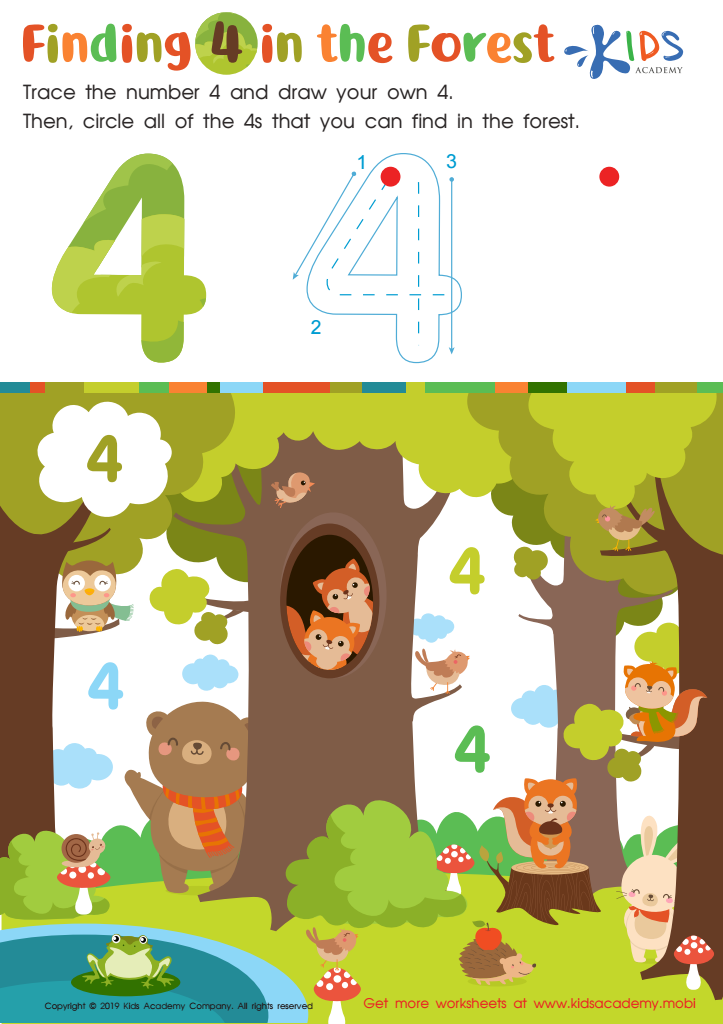
Finding 4 in the Forest Worksheet
Before starting, have your kids count as high as they can. Ask them to identify the setting and point out the 4s. Trace 4 and draw your own. Help your kids circle all the 4s they can find in the forest. How far can they count? How well did they find the hidden 4s?
Finding 4 in the Forest Worksheet
Worksheet
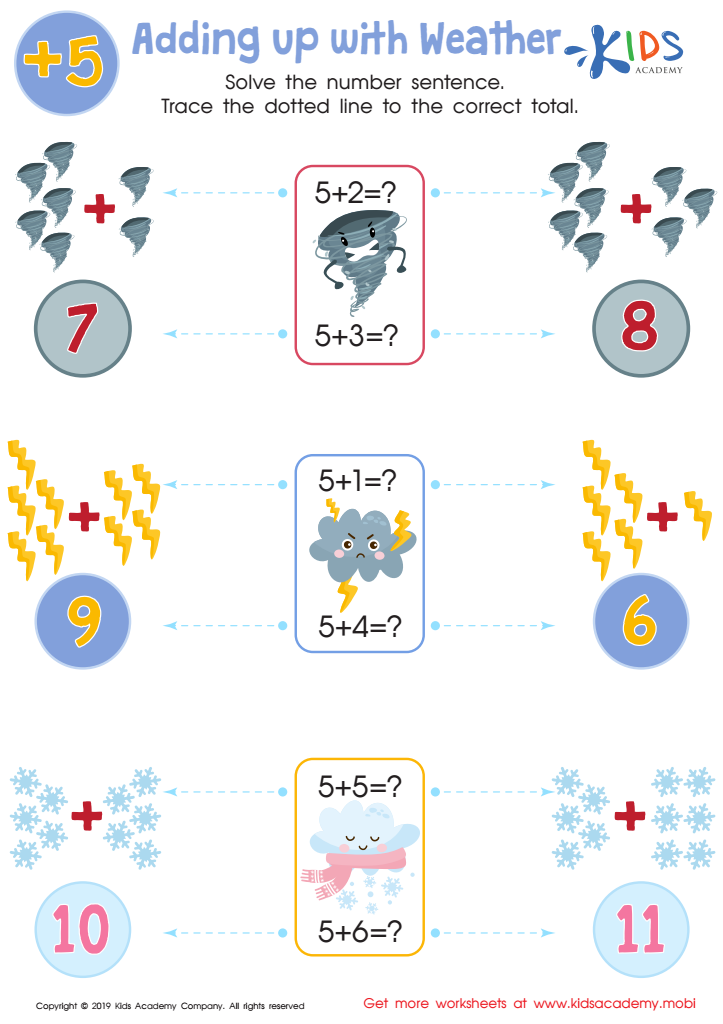
Adding up With Water Worksheet
Ask your kids to name different kinds of weather and what it's like outside now. Then, help them solve the number sentences on the worksheet by tracing the dotted line to the correct total.
Adding up With Water Worksheet
Worksheet
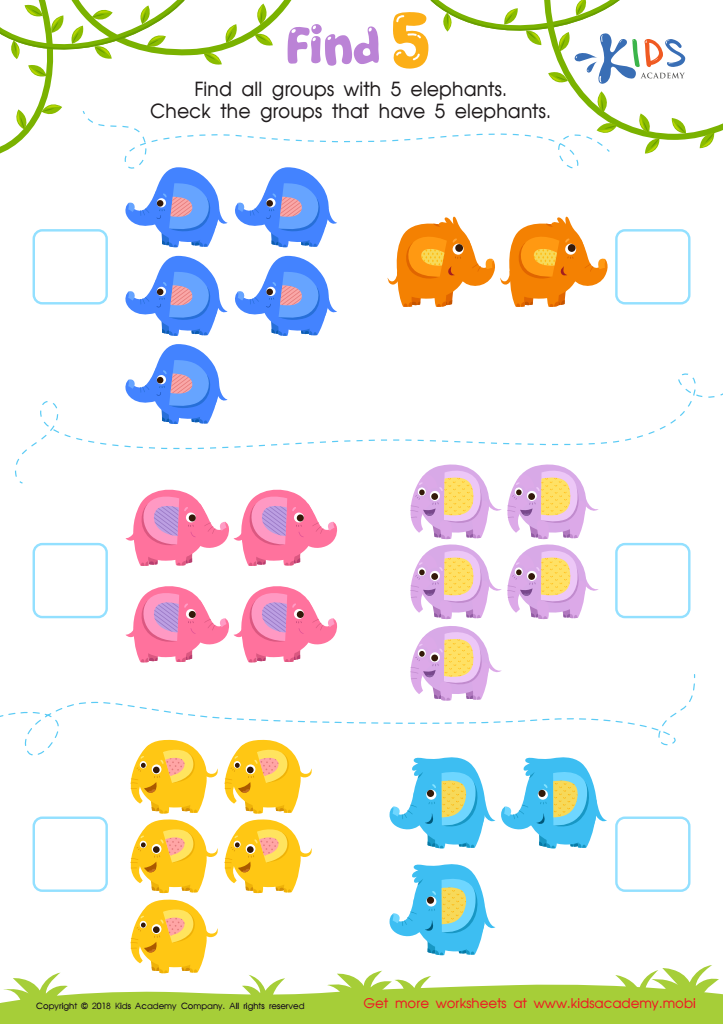
Find 5 Worksheet
Kids will love these cheery elephants that help them discover grouping and counting by fives. It's a great way to start learning addition and multiplication, while also developing fine motor skills. Download the free PDF and let the fun begin.
Find 5 Worksheet
Worksheet
Join Kids Academy for Free
Who is primarily going to use this learning content?







Attention to detail in math for 4-year-olds is crucial because it lays the foundation for their future learning and development. Early childhood is a unique period when a child's brain is incredibly receptive to new information. By fostering attention to detail, parents and teachers can help children develop critical thinking and problem-solving skills from a young age.
Firstly, attention to detail aids in understanding basic math concepts, such as recognizing numbers, shapes, and patterns. This understanding is essential for grasping more complex math topics in later years. Secondly, children who learn to pay attention to detail are more likely to make fewer mistakes, which can boost their confidence and encourage a positive attitude towards learning.
Moreover, this skill transcends math and benefits other areas such as reading and writing. For instance, being detail-oriented helps children notice differences between similar letters and words, which is crucial for literacy development.
Fostering attention to detail also promotes concentration and patience. Engaging in activities that require focus helps improve a child's ability to concentrate on tasks for longer periods, a skill beneficial for both academic success and daily life.
In essence, attention to detail in early math education is not just about numbers; it's about equipping children with the cognitive tools they need for holistic development and lifelong learning.








