
Basic addition practice Math Worksheets for 4-Year-Olds
11 filtered results
Difficulty Level
Grade
Age
-
From - To
Subject
Activity
Standards
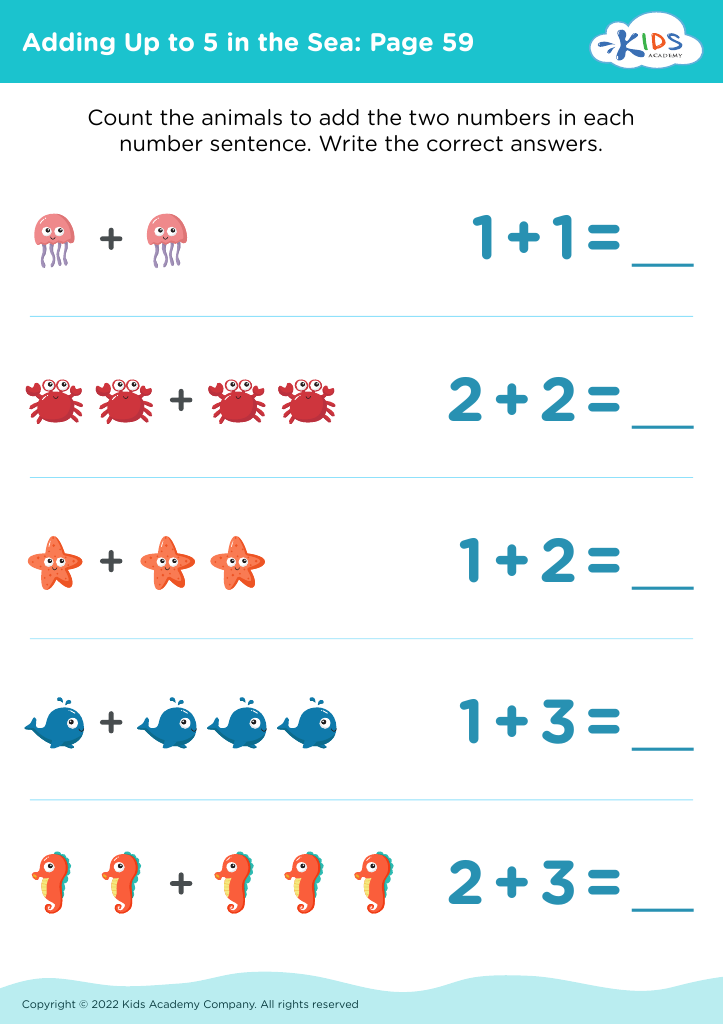
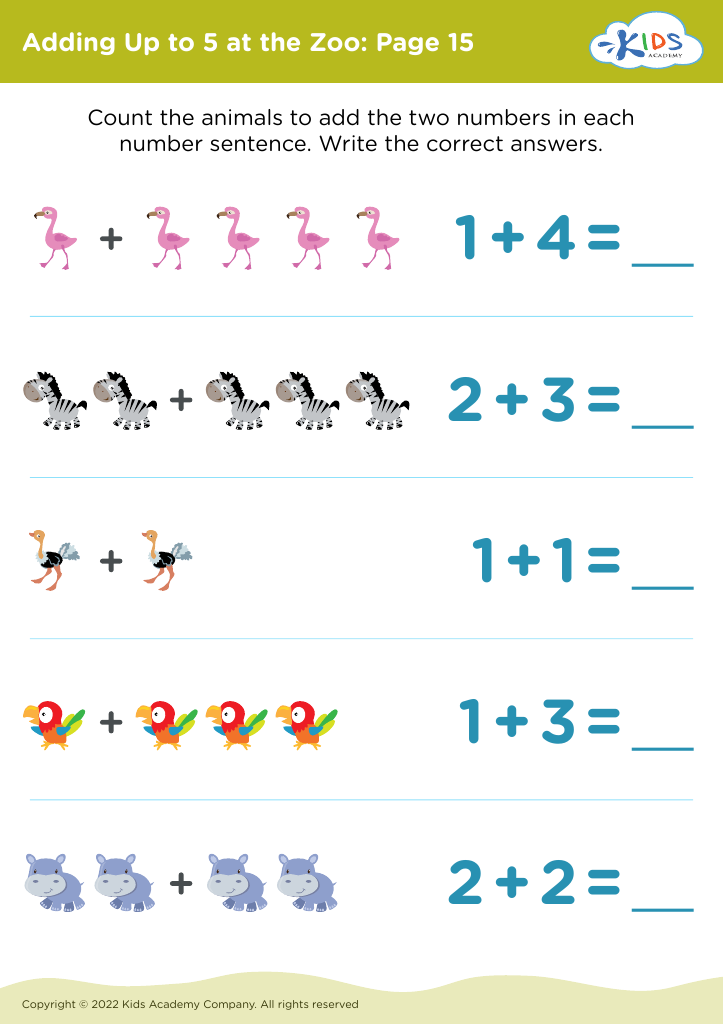
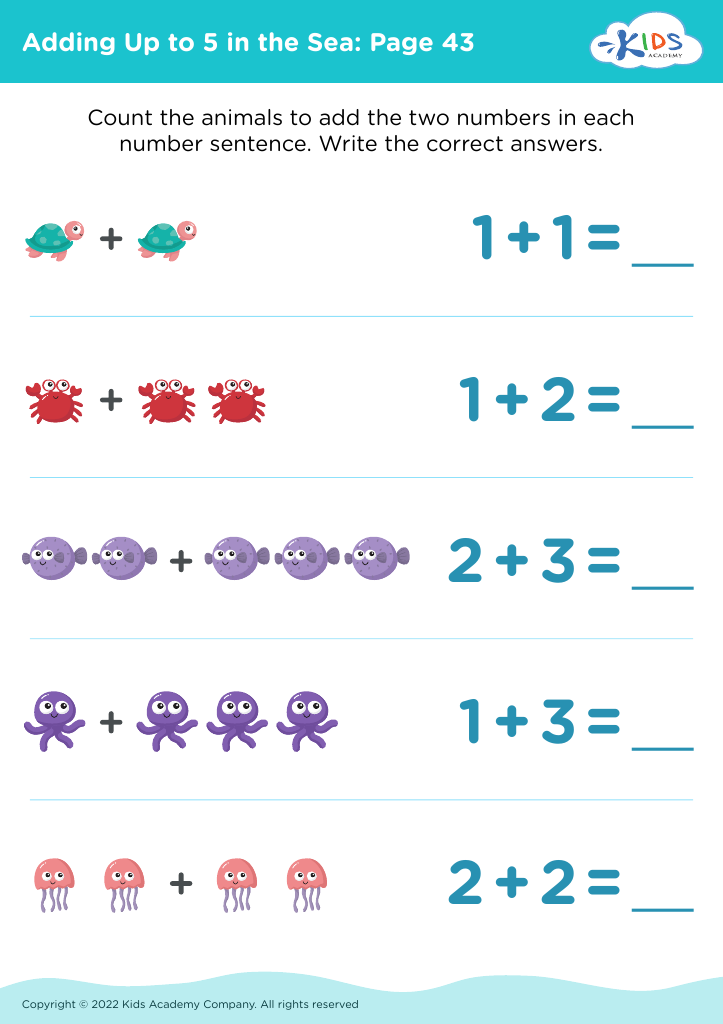
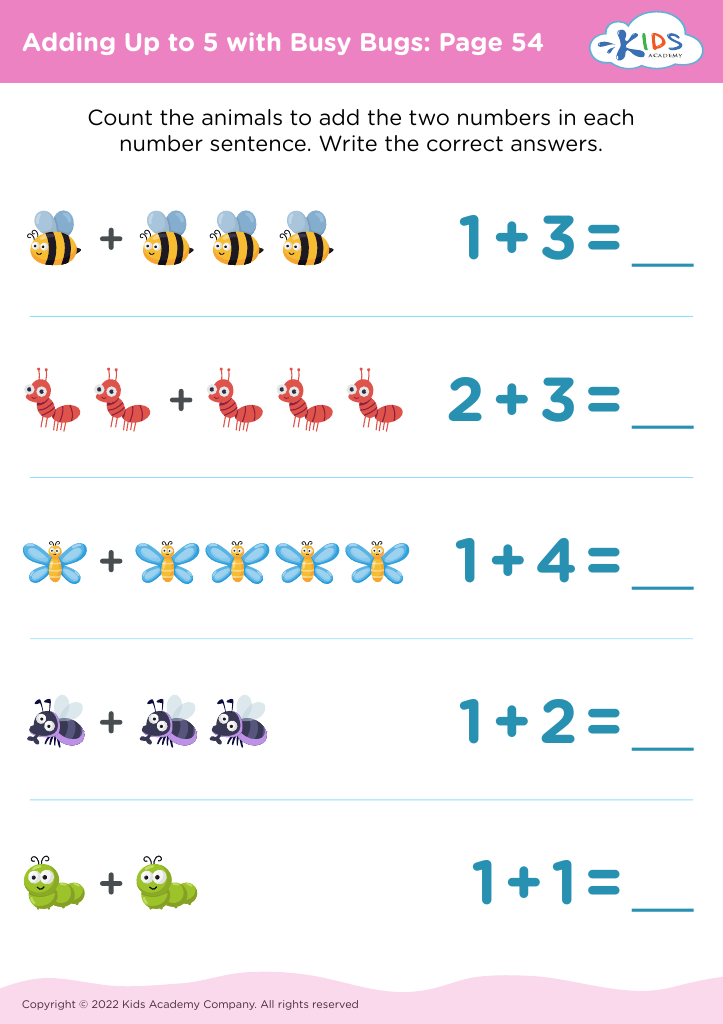
Explore our engaging Basic Addition Practice Math Worksheets designed specifically for 4-year-olds! These interactive worksheets provide young learners with a fun and stimulating way to grasp fundamental math concepts. Your child will enjoy colorful illustrations and playful activities that introduce the basics of addition, helping to build essential early numeracy skills. With a variety of exercises to choose from, children can practice addition at their own pace, reinforcing their understanding through repetition and play. Ideal for parents and educators alike, our worksheets make mastering simple addition a delightful experience while fostering a love for learning in your little one. Start their math journey today!
Favorites
With answer key
Interactive
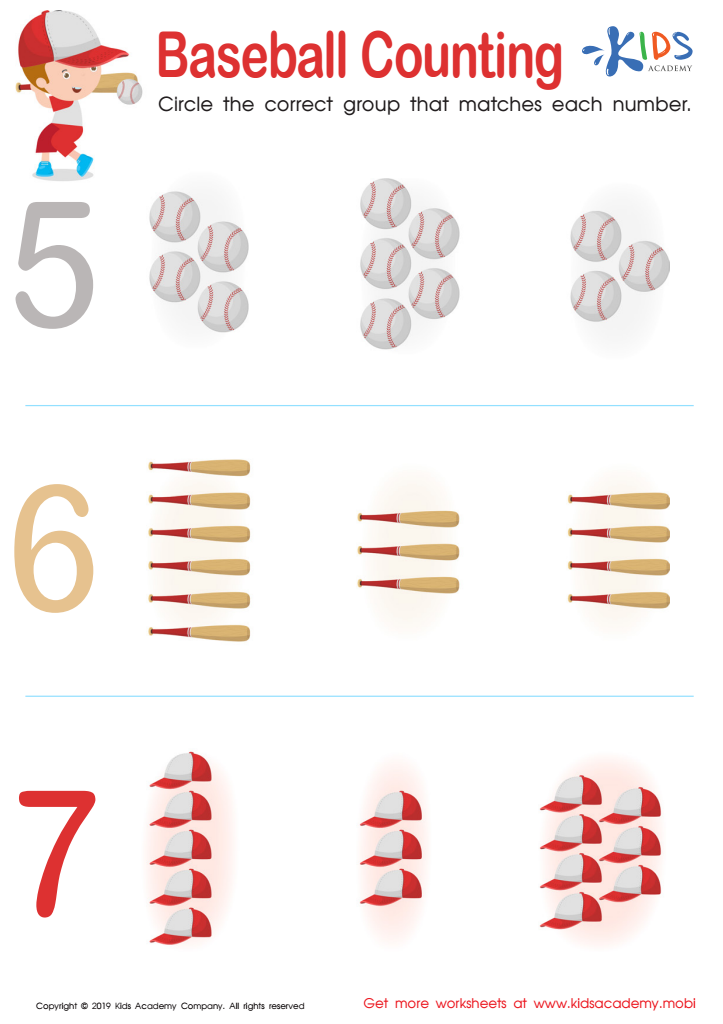
Baseball Counting Worksheet
Does your family like baseball? Refresh their minds by asking them to count items in a baseball game. To begin, have them count from 1 to 10. Point out each object and read out the numbers. Then, help them circle the group that matches each number. It will be a fun way to test their counting skills!
 Assign to My Students
Baseball Counting Worksheet
Worksheet
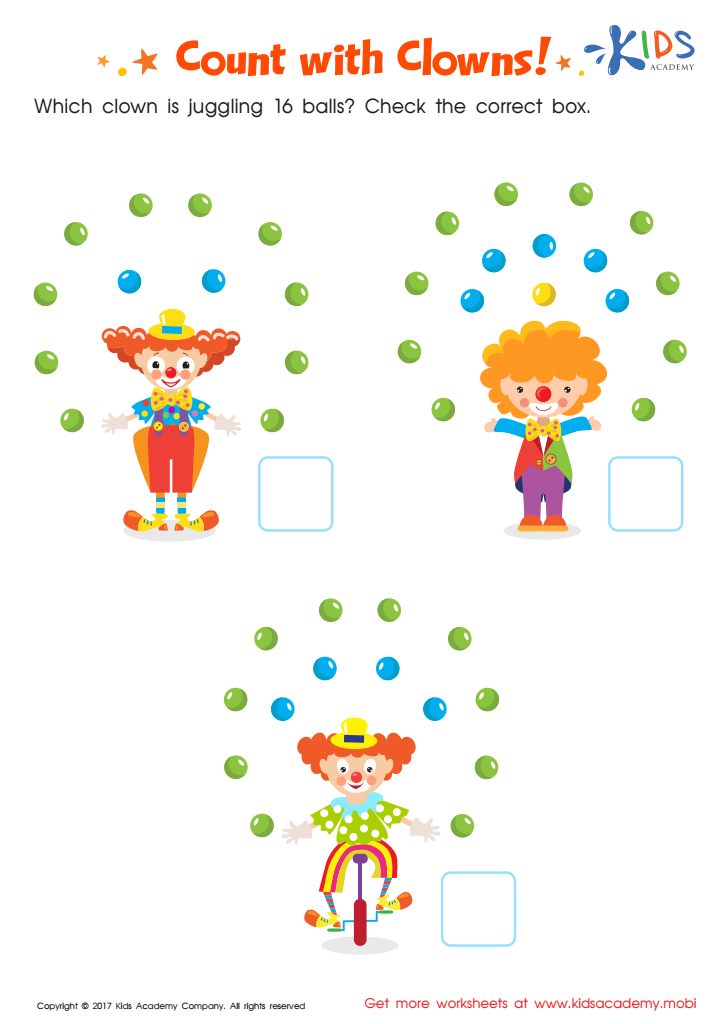
Count with Clowns Worksheet
Math may not be a laughing matter, but this worksheet sure is! Download the PDF and get ready to count balls with the clowns! Your child will have a blast and learn how to count at the same time. It's an easy, fun way to practice math!
Count with Clowns Worksheet
Worksheet
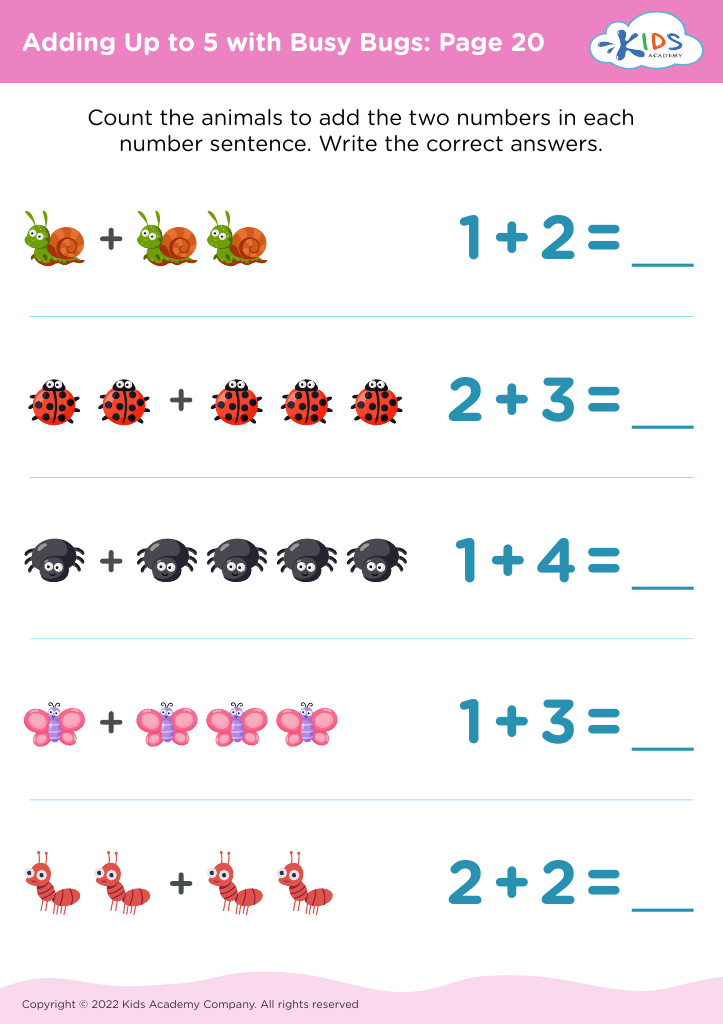
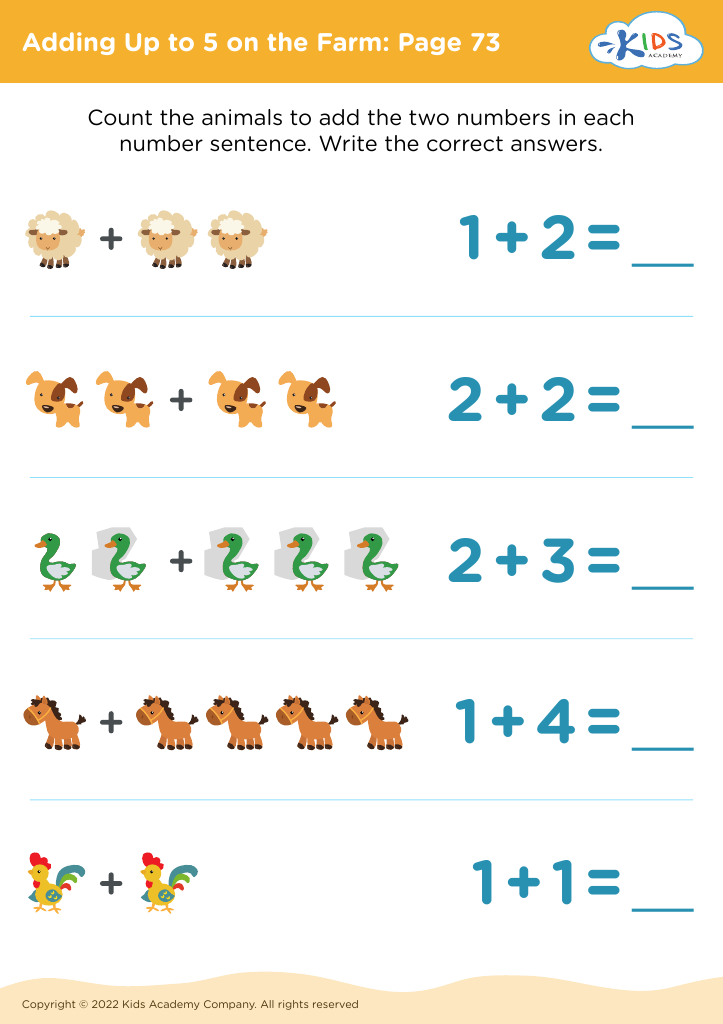
Join Kids Academy for Free
Who is primarily going to use this learning content?








Basic addition practice for 4-year-olds is crucial for several reasons. First, early mathematics skills lay the foundation for future academic success. Mastering simple addition concepts helps children develop critical thinking and problem-solving abilities, which are essential in various subjects beyond math. Engaging in basic addition introduces young learners to numbers and spatial awareness, enhancing their cognitive abilities.
Additionally, practicing addition fosters a sense of accomplishment and confidence in children. As they grasp simple mathematical concepts, they become more willing to engage in further learning, reinforcing a positive attitude toward education. Math skills also play a vital role in everyday situations, enabling children to understand quantities, comparisons, and simple transactions, thus fostering independence.
Moreover, incorporating fun and interactive methods for teaching addition can enhance the parent-child or teacher-child bonding experience. Games, storytelling, and hands-on activities make learning enjoyable, encouraging children to think creatively and collaboratively.
In summary, basic addition practice is fundamental for holistic development in young children, equipping them with essential life skills, confidence, and a love for learning. Parents and teachers play a pivotal role in guiding this early mathematical journey, ensuring children build strong foundations for their educational futures.








