Comparing objects Math Worksheets for 4-Year-Olds
6 filtered results
-
From - To
Discover the perfect resource to enhance your preschooler’s math skills with our "Comparing Objects Math Worksheets for 4-Year-Olds”! Specifically designed for young learners, these fun and educational worksheets help children grasp the fundamentals of comparing objects. Through engaging activities, kids will learn to identify differences and similarities in size, shape, and quantity, building a strong foundation in early math concepts. Ideal for both classroom and home use, these worksheets make learning interactive and enjoyable. Boost your child’s confidence and critical thinking with our carefully crafted, age-appropriate exercises. Start developing essential math skills today!
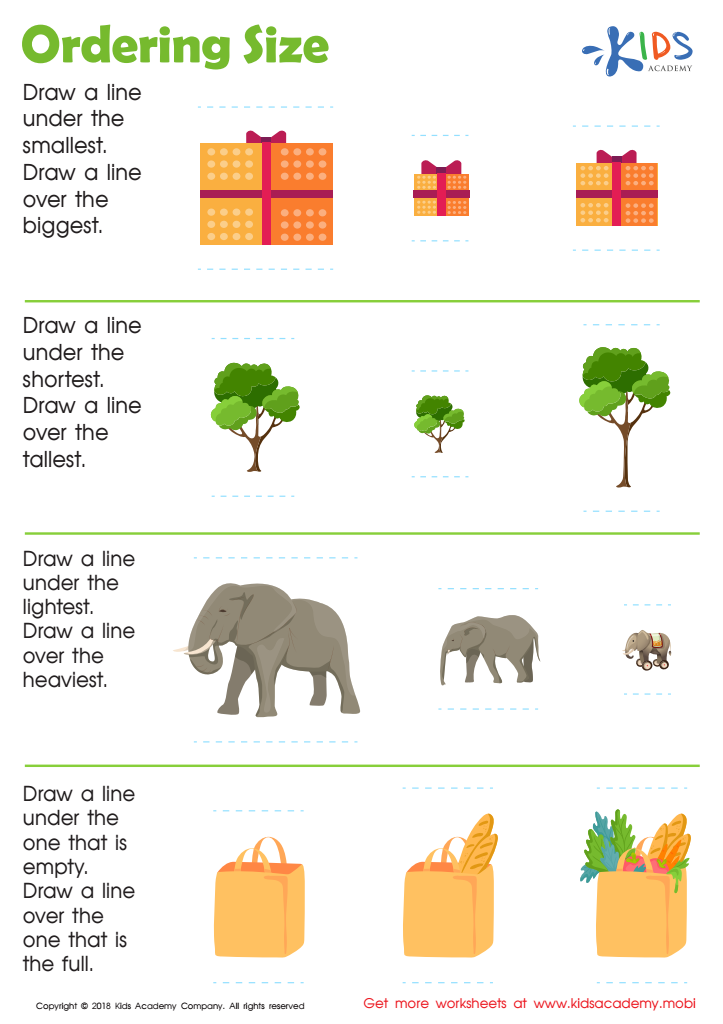
Ordering Size Worksheet
 Assign to My Students
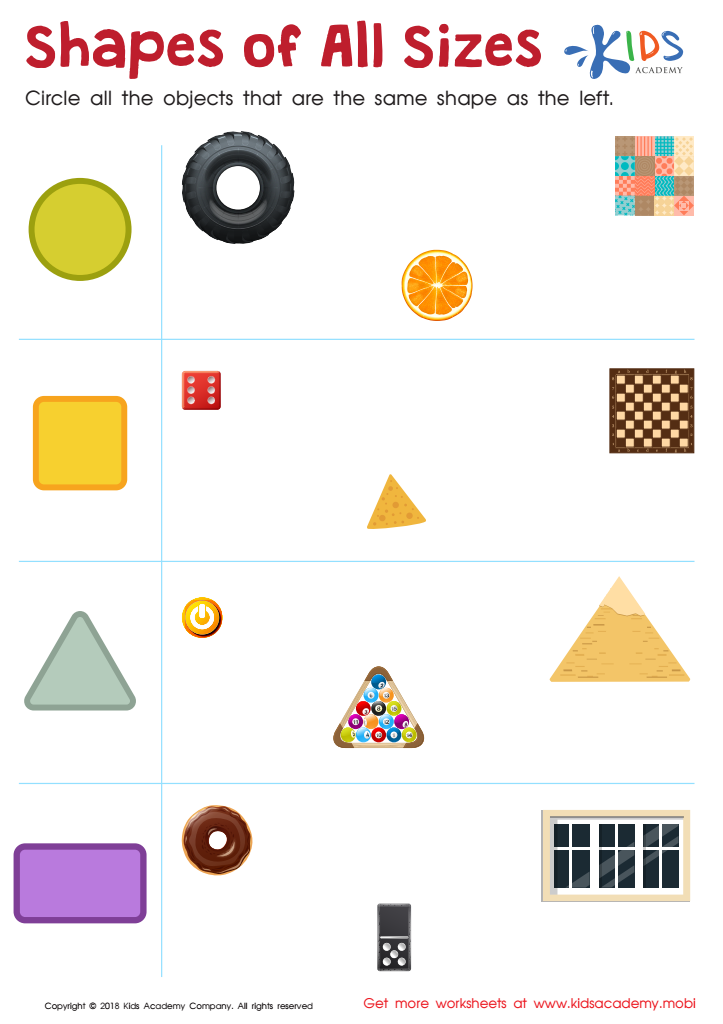
Shapes of All Sizes Worksheet
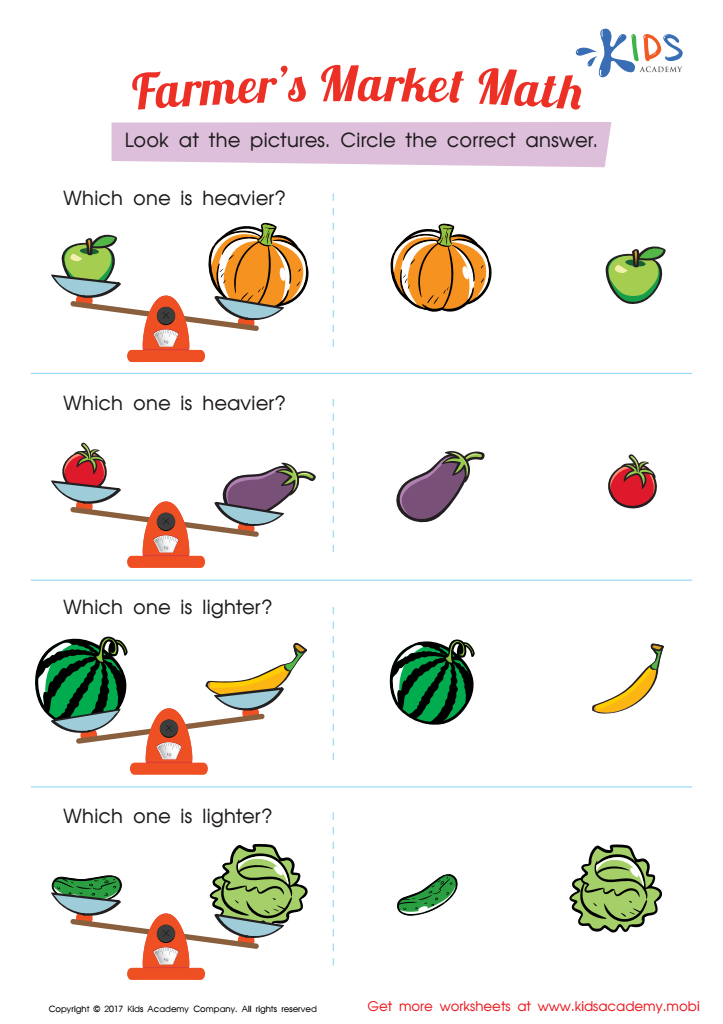
Which One Is Heavier Worksheet
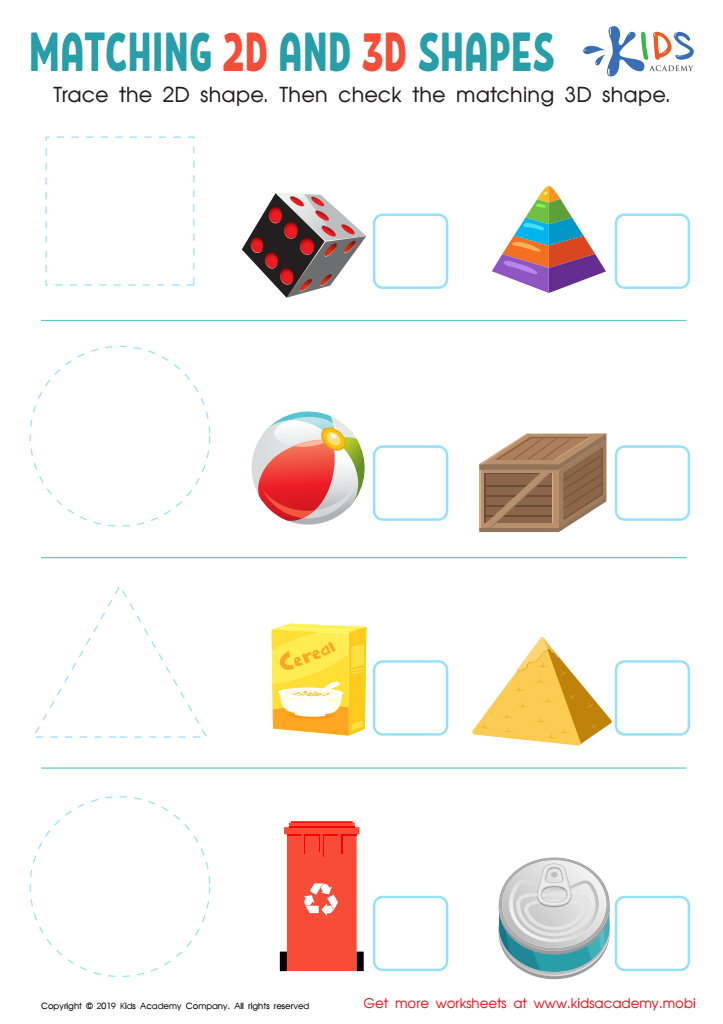
Matching 2D and 3D Shapes Worksheet
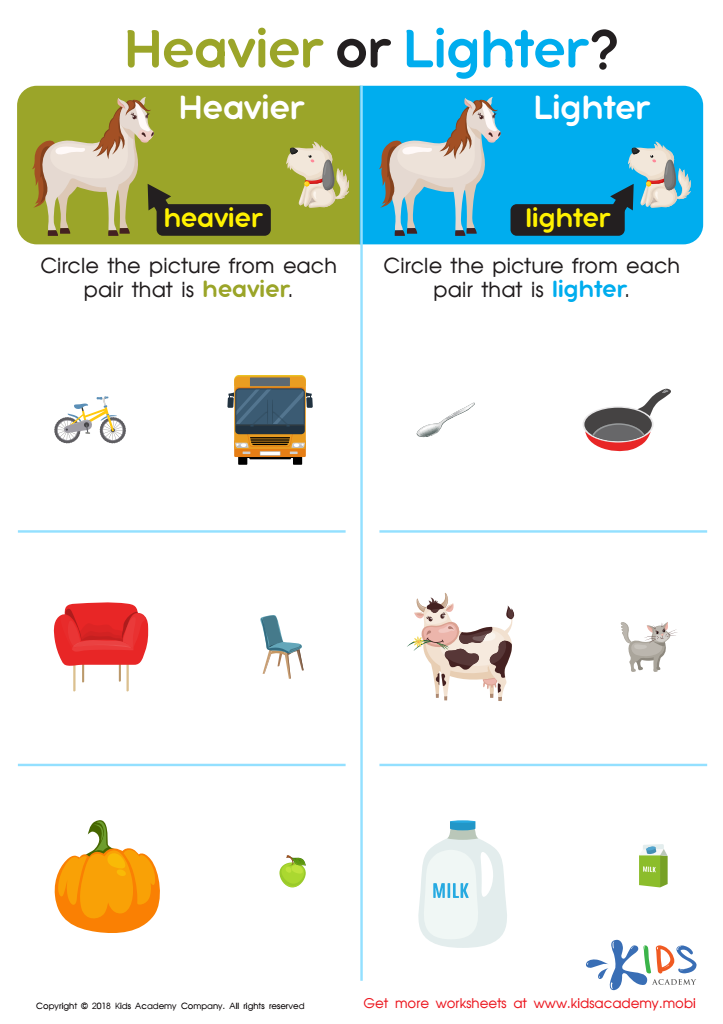
Heavier or Lighter? Worksheet
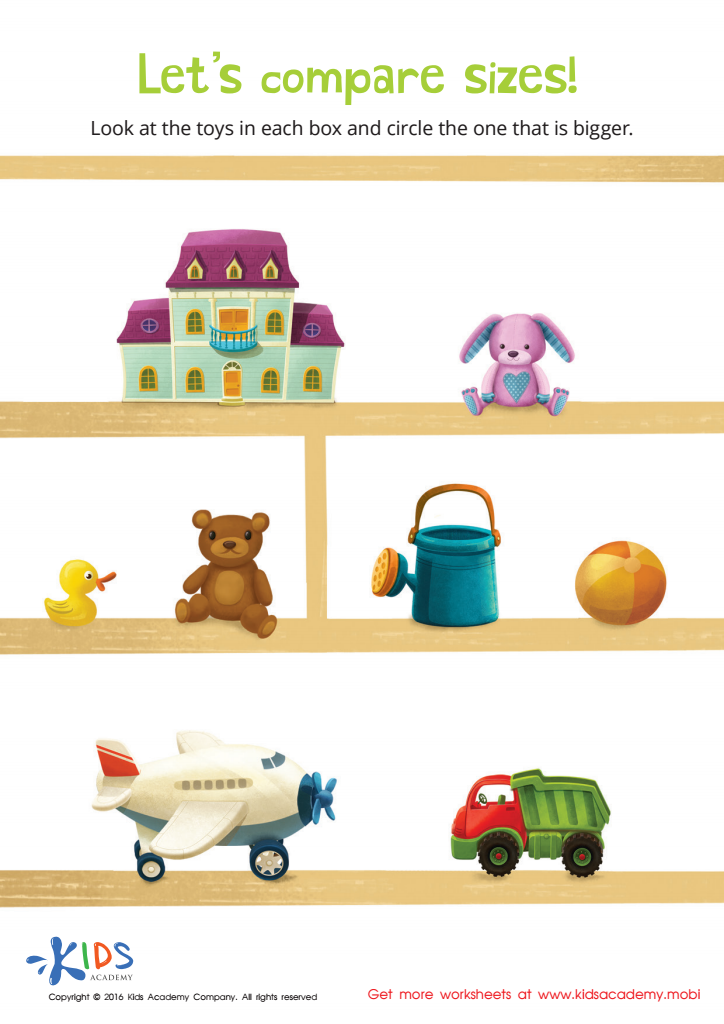
Classifying by Size Sorting Worksheet



.jpg)



Parents and teachers should care about teaching young children to compare objects in math because it lays the foundation for critical thinking and problem-solving skills. At the age of four, children are beginning to understand the world around them in more complex ways, and comparing objects helps develop key cognitive abilities such as observation, differentiation, and classification.
When children compare objects by size, shape, weight, and other characteristics, they enhance their ability to notice and articulate differences and similarities. This skill is fundamental not only in math but in everyday decision-making and scientific investigation. For instance, comparing fruits by size might inform choices about which one to eat first or how to balance them in a grocery bag.
Furthermore, these activities help with language development as children learn to describe and reason about what they see. Phrases like "bigger than," "smaller than," "heavier," and "lighter" become tools for accurate communication and understanding interactions.
Graphing comparisons visually, like lining up blocks by height, also strengthens visual-spatial intelligence, which is crucial for fields such as geometry and engineering. Introducing these concepts early makes math less intimidating and builds confidence. It provides a fun and engaging way for children to form a mental framework that will support more advanced mathematical concepts later on.








