Division practice Math Worksheets for 4-Year-Olds
5 filtered results
-
From - To
Introducing our engaging Division Practice Math Worksheets for 4-year-olds, designed to make learning fun! These worksheets provide an interactive way for young learners to explore the concept of division through colorful illustrations and simple activities. Tailored for preschoolers, the worksheets focus on foundational skills, helping children understand sharing and grouping in a playful manner. With a variety of exercises, kids will build confidence in early math skills while developing critical thinking. Perfect for home or classroom use, these division practice worksheets are an excellent resource for early educators and parents aiming to foster a love for math in their little ones!
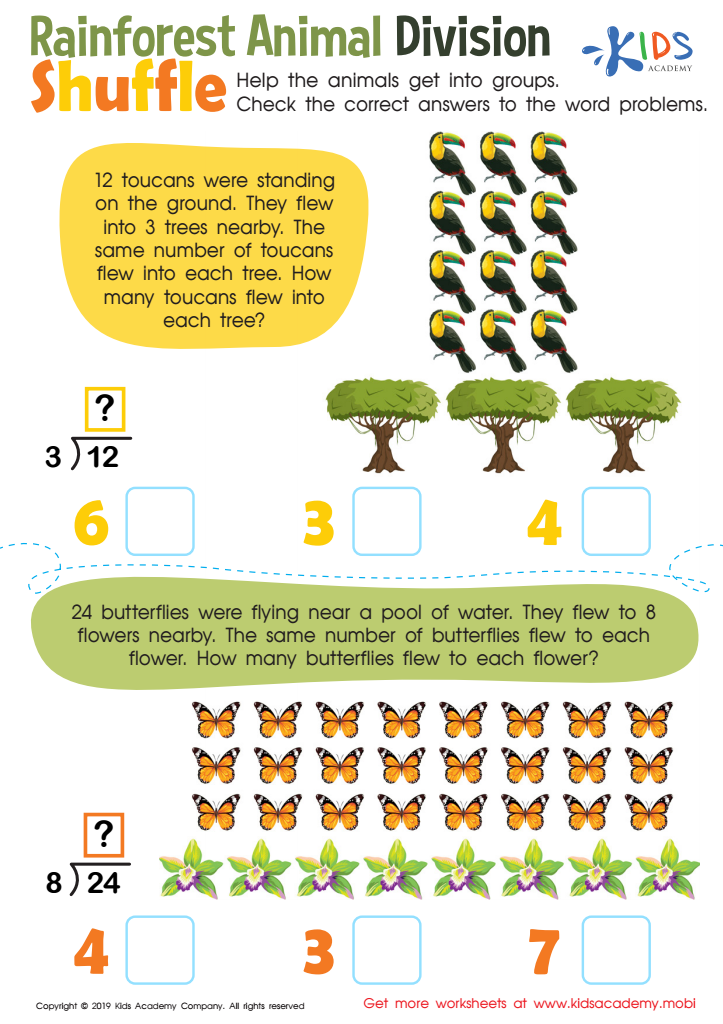
Rainforest Animal Division Worksheet
 Assign to My Students
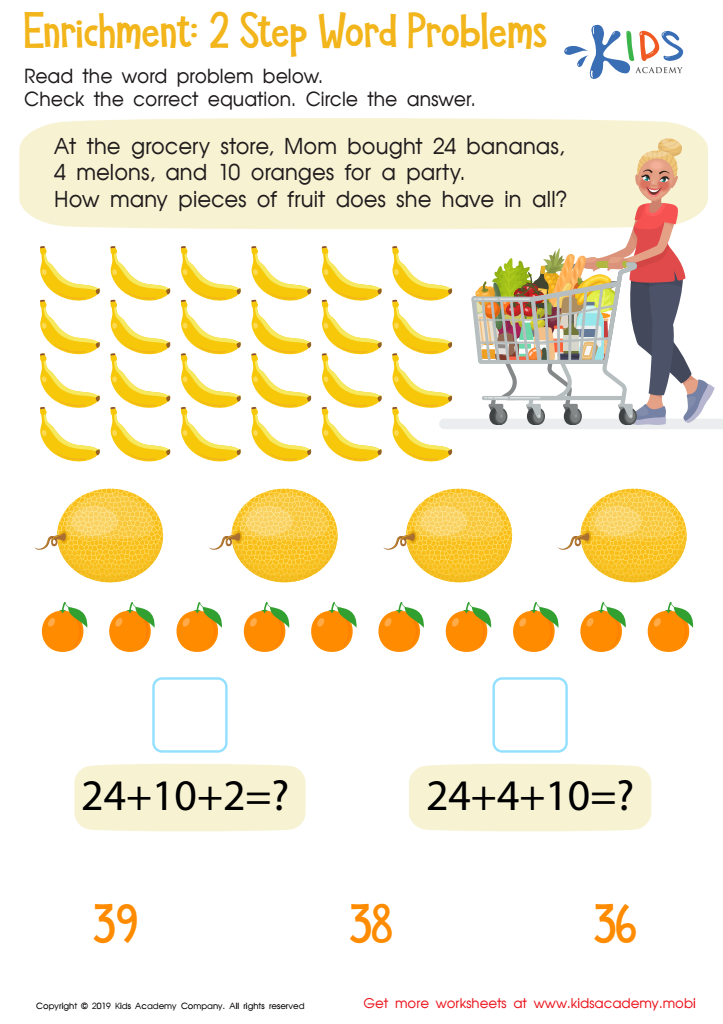
Enrichment -2 Step Word Problems Worksheet
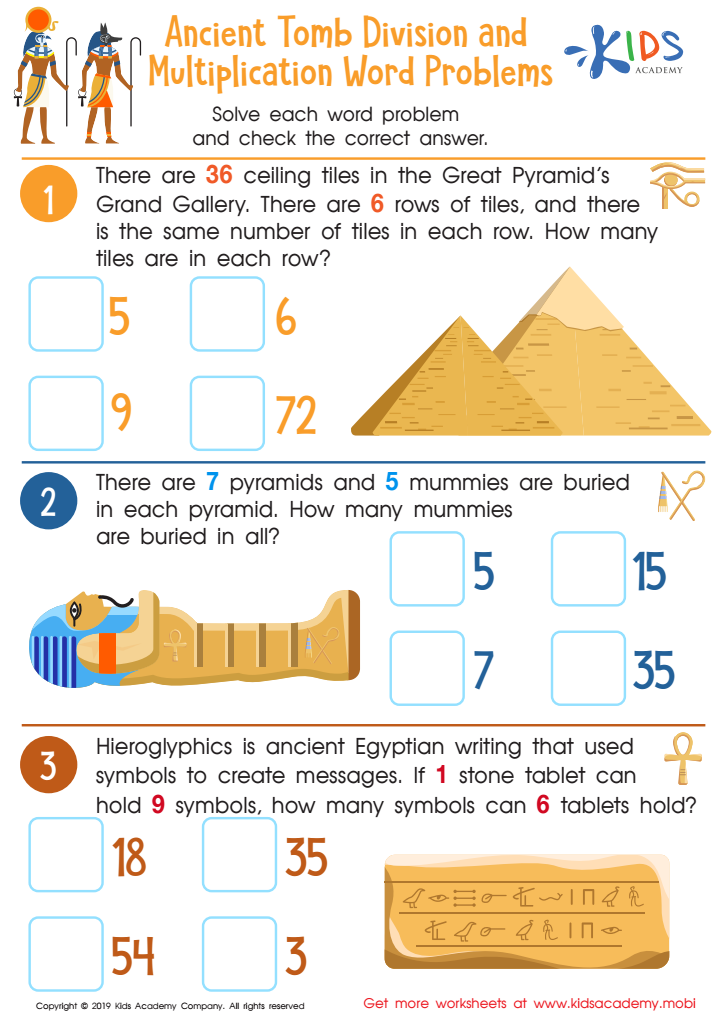
Ancient Tomb Division and Multiplication Word Problems Worksheet
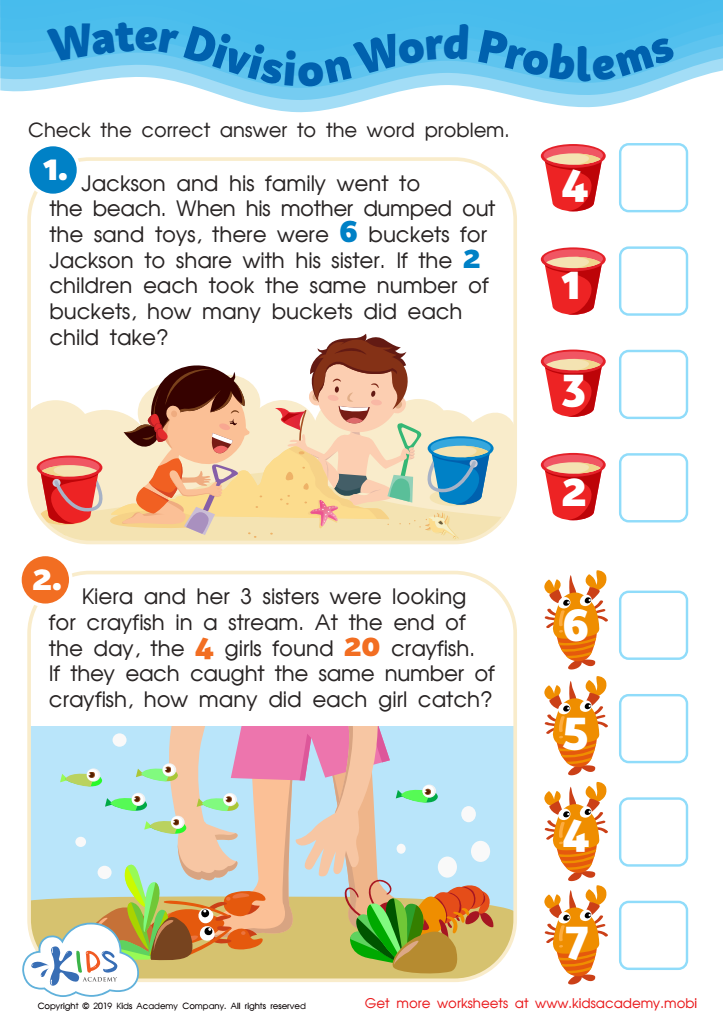
Water Division Word Problems Worksheet
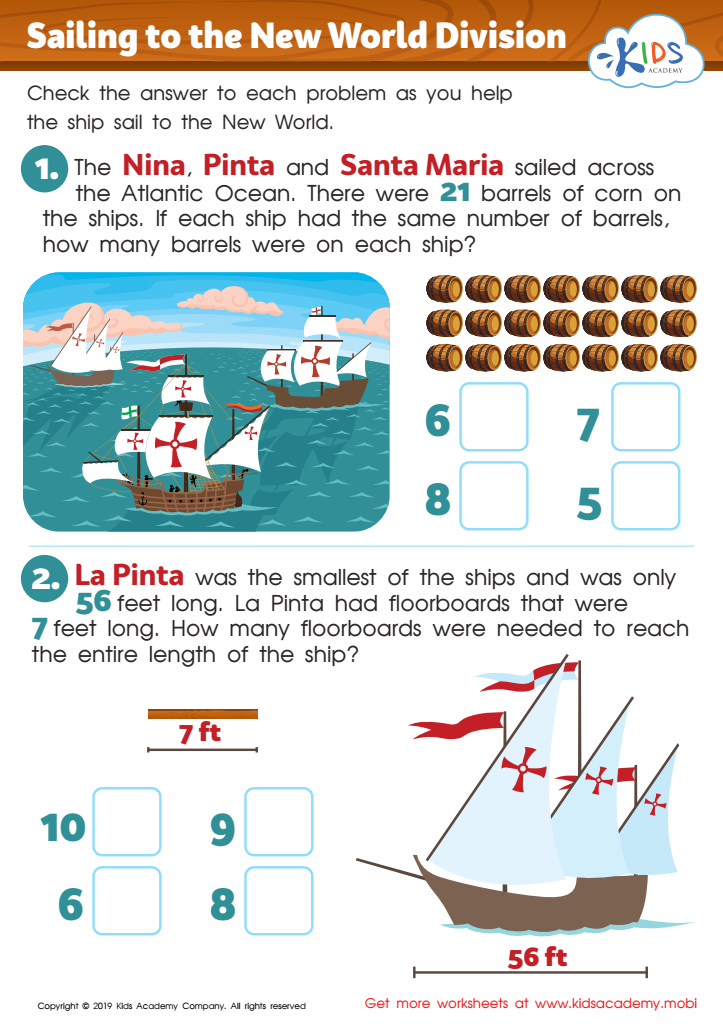
Sailing to the New World Division Worksheet







Teaching division to 4-year-olds may seem early, but understanding the foundational concepts of division is essential for developing a child's mathematical skills. At this age, children are highly receptive to learning, and introducing division through playful activities can spark their interest in math. Engaging toddlers in division practice helps them understand the concept of sharing and grouping, which are crucial elements of division.
When parents or teachers incorporate division activities, such as sharing toys or snacks equally among friends, it builds essential skills like problem-solving, critical thinking, and social interaction. These experiences foster a sense of fairness and cooperation, encouraging collaborative play and group dynamics.
Moreover, early exposure to division-related concepts lays the groundwork for more advanced mathematical understanding. By recognizing patterns and relationships, children will find it easier to grasp more complex operations as they progress in their education. Active participation in these learning experiences not only enhances cognitive skills but also boosts confidence in math, setting a positive tone for future academic success.
Ultimately, supporting division practice at this early stage helps nurture a love for learning and instills crucial life skills that will benefit children beyond the classroom.








