
Fine motor skills (writing numbers) Math Worksheets for 4-Year-Olds
15 filtered results
Difficulty Level
Grade
Age
-
From - To
Subject
Activity
Standards
Boost your 4-year-old's early math skills with our engaging Fine Motor Skills (Writing Numbers) Math Worksheets! Designed to combine number recognition with fine motor development, these worksheets feature fun, interactive exercises where children practice tracing and writing numbers. Each worksheet encourages young learners to strengthen hand-eye coordination and build the foundational skills necessary for future writing tasks. Perfect for preschoolers, our math worksheets make learning numbers both enjoyable and educational, fostering confidence and proficiency at an early age. Download now and watch your child's skills flourish with these captivating, age-appropriate exercises from Kids Academy!
Favorites
With answer key
Interactive
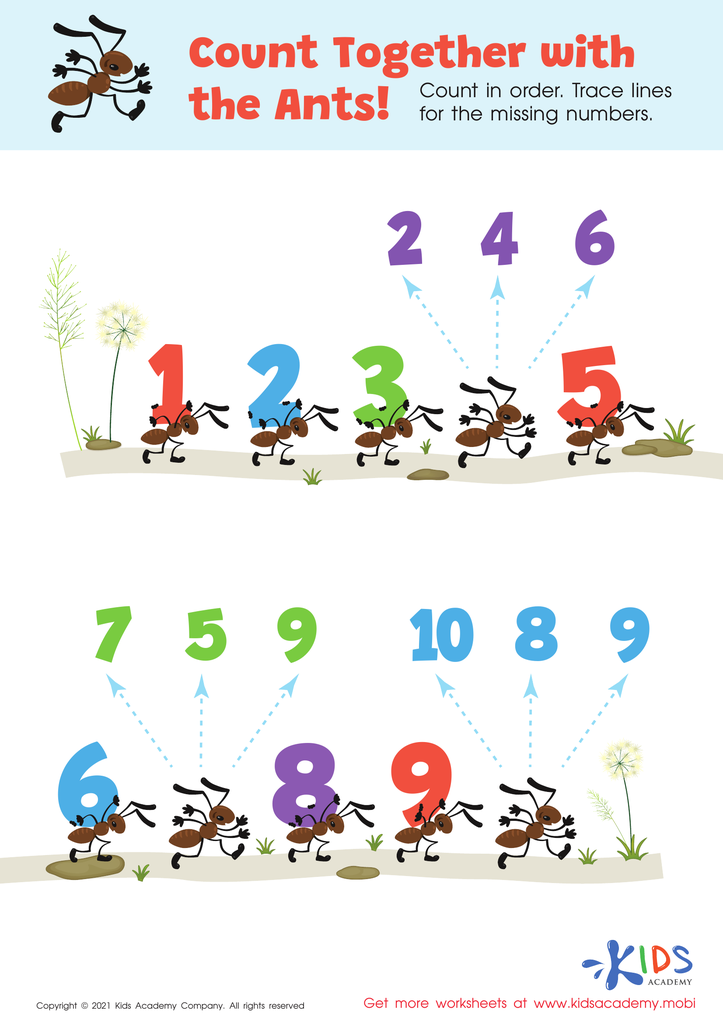
Count Together with the Ants Worksheet
Rather than letting kids get too deep in online games, keep them engaged with learning worksheets. Ask them to identify the insect in the picture, then count the ants. Help them trace lines to the missing numbers. It's simple and straightforward for young children to comprehend.
Count Together with the Ants Worksheet
Worksheet
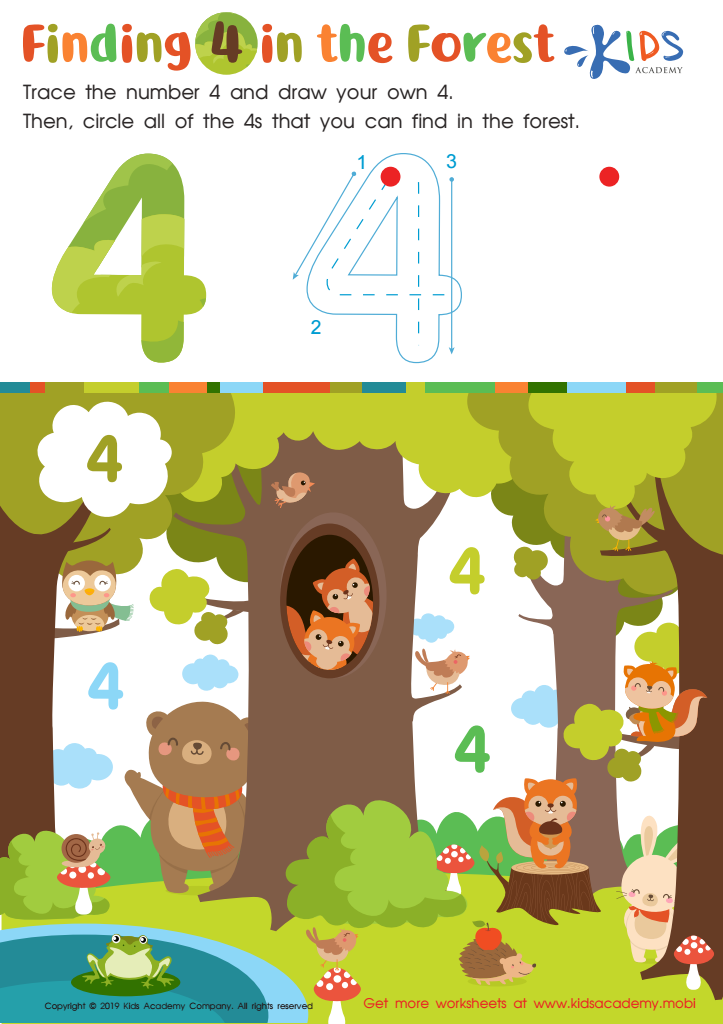
Finding 4 in the Forest Worksheet
Before starting, have your kids count as high as they can. Ask them to identify the setting and point out the 4s. Trace 4 and draw your own. Help your kids circle all the 4s they can find in the forest. How far can they count? How well did they find the hidden 4s?
 Assign to My Students
Finding 4 in the Forest Worksheet
Worksheet
Join Kids Academy for Free
Who is primarily going to use this learning content?








Parents and teachers should prioritize the development of fine motor skills, particularly in writing numbers, for 4-year-olds because these skills form the foundation for future academic success and everyday tasks. Fine motor skills involve the coordination of small muscles, especially in the hands and fingers, which are crucial for writing and precise hand movements. By focusing on these skills, children improve their hand-eye coordination, which is essential not only for writing letters and numbers but also for tasks such as using scissors, tying shoelaces, and buttoning clothing.
Moreover, writing numbers at an early age introduces children to basic math concepts in a tangible and engaging manner. It fosters number recognition, sequence understanding, and spatial awareness. These foundational math skills are critical for more advanced mathematical thinking and problem-solving as the child grows.
Additionally, developing these skills enhances a child’s confidence and independence. When children can perform tasks independently and successfully, even simple ones like writing numbers, their self-esteem flourishes, leading to a more positive attitude towards learning.
In short, emphasizing fine motor skills and early math literacy for 4-year-olds provides them with essential skills that will support their academic journey and daily life activities, establishing a strong foundation for future learning and development.








