Number tracing Math Worksheets for 4-Year-Olds
3 filtered results
-
From - To
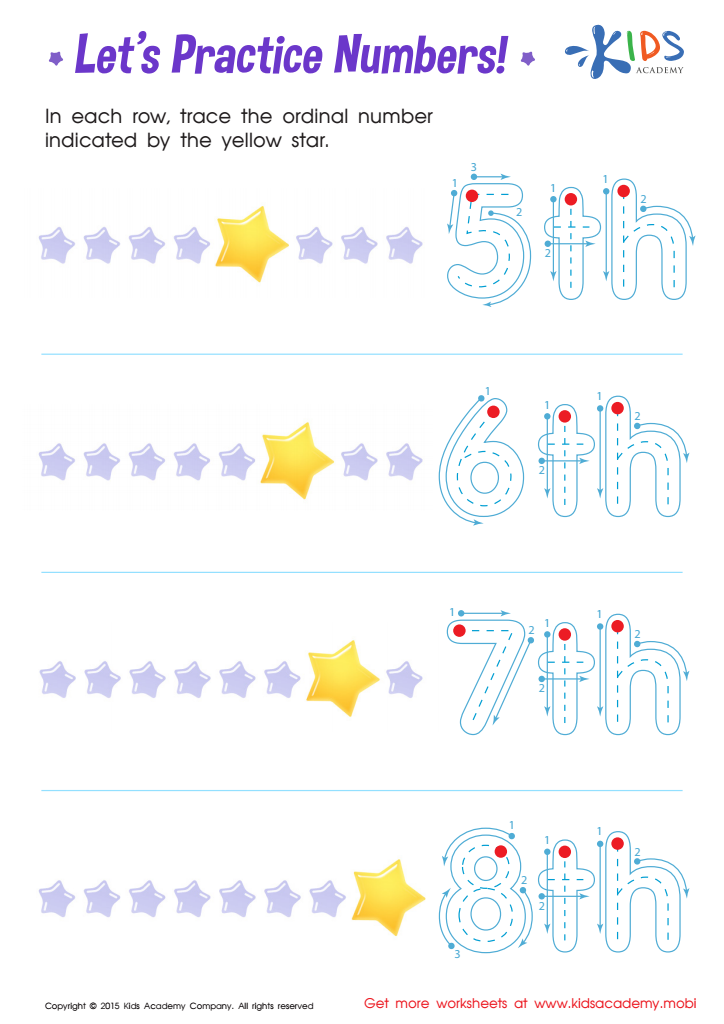
Unlock your child's potential with our engaging Number Tracing Math Worksheets designed specifically for 4-year-olds! These thoughtfully crafted worksheets combine fun and learning, allowing young learners to practice tracing numbers 1 through 10. They help develop essential fine motor skills, improve handwriting, and boost number recognition in a playful way. Each page is filled with colorful illustrations to keep your child motivated and entertained. Perfect for at-home learning or classroom activities, these worksheets provide a solid foundation in mathematics, making learning enjoyable and accessible. Explore our collection today and watch your child's confidence in numbers grow!
 Assign to My Students
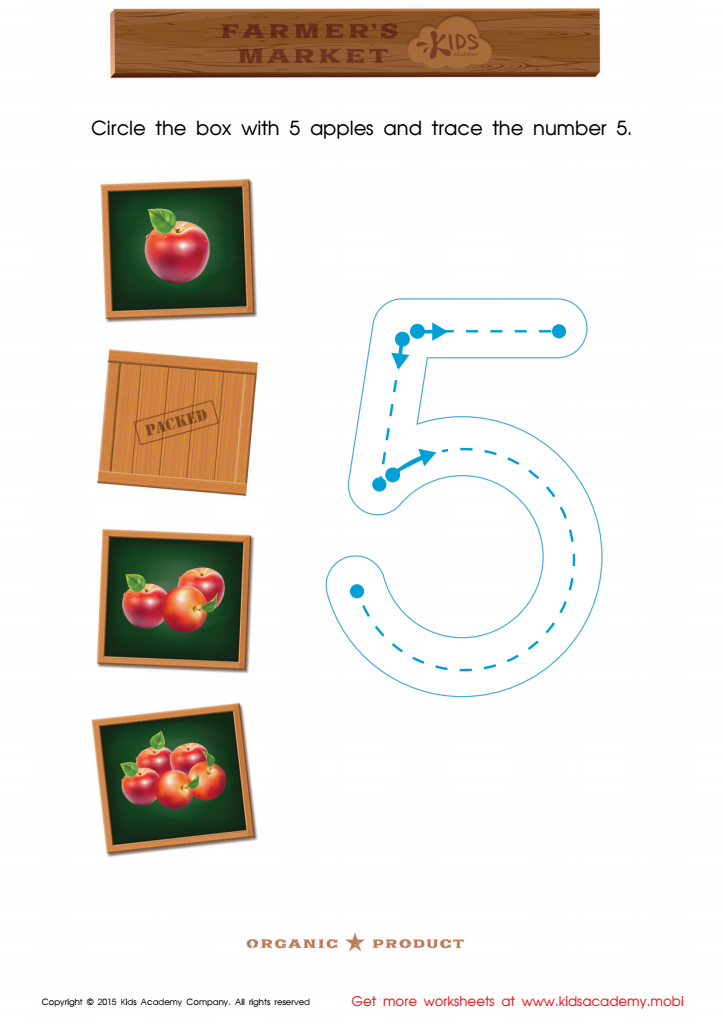
Count the Apples and Trace the Number 5 Printable
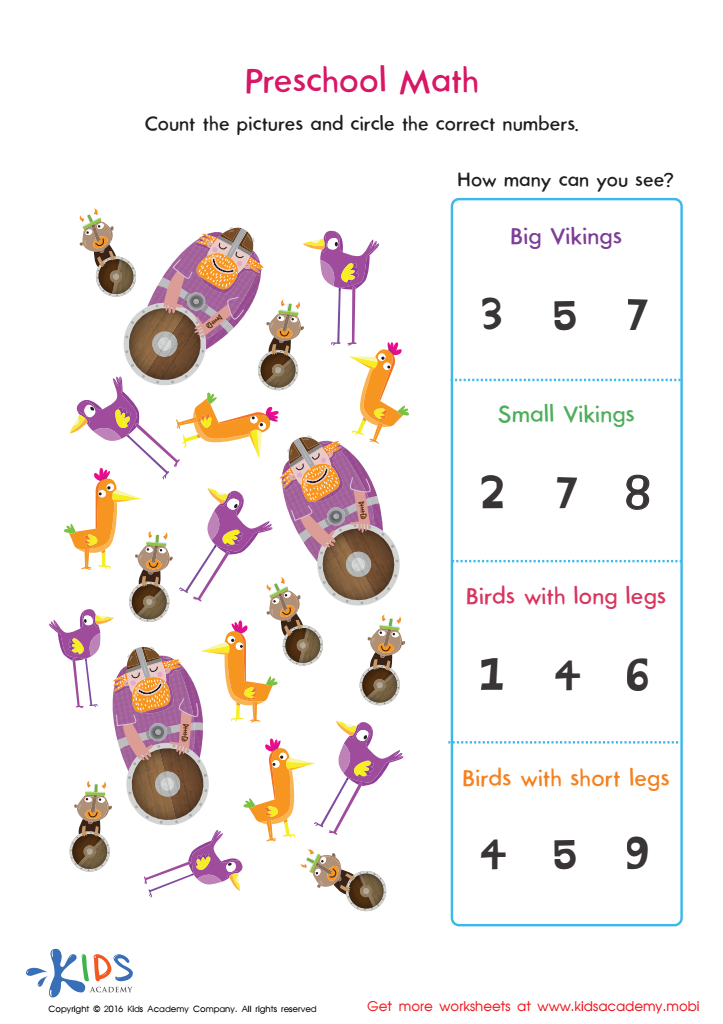







Number tracing for 4-year-olds is an essential activity for early childhood development, combining learning with fine motor skill enhancement. At this age, children are beginning to develop foundational math skills, and tracing numbers introduces them to their shapes, helping foster number recognition. Engaging in number tracing provides a hands-on approach, allowing children to physically create numbers, which enhances their cognitive understanding through muscle memory.
Moreover, tracing activities develop fine motor skills and hand-eye coordination, crucial for later tasks such as writing and drawing. This not only prepares them for future academic challenges but also builds their confidence and independence. As they successfully trace each number, they experience a sense of achievement that boosts their self-esteem.
Additionally, number tracing can serve as an engaging and interactive bonding experience between parents, caregivers, and teachers. It opens up opportunities for discussions around numbers, counting, and even basic arithmetic, laying the groundwork for future mathematical understanding. By prioritizing number tracing, parents and teachers invest in comprehensive early childhood education, promoting a positive attitude toward learning while setting the stage for academic success in later years. Ultimately, understanding numbers forms the basis for critical thinking and problem-solving skills needed in everyday life.








