Shape identification Math Worksheets for 4-Year-Olds
13 filtered results
-
From - To
Discover engaging and educational Shape Identification Math Worksheets designed specifically for 4-year-olds at Kids Academy! These fun and colorful worksheets help young learners easily recognize and identify shapes such as circles, squares, triangles, and more. Perfectly suited for preschoolers, our expertly crafted activities make learning shapes an exciting adventure, enhancing children's spatial awareness and fine motor skills. Foster a love for learning and strengthen foundational math knowledge with worksheets tailored to captivate and challenge young minds. Download and print today to provide your little one with a head start in early math skills at Kids Academy!
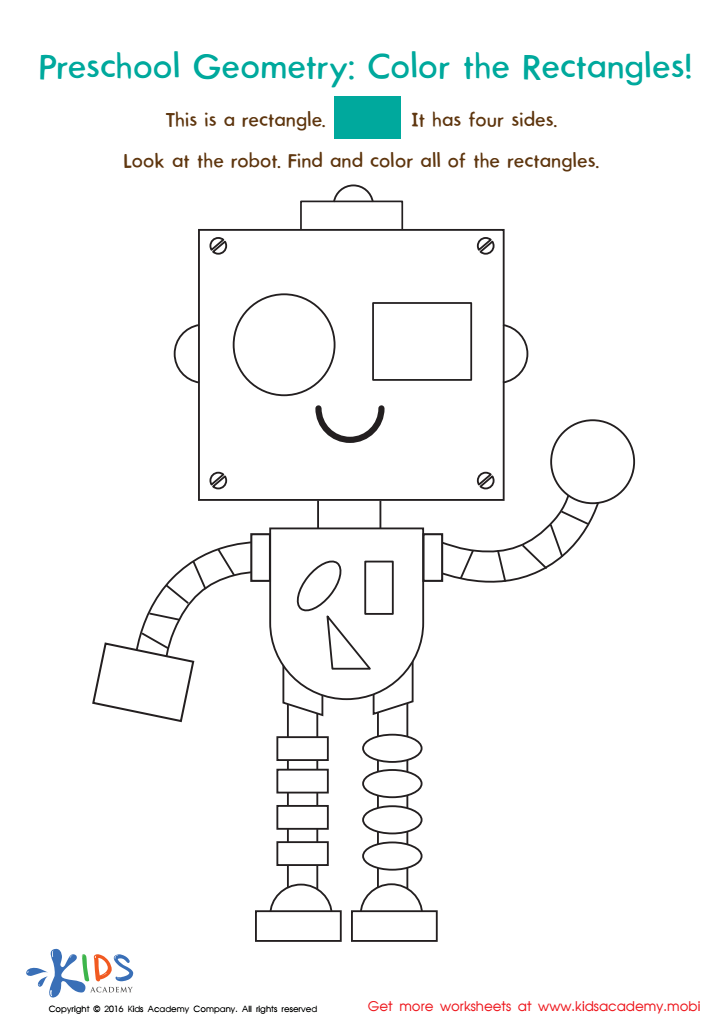
Geometry Worksheet
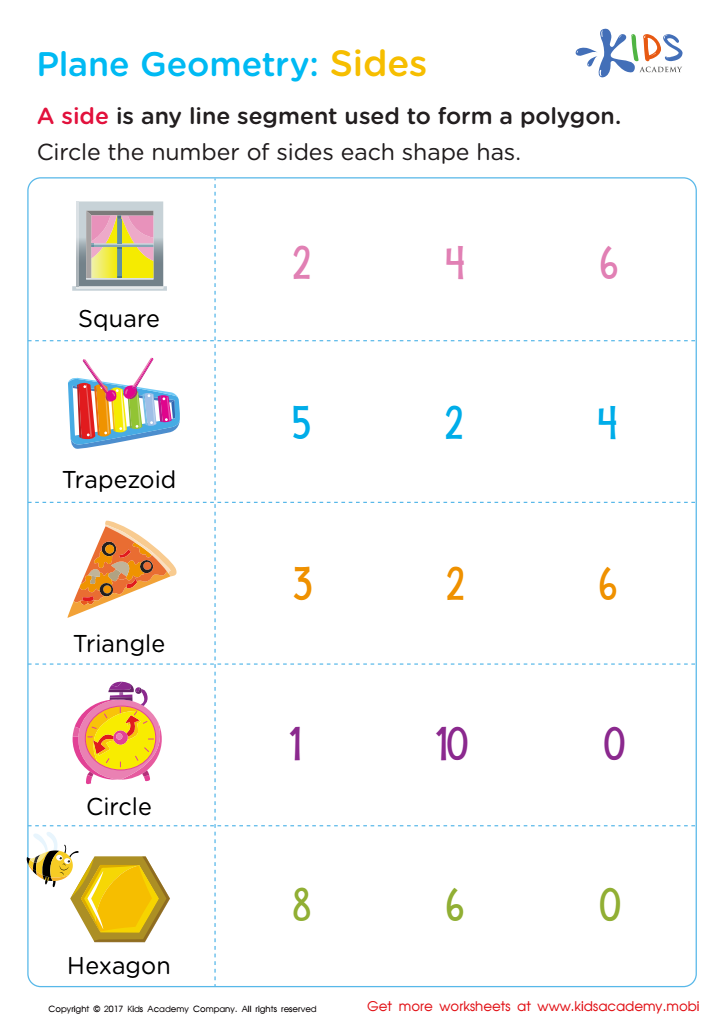
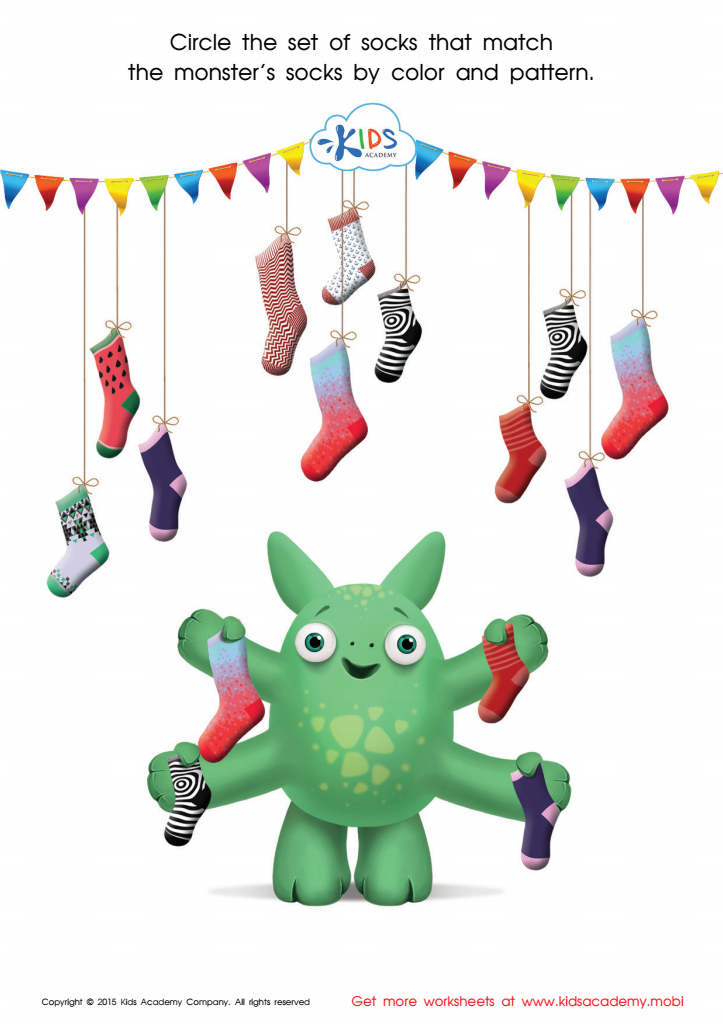
Sort the Monster's Socks Worksheet
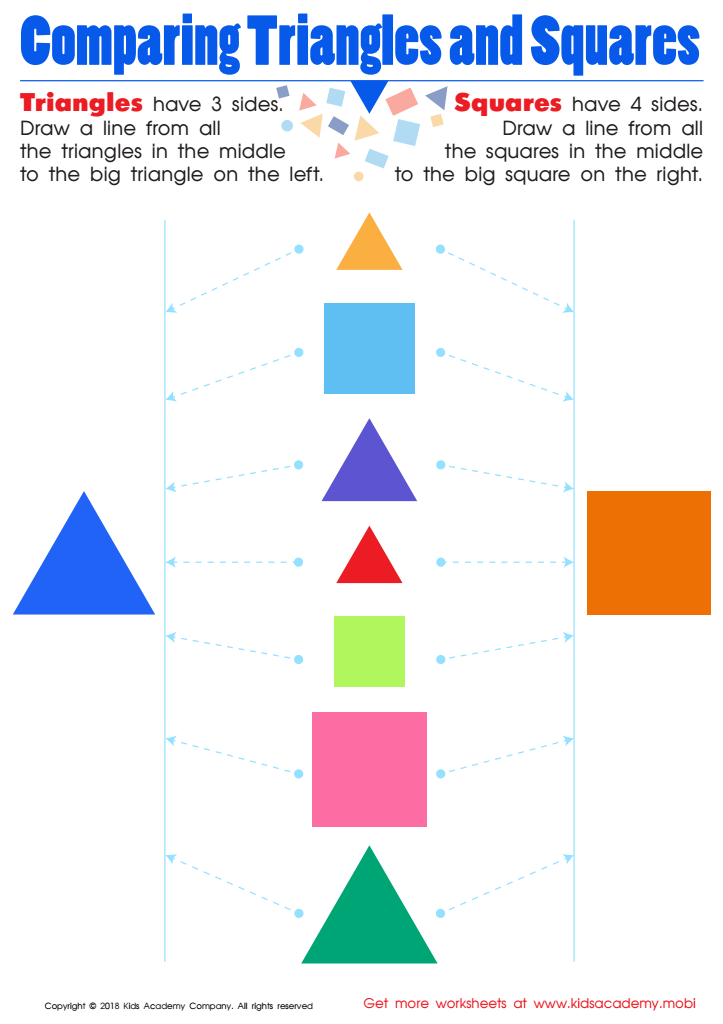
Comparing Triangles Squares Worksheet
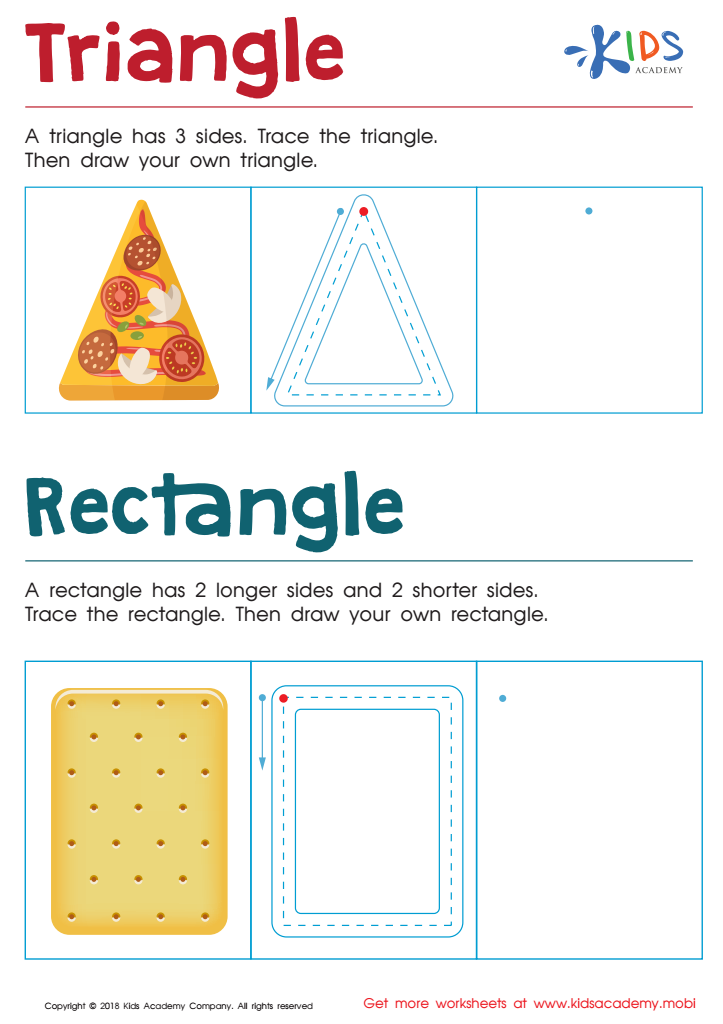
Triangle Rectangle Worksheet
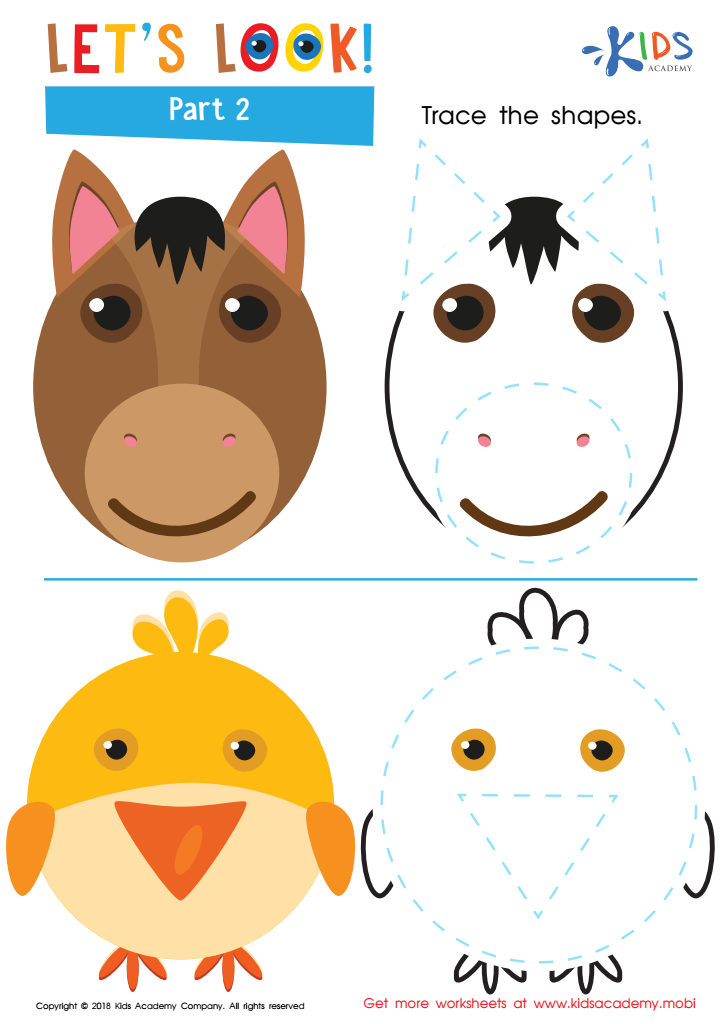
Let's Look! Part 2 Worksheet
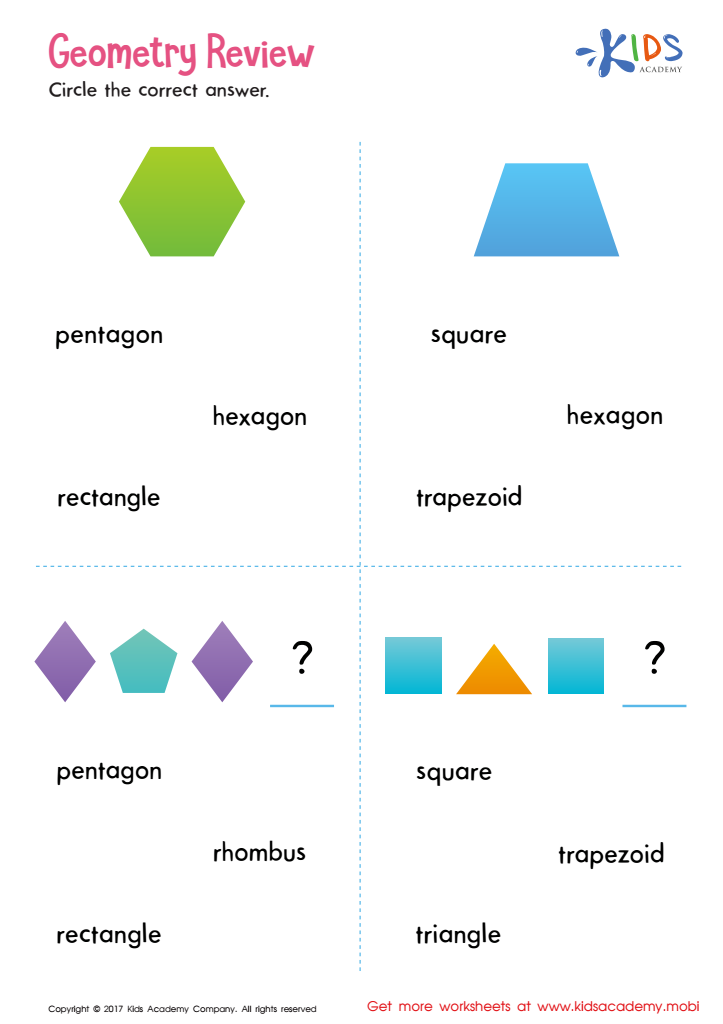
Geometry Review Printable
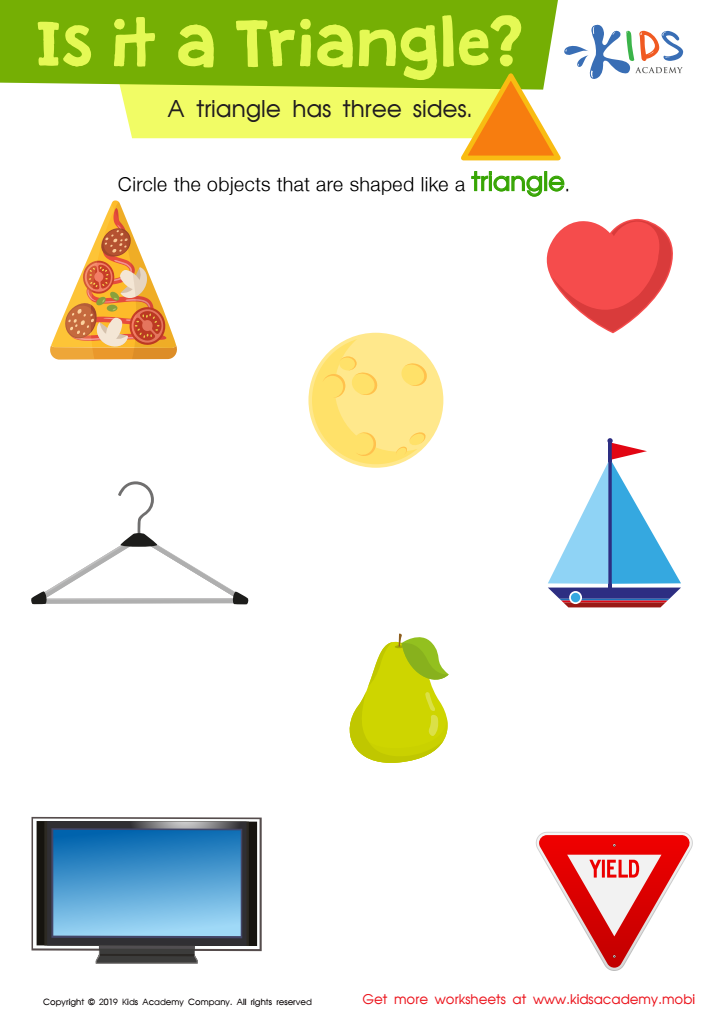
Is It a Triangle? Worksheet
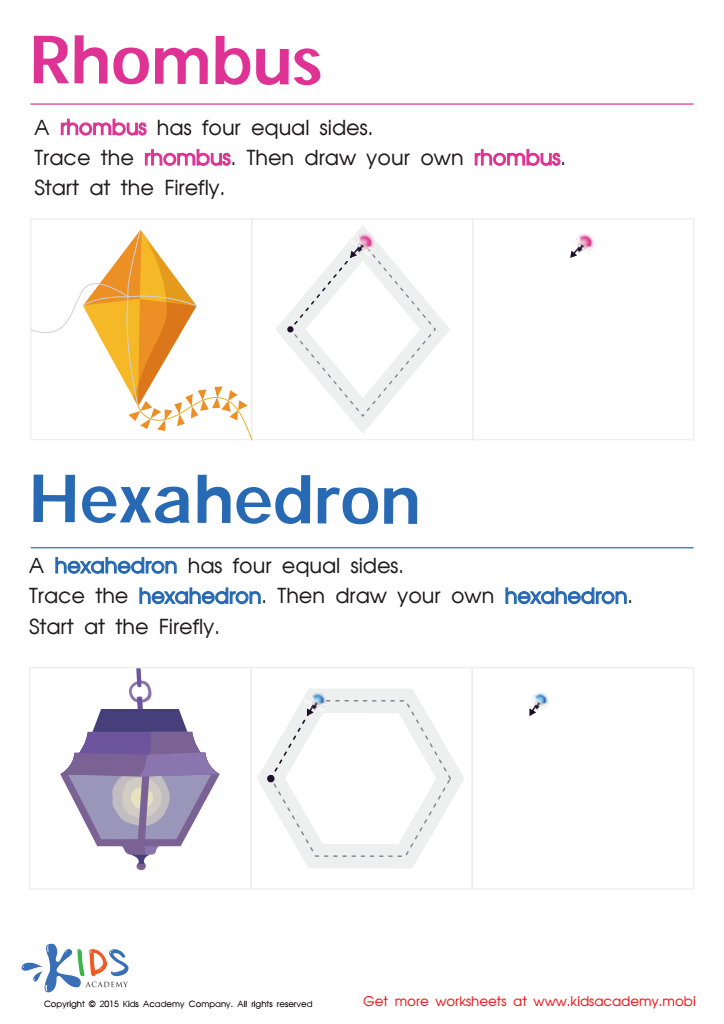
Draw a Rhombus And a Hexahedron Printable
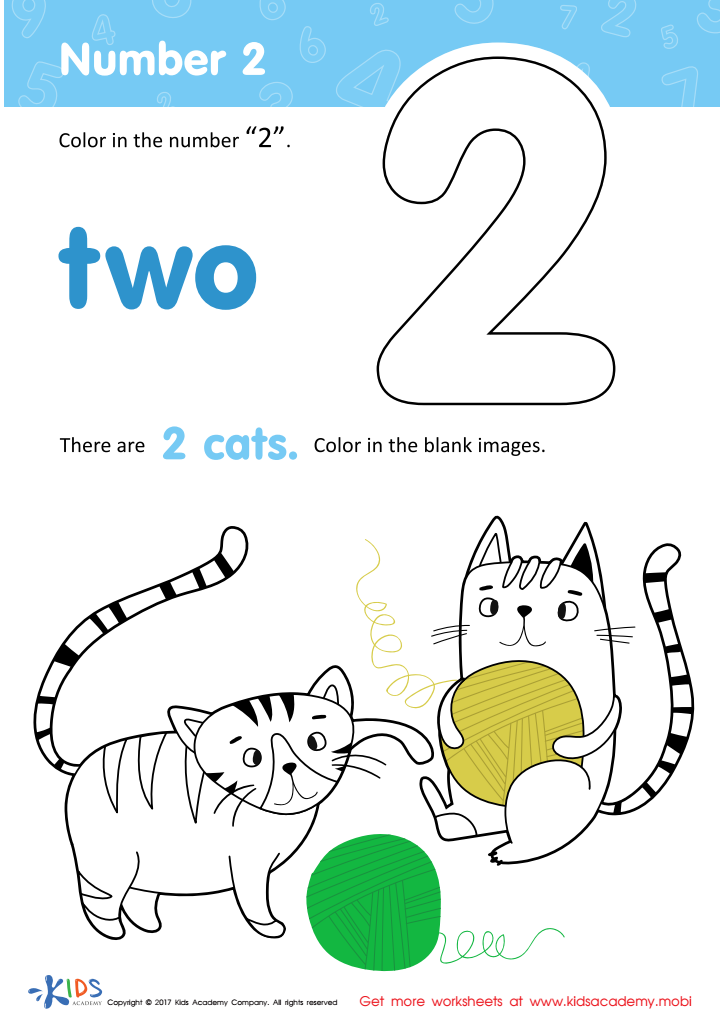
Number 2 Printable
 Assign to My Students
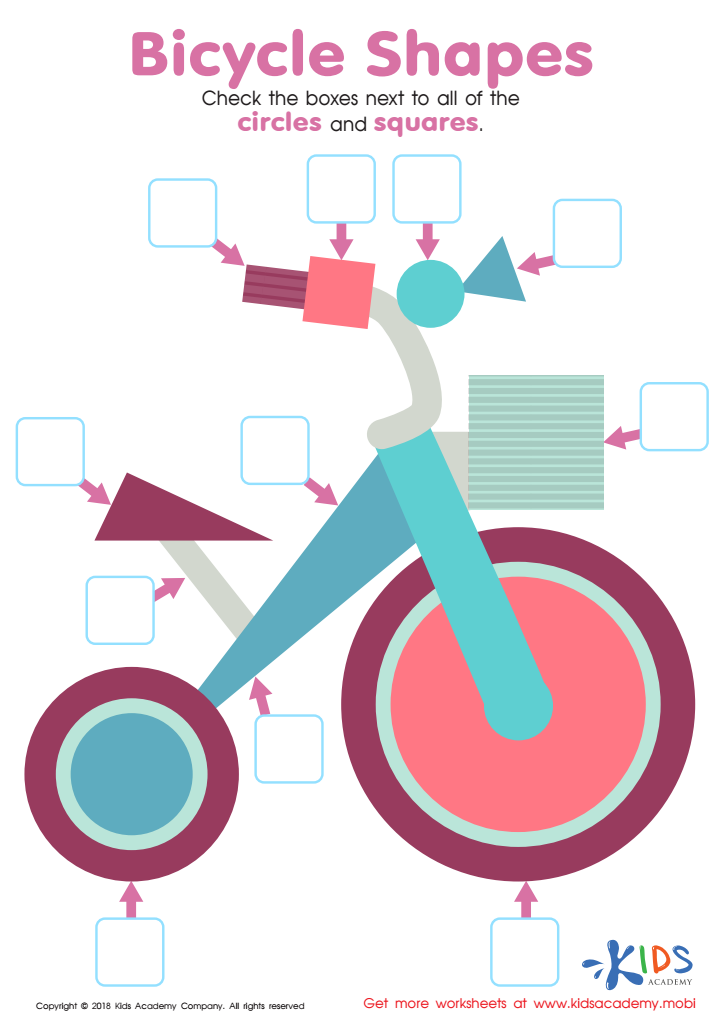
Bicycle Shapes Worksheet
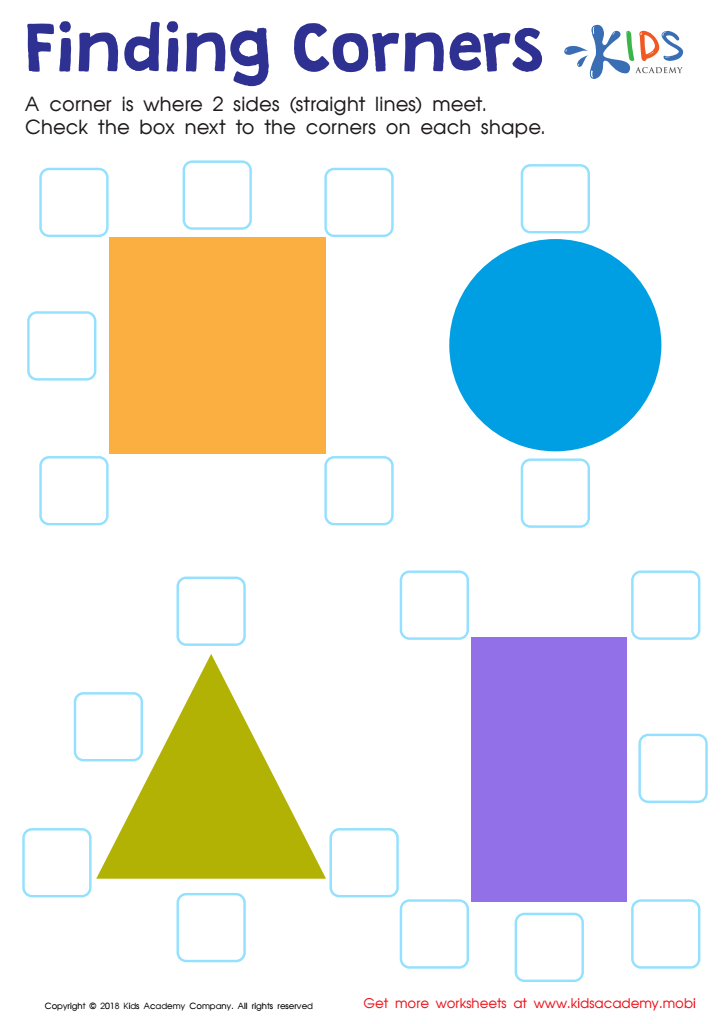
Finding Corners Worksheet
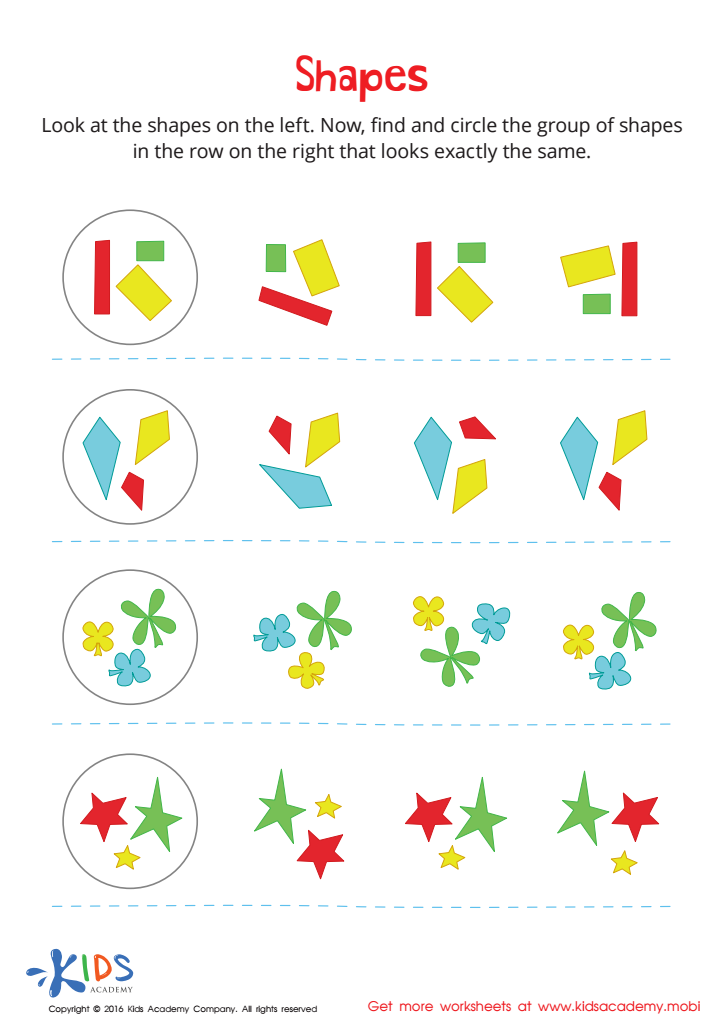
Shapes Worksheet








Shape identification is a foundational mathematical skill for 4-year-olds, essential for both cognitive and practical reasons. At this young age, children’s brains are highly receptive to pattern recognition and spatial relationships, key components of early math skills. Understanding basic shapes like circles, squares, and triangles helps children comprehend more complex mathematical concepts later, such as geometry and measurement.
From a developmental perspective, recognizing shapes enhances fine motor skills through activities like drawing and sorting, and it improves visual differentiation. When children identify and categorize shapes, they also boost their problem-solving abilities and critical thinking. These cognitive skills are transferable to other areas of learning, including reading, science, and even social skills, as children learn to describe their world and communicate more effectively.
Teachers and parents should care about shape identification because it lays the groundwork for academic success. Activities like puzzle games, shape-sorting toys, and simple drawing exercises can make learning fun while providing structured educational benefits. Engaging in these activities not only supports children’s cognitive development but also encourages a positive attitude towards learning, which is invaluable as they grow older. Therefore, helping 4-year-olds learn shapes isn’t just about math; it’s a comprehensive approach to fostering well-rounded early childhood development.








