Understanding directions Math Worksheets for 4-Year-Olds
4 filtered results
-
From - To
Unlock your child's potential with our "Understanding Directions" math worksheets designed specifically for 4-year-olds. These engaging resources incorporate fun activities that teach young learners essential directional concepts like left, right, above, and below. By following simple instructions, children enhance their comprehension skills while enjoying hands-on learning experiences. Perfect for preschoolers, these worksheets also promote critical thinking and spatial awareness as little ones navigate through various fun-filled exercises. Explore our vibrant and interactive worksheets to give your child a head start in understanding directions, ensuring they are not only prepared for future math challenges but also equipped with valuable life skills.
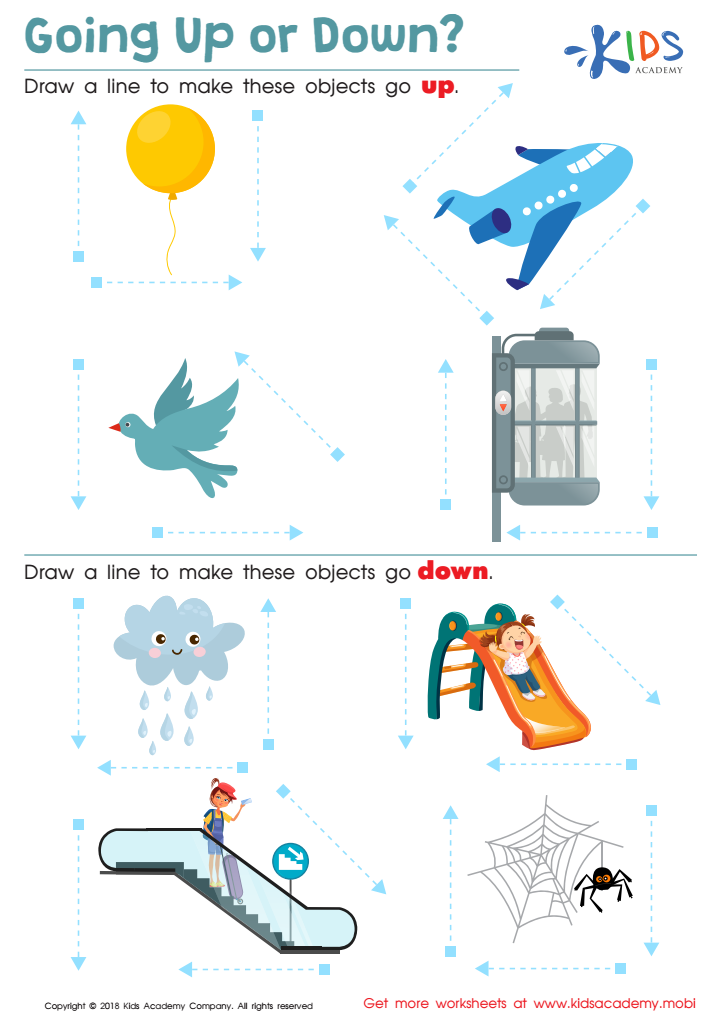
Going up or Down? Worksheet
 Assign to My Students
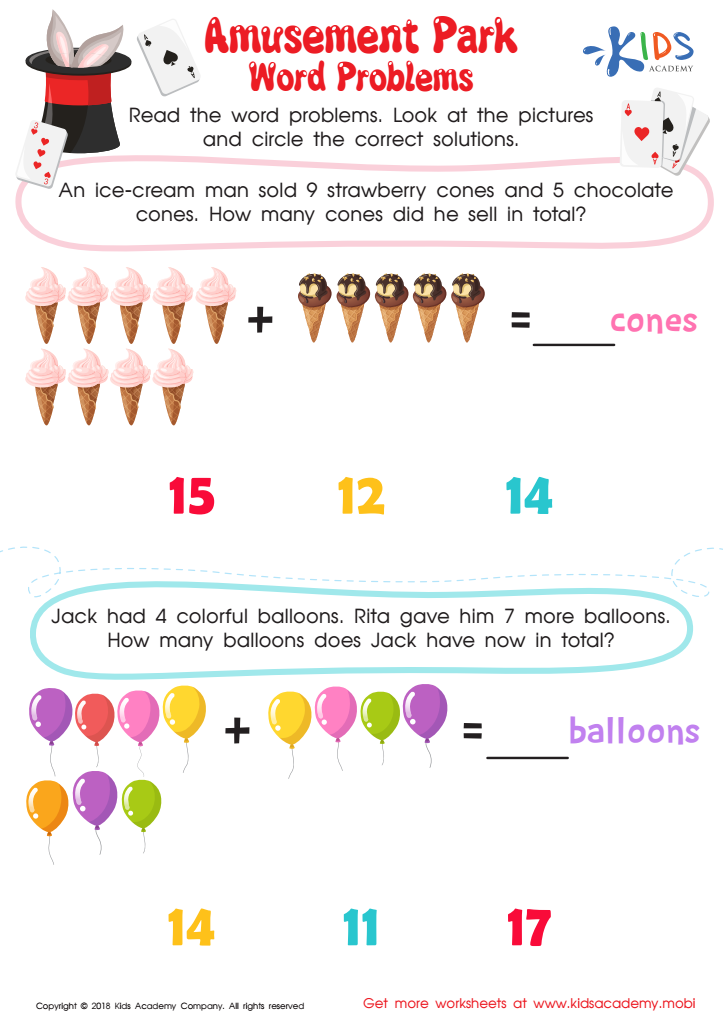
Amusement Park Word Problems Worksheet
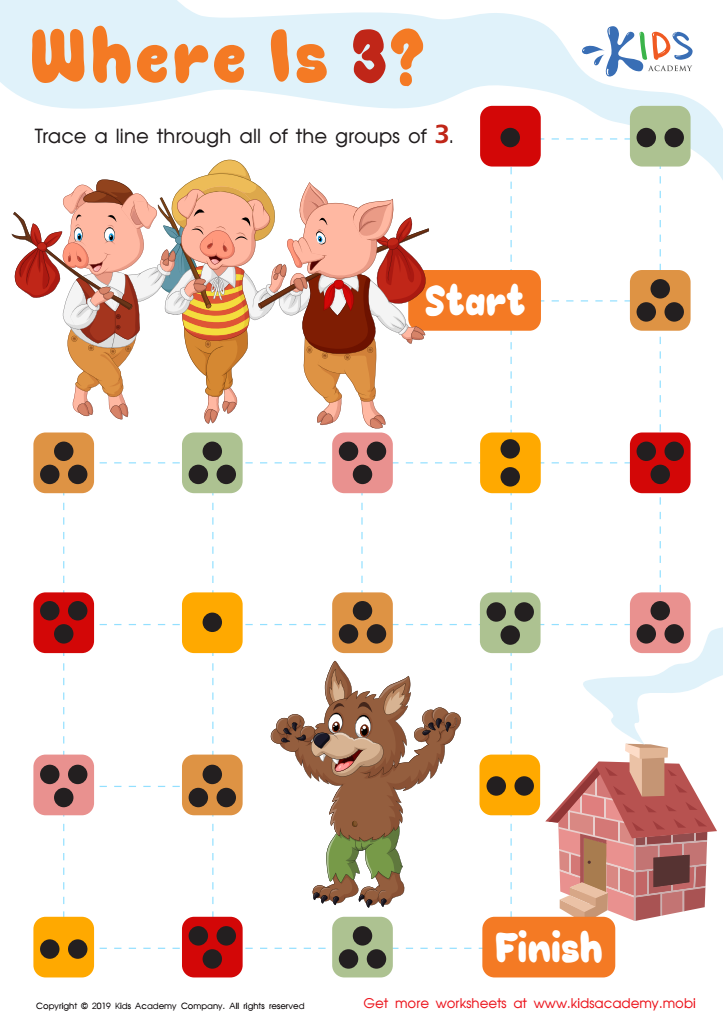
Where Is 3? Worksheet
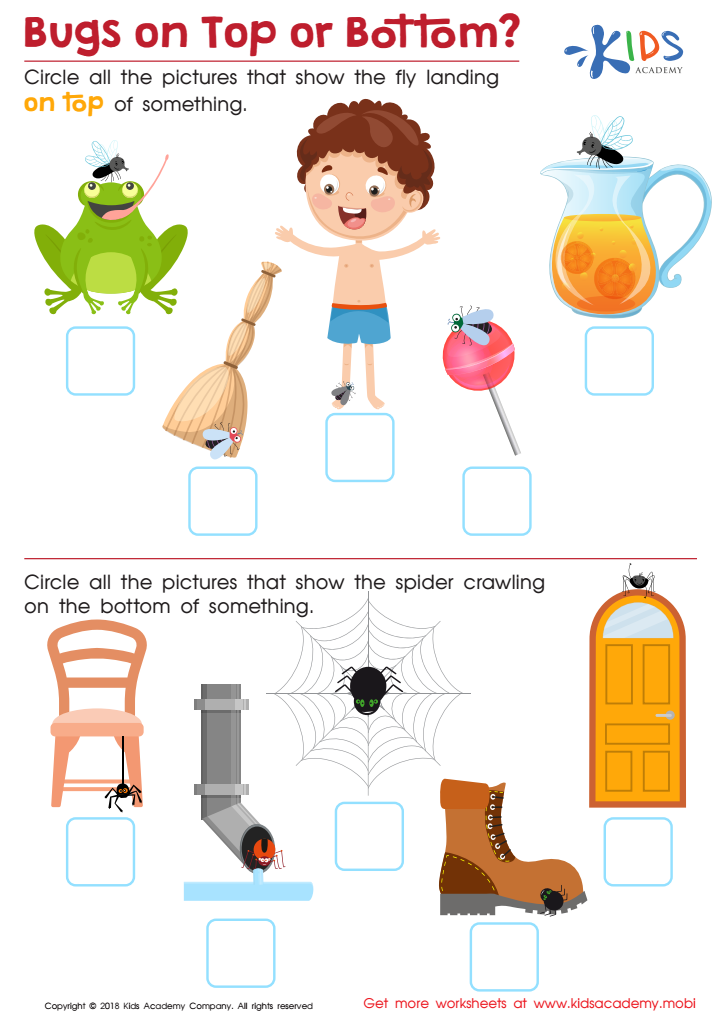
Bugs on Top or Bottom? Worksheet








Understanding directions in math is crucial for 4-year-olds as it lays the foundation for their future learning. At this age, children are naturally curious and eager to explore the world around them. Engaging them in mathematical directions helps develop their cognitive skills, critical thinking, and problem-solving abilities crucial for academic success.
When parents and teachers prioritize math comprehension, they foster confidence and a positive attitude towards learning. Children who grasp mathematical directions can better relate to everyday tasks, such as counting toys, measuring ingredients, or organizing objects by size or color. This experiential learning not only makes math enjoyable but also reinforces essential concepts like one-to-one correspondence and basic operations.
Moreover, understanding directions aids in improving listening and comprehension skills. Following instructions boosts their language development and social interaction, as they learn to communicate their thoughts and collaborate with peers.
By caring about how children understand mathematical directions, parents and teachers contribute to a more comprehensive educational experience that encourages creativity and adaptability, key traits in our rapidly changing world. Supporting young learners in this initial stage of depth and exploration ultimately cultivates lifelong skills and a love for learning.








