Understanding opposites Math Worksheets for 4-Year-Olds
4 filtered results
-
From - To
Explore our engaging "Understanding Opposites" math worksheets designed specifically for 4-year-olds! These interactive resources help young learners grasp fundamental concepts such as big vs. small, hot vs. cold, and more through playful activities. Each worksheet is created with vibrant illustrations to capture children's attention and make learning fun. By practicing opposites, children enhance their critical thinking skills while building a strong foundation in math and language. Perfect for both home and classroom use, these worksheets encourage independent work and promote cognitive development. Start your child’s journey into the world of opposites today and watch their confidence soar!
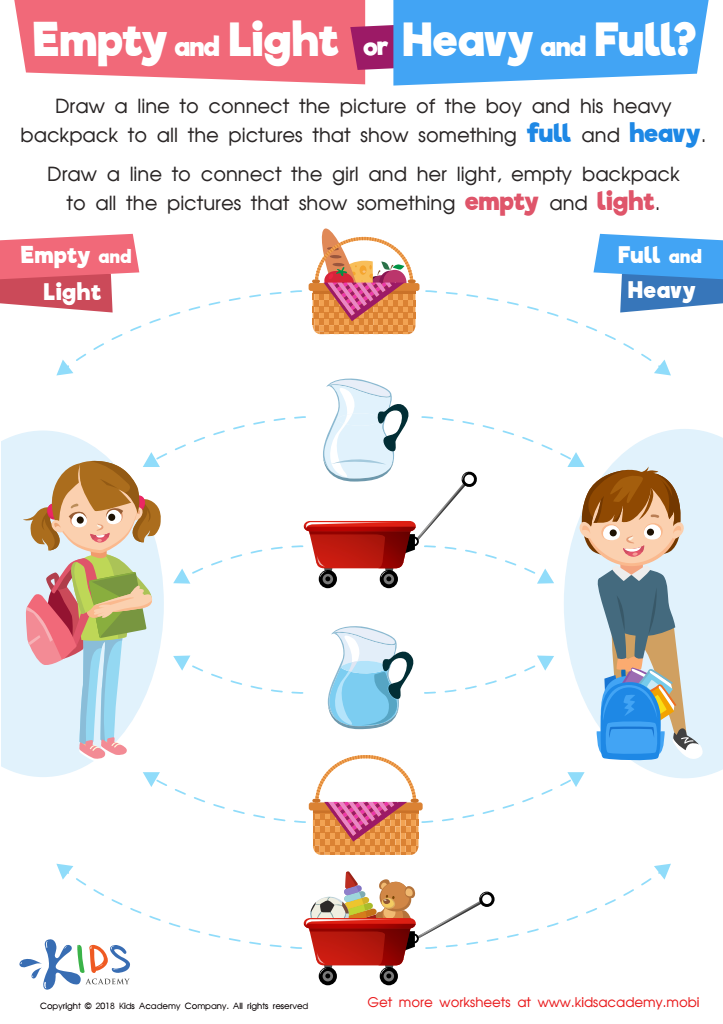
Empty and Light or Heavy and Full? Worksheet
 Assign to My Students
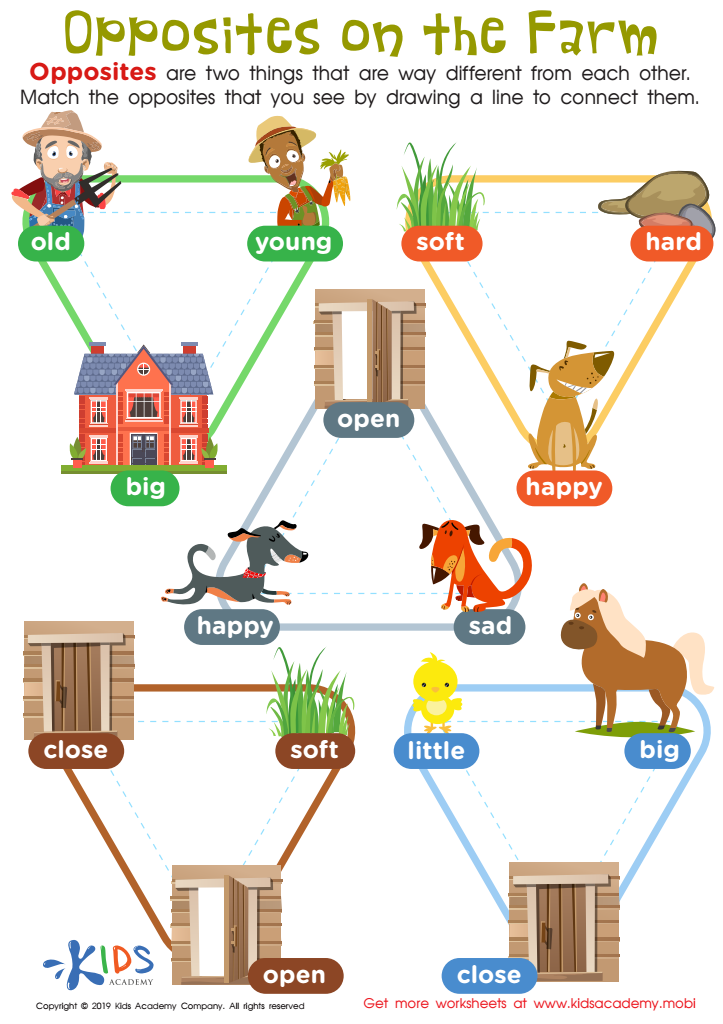
Opposites on the Farm Worksheet
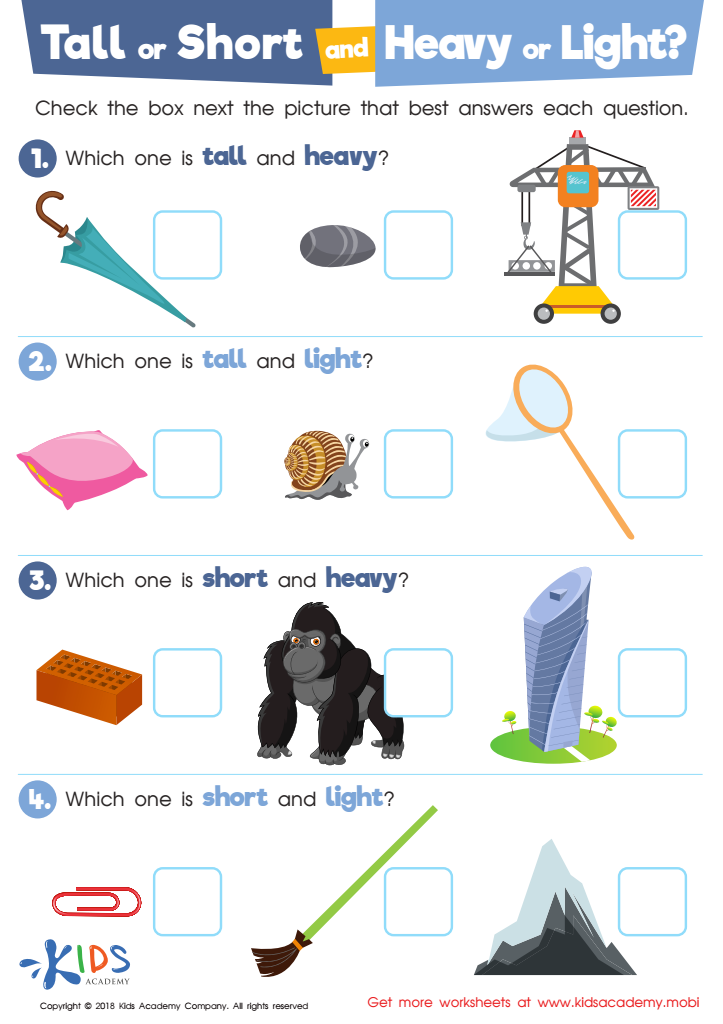
Tall or Short and Heavy or Light? Worksheet
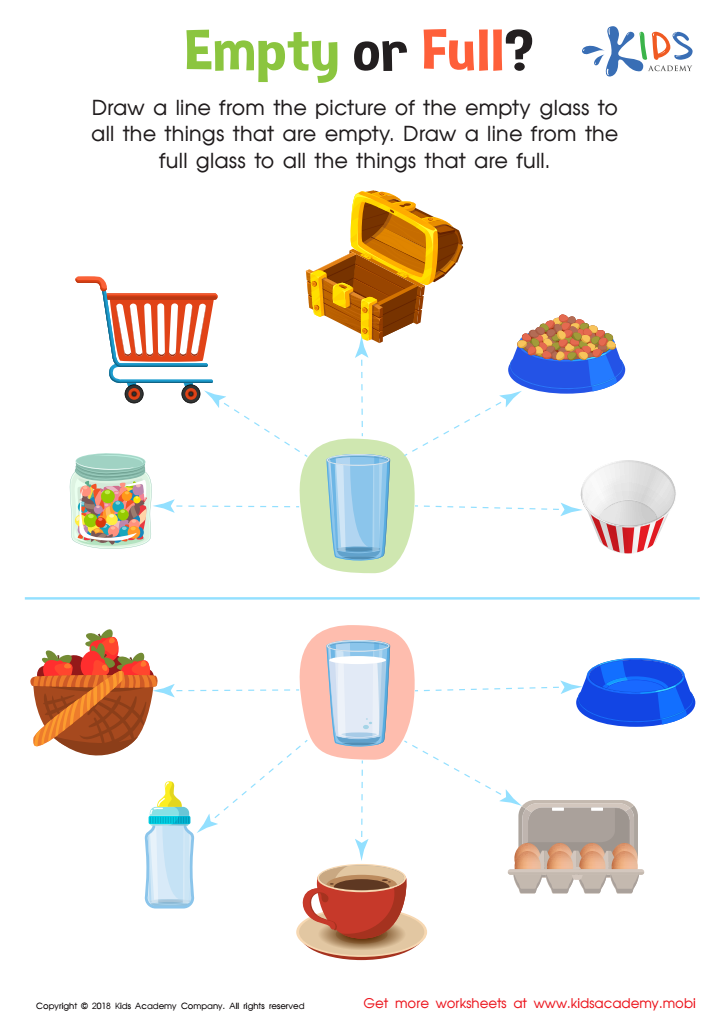
Empty or Full? Worksheet








Understanding opposites is a vital foundation in mathematics for 4-year-olds, as it cultivates essential cognitive skills and promotes early numerical comprehension. When children grasp concepts like big/small, high/low, or heavy/light, they not only develop their vocabulary but also begin to understand comparative relationships—an integral part of math.
Teaching opposites lays the groundwork for more complex mathematical concepts, such as addition and subtraction. For example, understanding that "more" and "less" are opposites helps children comprehend basic quantity. Additionally, exploring opposites fosters critical thinking and problem-solving skills, allowing young learners to analyze situations and make connections in their learning.
Engagement with opposites can also enhance creativity and language alternatives, as it often leads to rich discussions and storytelling opportunities. For parents and educators, incorporating games and activities around opposites creates a dynamic learning environment, making math fun and relatable.
Ultimately, by nurturing an understanding of opposites, parents and teachers are not just teaching math; they are providing children with fundamental skills crucial for academic success, cognitive development, and everyday life. This early exposure can spark a lifelong interest in learning and exploration in the world of mathematics.








