
Underwater animal identification Math Worksheets for 4-Year-Olds
3 filtered results
Difficulty Level
Grade
Age
-
From - To
Subject
Activity
Standards
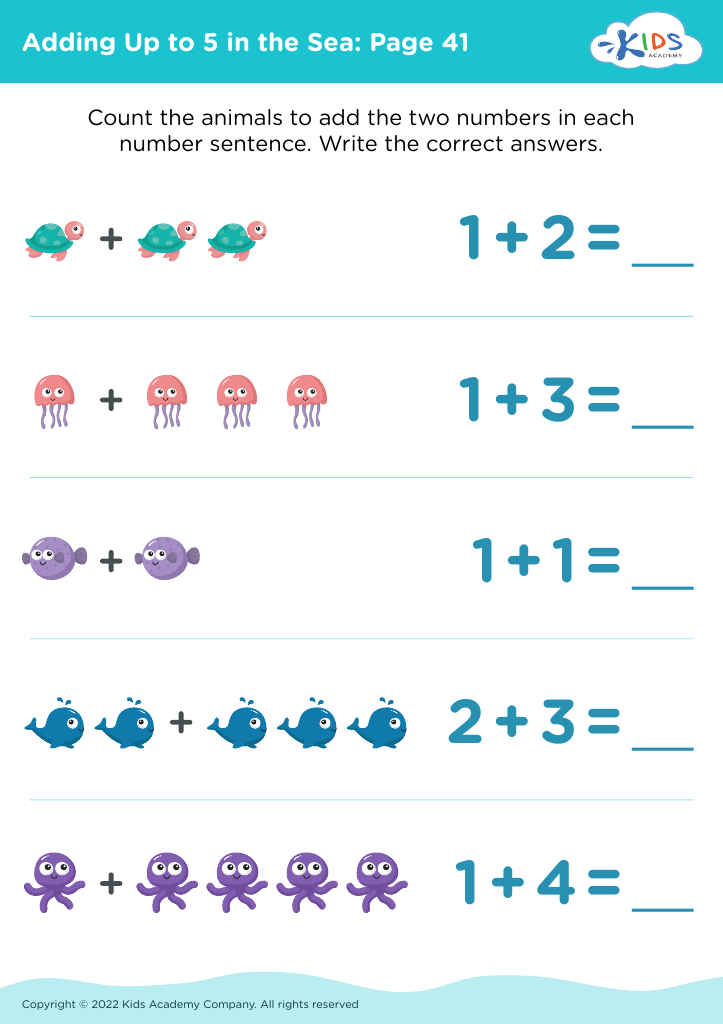
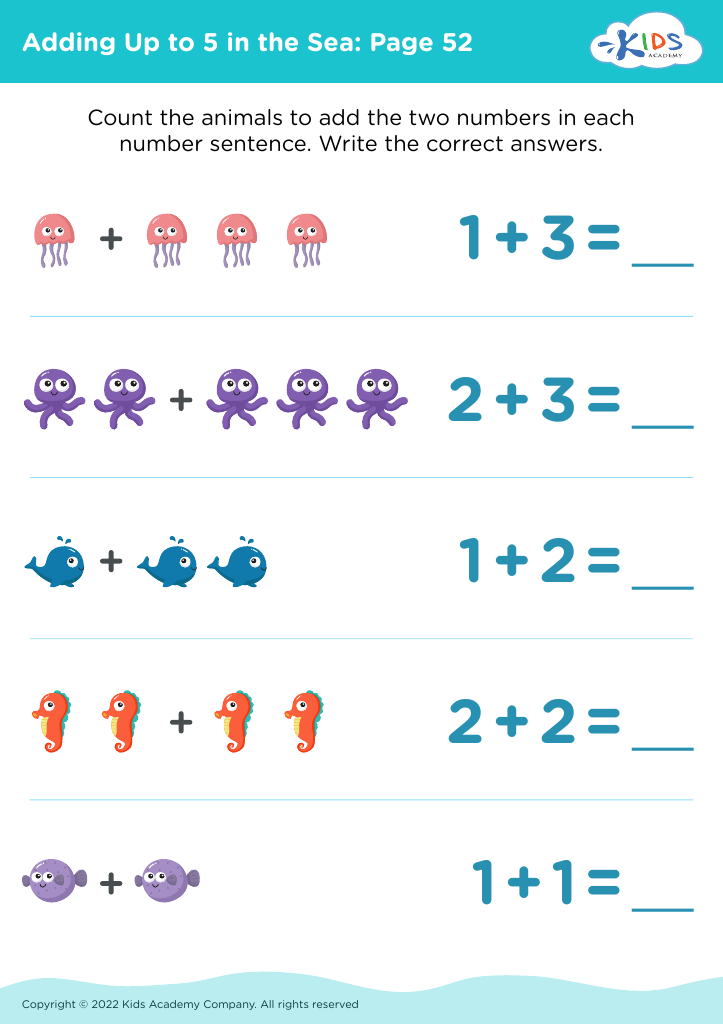
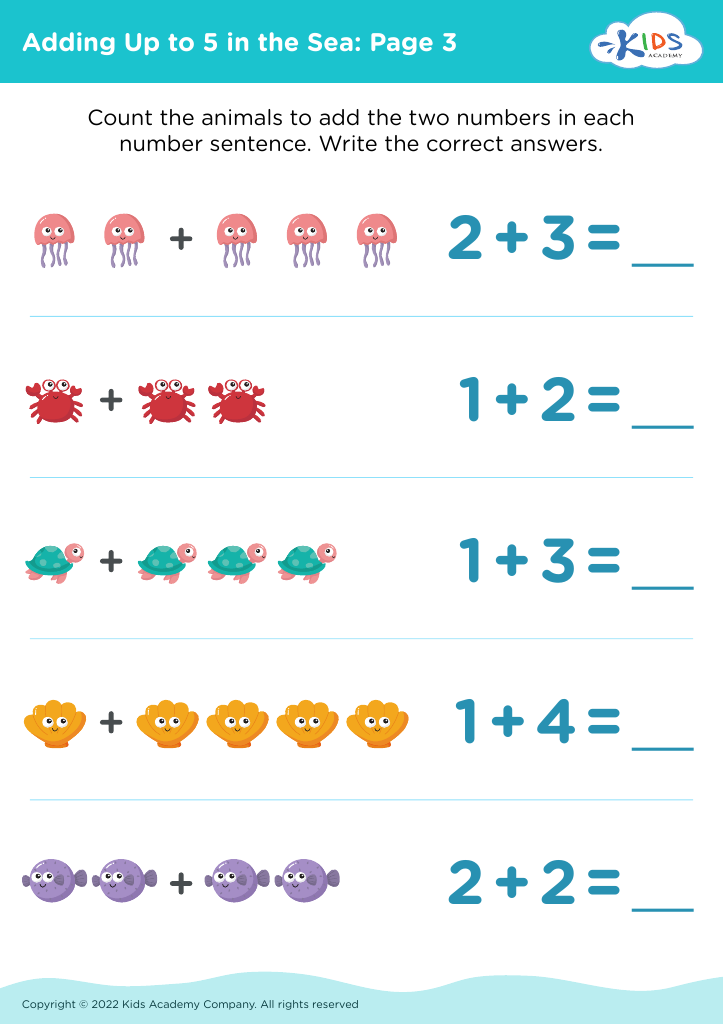
Dive into learning with our Underwater Animal Identification Math Worksheets for 4-Year-Olds! These engaging, colorful worksheets combine the excitement of marine life with essential early math skills. Designed to captivate young minds, children will enjoy identifying various underwater creatures while practicing counting, sorting, and number recognition. Featuring a variety of fun activities, these worksheets not only spark curiosity about the ocean but also promote critical thinking and problem-solving skills. Perfect for preschoolers, our worksheets provide a playful and educational experience, supporting foundational math learning in a way that’s enjoyable and visually stimulating. Make math magical with underwater adventures!
Favorites
With answer key
Interactive
Join Kids Academy for Free
Who is primarily going to use this learning content?






Introducing underwater animal identification math to 4-year-olds serves as a fun and educational exercise that blends curiosity about nature with foundational mathematical skills. Parents and teachers can benefit for several compelling reasons. First, learning to identify underwater animals like fish, starfish, and octopuses ignites a child's interest in the natural world, fostering a sense of curiosity and love for learning. Such engagement helps children see learning as a fun and lifelong endeavor.
On the mathematical frontier, incorporating animal identification with counting, sorting, and basic arithmetic sets kids on the right path for numerical proficiency. For instance, asking children to count the number of clownfish or grouping sea creatures by color or size allows them to practice and apply math concepts in an engaging context. This approach aligns well with early math curricula that emphasize hands-on learning and promotes cognitive development through pattern recognition and problem-solving skills.
Moreover, discussing underwater animals with children aids their language development. They learn new vocabulary and improve descriptive skills. This interdisciplinary method encourages a holistic approach to early education. Thus, caring about underwater animal identification math for 4-year-olds enriches their developmental experiences, ensuring balanced growth in intellectual, emotional, and social domains.








