Comparing object weights Measurement Worksheets for 4-Year-Olds
3 filtered results
-
From - To
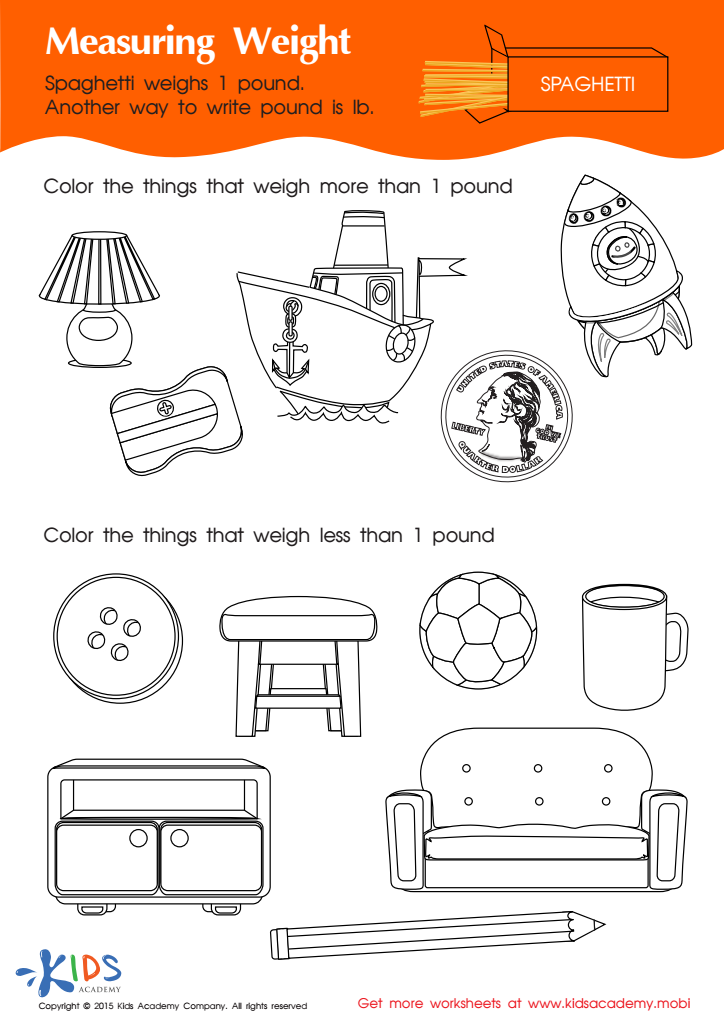
Discover our engaging "Comparing Object Weights Measurement Worksheets for 4-Year-Olds" that make learning fun and interactive. Designed to enhance early math skills, these worksheets help young learners understand the concept of weight by comparing different objects. They develop critical thinking through hands-on activities, fostering fine motor skills and cognitive development. Each worksheet features vibrant illustrations and simple exercises that keep kids entertained while they learn. Perfect for parents and teachers, our printable resources provide a foundation for future mathematical success. Give your child a head start in their educational journey with these entertaining and educational weight comparison worksheets.
 Assign to My Students
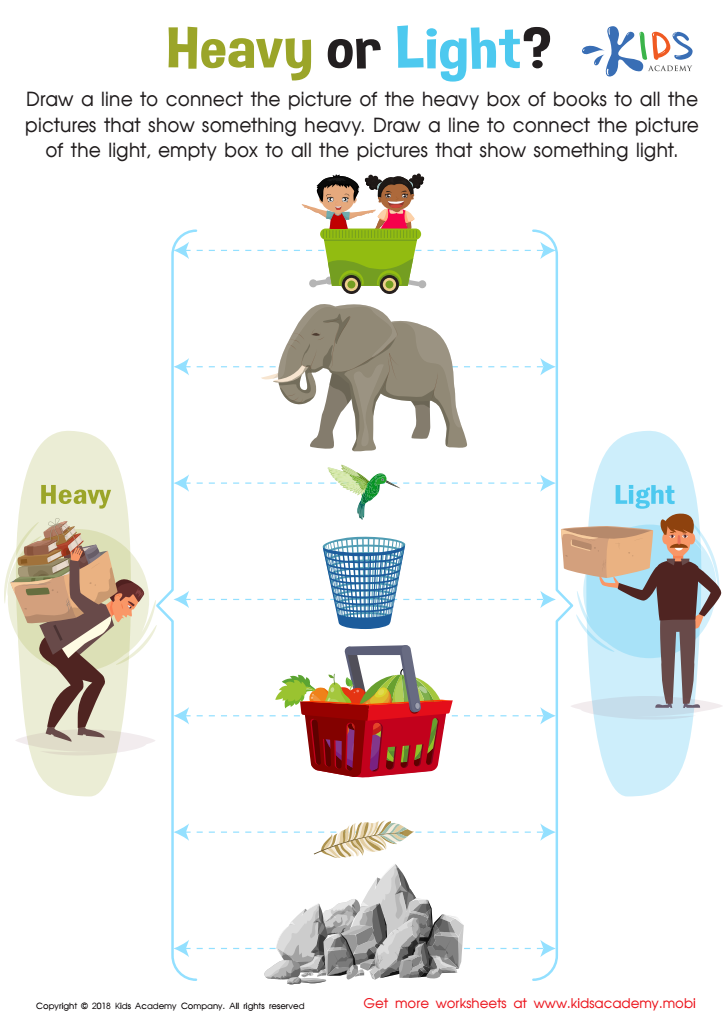
Heavy or Light? Worksheet
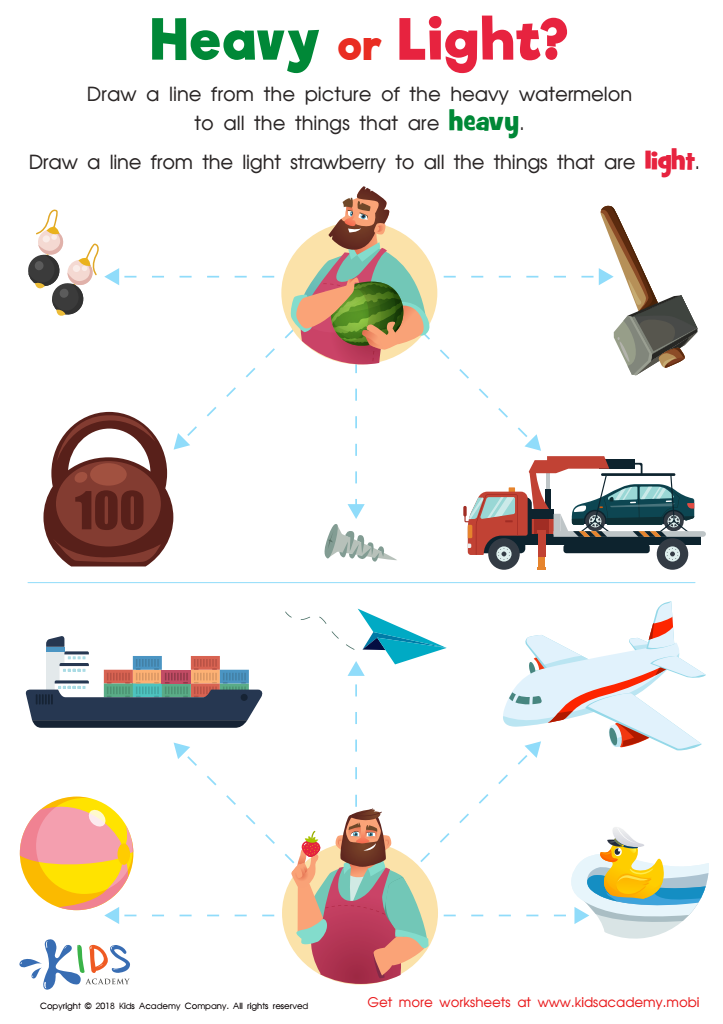
Heavy or Light? Worksheet







At four years old, children are at a critical stage of cognitive development, and learning comparative measurements, such as comparing the weights of objects, plays a vital role in their overall growth. Such activities foster early mathematical thinking and lay the groundwork for future learning in science, technology, engineering, and mathematics (STEM). When children compare object weights, they develop a solid foundation in understanding concepts of heavy and light, balance, and equilibrium, which are essential for grasping more complex scientific ideas later on.
Engaging in weight comparison exercises also enhances a child's fine motor skills, as they manipulate and experiment with different objects. It develops critical thinking and problem-solving abilities by encouraging young learners to make observations, hypothesize, and draw conclusions based on their discoveries. These activities nurture curiosity and a sense of exploration, which are fundamental attributes for lifelong learning.
Moreover, teachers and parents can use everyday scenarios to introduce these concepts, making learning both accessible and relevant. Cooking, grocery shopping, and playtime can all become powerful teaching moments. As children interact with diverse objects and measure their weights, they strengthen their vocabulary with terms like heavier, lighter, and balance. In sum, integrating measurement comparisons into early childhood learning enriches a child's educational journey by building essential cognitive, motor, and language skills.








