Multiplication practice Subtraction Worksheets for 4-Year-Olds
3 filtered results
-
From - To
Welcome to our engaging "Multiplication Practice and Subtraction Worksheets" designed specifically for 4-year-olds! These worksheets offer a fun and interactive way for your little learners to explore the foundational concepts of multiplication and subtraction. With colorful illustrations and age-appropriate activities, children can develop their early math skills while enjoying learning. Each worksheet focuses on essential problem-solving techniques, helping young minds grasp mathematical relationships. Perfect for homeschooling or extra practice, our worksheets foster confidence and independence in young learners. Dive into a world of math-filled excitement and lay the groundwork for future mathematical success! Check them out today!
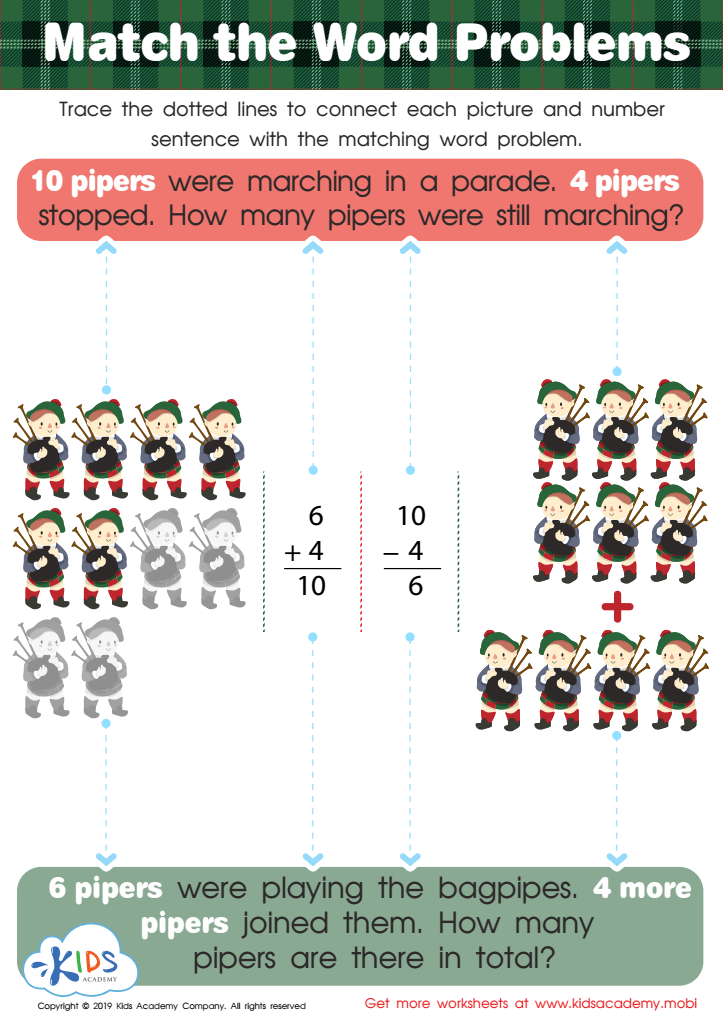
Match the Word Problems Worksheet
 Assign to My Students
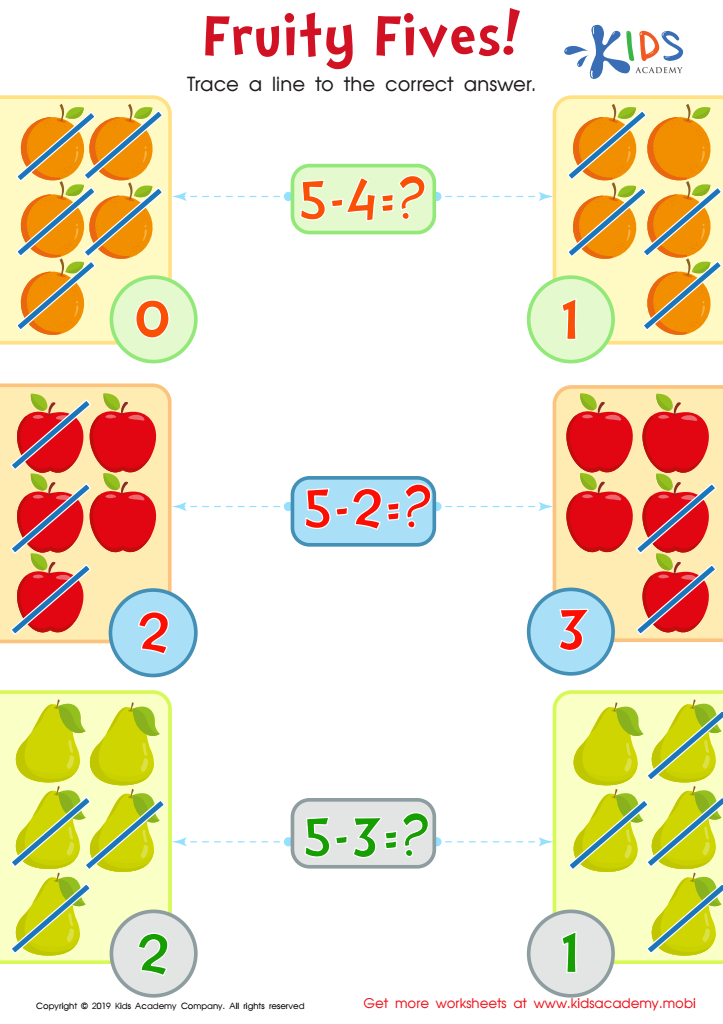
Fruity Fives! Worksheet
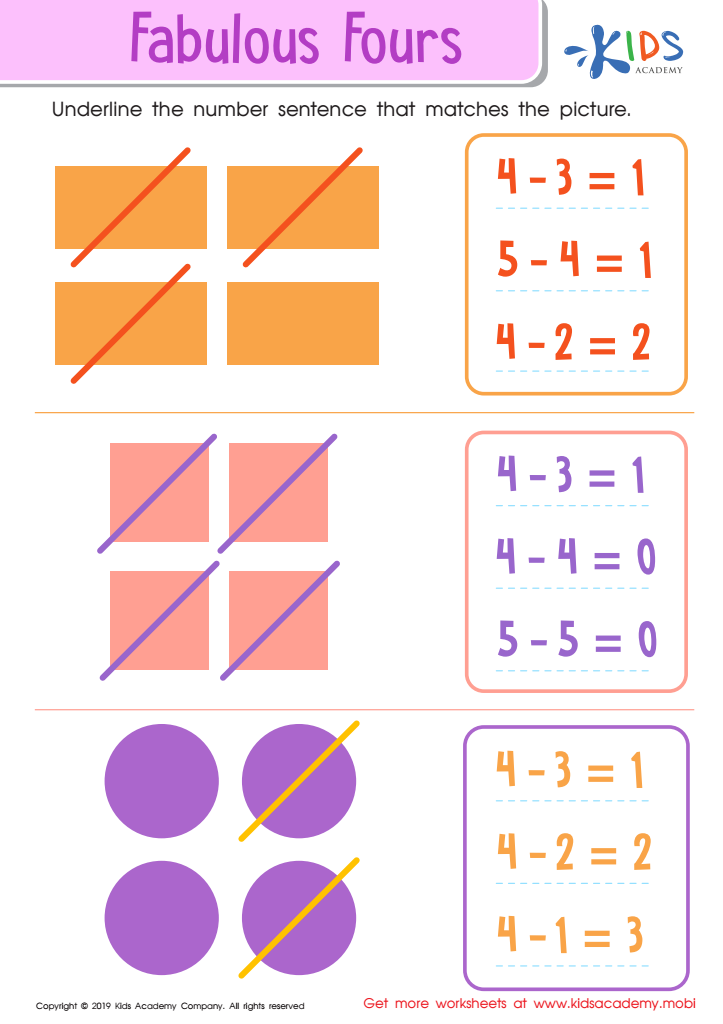
Fabulous Fours Worksheet








Parents and teachers should care about multiplication practice and subtraction for 4-year-olds because these foundational skills lay the groundwork for future mathematical understanding and cognitive development. Though it may seem advanced, introducing basic concepts of multiplication and subtraction in playful and engaging ways can spark curiosity and foster a love for math at an early age.
At this stage, children are naturally inclined to explore patterns and relationships, making it an ideal time to introduce early multiplication concepts, such as grouping and repeated addition. This can be done using visual aids, such as toys or blocks, which help solidify abstract ideas through tangible experiences.
Similarly, subtraction is vital as it helps develop critical thinking and problem-solving skills. Engaging young learners in subtraction using everyday scenarios – like sharing snacks or counting down from a group of toys – makes math relatable and enjoyable. It nurtures their ability to reason and makes them comfortable with numbers.
By incorporating multiplication and subtraction into daily activities, parents and teachers not only strengthen mathematical foundations but also help children build resilience and confidence in their abilities, ensuring they feel equipped for future learning. Ultimately, this early engagement sets the stage for lifelong mathematical success.








