Number comprehension Subtraction Worksheets for 4-Year-Olds
7 filtered results
-
From - To
Introduce your child to the basics of subtraction with our engaging Number Comprehension Subtraction Worksheets designed for 4-year-olds. These thoughtfully crafted worksheets make learning subtraction an exciting adventure through colorful visuals and fun activities, ensuring a solid foundation in math. Your child will develop essential number comprehension skills while enjoying interactive lessons that seamlessly blend play and education. Perfectly tailored for young learners, our worksheets foster confidence and enthusiasm in early math skills. Enhance your child's numerical understanding with our age-appropriate, expert-designed subtraction worksheets today—where learning subtraction becomes a delightful journey!
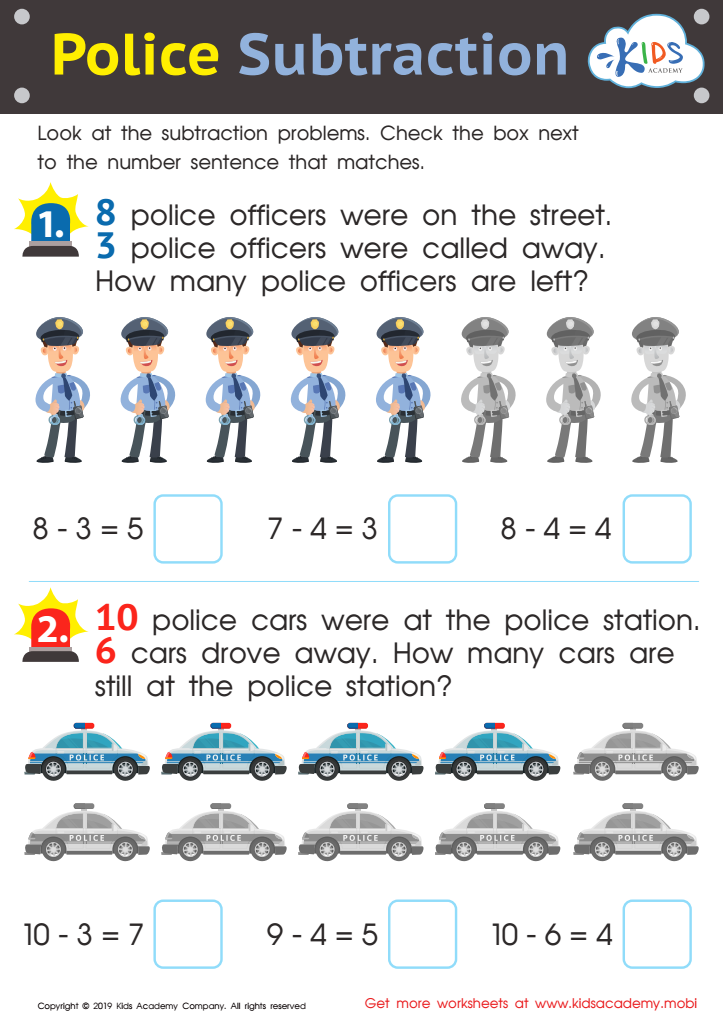
Police Subtraction Worksheet
 Assign to My Students
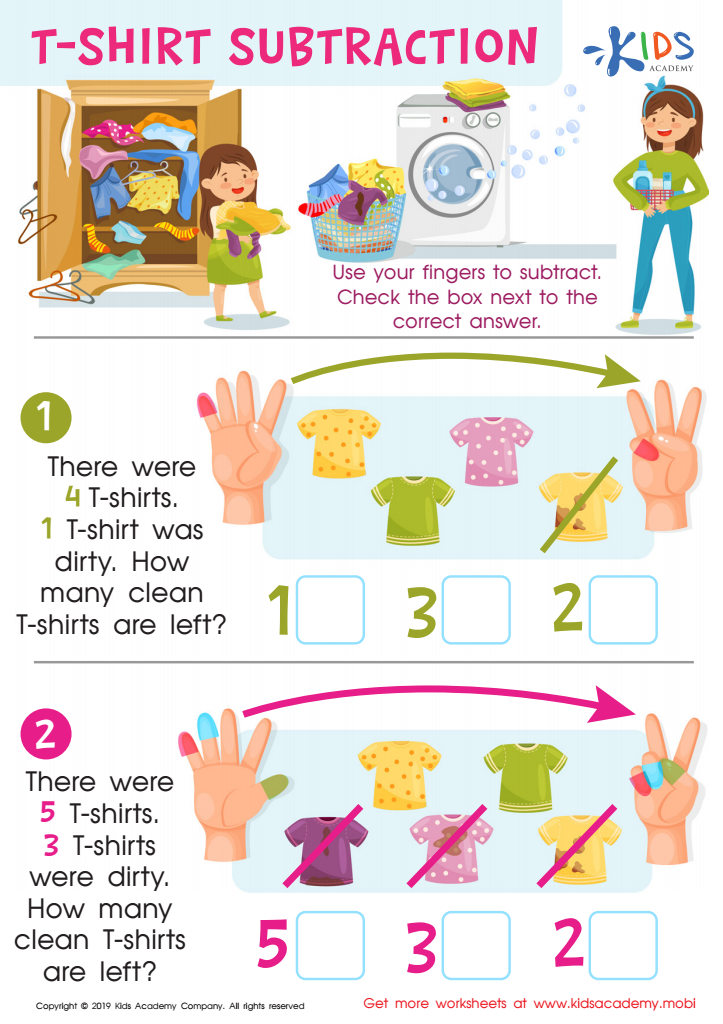
T-shirt Subtraction Worksheet
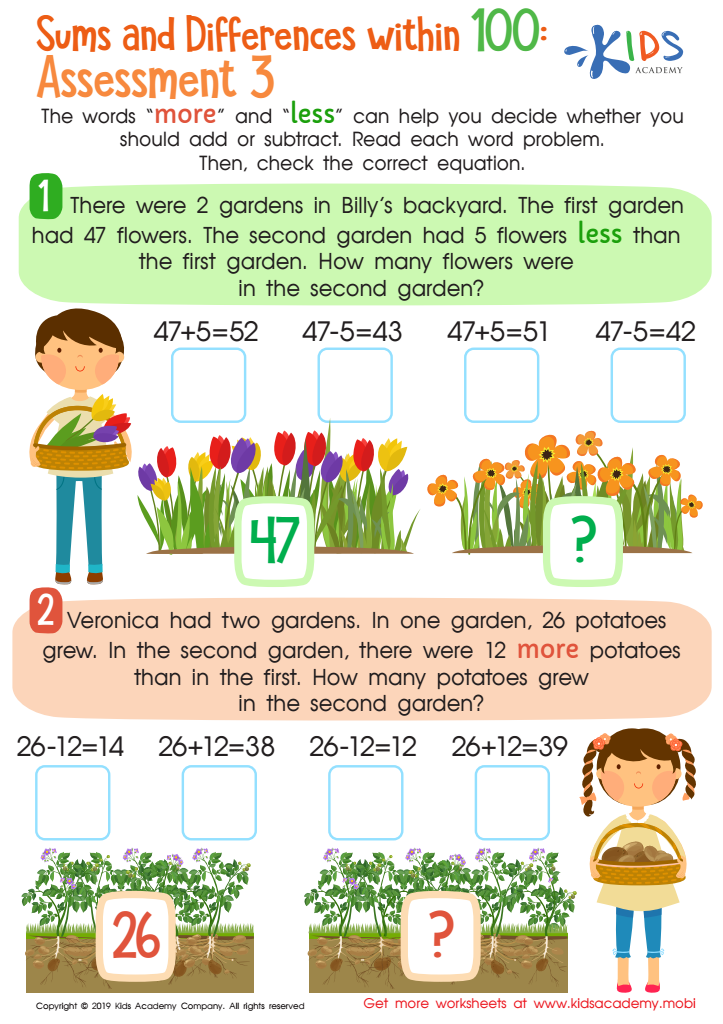
Sums and Differences Within 1 - Assessment 1 Worksheet
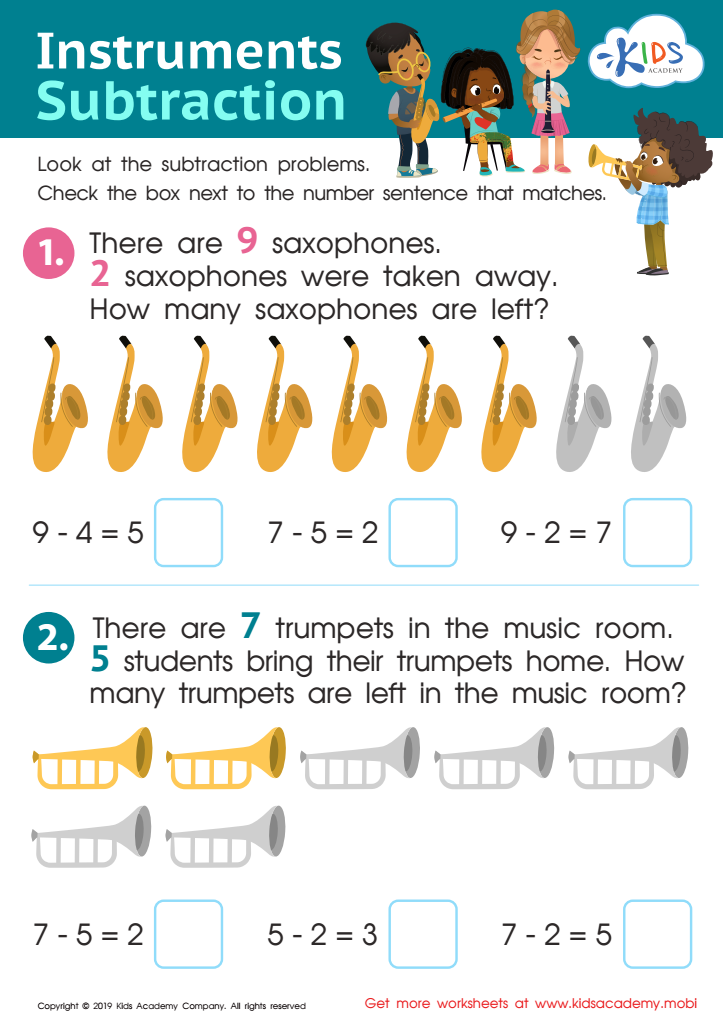
Instrument Subtraction Worksheet
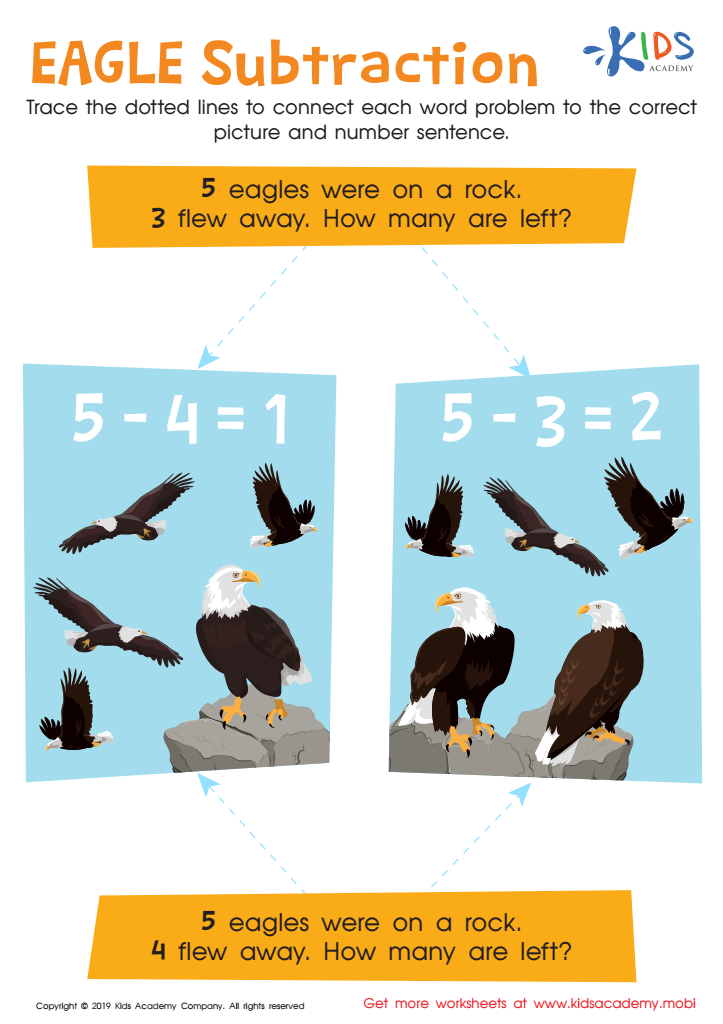
Eagle Subtraction Worksheet
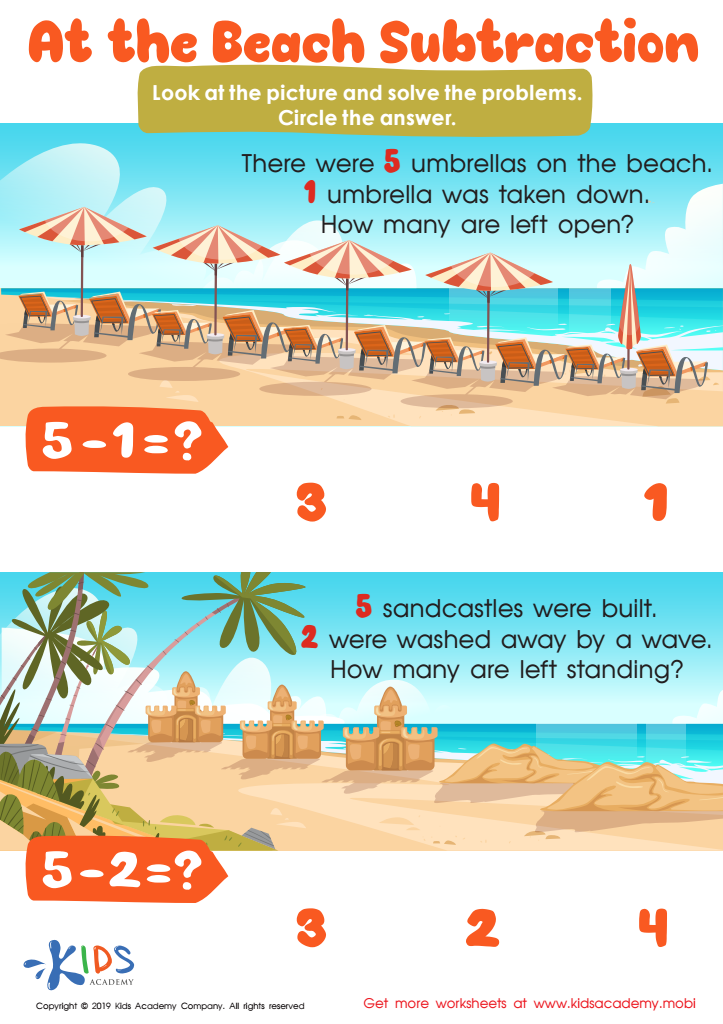
At the Beach Subtraction Worksheet
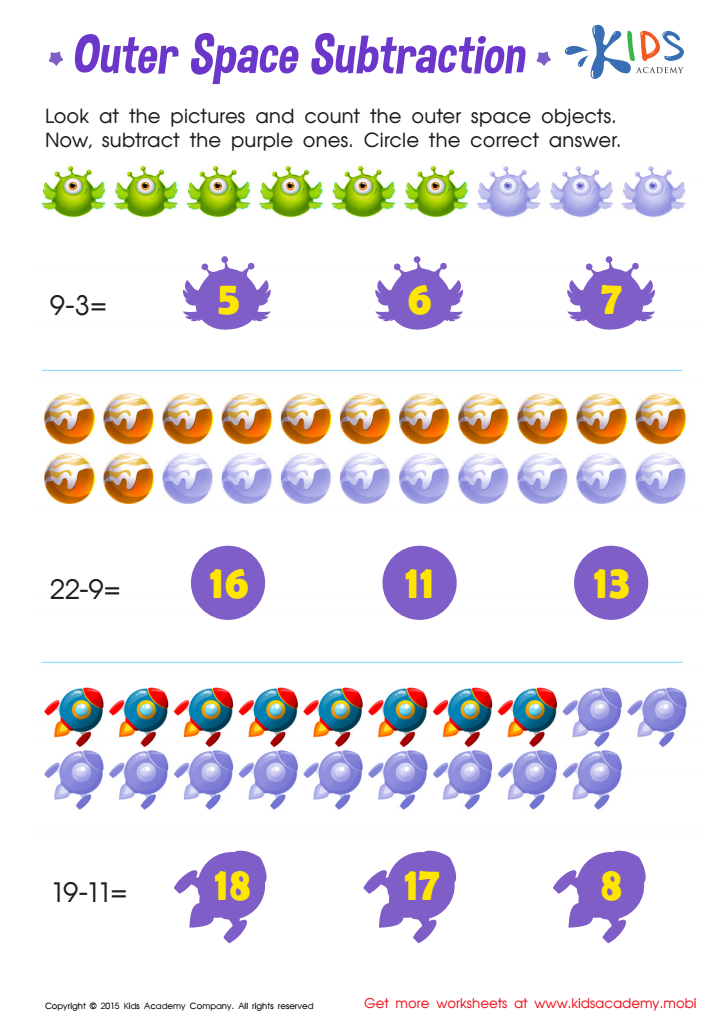
Outer Space Substraction Worksheet






.jpg)

Number comprehension, especially subtraction, is a fundamental skill for 4-year-olds as it lays the groundwork for their future academic and everyday life success. At this age, children are developing critical cognitive skills, and understanding basic mathematical concepts like subtraction helps enhance their logical thinking and problem-solving abilities.
Engaging with subtraction encourages children to grasp the concept of 'taking away,' fostering an early understanding of how numbers work and relate to each other. This foundational math skill is essential because it forms the basis for more complex arithmetic operations children will encounter later.
For parents and teachers, focusing on subtraction ensures that children are building a robust mathematical foundation. It also helps improve their ability to follow instructions and perseverance, as they often need to try different approaches to understand the concept fully. Additionally, these skills are not only crucial in academic settings but are also vital in real-life scenarios, such as sharing, counting objects, and understanding money.
Early exposure to subtraction helps prevent math anxiety by making the subject approachable and fun, using games and practical activities. When children feel confident in their ability to handle basic math problems, they are more likely to excel in school and develop a lifelong appreciation for mathematics. Supporting their numerical skills encourages overall cognitive development and fosters a love for learning.








