Shape identification Tracing Shapes Worksheets for 4-Year-Olds
3 filtered results
-
From - To
Discover our engaging Shape Identification Tracing Shapes Worksheets designed specifically for 4-year-olds! These fun and interactive worksheets help young learners recognize and trace various shapes, including circles, squares, triangles, and more. By encouraging shape identification through tracing, children enhance their fine motor skills, hand-eye coordination, and cognitive development. Our vibrant and colorful designs keep kids motivated while solidifying their understanding of essential geometric concepts. Perfect for home or classroom use, these worksheets provide a wonderful opportunity for early learners to explore shapes creatively. Download now and watch your little ones enjoy learning while having fun with shapes!
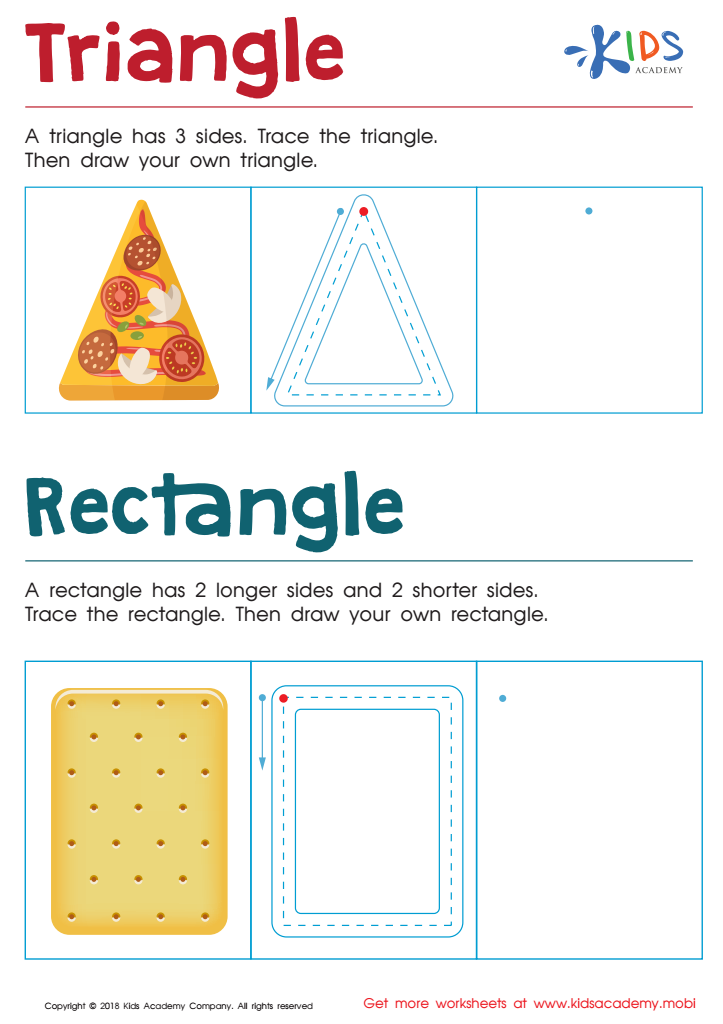
Triangle Rectangle Worksheet
 Assign to My Students
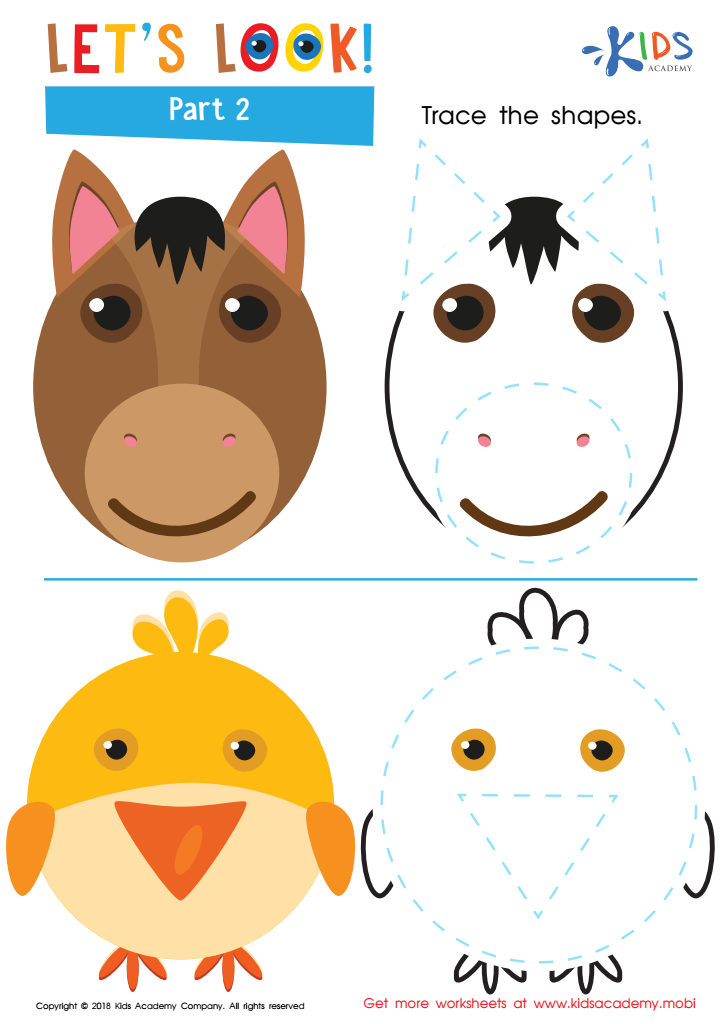
Let's Look! Part 2 Worksheet
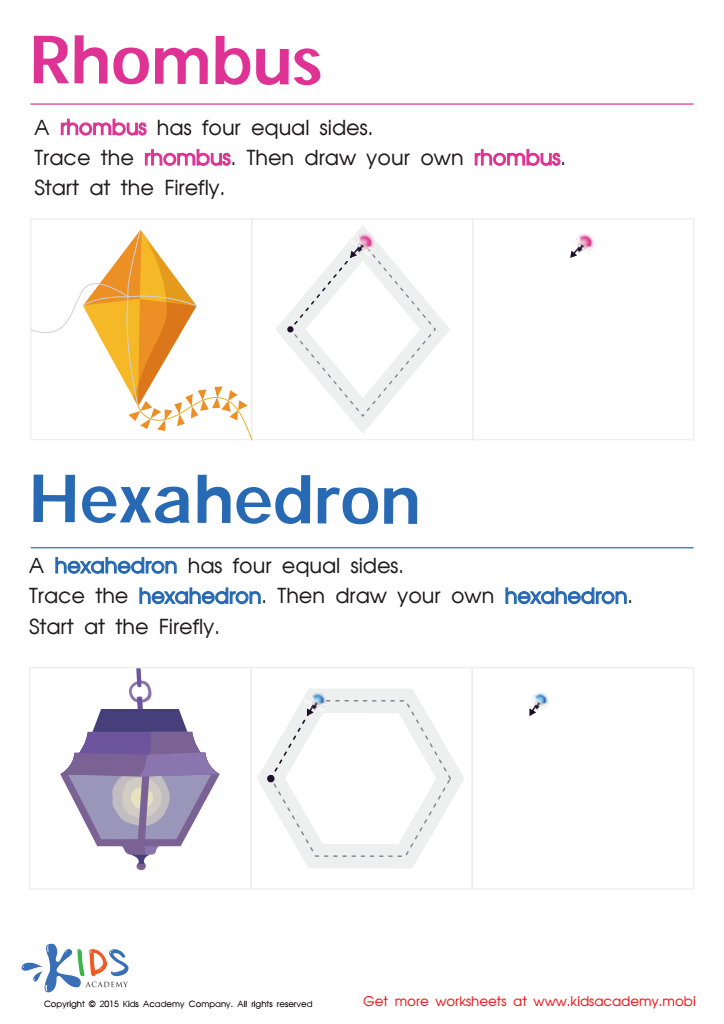
Draw a Rhombus And a Hexahedron Printable








Shape identification and tracing are crucial activities for 4-year-olds, serving as foundational skills for their cognitive development and early mathematics. When children learn to identify different shapes—such as circles, squares, triangles, and rectangles—they begin to understand spatial relationships and categorize objects, which enhances their problem-solving abilities.
Tracing shapes allows young learners to develop fine motor skills, vital for tasks like writing and self-care later on. This activity encourages hand-eye coordination, as children concentrate on their movements while following the outlines. Additionally, tracing familiar shapes can boost a child's confidence, making them more willing to explore other learning opportunities.
Furthermore, shape tracing can stimulate language development. As teachers or parents guide children through the activity, they can introduce vocabulary related to geometry and colors, fostering both communication skills and comprehension.
Engaging in shape activities promotes critical thinking and creativity as children begin to draw and create new objects from basic shapes. Given these benefits, parents and teachers should prioritize shape identification and tracing in early learning environments, laying the groundwork for future academic success while making learning fun and interactive. Engaging with shapes nurtures a child’s curiosity and willingness to learn, key attributes for lifelong educational journeys.