Coloring skills Reading Worksheets for 4-Year-Olds
3 filtered results
-
From - To
Unlock your child's creativity and enhance their reading skills with our Coloring Skills Reading Worksheets for 4-Year-Olds. Designed specifically for young learners, these engaging worksheets combine coloring activities with foundational reading exercises, making learning fun and interactive. Each worksheet encourages children to color while recognizing letters, sounds, and words, fostering both artistic expression and literacy development. Perfect for home or classroom use, these resources are easy to print and provide a playful way to reinforce essential skills. Start your child's reading journey today with our captivating coloring worksheets that promote imagination and learning in one exciting package!
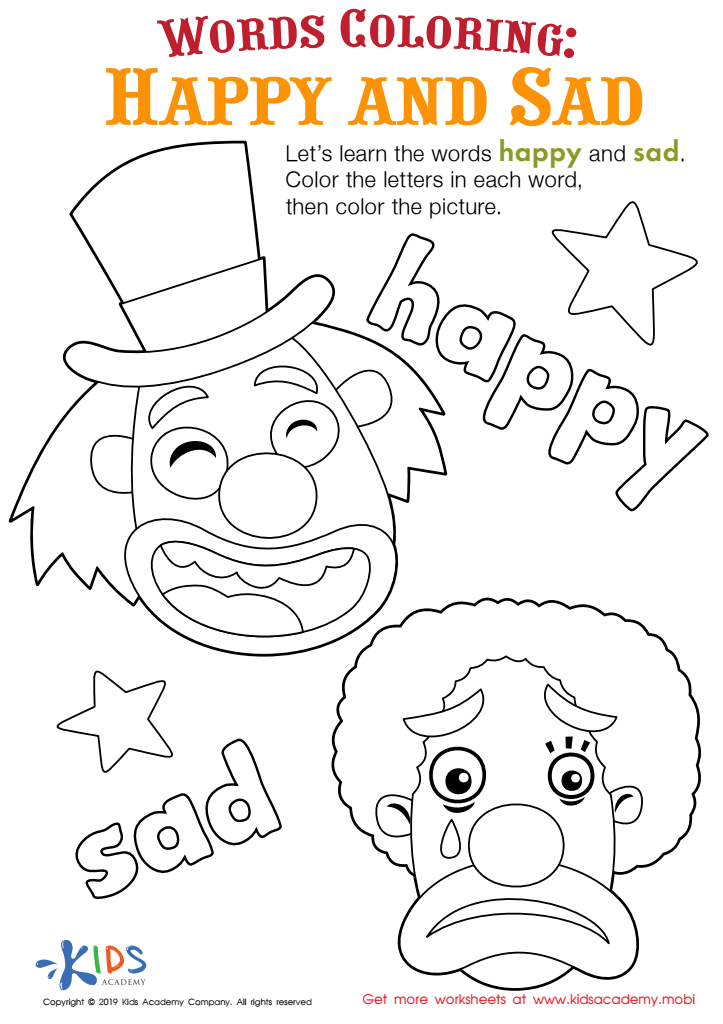
Happy and Sad Words Coloring Worksheet
 Assign to My Students
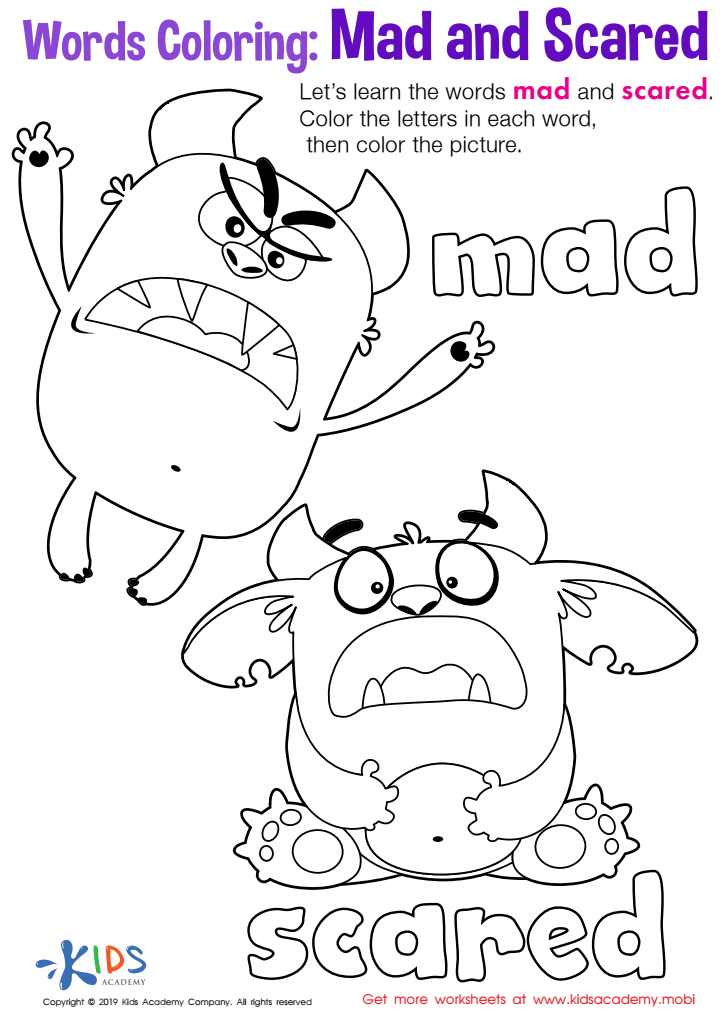
Mad and Scared Words Coloring Worksheet
Assign to My Students


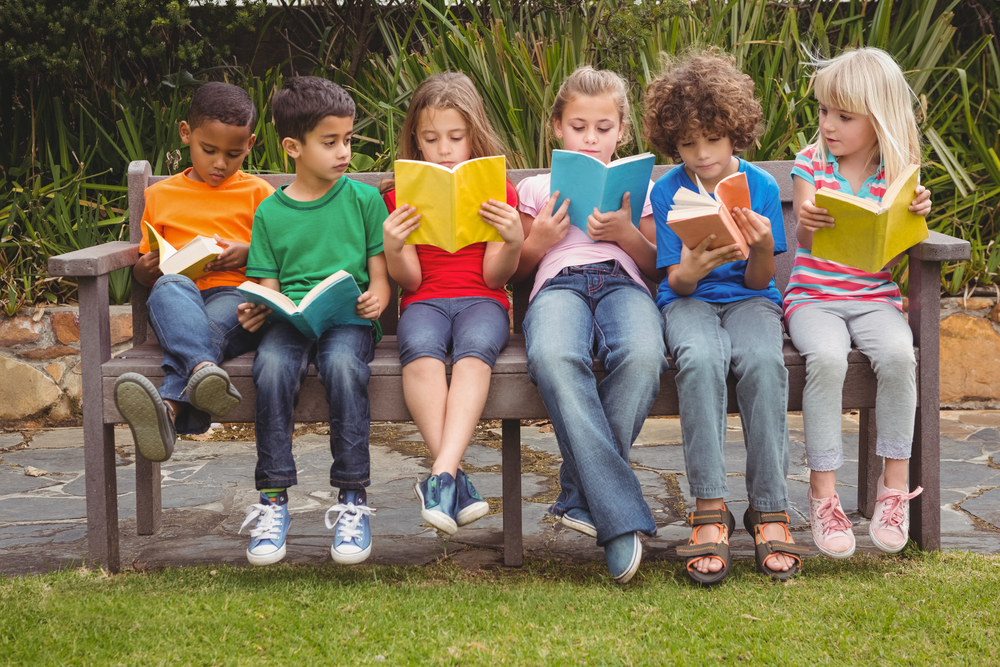
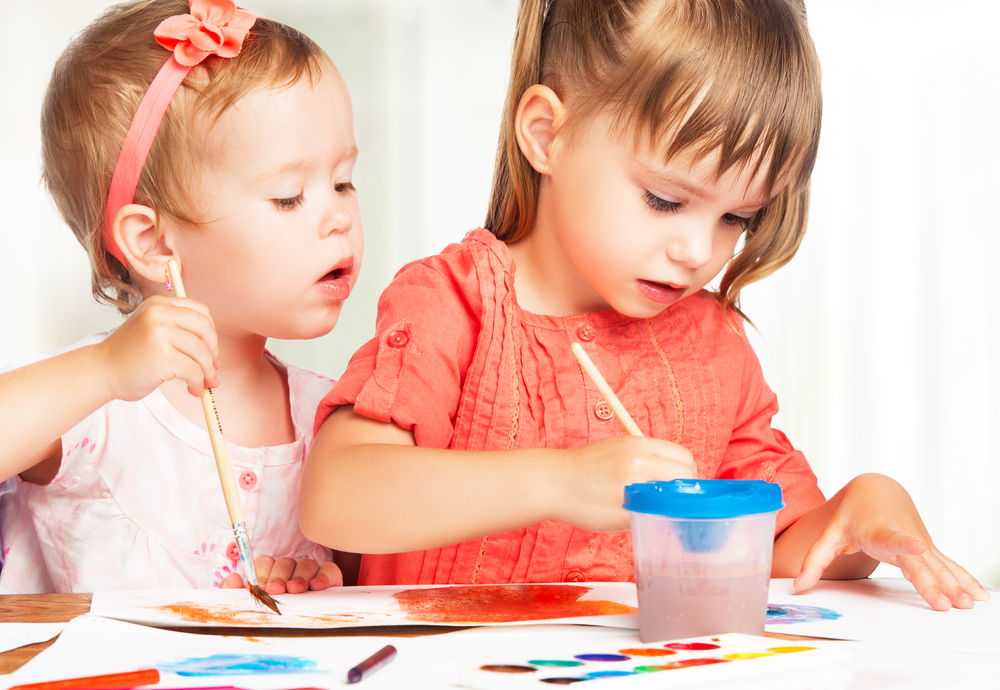




Coloring skills in 4-year-olds play a vital role in their overall development, making it essential for parents and teachers to prioritize this activity. Firstly, coloring enhances fine motor skills, which are crucial for tasks such as writing and self-care. As children grasp crayons and make deliberate movements, they build the coordination necessary for holding writing instruments later on.
Moreover, coloring fosters creativity and self-expression. When children engage with colors and shapes, they explore their imaginations, helping them develop critical thinking and problem-solving skills. Additionally, coloring can be an effective tool for teaching basic concepts like letters, numbers, and shapes, linking art and literacy.
Beyond cognitive skills, coloring promotes concentration and focus. As children commit their attention to choosing colors and following outlines, they practice sustaining attention, which is beneficial in all learning environments. This skill is particularly important as they are introduced to more complex tasks in school.
Finally, coloring can serve as a calming activity, providing emotional regulation through creative expression. By appreciating the significance of coloring, parents and teachers can support holistic development, laying a solid foundation for future learning and growth in literacy and beyond.








