
Critical thinking skills Reading Worksheets for 4-Year-Olds
3 filtered results
Difficulty Level
Grade
Age
-
From - To
Subject
Activity
Standards
Unlock your child’s potential with our Critical Thinking Skills Reading Worksheets for 4-Year-Olds! These engaging worksheets are designed to enhance your little one's analytical abilities through captivating stories and relevant activities. With a focus on comprehension, problem-solving, and reasoning, our worksheets foster essential critical thinking skills that set the foundation for future learning. Parents and educators will find an array of fun exercises that promote active thinking, sequence understanding, and character analysis, all tailored to young learners. Nurture a love of reading while encouraging cognitive growth with our thoughtfully crafted resources, perfect for early childhood development!
Favorites
With answer key
Interactive
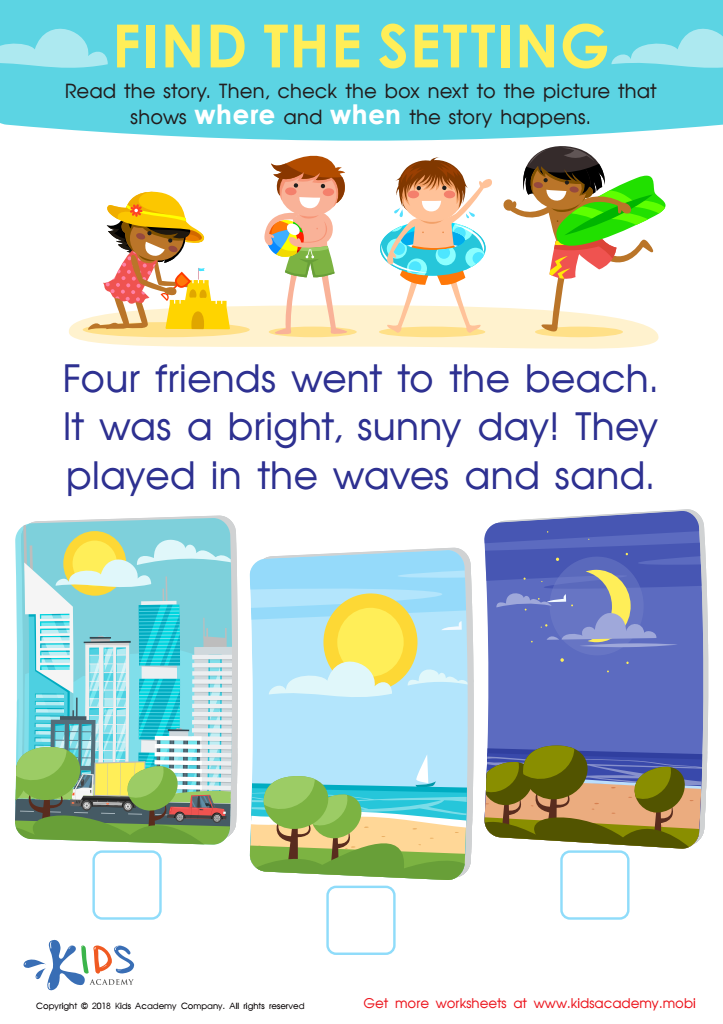
Find the Setting Worksheet
Writing a good story requires decisions about theme, plot, characters, and setting. Setting is the place and time where events occur. Read the story in this fun worksheet with your children and ensure they are paying attention. Guide them to check the box next to the picture that shows the story's setting. 80 words.
 Assign to My Students
Find the Setting Worksheet
Worksheet
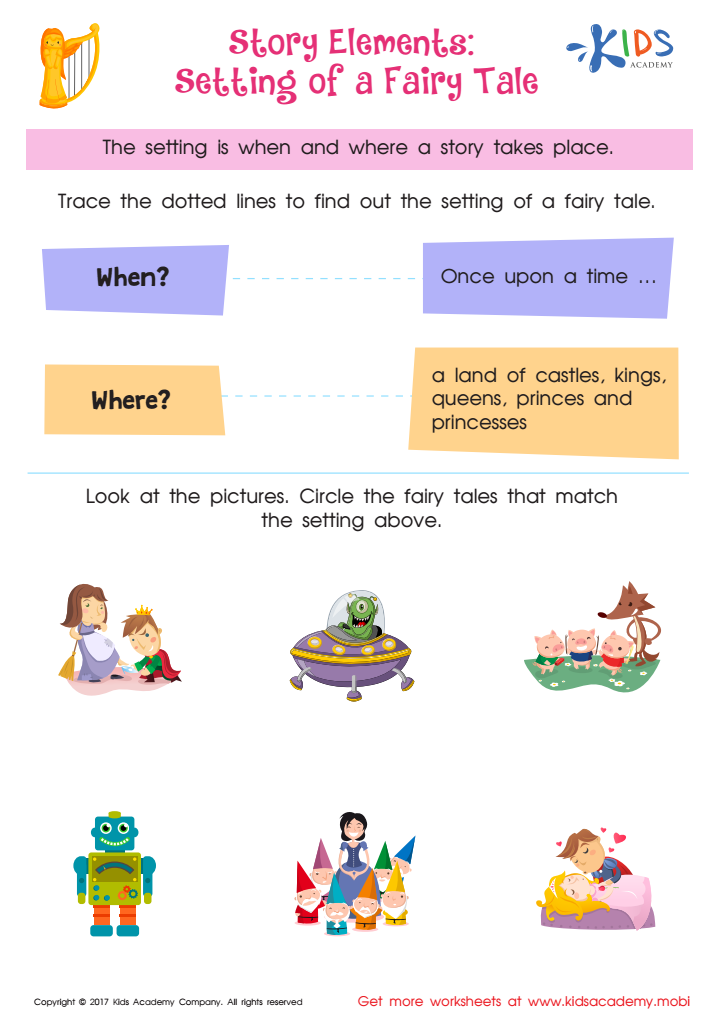
Story Elements: Setting of a Fairy Tale Printable
Help your child learn to analyze stories starting with setting. Use Story Elements worksheet to break down setting into two parts. This will help your child recognize setting quickly and understand its importance in the plot.
Story Elements: Setting of a Fairy Tale Printable
Worksheet
Join Kids Academy for Free
Who is primarily going to use this learning content?








Critical thinking skills are essential in a child's development, starting as early as age four. Parents and teachers should prioritize fostering these skills during reading activities for several reasons. First, critical thinking promotes curiosity and encourages children to ask questions about the stories and content they encounter. This inquisitive nature supports language development and enhances comprehension, making reading a more interactive and enriching experience.
Moreover, critical thinking helps young learners connect the dots between their own experiences and the narratives in books. It allows them to analyze situations, characters, and moral lessons, fostering empathy and independent thought. As children's ability to evaluate information evolves, they become better problem solvers, preparing them for academic challenges ahead.
Engaging children with open-ended questions about the story or its characters encourages them to express their thoughts and justify their reasoning. This dialogue not only boosts confidence but also enhances communication skills. Ultimately, nurturing critical thinking through reading lays a foundation for lifelong learning, helping children navigate the complexities of the world as they grow. By prioritizing these skills, parents and teachers can ensure that children are well-equipped for future educational pursuits and real-life challenges.








