Enhancing Reading Comprehension Reading Worksheets for 4-Year-Olds
5 filtered results
-
From - To
Discover our "Enhancing Reading Comprehension Worksheets for 4-Year-Olds," designed to promote early literacy skills and boost comprehension in young learners. These engaging, interactive worksheets focus on developing key reading competencies, helping your child understand and interpret texts effectively. Through fun activities that encourage critical thinking, vocabulary building, and story connection, children will gain confidence in their reading abilities. Perfect for parents and educators alike, our resources are tailored to suit the developmental stage of four-year-olds, ensuring an enjoyable learning experience. Cultivate a love for reading today with our thoughtfully crafted worksheets that pave the way for lifelong learning!
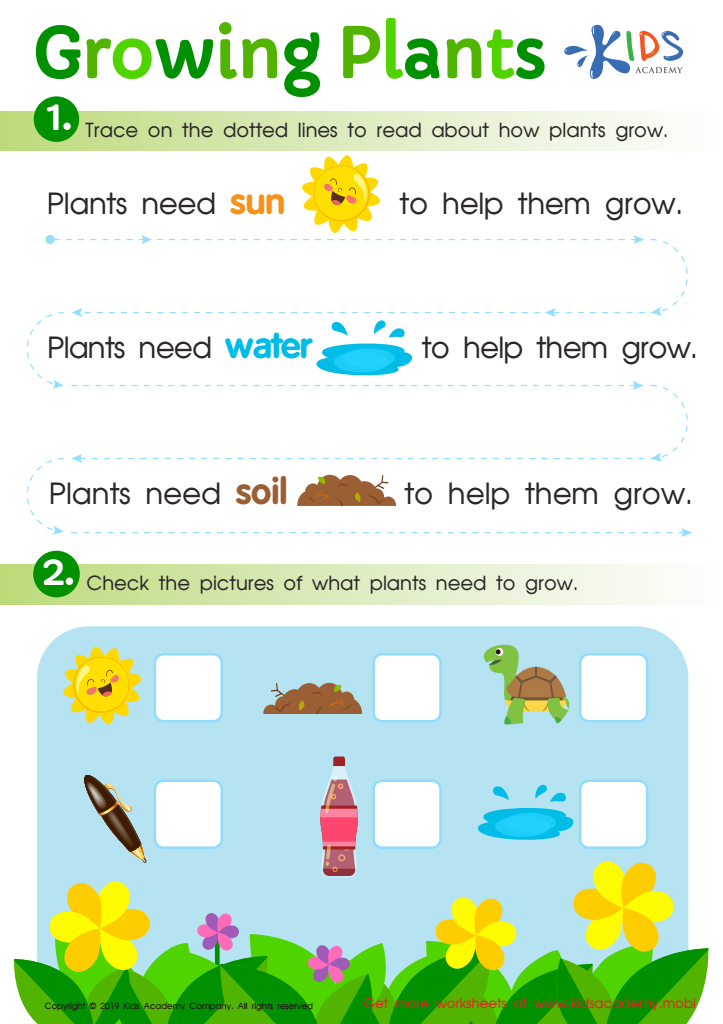
Growing Plants Worksheet
 Assign to My Students
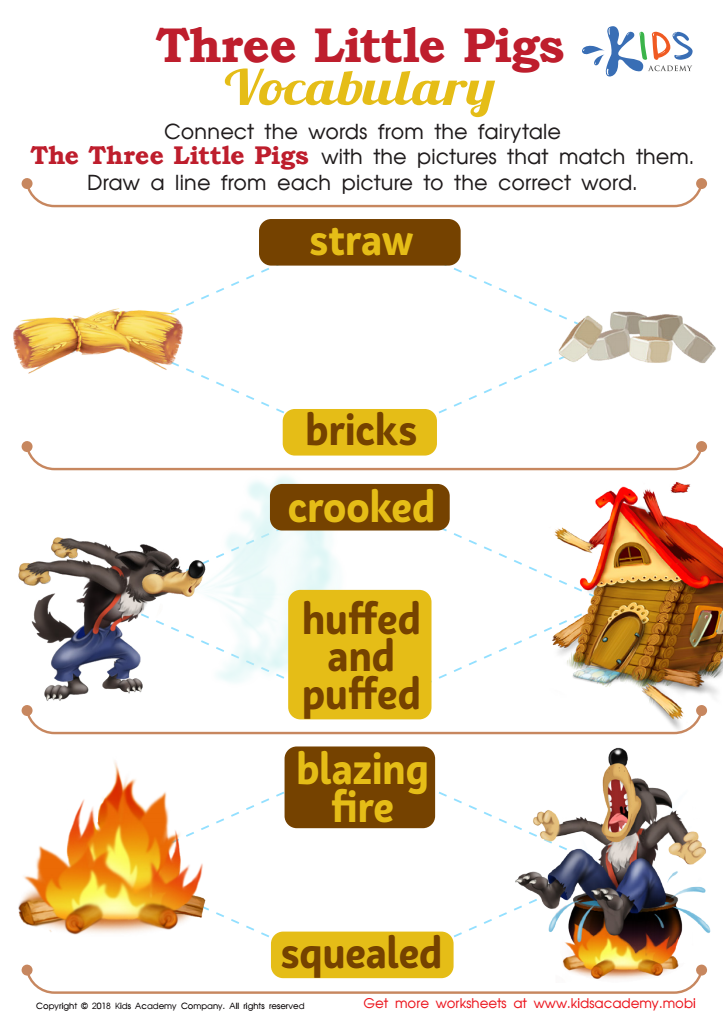
Three Little Pigs Vocabulary Worksheet
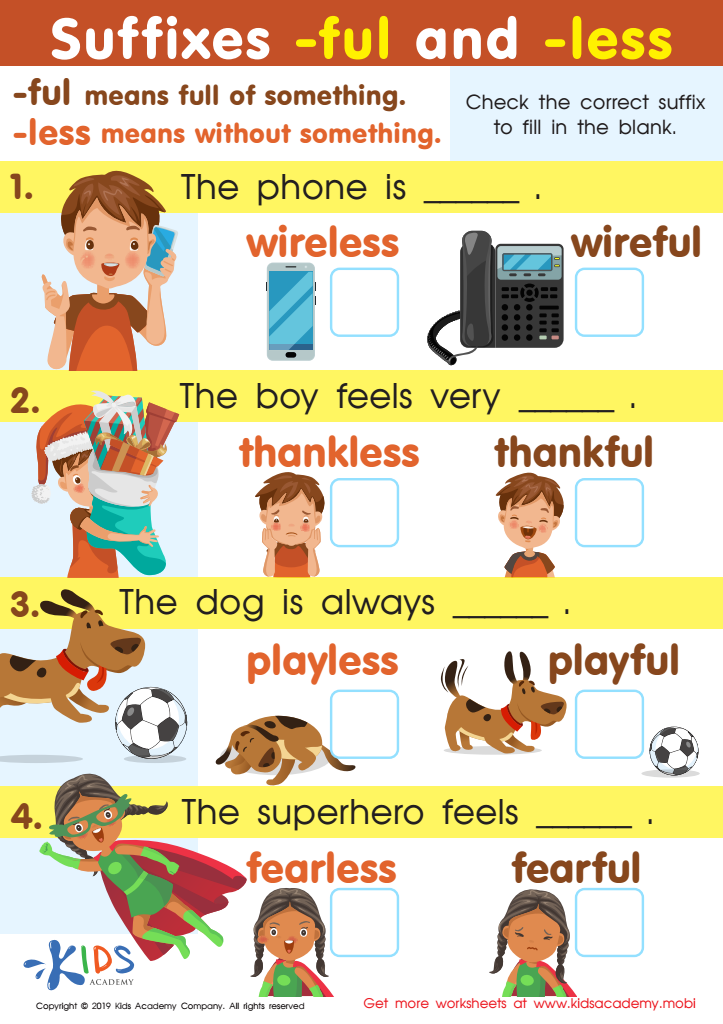
Suffixes –ful and –less Worksheet
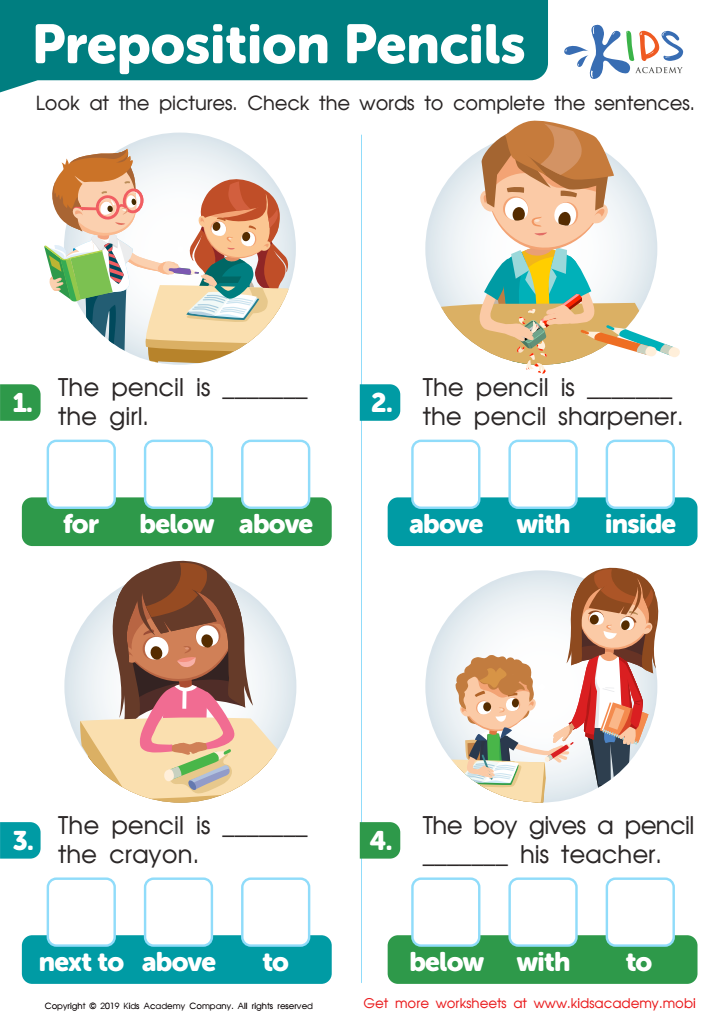
Preposition Pencils Worksheet
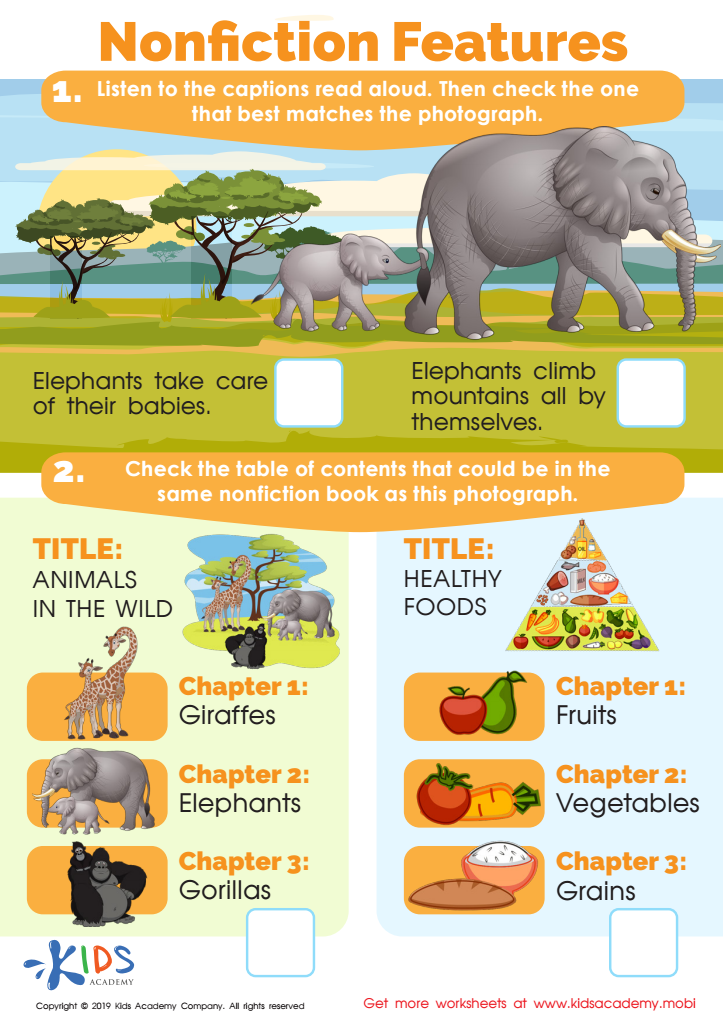
Nonfiction Features Worksheet








Enhancing reading comprehension for 4-year-olds is crucial as early literacy skills lay the foundation for future academic success. At this age, children are rapidly developing cognitive and language abilities. Fostering comprehension helps them not only recognize words but also understand meanings and concepts, transforming reading into an engaging experience.
When parents and teachers focus on comprehension, they encourage curiosity and critical thinking, keys to lifelong learning. Engaging with stories and interactions around books helps children make connections between their experiences and the world, boosting vocabulary and language skills. This is vital as strong language abilities are linked to better performance in school later on.
Additionally, early comprehension skills can promote social-emotional development. Discussing characters’ feelings and motivations fosters empathy and emotional intelligence, teaching children how to relate to others' experiences.
Furthermore, the enjoyment of reading sets children on a path of exploration and creativity, cultivating a love for literature that can enrich their lives. Ultimately, prioritizing reading comprehension for 4-year-olds ensures that they are not just passive consumers of information, but active, enthusiastic learners equipped for their educational journey ahead. Thus, parents and teachers play an essential role in nurturing these early skills.








