
Cognitive Development Reading Comprehension Worksheets for 4-Year-Olds
4 filtered results
Difficulty Level
Grade
Age
-
From - To
Subject
Activity
Standards
Discover our engaging Cognitive Development Reading Comprehension Worksheets designed specifically for 4-year-olds! These worksheets foster critical thinking and enhance language skills through captivating stories and interactive questions. Ideal for young learners, each activity promotes vocabulary building and comprehension, helping children connect text to their experiences. With colorful illustrations and age-appropriate challenges, our resources make learning fun and effective. Perfect for parents and educators aiming to support early literacy, these worksheets encourage kids to think critically and articulate their thoughts confidently. Explore our collection today and nurture your child's cognitive abilities while instilling a love for reading!
Favorites
With answer key
Interactive
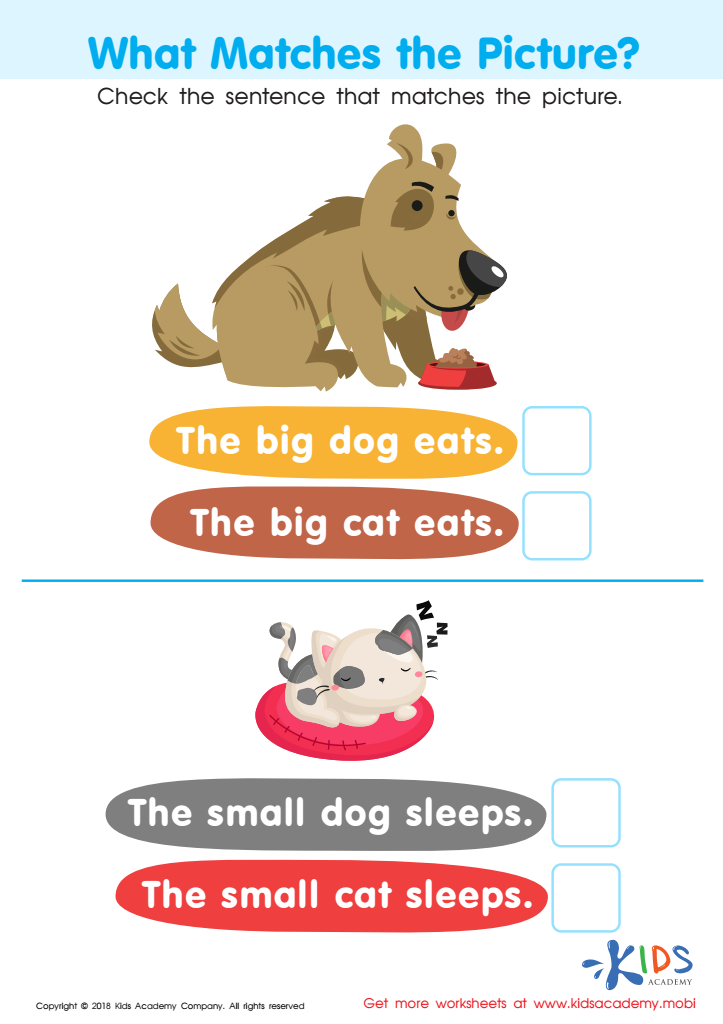
What Matches the Picture? Worksheet
Emerging readers can use pictures of cute pets and phrase repetition to match sentences to pics, building skills while having fun! It's a great way to bolster vocab and confidence, motivating them to keep reading.
 Assign to My Students
What Matches the Picture? Worksheet
Worksheet
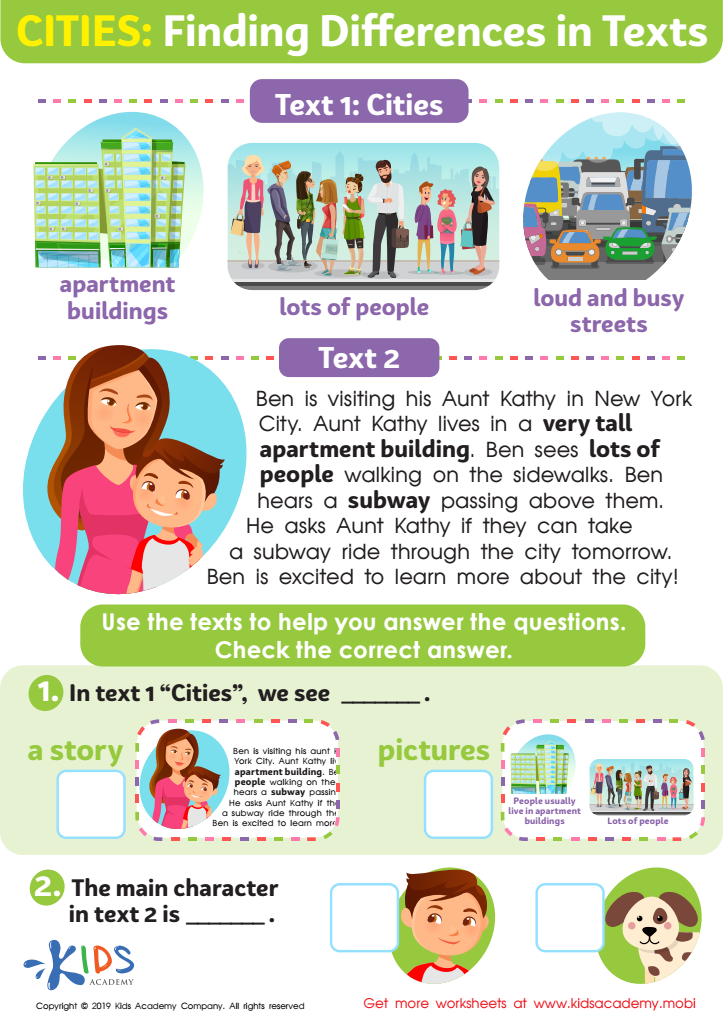
Cities: Finding Differences Worksheet
Critical thinking is essential for reading comprehension. New readers must be able to identify the key information in different text formats. This worksheet helps children learn what they might find in cities and how to differentiate between stories and pictures.
Cities: Finding Differences Worksheet
Worksheet
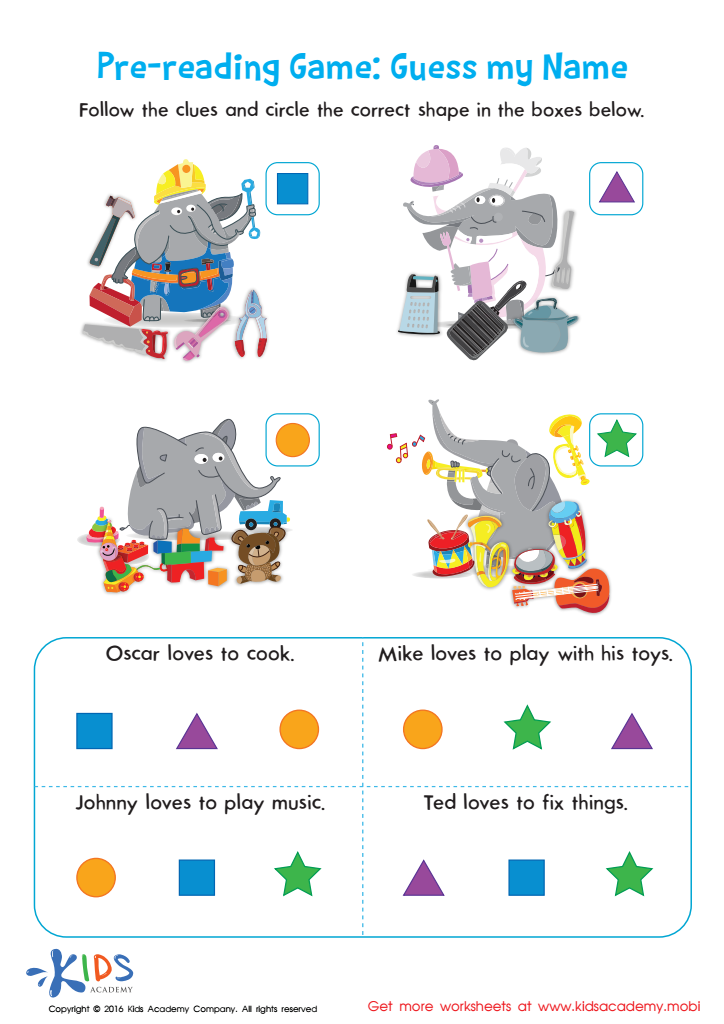
Pre Reading Worksheet Guess My Name
Guess My Name is a fun way to practice inference skills.
Guess My Name is a fun pre-reading game to help your child practice drawing inferences from clues. With colorful illustrations, they'll use clues to match each elephant with its sentence and sharpen their inference skills.
Pre Reading Worksheet Guess My Name
Worksheet
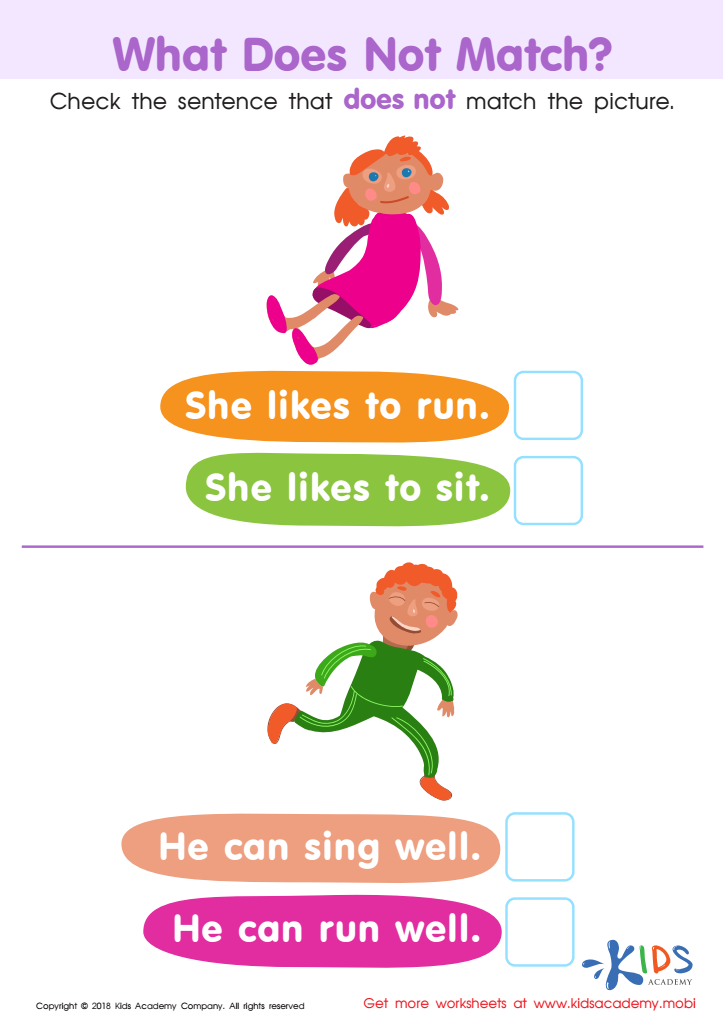
What Does Not Match? Worksheet
Emerging readers need to practice using visual cues and repetitive text. This colorful PDF provides them with an opportunity to look at pictures, use discrimination and discern which phrase does not match. It also enables them to gain familiarity with high-frequency words to aid decoding longer sentences.
What Does Not Match? Worksheet
Worksheet
Join Kids Academy for Free
Who is primarily going to use this learning content?







Cognitive development in early childhood, particularly regarding reading comprehension, is crucial for a child's overall growth and future academic success. For 4-year-olds, this stage of development focuses on building foundational skills such as understanding language, recognizing letters, and making connections between words and meanings. These skills serve as the building blocks for literacy and are interlinked with children's cognitive abilities.
Parents and teachers should care about reading comprehension at this age because it significantly impacts a child's ability to understand and engage with the world around them. High-quality interactions, such as a shared reading experience, enhance vocabulary and critical thinking skills. For instance, when adults ask open-ended questions about a story, they foster a child's ability to analyze and predict outcomes, which boosts comprehension.
Moreover, early reading comprehension lays the groundwork for future learning; children who are proficient readers by third grade are more likely to succeed academically and socially. Encouraging a love for reading during these formative years not only improves literacy but also develops curiosity, imagination, and emotional intelligence. Thus, investing in early cognitive development strategies is essential for children, ensuring they are well-prepared for lifelong learning.








