Story analysis Reading Fiction Worksheets for 4-Year-Olds
4 filtered results
-
From - To
Unlock the magic of storytelling with our Story Analysis Reading Fiction Worksheets designed for 4-year-olds. These engaging worksheets from Kids Academy foster early reading skills through the exploration of captivating tales. Each activity helps children enhance their understanding of story elements such as setting, characters, and plot. By analyzing stories, young readers develop critical thinking and comprehension skills in a fun, interactive way. Perfect for preschoolers, our printable worksheets encourage a lifelong love for reading while making learning an adventure. Start your child’s reading journey with us and watch their imagination soar!
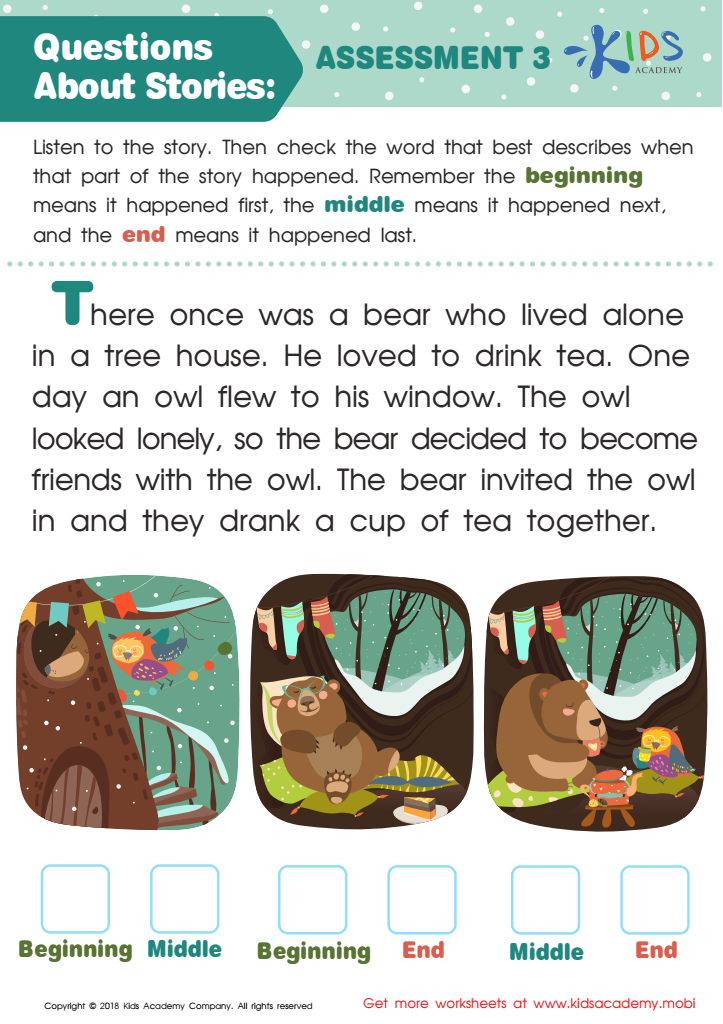
Questions About Stories: Assessment 3 Worksheet
 Assign to My Students
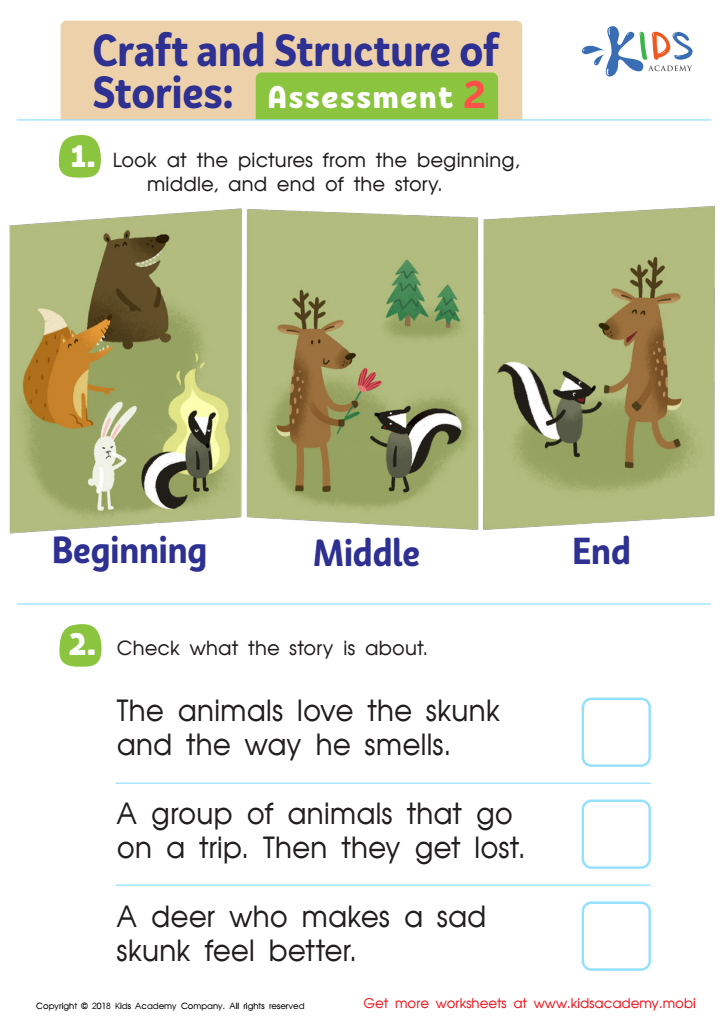
Craft and Structure of Stories: Assessment 2 Worksheet
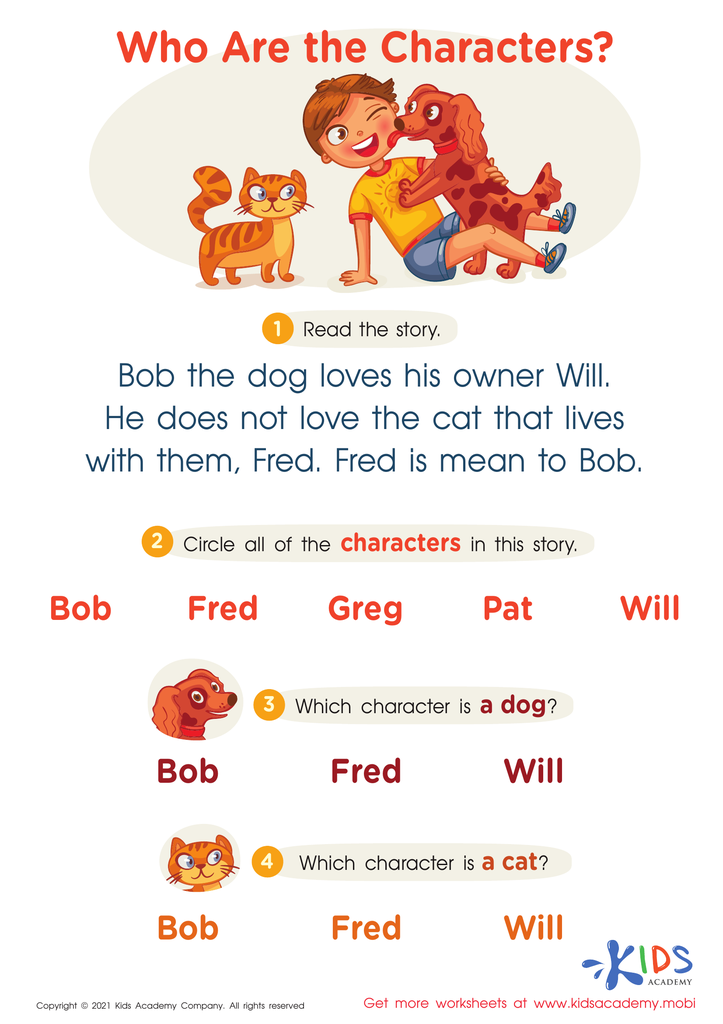
Who Are the Characters? Worksheet
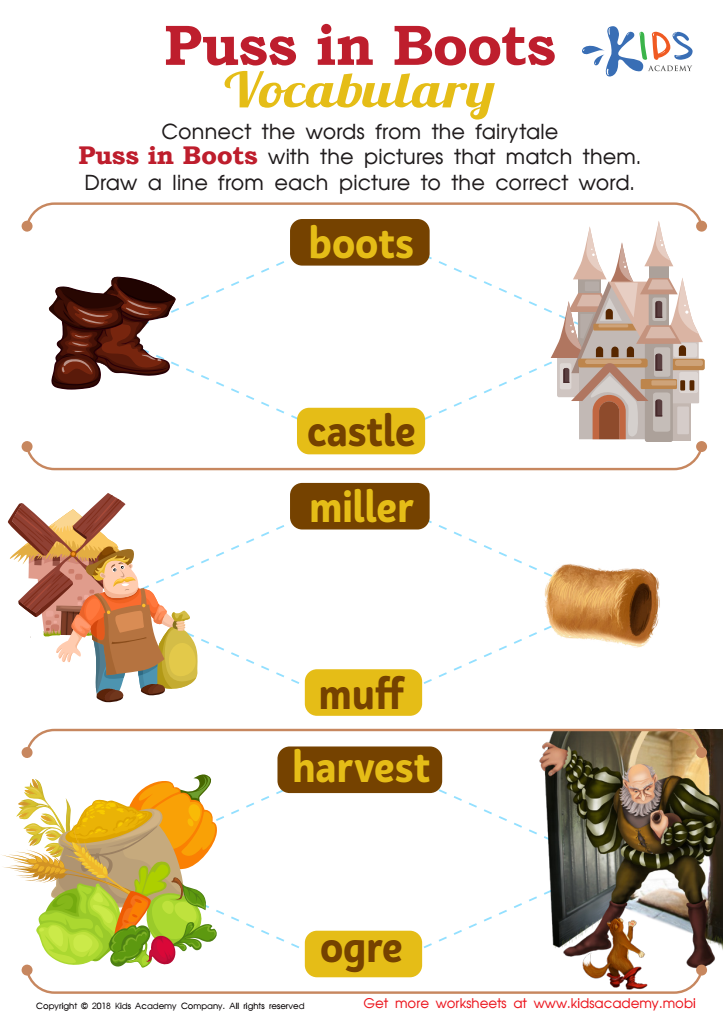
Puss in Boots Vocabulary Worksheet








Story analysis and reading fiction for 4-year-olds are indispensable for their comprehensive development. Engaging with fiction stimulates cognitive abilities by introducing children to new vocabulary, sentence structures, and storytelling techniques. This fosters language proficiency and enhances their communication skills. Furthermore, analyzing stories helps develop critical thinking as children begin to understand plot structure, character development, and themes. They learn to make predictions, express thoughts, and articulate questions, which are pivotal cognitive milestones.
From a socio-emotional perspective, reading fiction allows children to empathize with characters, which cultivates emotional intelligence and social understanding. Stories often introduce moral dilemmas, enabling discussions about right and wrong and nurturing a child's ability to grasp ethical concepts.
Moreover, the imaginative contexts found in fiction stories expand creativity and encourage problem-solving. Children learn to envision new possibilities and scenarios, contributing towards innovative thinking.
For parents and teachers, regularly practicing story analysis with 4-year-olds also offers a valuable bonding activity. It provides an avenue to closely observe and understand a child’s thoughts and personality, building stronger emotional connections.
Investing time in story analysis and reading fiction lays a robust groundwork for lifelong learning, empathy, creativity, and critical thinking, ultimately shaping well-rounded individuals.








