Rhyming skills development Rhyming Words Worksheets for 4-Year-Olds
3 filtered results
-
From - To
Boost your child's language skills with our engaging Rhyming Words Worksheets designed specifically for 4-year-olds! Rhyming is a fundamental component of early literacy that enhances phonemic awareness and vocabulary development. Our carefully crafted worksheets offer a variety of fun activities, including matching rhyming words and completing engaging rhymes, that encourage young learners to explore sounds and patterns in language. Each worksheet is colorful and age-appropriate, making learning enjoyable and effective. Perfect for home or classroom use, these resources help nurture a love for reading while building essential skills. Start your child’s linguistic journey today with our interactive rhyming tools!
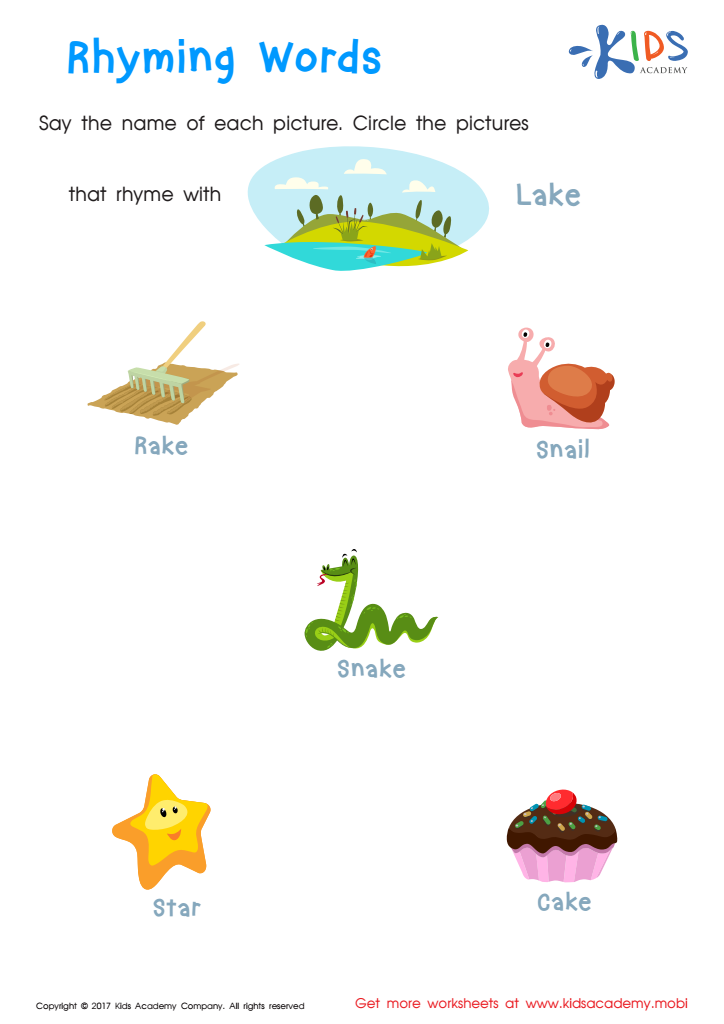
Rhyming Words Rhyming Worksheet
 Assign to My Students
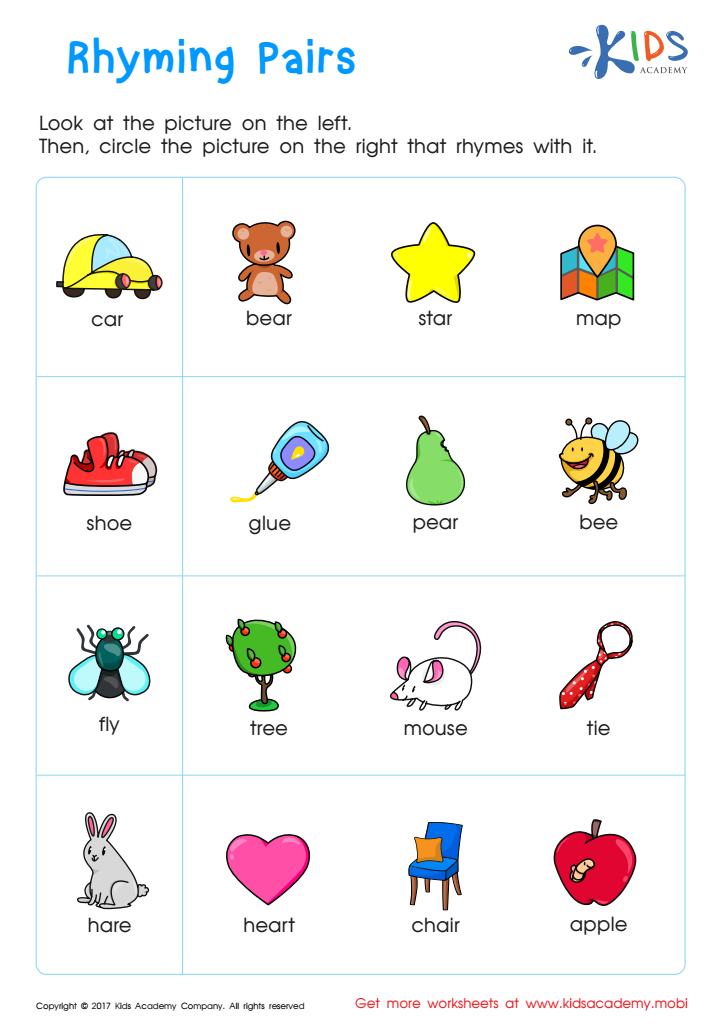
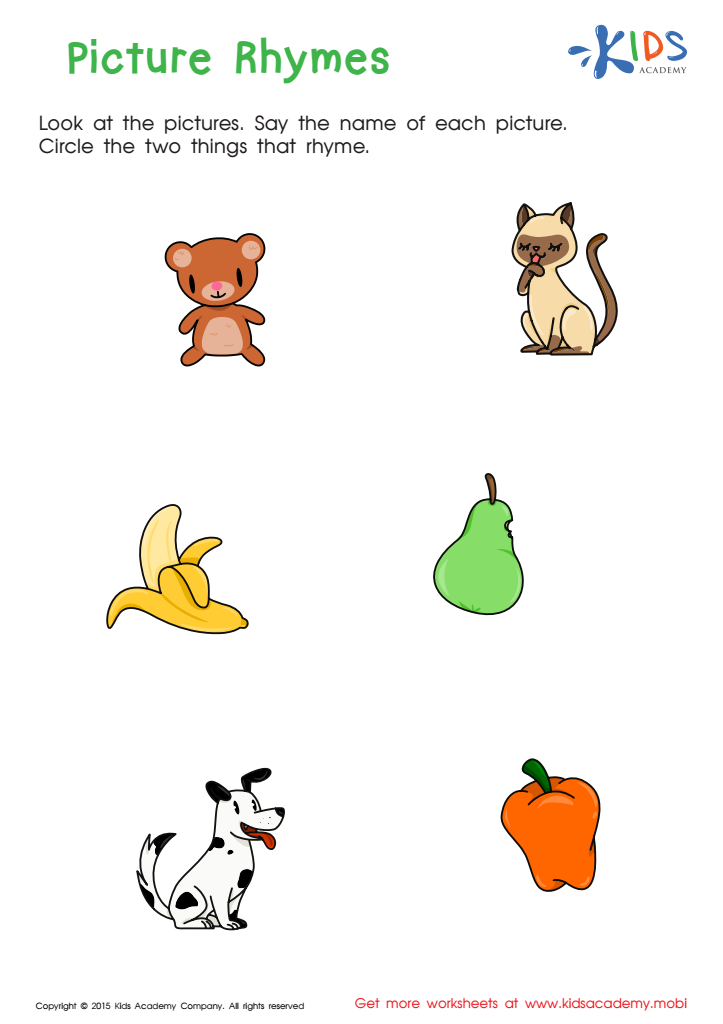
First Words: Picture Rhymes Worksheet







Rhyming skills are crucial for early literacy development in 4-year-olds, making it essential for parents and teachers to prioritize this aspect of language learning. Engaging with rhyming words helps young children recognize sounds and patterns in language, laying a strong foundation for reading and writing. When children identify rhyming words, they enhance their phonological awareness, which is a key predictor of future reading success.
Additionally, rhyming activities promote vocabulary growth as children are exposed to new words in a fun and memorable context. These activities can stimulate cognitive development, improve memory skills, and boost creativity, as children play with sounds and create their own rhymes.
Furthermore, incorporating rhyming into playful interactions helps foster a love for language through songs, poems, and stories, making learning enjoyable. This positive association with literacy can instill lifelong reading habits.
For parents and teachers, nurturing rhyming skills is not just about academic achievement; it also promotes social interaction and communication skills, as children often share rhymes with peers. Ultimately, fostering rhyming abilities in young learners is an enjoyable way to enhance their cognitive skills and prepare them for future educational experiences.








