Vocabulary enhancement Seasons Worksheets for 4-Year-Olds
4 filtered results
-
From - To
Boost your child's vocabulary with our engaging Seasons Worksheets designed specifically for 4-year-olds! These fun and interactive worksheets introduce young learners to seasonal terminology, helping them express their thoughts and experiences related to spring, summer, autumn, and winter. Featuring vibrant illustrations and simple activities, children will enjoy identifying seasonal changes, weather patterns, and related concepts. Each worksheet fosters language development and comprehension through games, matching activities, and creative exercises. Perfect for preschool classrooms or home learning, these vocabulary enhancement worksheets make learning about seasons exciting and memorable. Dive into a world of words and watch your child's language skills grow!
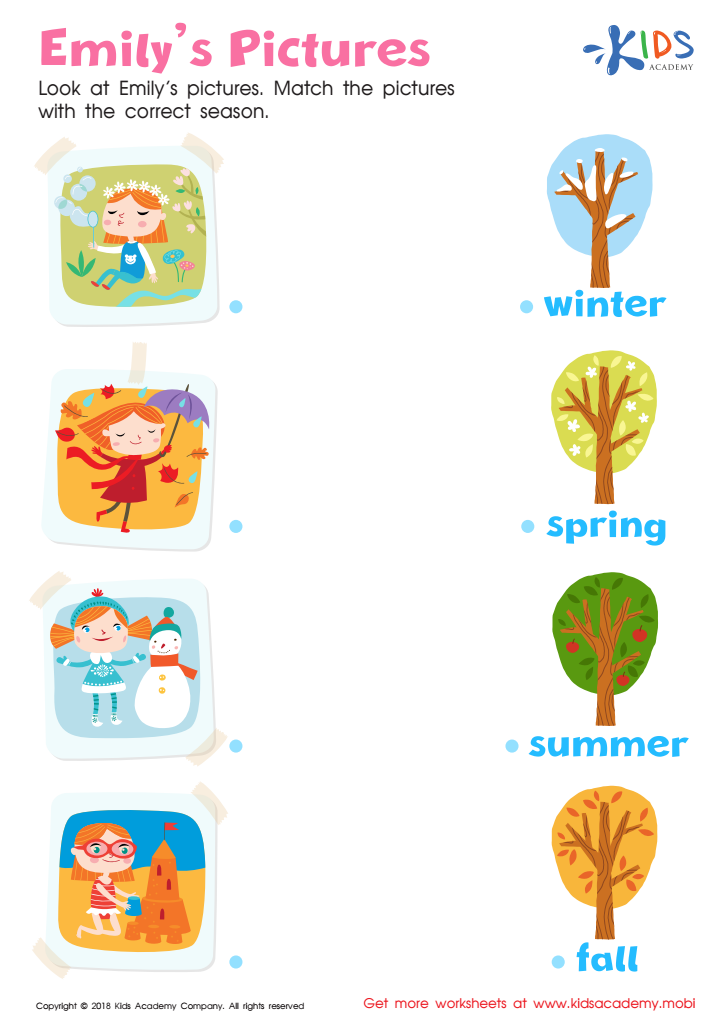
Emily's Pictures Worksheet
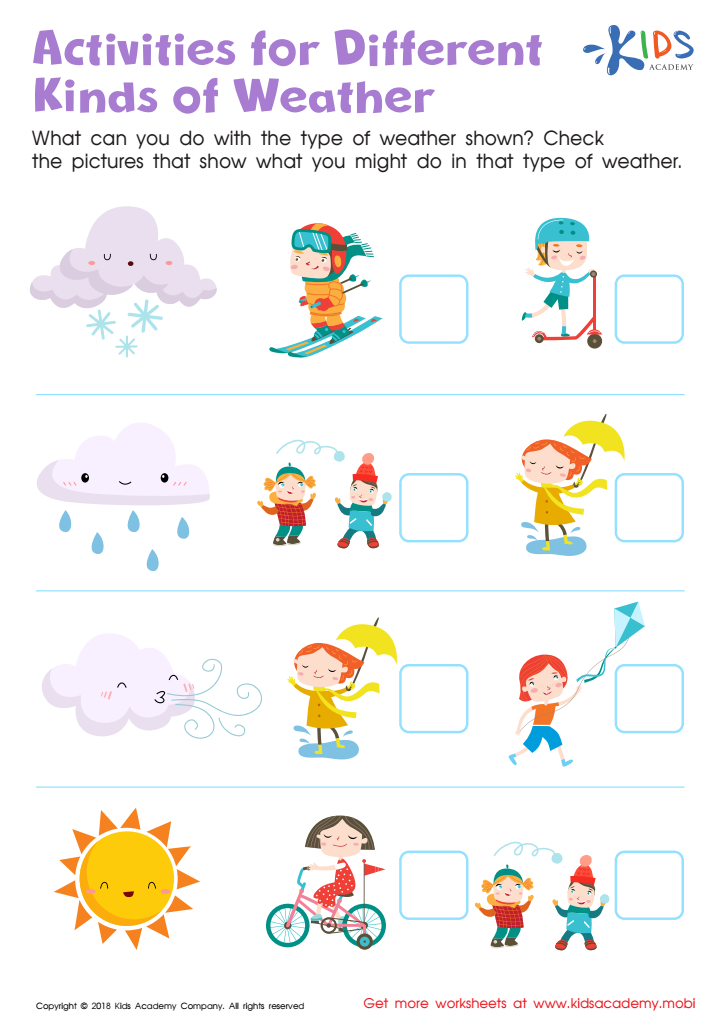
Activities for Different Kinds of Weather Worksheet
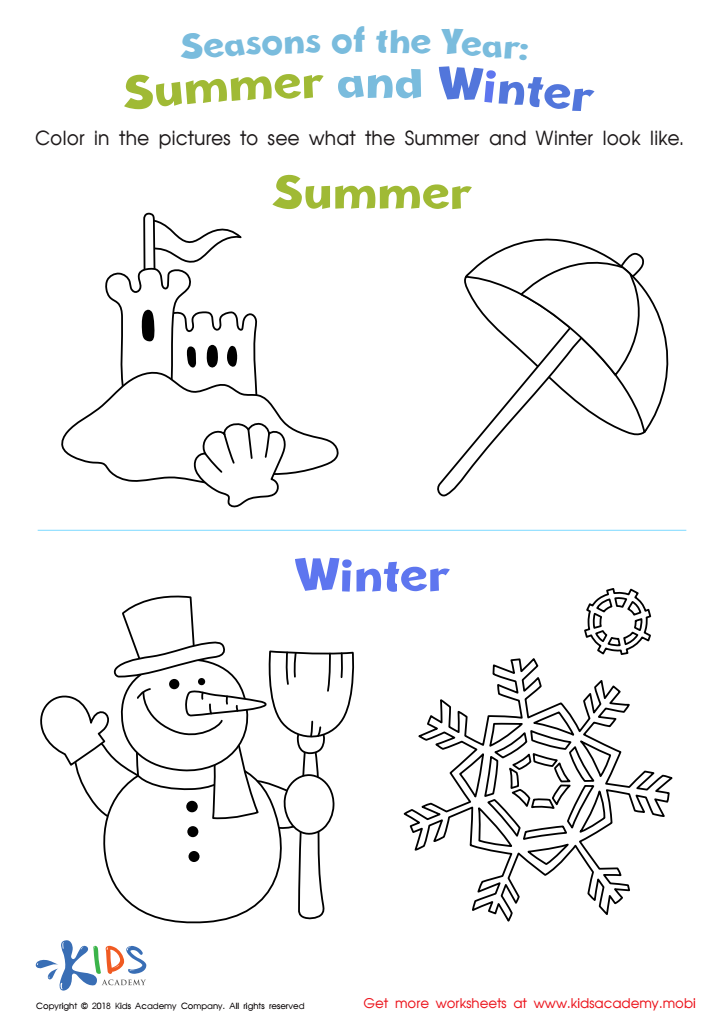
Summer and Winter Worksheet
 Assign to My Students
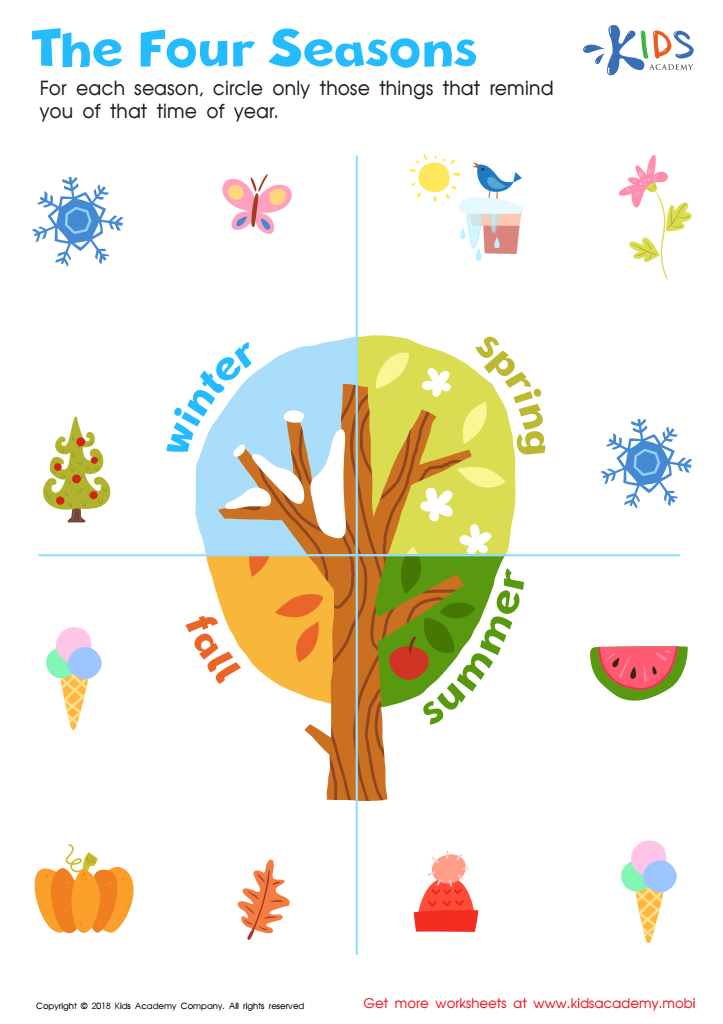
The Four Seasons Worksheet


%20(1).jpg)


Vocabulary enhancement is crucial for 4-year-olds as it lays the foundational skills for their future academic success and overall communication abilities. At this age, children are naturally curious, eager to explore new words, and readily absorb language through play and interaction. Engaging in vocabulary enhancement during "Vocabulary Seasons" allows children to expand their curiosity and expression, helping them describe their thoughts and feelings more clearly.
Parents and teachers should care because enhanced vocabulary boosts cognitive development, supporting improved reading skills and comprehension as children grow older. Strong vocabulary skills foster better social interactions and empower children to articulate their needs, fostering self-advocacy and confidence.
Furthermore, targeted vocabulary activities are not merely about memorizing words—they often involve exciting themes, stories, and games that make learning enjoyable and engaging. By incorporating systematic vocabulary enhancement, caregivers provide enriched language experiences that will equip children with essential skills for school readiness.
Ultimately, investing time in vocabulary development prepares young learners with the language foundation they will build upon throughout their educational journey, turning mere words into powerful tools for communication, understanding, and connection with the world around them.







