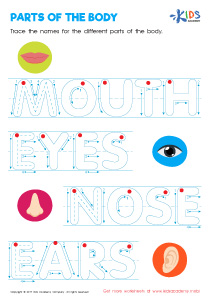
Vocabulary development World Around Us Worksheets for 4-Year-Olds
5 filtered results
Difficulty Level
Grade
Age
-
From - To
Subject
Activity
Standards
Enhance your 4-year-old's vocabulary with our engaging "World Around Us" worksheets! These printable resources are designed to introduce young learners to new words while exploring their surroundings. Our thoughtfully crafted activities focus on everyday themes, encouraging children to enrich their language skills in a fun and interactive way. Each worksheet is tailored to inspire curiosity about the world, promoting both vocabulary development and comprehension. As children connect with familiar objects, animals, and environments, they build a strong foundation for future learning. Perfect for at-home learning or classroom activities, these worksheets foster a love for language and exploration in young minds!
Favorites
With answer key
Interactive
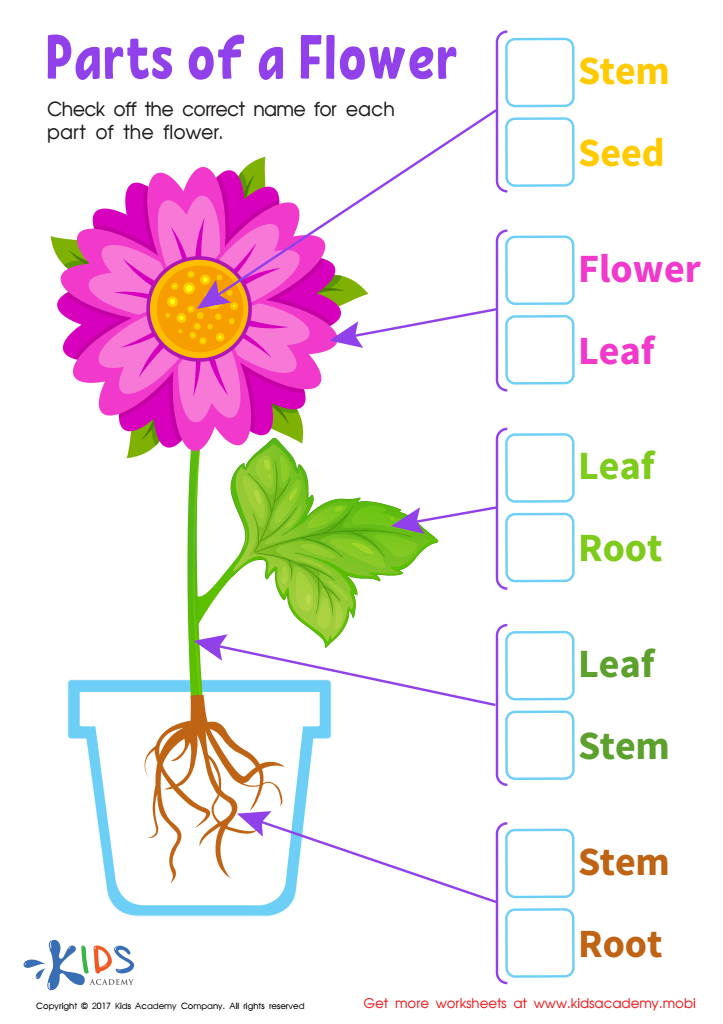
Parts Flower Printable
Introduce your child to life science with this vivid parts of a flower worksheet! They'll learn basic flower structures while building biology vocabulary and discovering plants are living creatures too! Perfect for budding little scientists!
 Assign to My Students
Parts Flower Printable
Worksheet
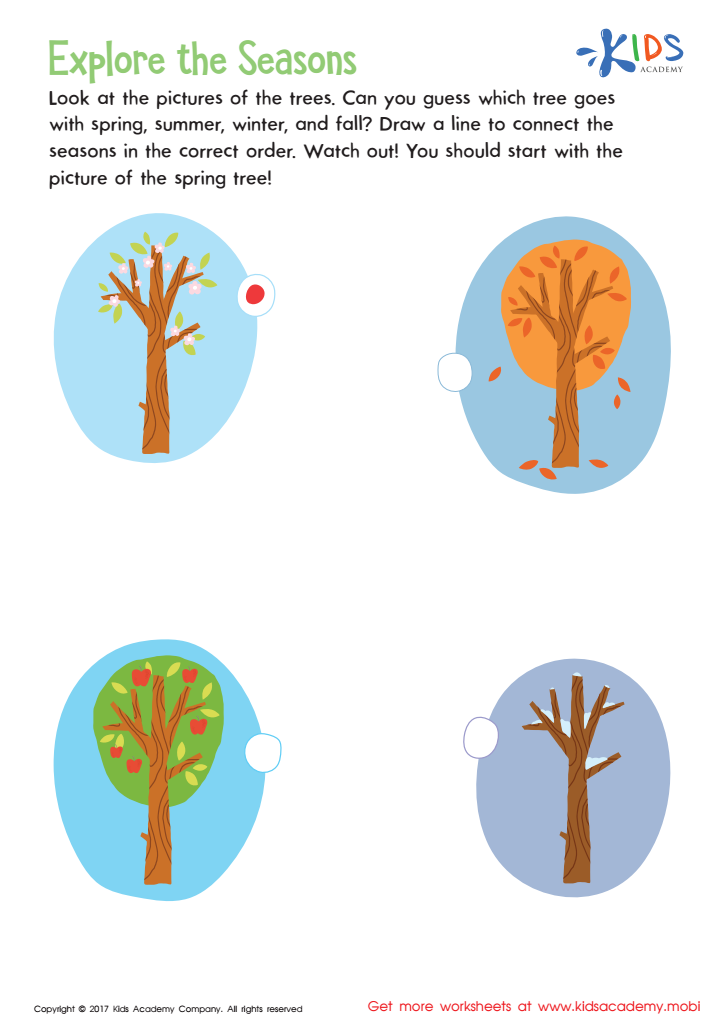
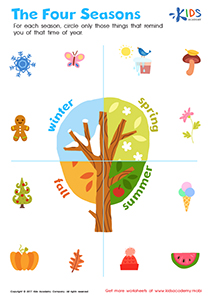
Explore the Seasons Worksheet
Introduce kids to the abstract concept of time with the explore the seasons printable. It helps build logical reasoning and problem-solving skills while teaching how trees change with the weather. Plus, it lets kids make real-life connections to what they're learning. So have them recall the seasons that have passed this year and prepare to be amazed!
Explore the Seasons Worksheet
Worksheet
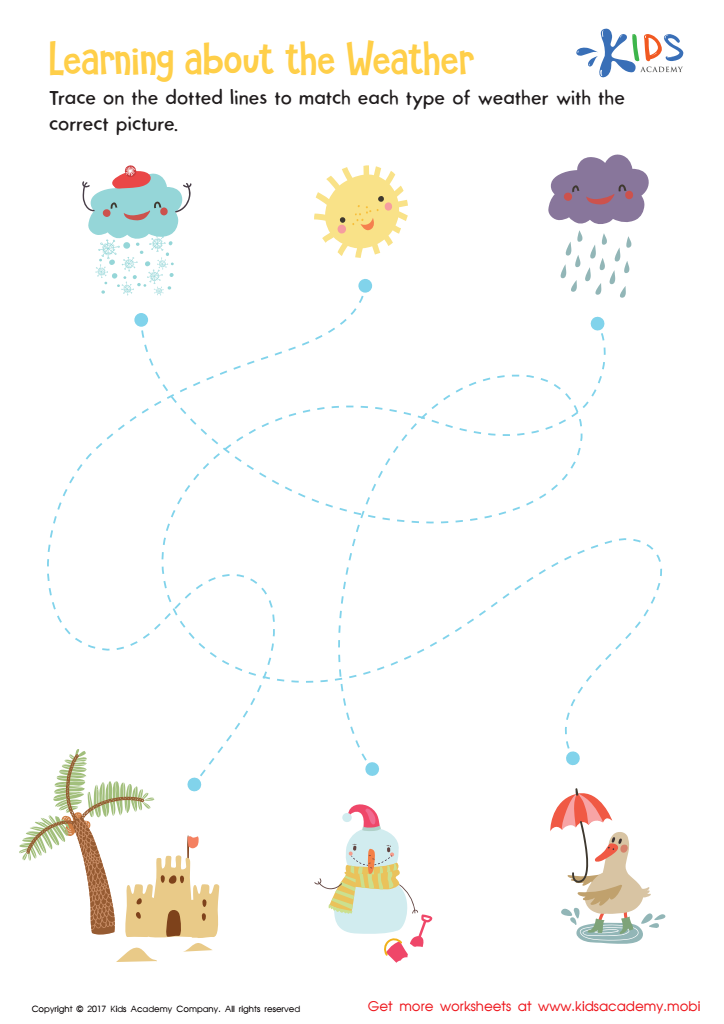
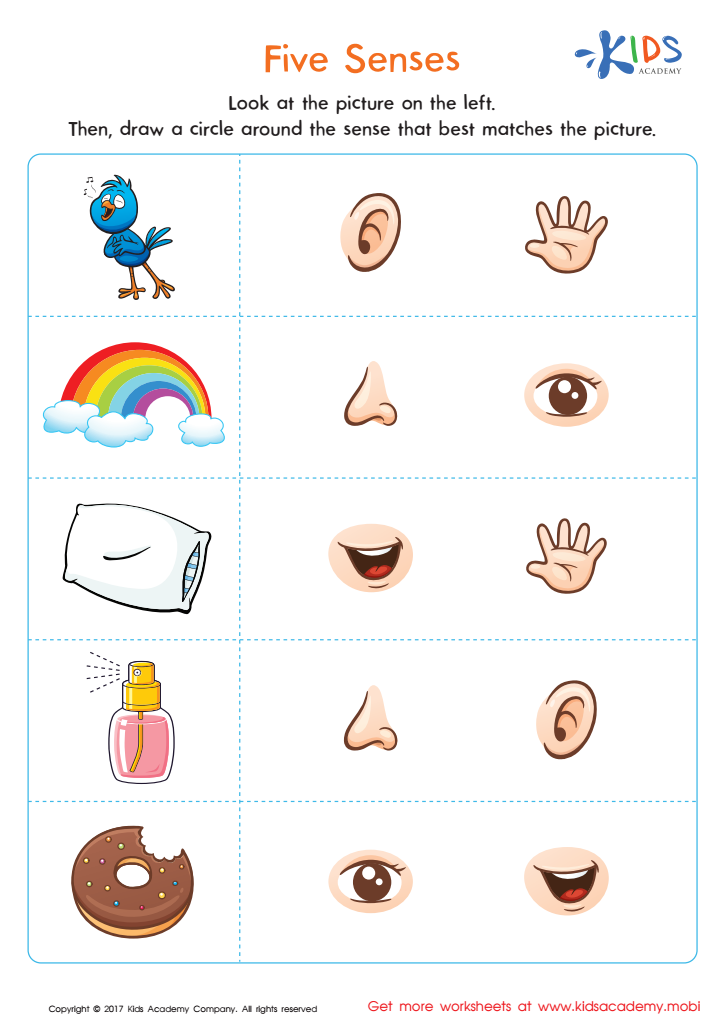
Five Senses Printable
For an easy way to jumpstart your child's critical thinking and introduce the five senses, print our free worksheets! These are great for reviewing each sense and practicing critical thinking skills. Work with your child and discuss each image. After completing the worksheet, find objects around the house so they can quiz themselves!
Five Senses Printable
Worksheet
Join Kids Academy for Free
Who is primarily going to use this learning content?








Vocabulary development in young children, particularly around the age of four, is crucial for their overall learning and cognitive skills. By nurturing a rich vocabulary, parents and teachers equip children with the language tools they need to express themselves and understand the world around them.
First, vocabulary is foundational for reading and writing skills. The larger a child's vocabulary, the easier it is for them to decode, comprehend, and engage with written material. This early exposure translates to better literacy outcomes as they progress through school.
Second, a strong vocabulary enhances communication skills. Children learn to articulate their thoughts, feelings, and ideas more effectively, promoting healthy social interactions and relationships. As they navigate play and group activities, a wide vocabulary encourages collaboration and conflict resolution.
Moreover, vocabulary development stimulates cognitive growth. When children learn new words, they also learn concepts, categories, and relationships, enriching their understanding of the world. This awareness fosters curiosity and critical thinking, essential skills for lifelong learning.
Lastly, parents and teachers play an integral role in modeling and creating environments for vocabulary acquisition. Through conversations, storytelling, reading, and engaging activities, they can inspire a love for words that will last a lifetime, making vocabulary development a top priority in early education.