Counting skills Alphabet Worksheets for Ages 5-6
4 filtered results
-
From - To
Enhance your child's early learning experience with our Counting Skills Alphabet Worksheets, specially designed for ages 5-6. These engaging worksheets seamlessly combine letter recognition and counting practice, helping young learners build a solid foundation in both literacy and numeracy. Each activity encourages children to trace letters while counting objects, fostering essential math skills and enhancing fine motor abilities. With colorful, appealing designs, these worksheets spark your child’s interest in learning. Perfect for home or classroom use, our worksheets promote interactive learning, ensuring children are both entertained and educationally enriched. Download now to support your child's growth in counting and the alphabet!
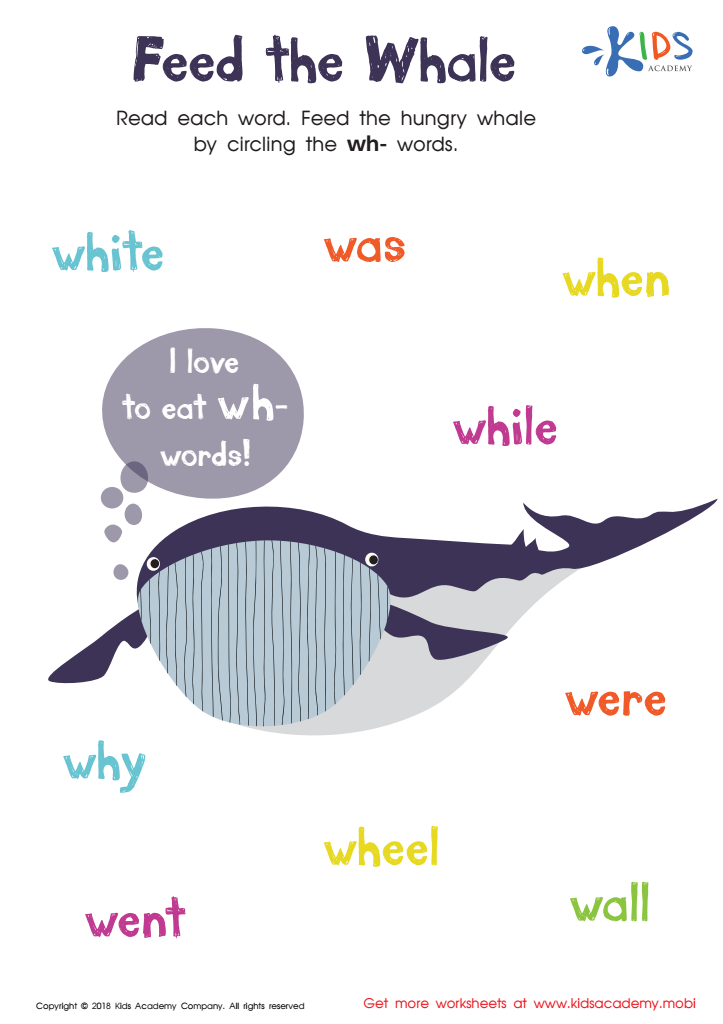
Feed the Whale Worksheet
 Assign to My Students
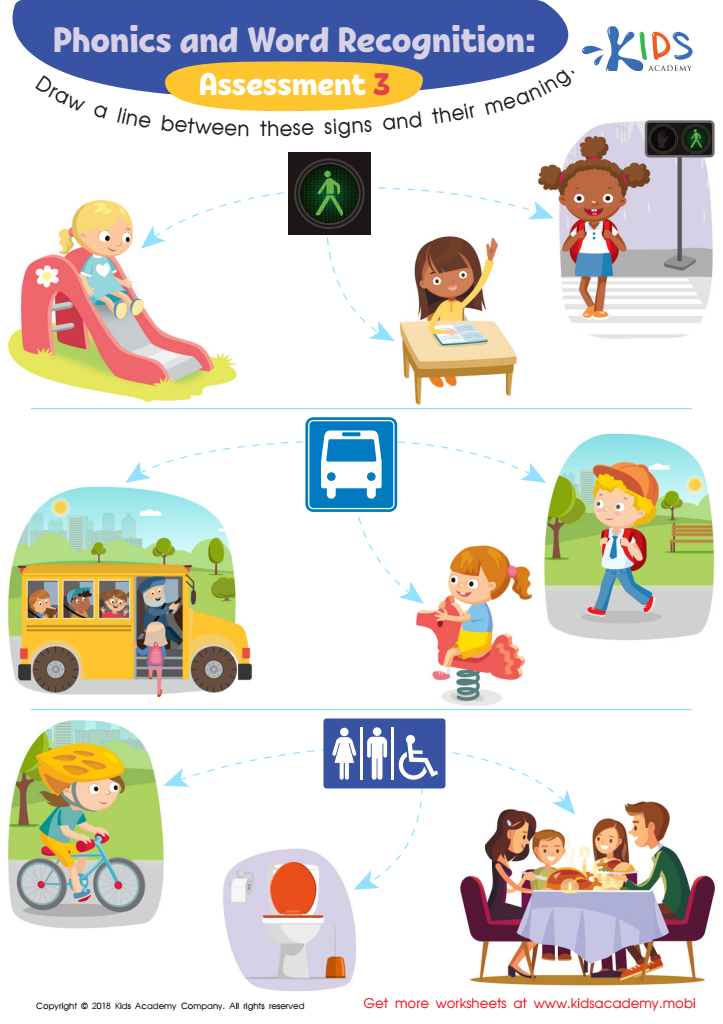
Phonological Awareness: Assessment 3 ELA Worksheet
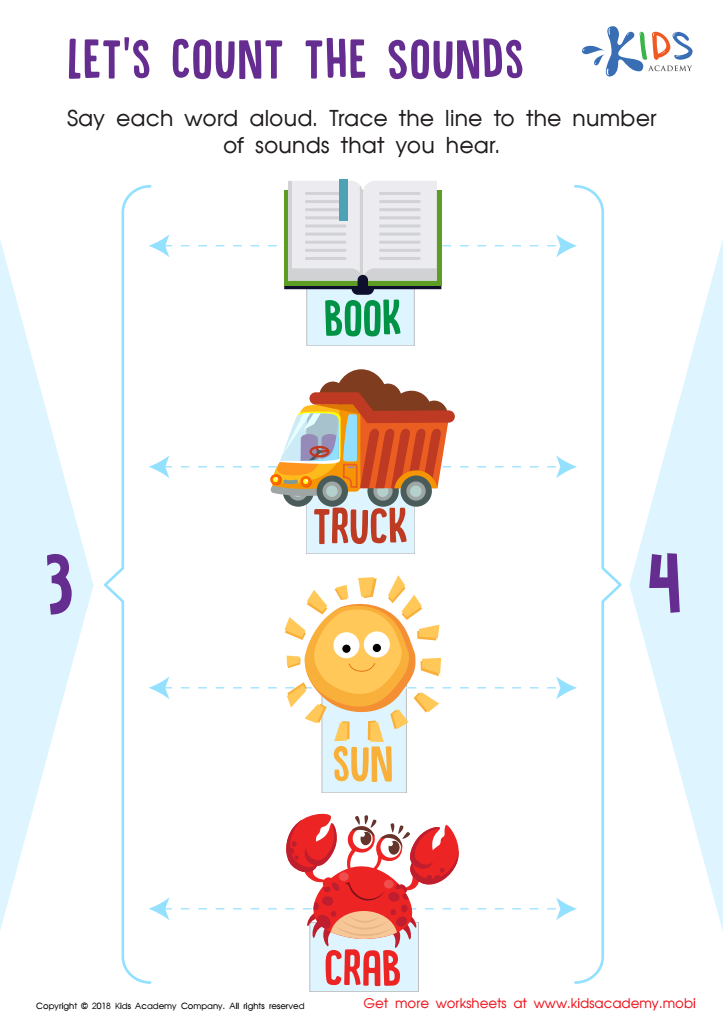
Let's Count the Sounds Worksheet
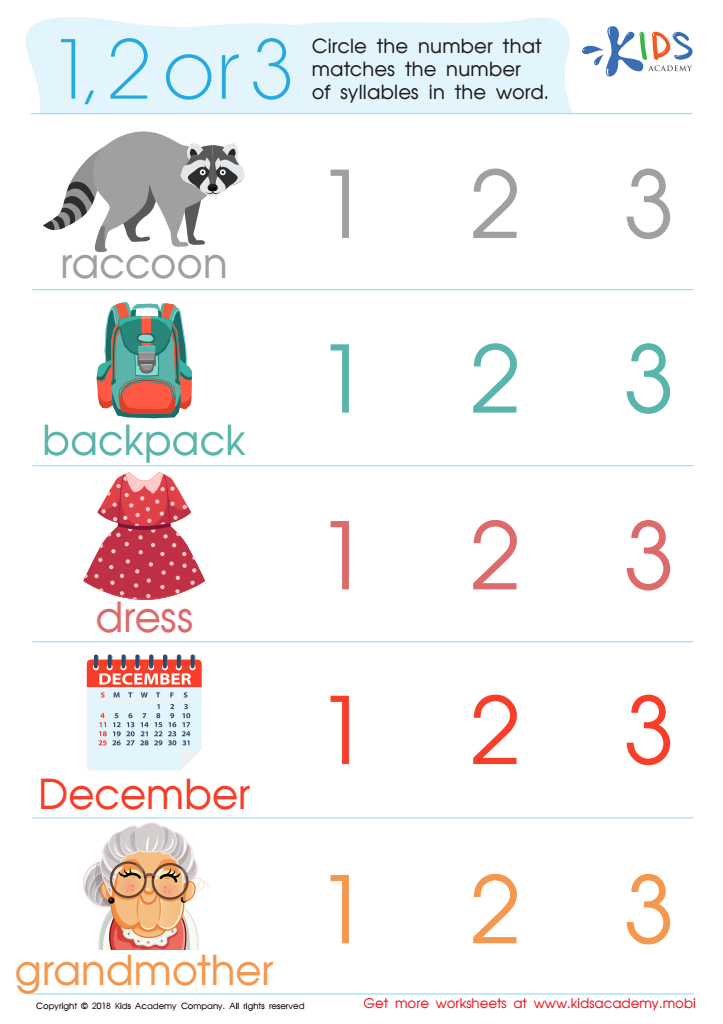
1, 2 or 3? Worksheet







Counting skills and the alphabet are foundational components of early childhood education, especially for children aged 5-6. Parents and teachers should prioritize these skills because they form the building blocks for future academic success.
First, counting helps develop critical numeracy skills which are essential in everyday life. Children learn to recognize numbers, understand their order, and grasp basic arithmetic concepts. Mastering counting can lead to more advanced mathematical abilities, enhancing cognitive development.
Similarly, knowledge of the alphabet is crucial for literacy skills. Recognizing letters, understanding their sounds, and being able to form simple words are vital for reading and writing. These skills promote language development, improve communication, and foster a love for reading.
Additionally, both counting and alphabet skills contribute to overall cognitive development, encouraging problem-solving and critical thinking. These skills teach children about patterns, sequences, and classification.
Furthermore, engaging in counting and alphabet activities fosters social interaction, as children often work collaboratively in these learning experiences. Thus, parents and teachers should care about mastering counting and the alphabet, as it not only supports academic achievement but also equips children with vital life skills essential for success in school and beyond.







