
Reading proficiency Alphabet Worksheets for Ages 5-6
6 filtered results
Difficulty Level
Grade
Age
-
From - To
Subject
Activity
Standards
Boost your child's reading skills with our Reading Proficiency Alphabet Worksheets for Ages 5-6. These expertly designed printables from Kids Academy focus on foundational phonics, letter recognition, and early reading comprehension. Engaging activities incorporate fun illustrations and diverse exercises tailored to captivate young learners. Our worksheets target essential learning skills, providing an exceptional resource to enhance classroom learning or support home schooling. Build confidence and proficiency in reading as children interact with each worksheet, making learning the alphabet an enjoyable journey. Elevate your child's early literacy skills with Kids Academy's intelligently crafted worksheets today!
Favorites
With answer key
Interactive
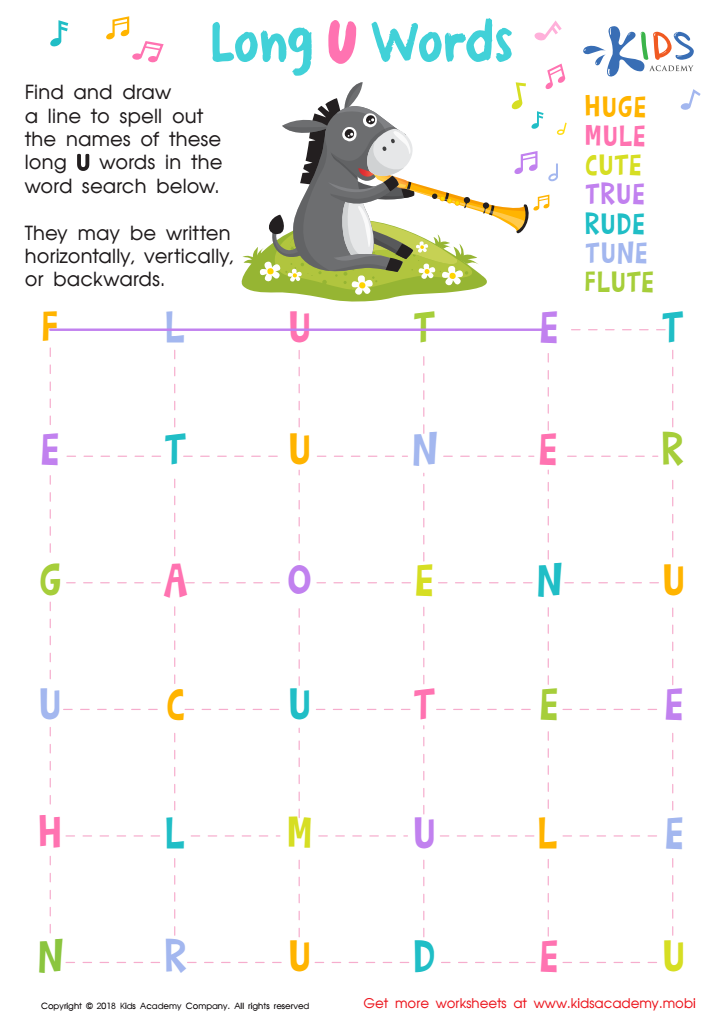
Long /u/ Words Worksheet
Your child needs to learn phonetics to enunciate and differentiate words. This fun worksheet encourages them to find and draw lines connecting the long 'U' words in the word search. Help them read the words on the right side of the picture, then look for them in the word search (horizontally, backwards or vertically).
Long /u/ Words Worksheet
Worksheet
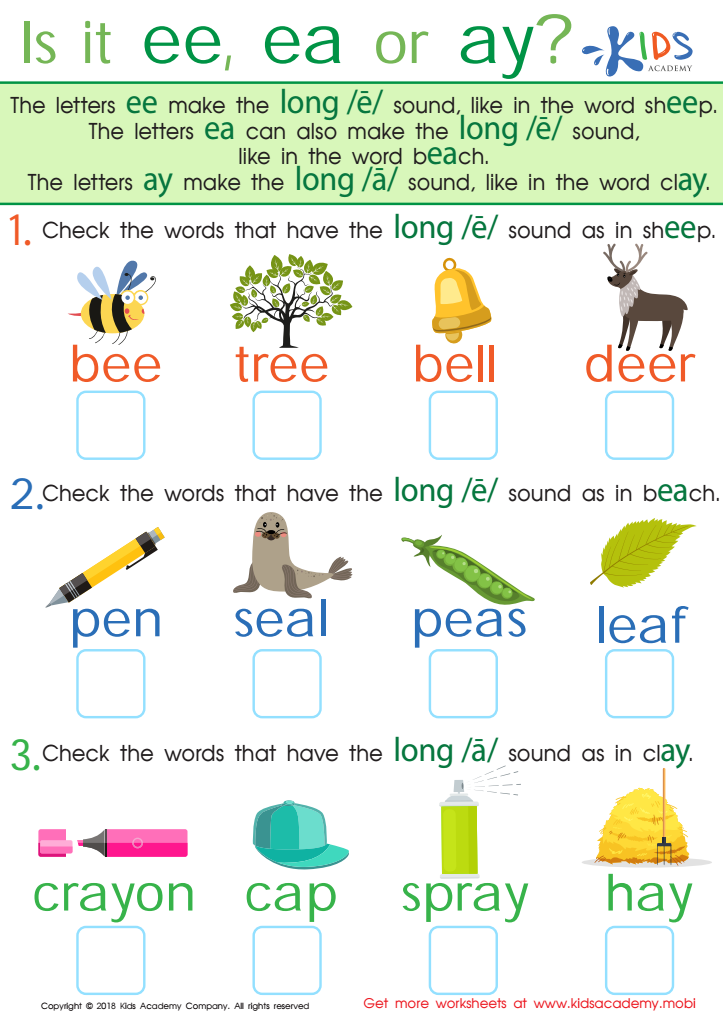
Is It EE, EA, or AY? Worksheet
When 'ee', 'ea' and 'ay' are in words, they usually make the long /e/ and /a/ sounds. Examples of words with 'ee' are "sheep", 'beach' and 'seat' with 'ea', and 'clay' and 'play' with 'ay'. Check this colourful worksheet with your kids; help them find the words that make the long /e/ sound like 'sheep'.
Is It EE, EA, or AY? Worksheet
Worksheet
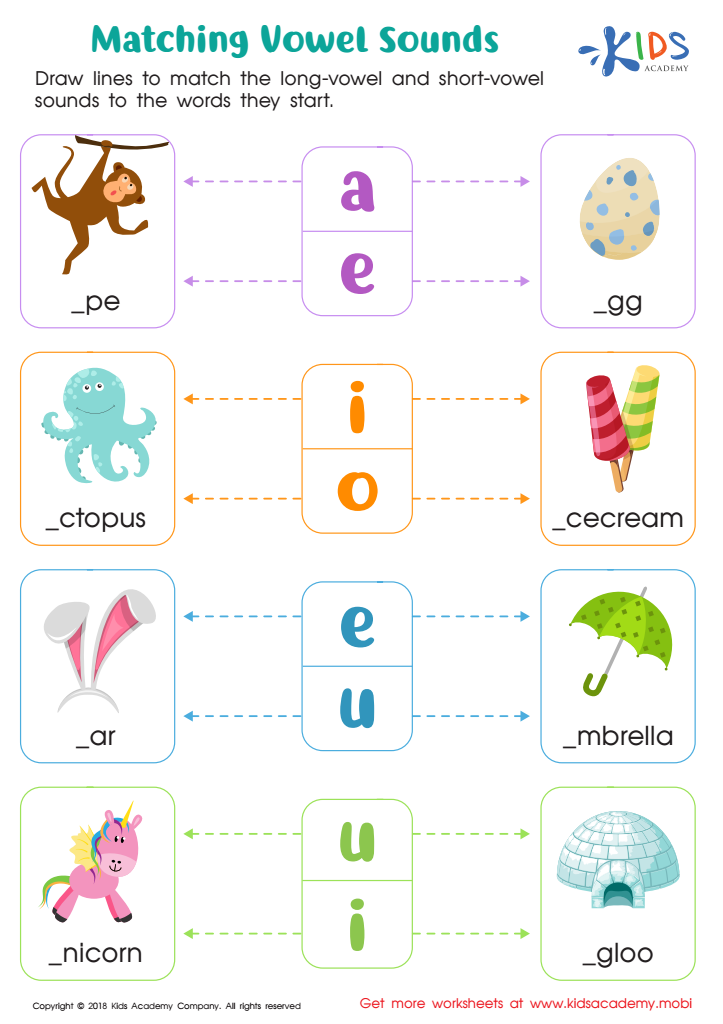
Matching Vowel Sounds Worksheet
Teach your child phonics with a fun worksheet! Ask your child to name a vowel sound and listen if it's long or short. Differentiating between long and short vowel sounds can be tricky, but this matching worksheet makes it easy for kids to understand. Have fun and master phonics - the worksheet will help them understand the difference between long and short vowel sounds!
Matching Vowel Sounds Worksheet
Worksheet

Long and Short U Worksheet
Revised: Spice up your lesson on long and short vowels with this fun printout! Kids read the words "tube" and "tub," then reinforce the sound by coloring in the words and pictures. It's a great way to make phonics class enjoyable!
Download (PDF)
 Assign to My Students
Assign to My Students
Long and Short U Worksheet
Worksheet
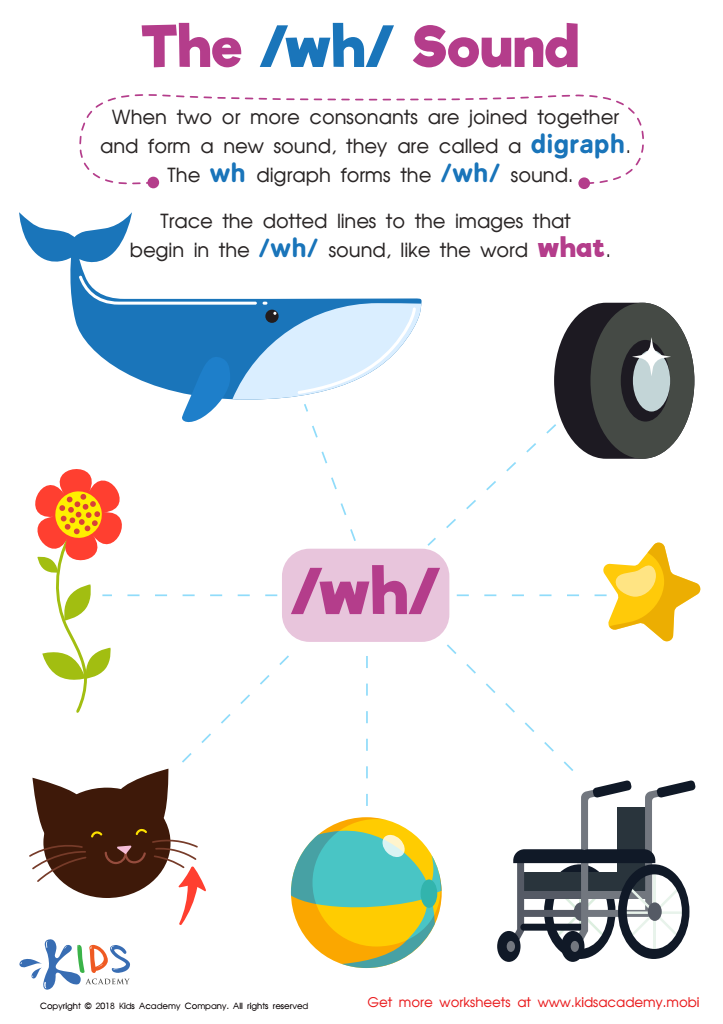
The /wh/ Sound Worksheet
Digraphs join two consonants to make a new sound, like /wh/. Give examples, like "whale", "when" and "why". Ask kids to name pictures in a worksheet and trace dotted lines to images beginning with the /wh/ sound; "what" is one example.
The /wh/ Sound Worksheet
Worksheet
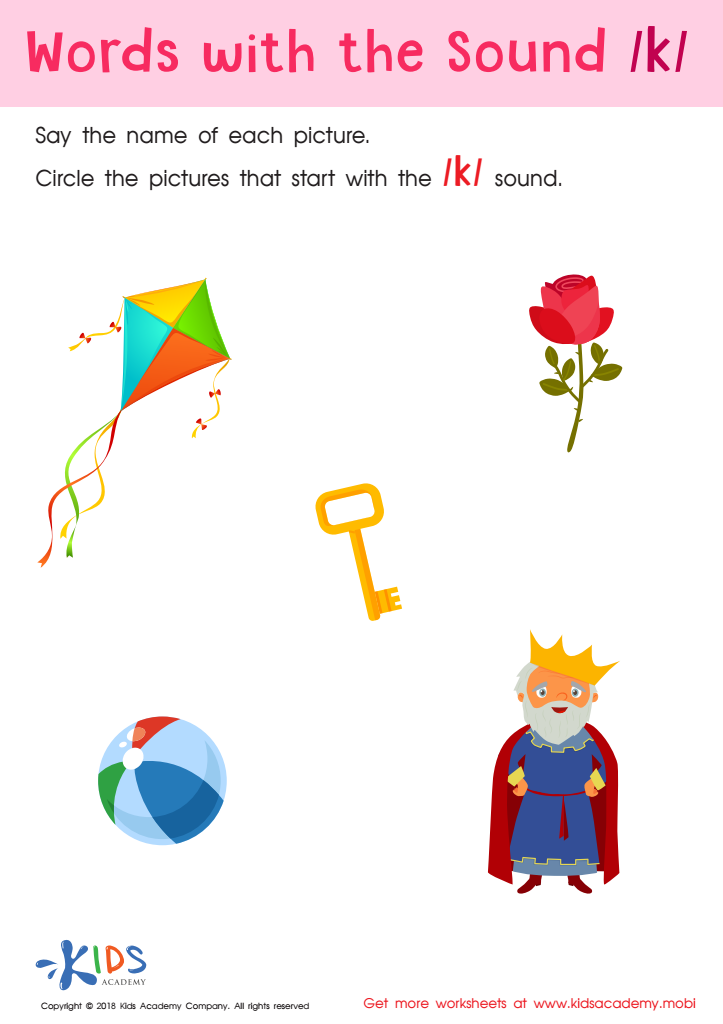
Words with sound k Reading Worksheet
Help your preschooler master the hard "k" sound with this fun worksheet from Kids Academy! Ask your child to say each picture aloud and circle only the pictures that start with "k". This early reading exercise will boost phonics skills and is sure to be loved by your little learner!
Words with sound k Reading Worksheet
Worksheet
Join Kids Academy for Free
Who is primarily going to use this learning content?







Reading proficiency in early childhood, particularly for ages 5-6, lays the foundation for all future learning. At this stage, the Reading Alphabet (understanding and recognizing letters and their sounds) is crucial for developing essential literacy skills. Proficiency in reading at a young age has been shown to correlate strongly with academic success later on. When children are literate early, they can more readily engage with the curriculum and comprehend increasingly complex material.
Early literacy also significantly affects cognitive development, enhancing thinking skills, improving memory, and fostering creativity. When children understand the mechanics of reading, they can better explore stories, ask questions, and satisfy their curiosity about the world, leading to a love for learning.
Moreover, reading proficiency can influence social-emotional development. Early readers often feel more confident and competent, positively impacting their overall classroom engagement and social interactions. They are more likely to participate, share ideas, and collaborate with peers.
For these reasons, both parents and teachers must prioritize teaching the Reading Alphabet. Investing time and resources into early literacy not only benefits individual children but also contributes to a more educated, thoughtful, and capable future generation. Regular practice, interactive reading sessions, and support can make a significant difference in a child's academic and personal growth.







