Sound differentiation Alphabet Worksheets for Ages 5-6
3 filtered results
-
From - To
Unlock the power of phonics with our Sound Differentiation Alphabet Worksheets tailored for children aged 5-6. Designed to develop key reading skills, these engaging worksheets help young learners identify, distinguish, and match letters with their corresponding sounds. Packed with fun activities like tracing, coloring, and matching, these resources make learning enjoyable and effective. Perfect for kindergarten students, our worksheets foster early literacy development, setting a strong foundation for future reading success. Give your child a head start on their education journey with our expert-crafted tools that turn learning the alphabet into an exciting adventure!
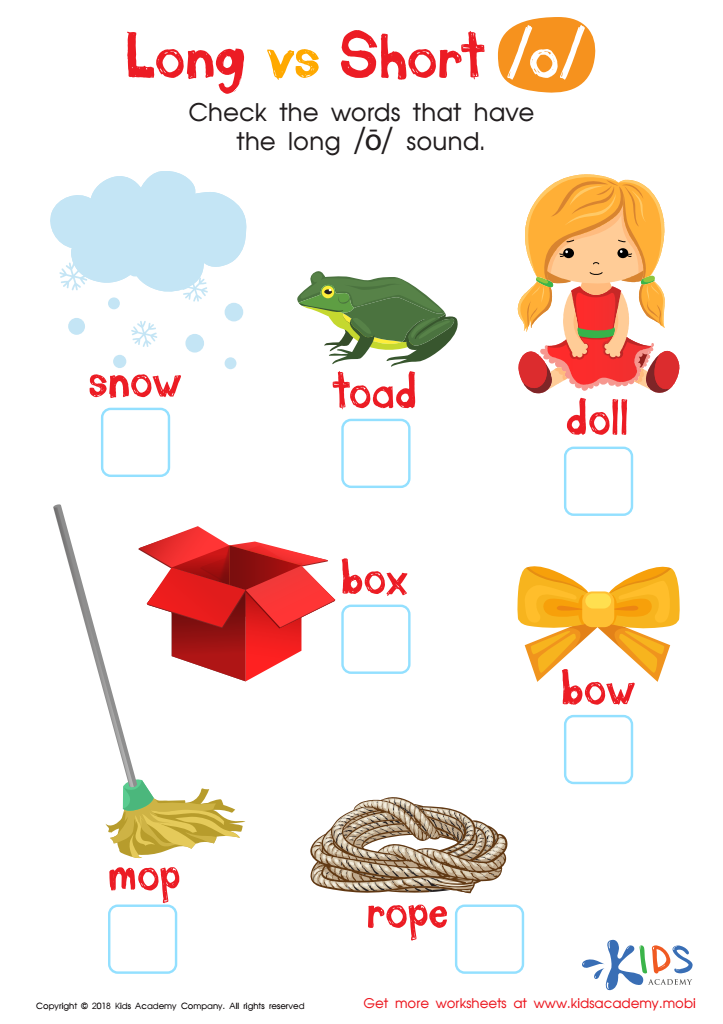
Long vs Short O Reading Worksheet
 Assign to My Students
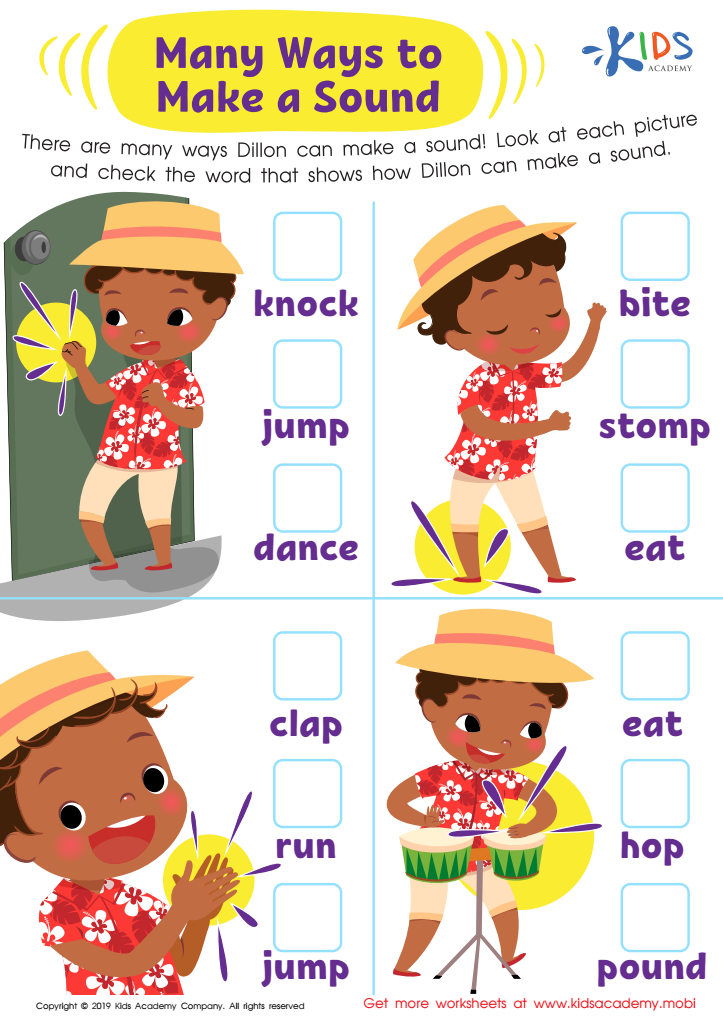
Many Ways to Make a Sound Worksheet
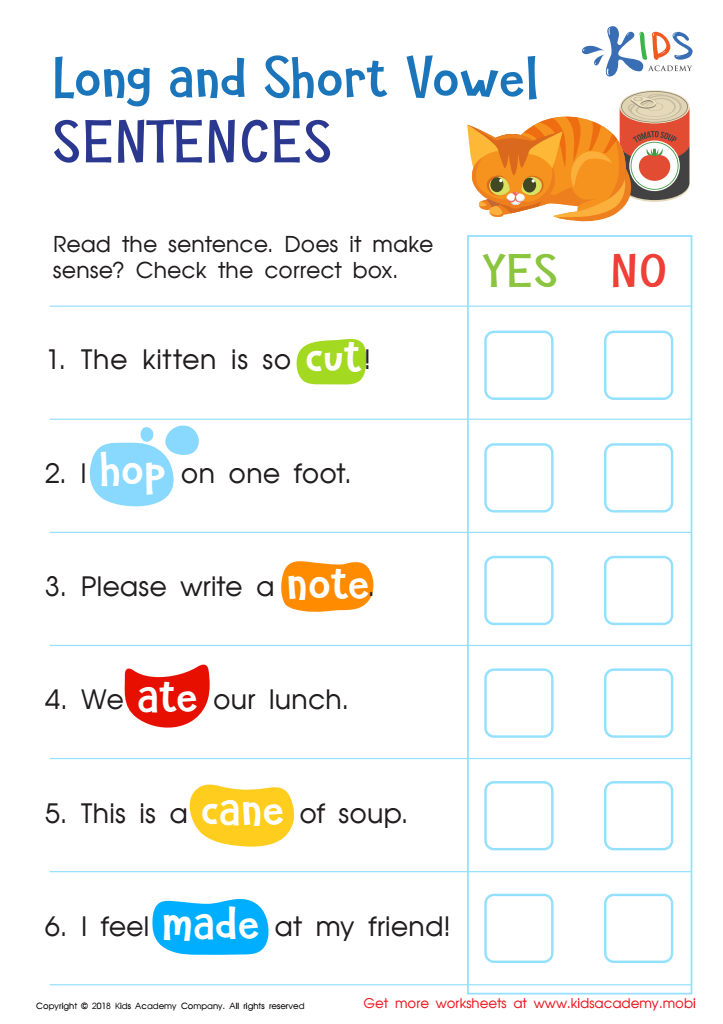
Long and Short Vowel Sentences: Assessment Worksheet






Parents and teachers should care about sound differentiation alphabets for ages 5-6 because it lays the foundational skills necessary for developing strong reading and writing abilities. At this critical age, young children's brains are highly adaptable and primed for learning language. Introducing them to sound differentiation alphabets helps them recognize and distinguish between individual sounds (phonemes) and understand their corresponding letters (graphemes).
This early skillset is crucial for phonemic awareness, which is the ability to hear, identify, and play with sounds in spoken words. Phonemic awareness is a key predictor of children's ability to read efficiently. When children comprehend the relationship between sounds and letters, they can start decoding words, making it easier for them to read new words and build their vocabulary.
Moreover, mastering sound differentiation not only aids in reading accuracy but also in spelling. If children can break down words into their constituent sounds, they are better equipped to spell words correctly. This contributes to their overall literacy development, enhancing their confidence and willingness to engage with written material.
In global terms, children who develop strong early literacy skills are more likely to succeed academically, fostering a lifelong love for learning. Therefore, focusing on sound differentiation alphabets during this pivotal developmental stage is essential for both parents and teachers seeking to support children's educational and cognitive growth.







