Sound-letter correlation Alphabet Worksheets for Ages 5-6
3 filtered results
-
From - To
Welcome to our Sound-Letter Correlation Alphabet Worksheets, designed specifically for children ages 5-6! These engaging worksheets are perfect for introducing young learners to the essential connection between letters and their corresponding sounds. Filled with vibrant illustrations and interactive activities, our materials promote phonemic awareness and boost early literacy skills. Each worksheet encourages children to recognize letters, practice pronunciation, and enhance their reading capabilities through fun exercises. Ideal for homeschooling, classroom activities, or summer learning, these worksheets provide a solid foundation for fostering confidence in young readers. Start your child's journey to literacy today with our delightful sound-letter correlation resources!
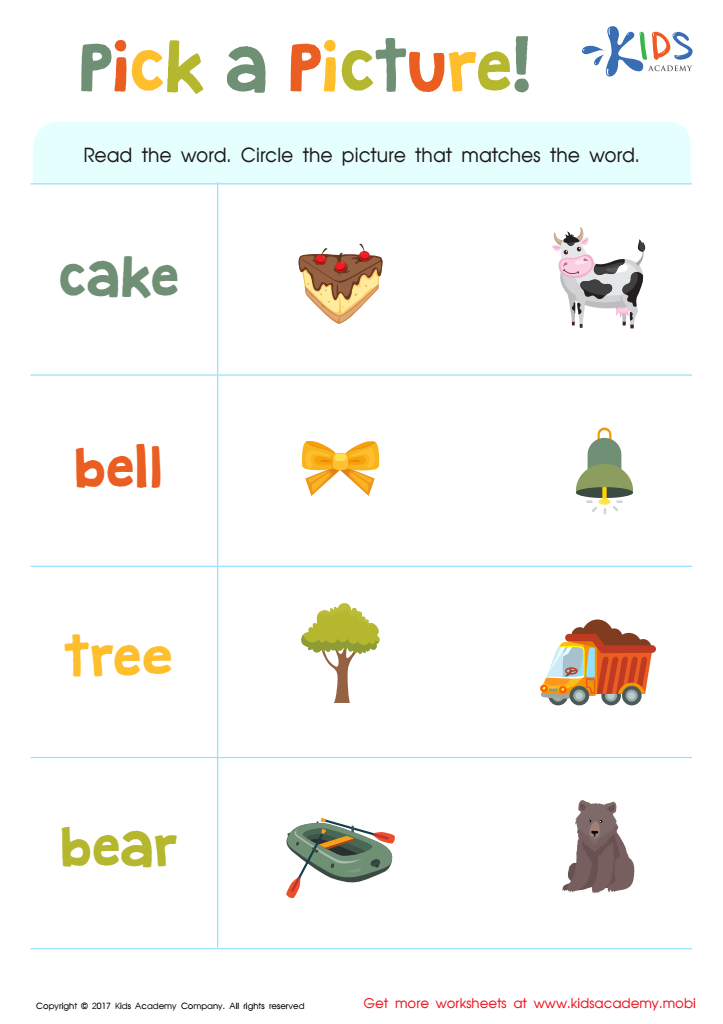
Pick a Picture Word Recognition Worksheet
 Assign to My Students
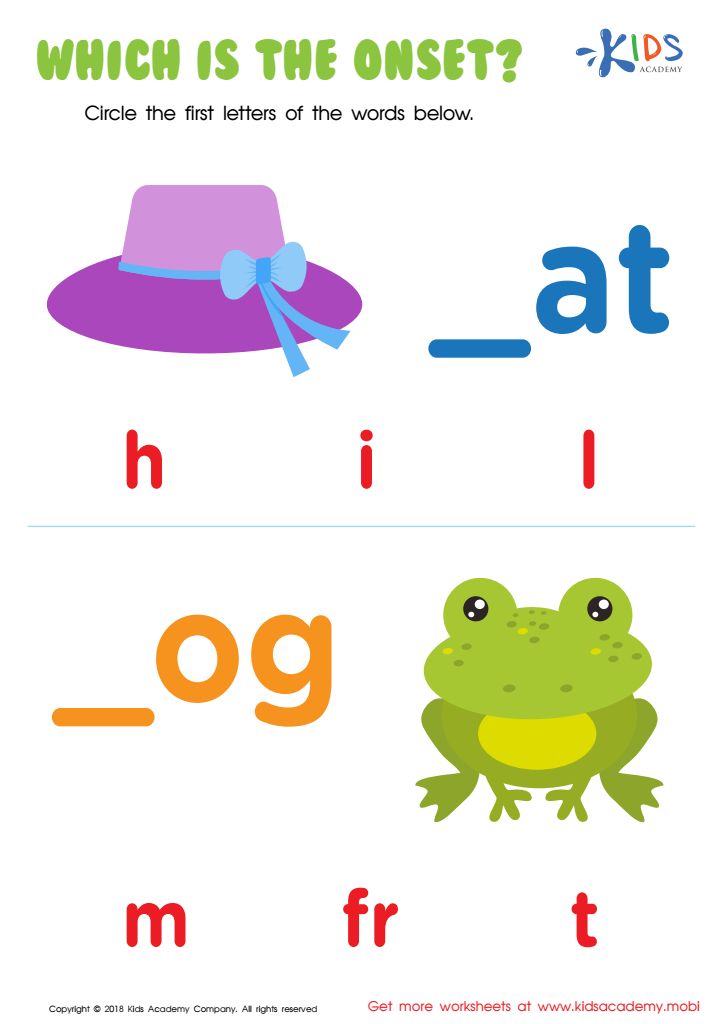
Which Is the Onset? Worksheet
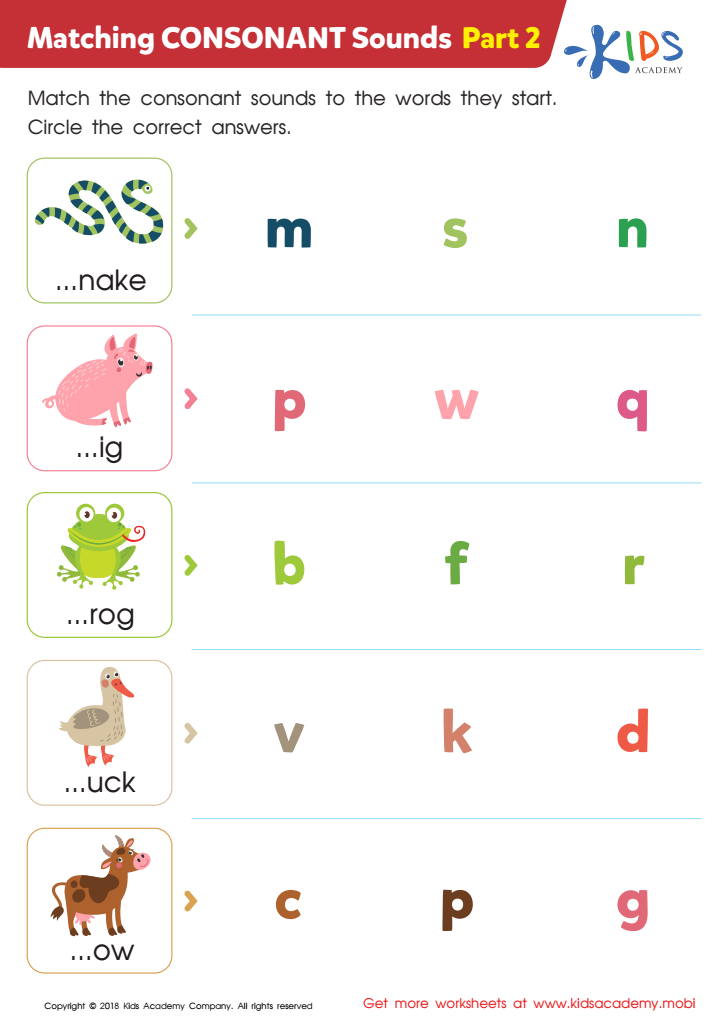
Matching Consonant Sounds: Part 2 Worksheet






Understanding sound-letter correlation, or phonics, is crucial for parents and teachers of children aged 5-6, as it lays the foundation for reading and writing skills. At this age, children are still developing their phonemic awareness—the ability to hear, identify, and manipulate individual sounds in spoken words. By recognizing the relationship between sounds and their corresponding letters, children can decode words, enhancing their reading fluency and comprehension.
When parents and teachers prioritize sound-letter correlation, they engage children in playful and interactive learning experiences, such as phonics games, rhymes, and songs. These activities not only make learning fun but also foster a positive attitude toward literacy. Furthermore, early mastery of sound-letter relationship supports vocabulary development and spelling, which are essential for effective communication.
Moreover, understanding phonics helps children build confidence as they encounter new words. It empowers them to become independent readers and writers, which is critical for academic success. Supporting sound-letter correlation means investing in children’s future literacy skills, ensuring they have the tools necessary for lifelong learning and effective communication in the increasingly literate world. Therefore, strong collaboration between parents and teachers in this area can effect lasting, positive academic outcomes.







