Lowercase identification Letter Recognition Worksheets for Ages 5-6
5 filtered results
-
From - To
Our "Lowercase Identification Letter Recognition Worksheets for Ages 5-6" are designed to help young learners master lowercase letters in an engaging and fun way. These printable worksheets feature a variety of activities that aid in the recognition and differentiation of lowercase letters, enhancing early reading skills. Ideal for children aged 5 to 6, the exercises promote fine motor skills while reinforcing letter-sound relationships. Our worksheets provide a comprehensive approach to alphabet mastery, making learning both accessible and enjoyable. Perfect for classroom settings or at-home practice, these tools are essential for a solid foundation in literacy.
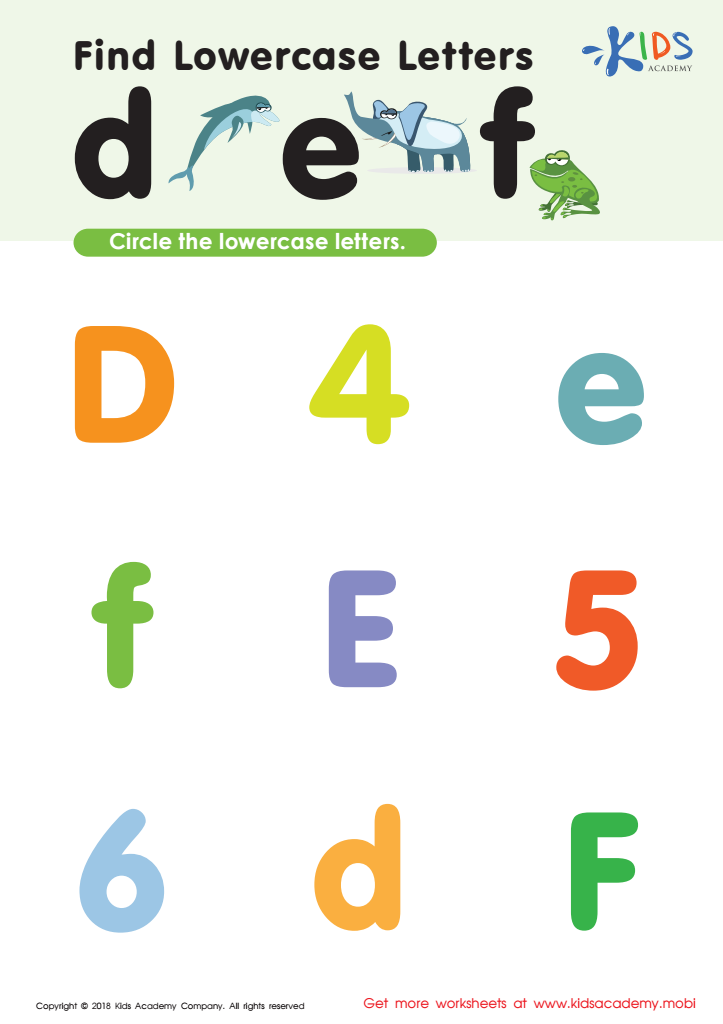
Find Lowercase Letters d e f Worksheet
 Assign to My Students
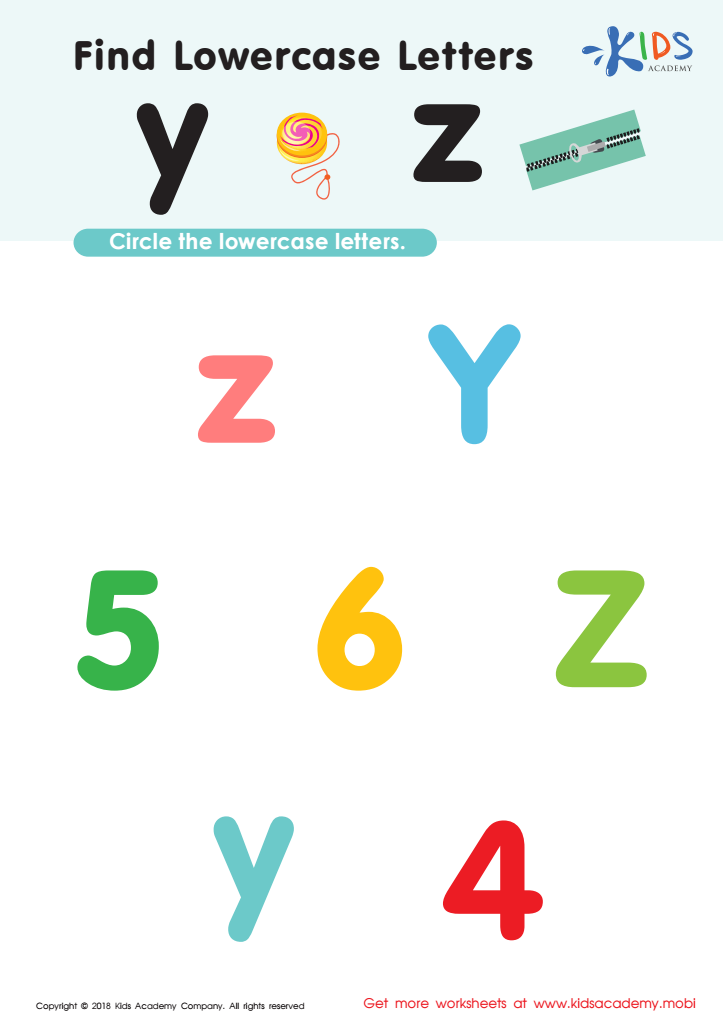
Find Lowercase Letters y z Worksheet

Find lowercase letters a b c Worksheet
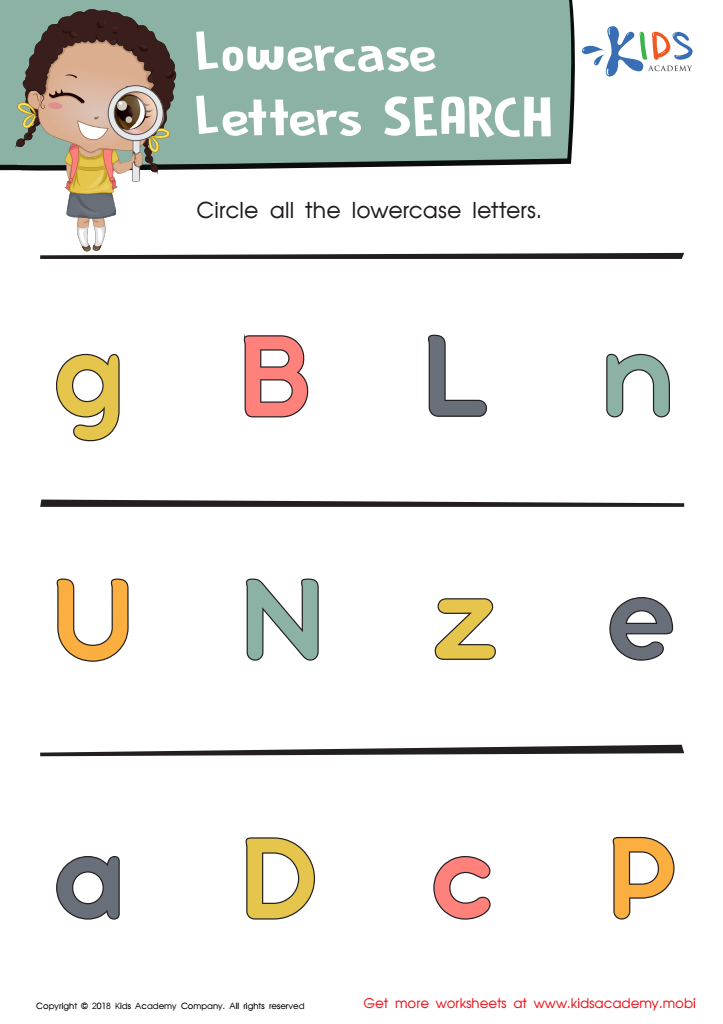
Lowercase Letters Search: Assessment Worksheet
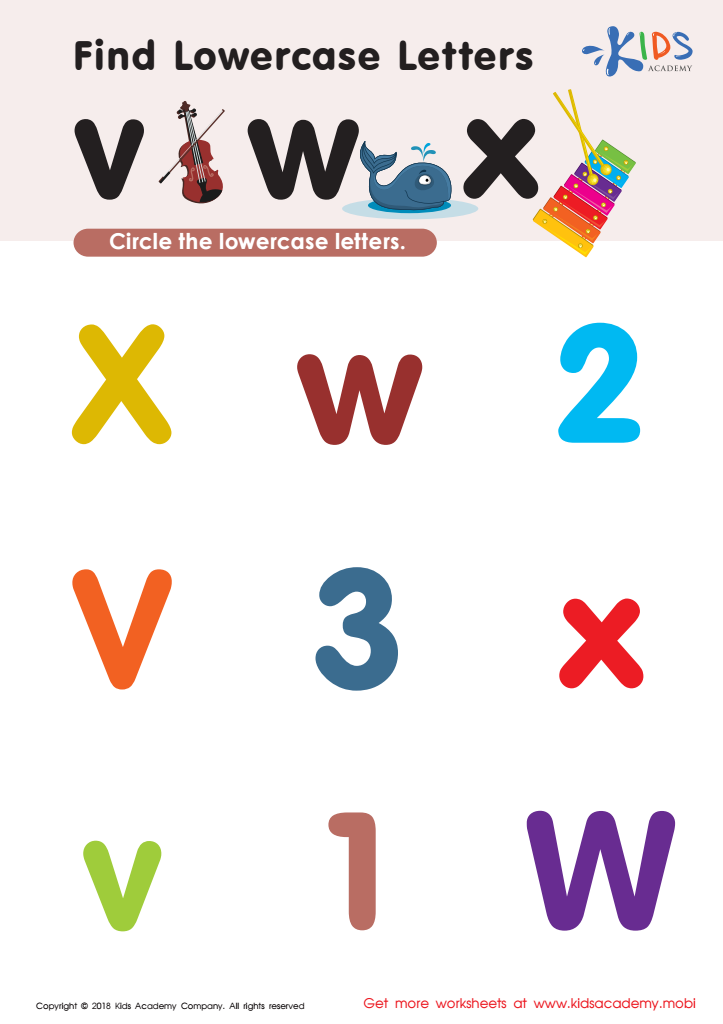
Find Lowercase Letters v w x Worksheet








Lowercase letter recognition for ages 5-6 is crucial because it lays the foundation for literacy and academic success. At this age, children transition from recognizing uppercase letters, often emphasized in early childhood, to the more commonly used lowercase letters in print. Lowercase letters dominate in books, instructions, and other written materials; therefore, recognizing them enhances reading fluency and comprehension.
Additionally, early mastery of lowercase letters contributes to smoother and faster writing skills. It helps children differentiate between similar-looking lowercase letters like 'b' and 'd,' minimizing confusion and errors. Early identification equips children to seamlessly blend sounds, aiding in phonics education and decoding unfamiliar words.
Parental and teacher involvement at this stage bolsters children's confidence and motivation to read. Engaging activities like alphabet games, flashcards, and engaging books can make learning lowercase letters enjoyable. Social interaction, such as reading bedtime stories or collaborative classroom exercises, reinforces this knowledge.
In summary, investing time and attention in lowercase letter identification for 5-6-year-olds creates a solid literacy foundation. It nurtures their reading abilities, fosters essential writing skills, and fosters an enriching learning environment, paving the way for lifelong educational achievements.







