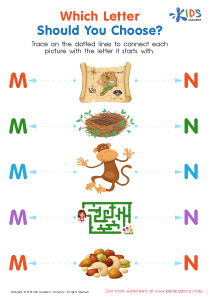
Letter recognition Lowercase/Small Letters Worksheets for Ages 5-6
11 filtered results
-
From - To
Introduce your 5-6-year-olds to the magical world of letters with our "Letter Recognition Lowercase/Small Letters Worksheets." These engaging and educational worksheets are expertly designed to help young learners identify and recognize lowercase letters with ease. Each activity combines fun illustrations and interactive exercises to reinforce letter shapes and sound-letter correspondence. Ideal for early grade students, these printables boost confidence and lay a solid foundation for reading and writing skills. Perfect for classroom or home use, our worksheets make letter learning an enjoyable and rewarding experience for your budding alphabet experts!
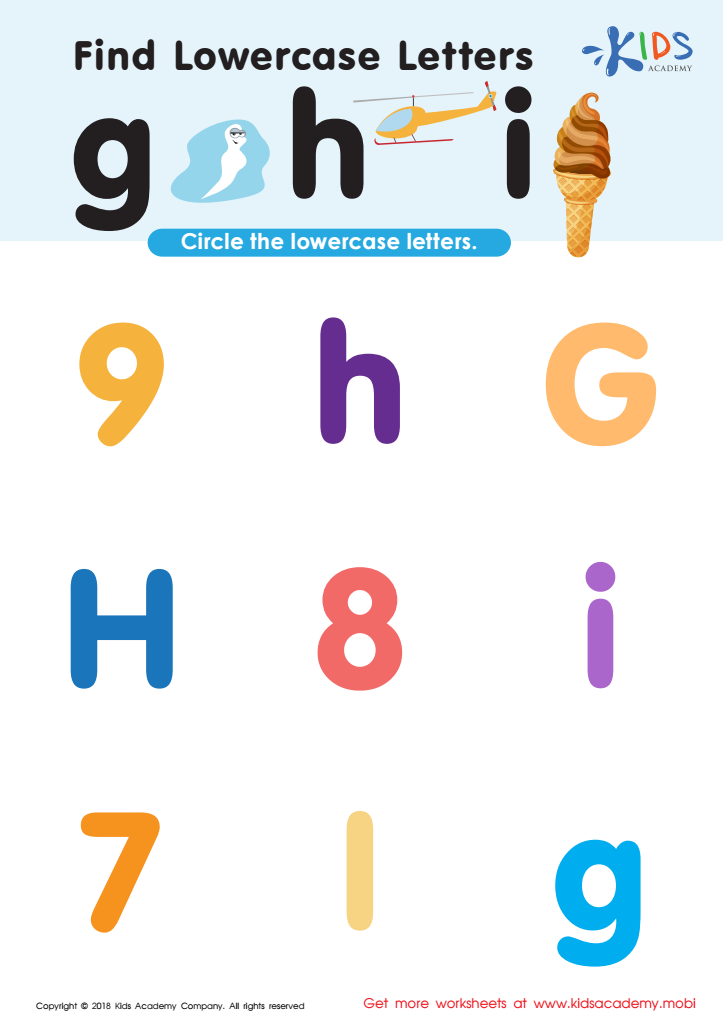
Find Lowercase Letters g h i Worksheet
 Assign to My Students
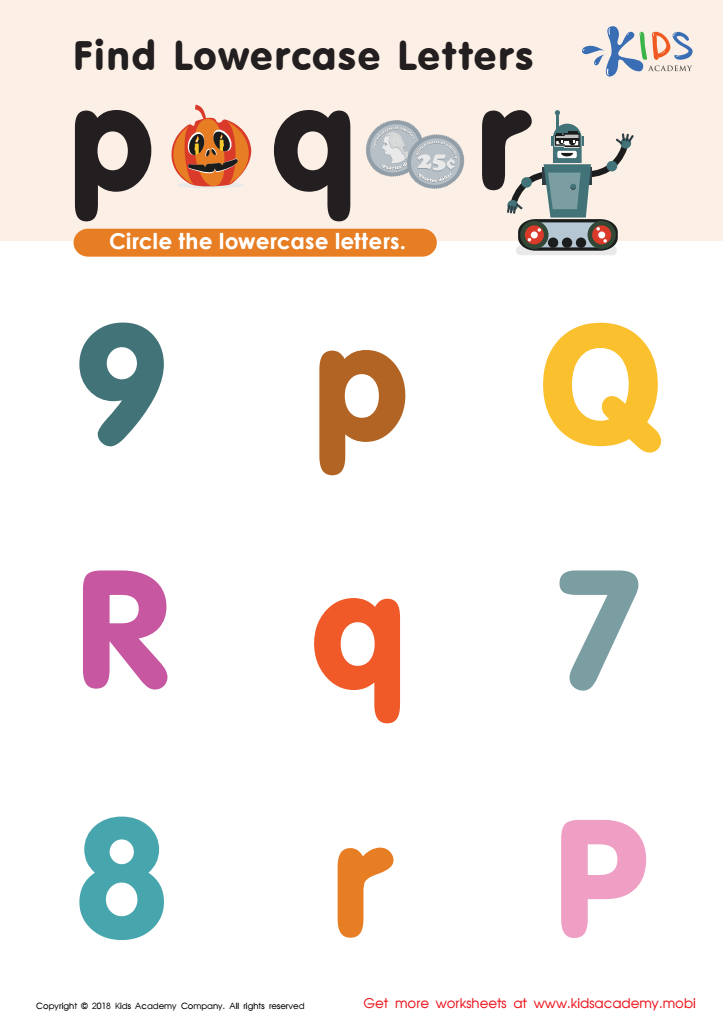
Find lowercase Letters p q r Worksheet
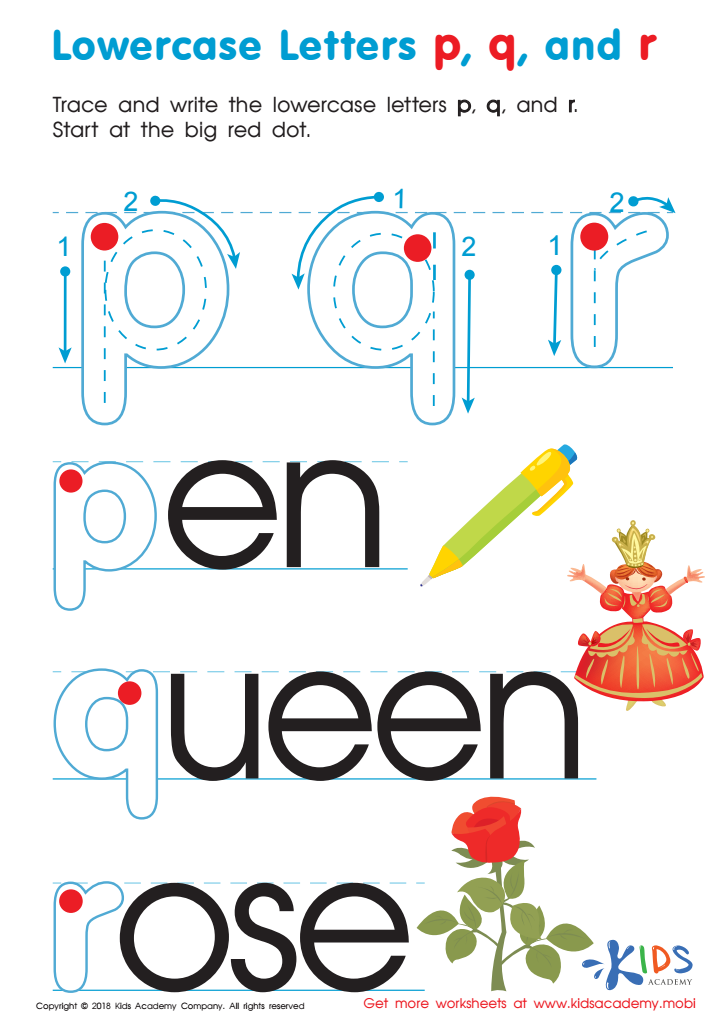
Lowercase Letters p q r Worksheet
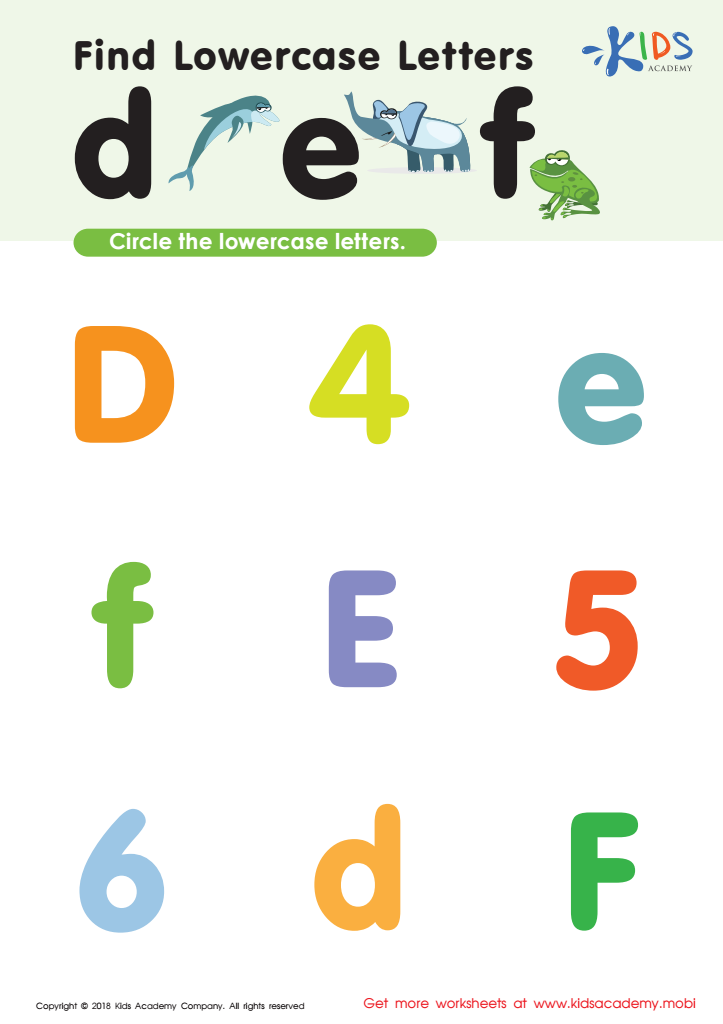
Find Lowercase Letters d e f Worksheet
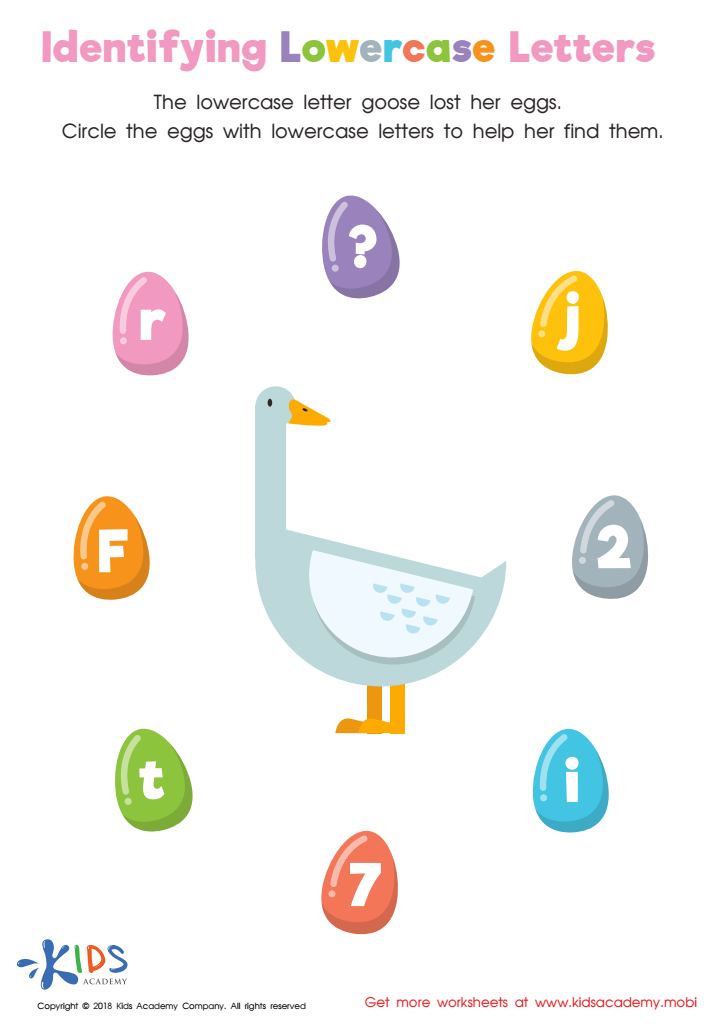
Identifying Lowercase Letters Worksheet
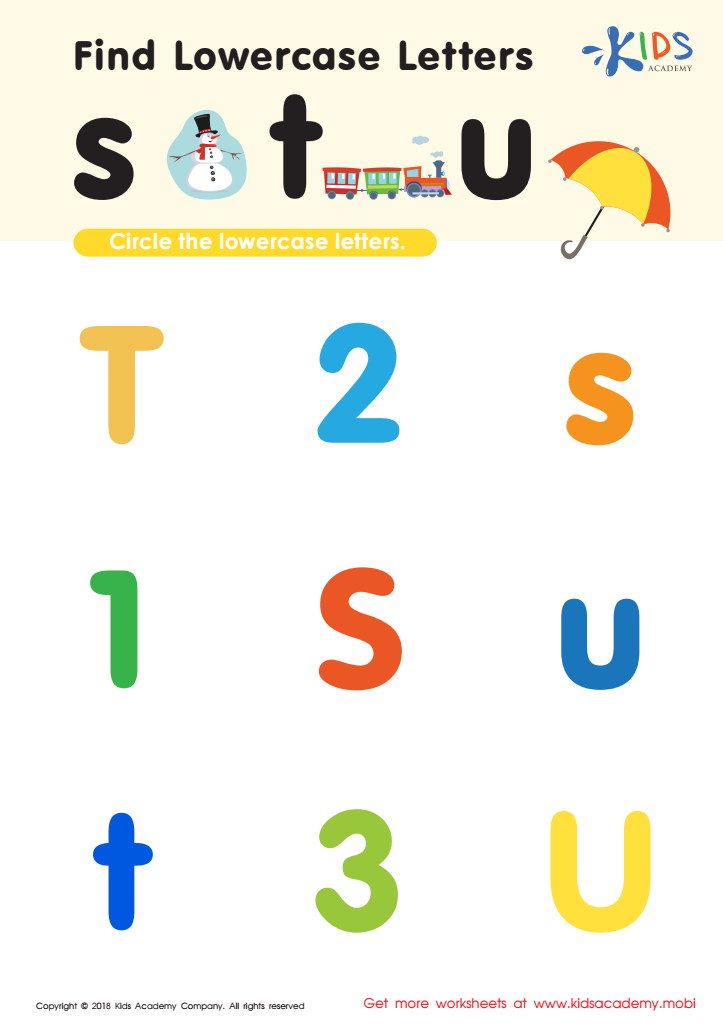
Find lowercase Letters s t u Worksheet
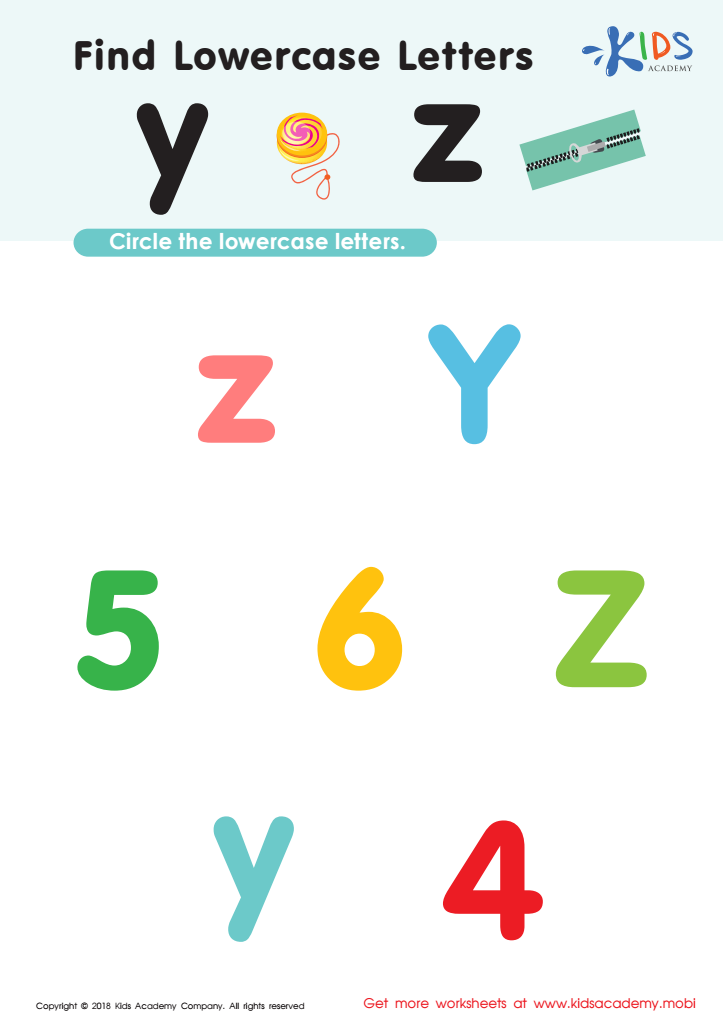
Find Lowercase Letters y z Worksheet
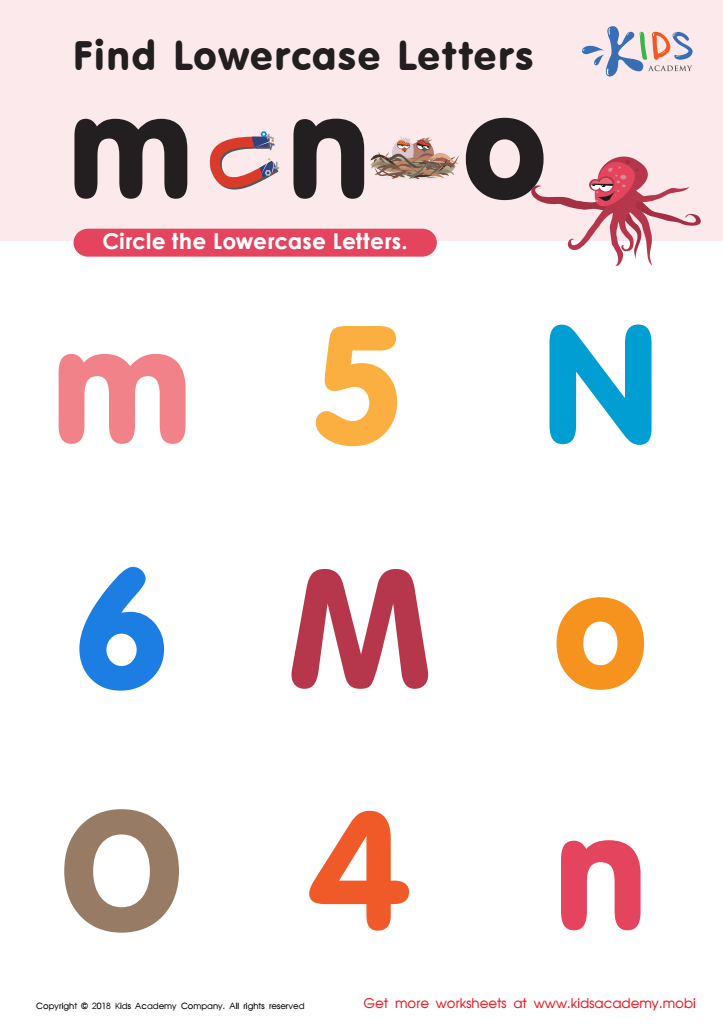
Find Lowercase Letters m n o Worksheet
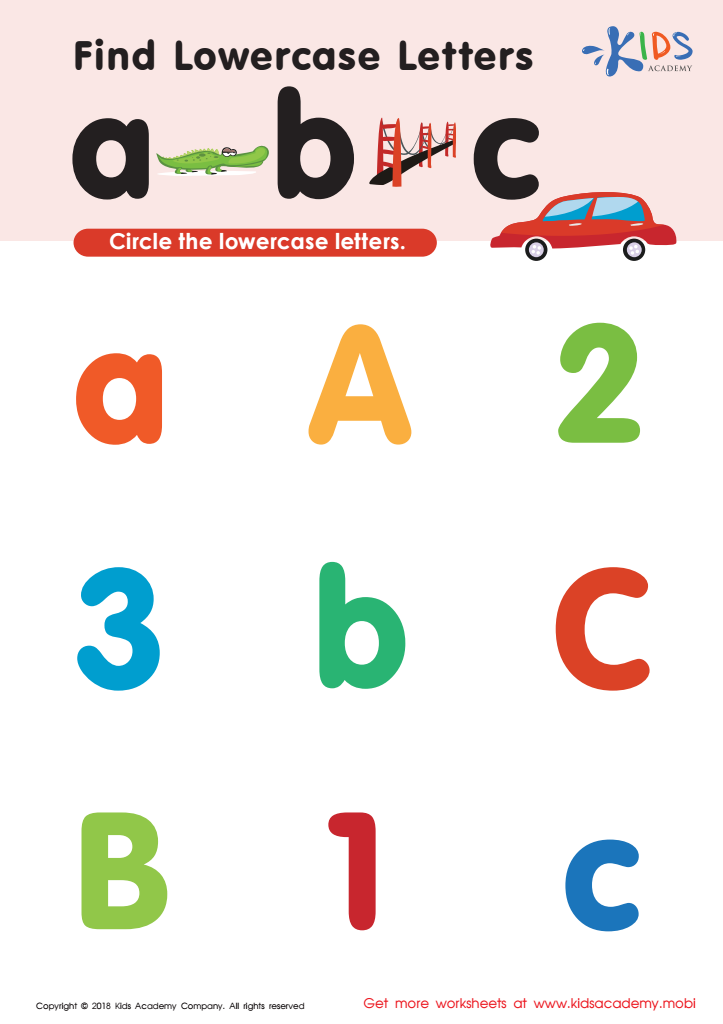
Find lowercase letters a b c Worksheet
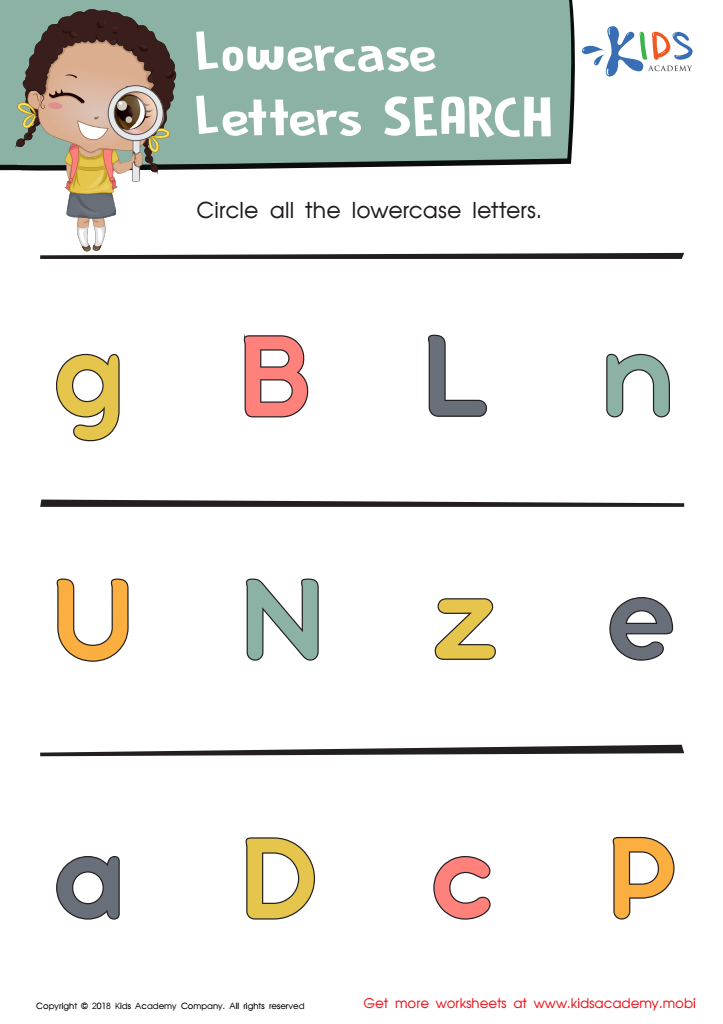
Lowercase Letters Search: Assessment Worksheet
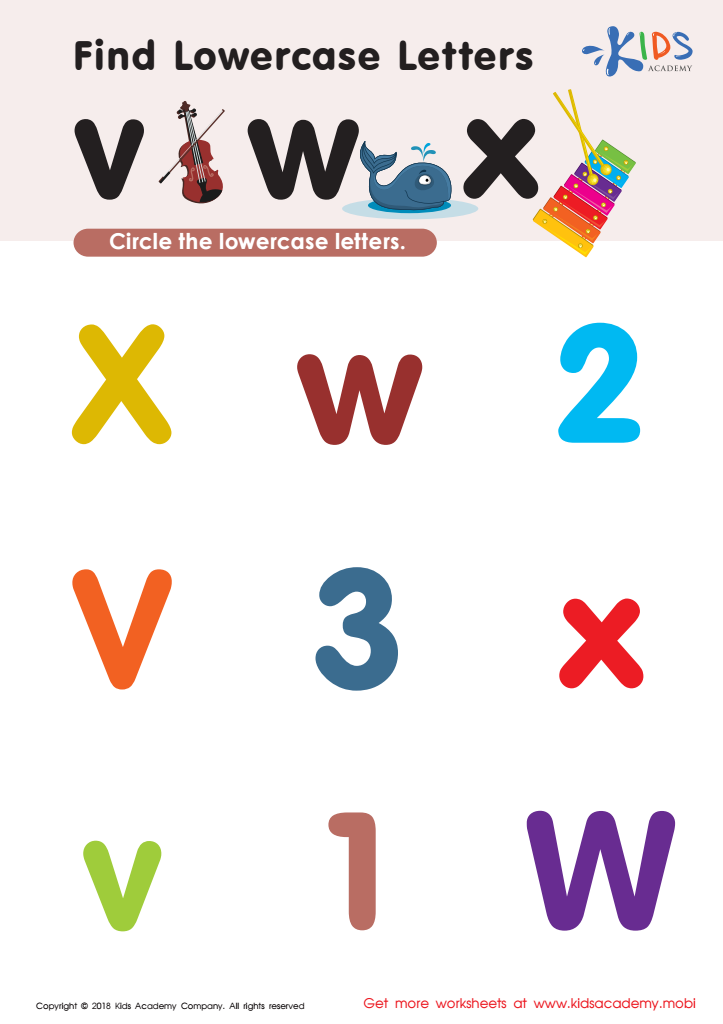
Find Lowercase Letters v w x Worksheet


Letter recognition, especially of lowercase letters, plays a crucial role in early childhood literacy. Parents and teachers should prioritize this skill for children ages 5-6 to lay a strong foundation for reading and writing. At this age, kids are typically transitioning from basic letter exposure to developing more complex literacy skills. Lowercase letters are ubiquitous in written text, representing about 95% of all printed material. Without proper recognition, children may struggle to read books, instructions, and even simple labels.
When children can confidently identify lowercase letters, they gain a better understanding of letter-sound relationships, an essential component of phonics used in decoding words. This recognition directly enhances reading fluency, comprehension, and spelling — all fundamental literacy skills.
Encouraging letter recognition can also boost children’s confidence and motivation to learn. Activities focusing on recognizing and naming lowercase letters can be enjoyable and engaging, making the learning process fun and effective. Early mastery reduces frustration, helping children build a positive relationship with learning and setting the stage for academic success.
Therefore, investing time and effort in helping children ages 5-6 master lowercase letter recognition will significantly benefit their entire educational journey, making them better prepared for future challenges in reading and writing.