Sound identification Phonics Worksheets for Ages 5-6
4 filtered results
-
From - To
Discover our engaging Sound Identification Phonics Worksheets tailored for ages 5-6. These expertly-crafted worksheets are designed to build essential phonics skills, helping young learners recognize, identify, and differentiate various letter sounds. By practicing with our fun and interactive sheets, children develop crucial early reading abilities, setting the stage for academic success. Ideal for both classroom and home use, these worksheets include diverse activities like matching, coloring, and tracing to keep kids excited about learning. Support your child's literacy journey with our comprehensive phonics resources at Kids Academy and watch their confidence soar.
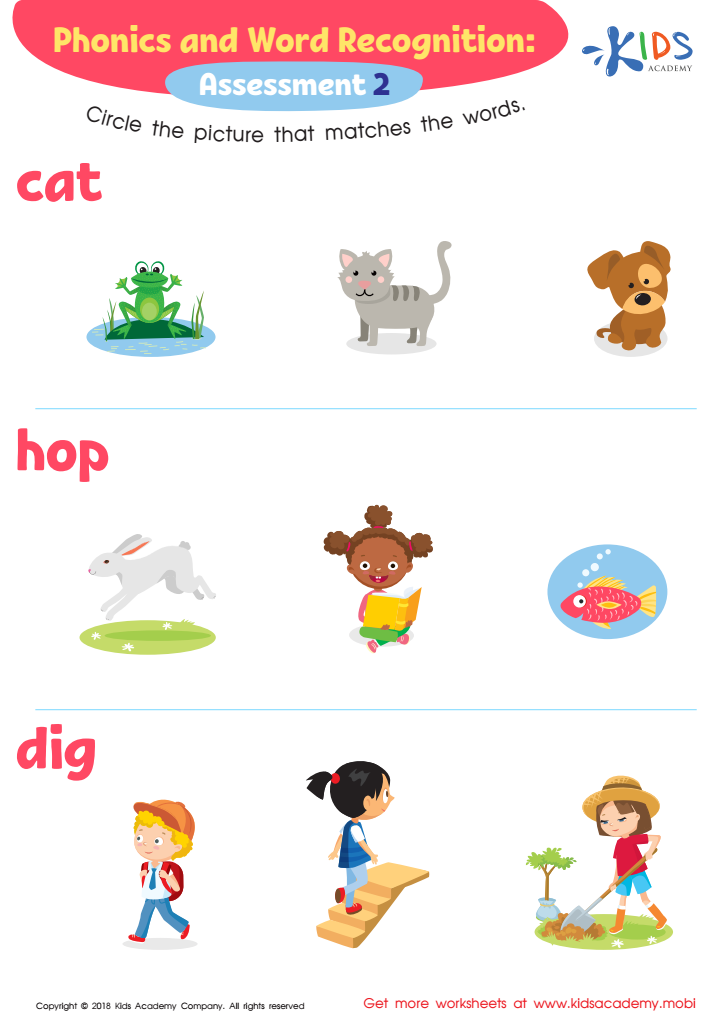
Phonological Awareness: Assessment 2 ELA Worksheet
 Assign to My Students
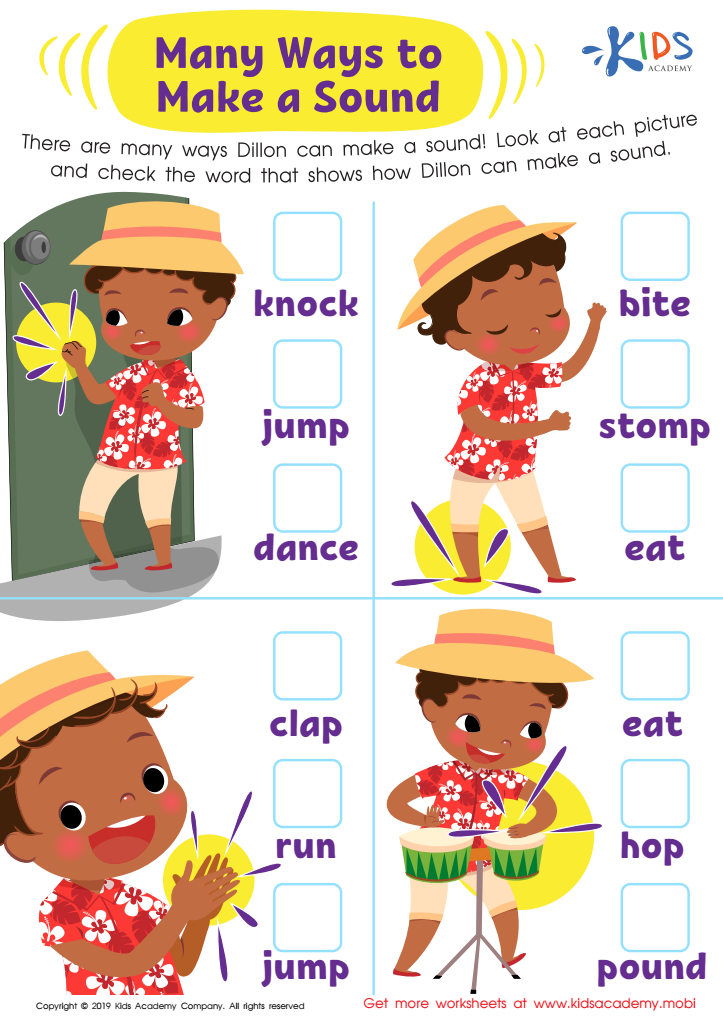
Many Ways to Make a Sound Worksheet
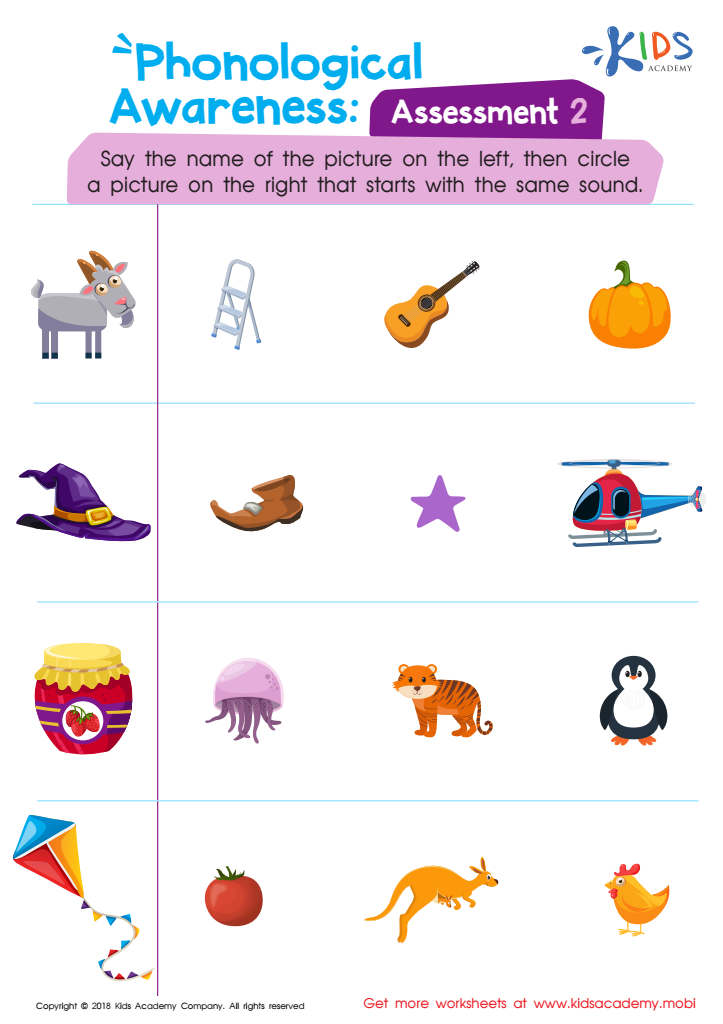
Phonological Awareness: Assessment 2 Worksheet
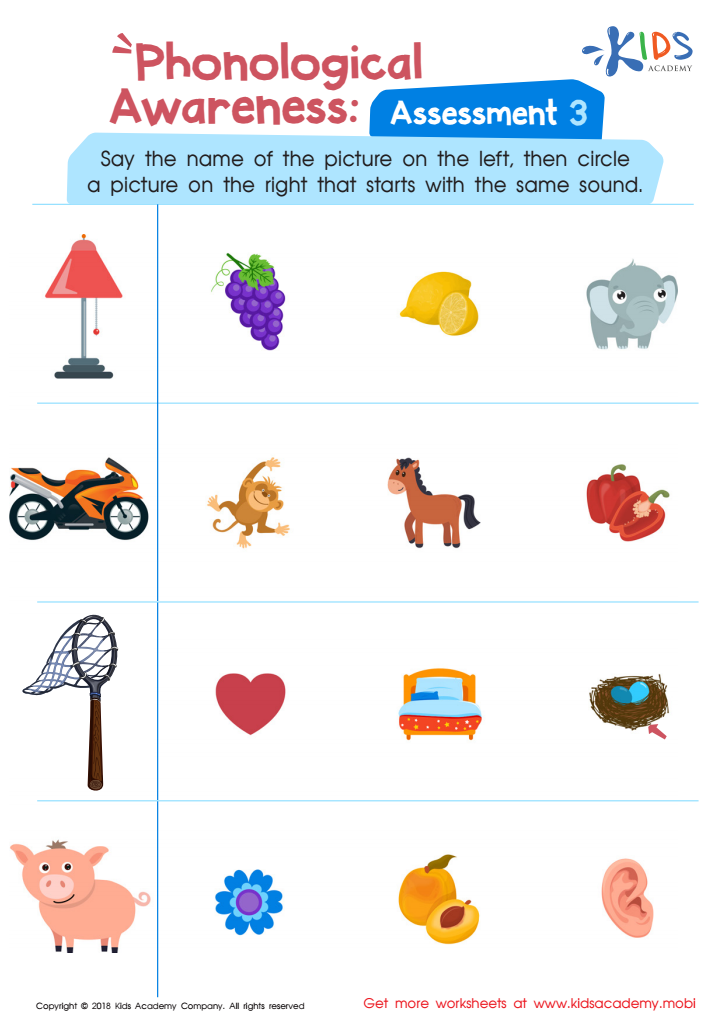
Phonological Awareness: Assessment 3 Worksheet








Sound identification phonics is fundamental for children aged 5-6 because it lays the groundwork for successful reading and writing. At this pivotal developmental stage, young minds are highly receptive to learning new skills, and phonics provides the essential link between spoken language and written language. By understanding the relationship between letters and sounds, children can begin to decode words, which boosts their reading fluency.
For parents and teachers, prioritizing phonics instruction can significantly impact a child’s academic trajectory. Children who grasp phonics early tend to become confident readers, enabling them to enjoy a wide variety of books. This, in turn, enhances their vocabulary, comprehension, and overall cognitive development.
Moreover, effective phonics instruction can help identify early signs of reading difficulties, allowing for timely interventions. A strong grounding in phonics can also foster a love for reading, leading to lifelong learning and curiosity.
Beyond academics, phonics skills contribute to effective communication, as children can spell and articulate thoughts clearly. Recognizing the sounds in words better equips children to engage and interact with their peers confidently. Ultimately, sound identification phonics for early learners forms the cornerstone of literacy, making it an indispensable focus for both parents and teachers.







