Handwriting practice Tracing Letters Worksheets for Ages 5-6 - Page 2
28 filtered results
-
From - To
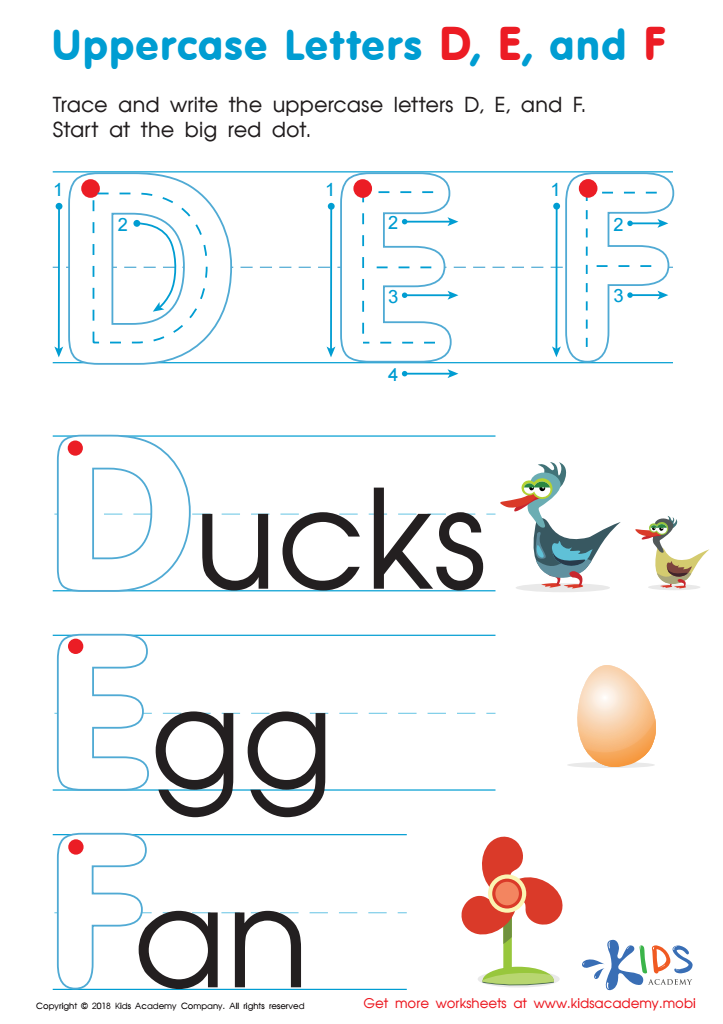
Uppercase Letters D, E, and F Worksheet
 Assign to My Students
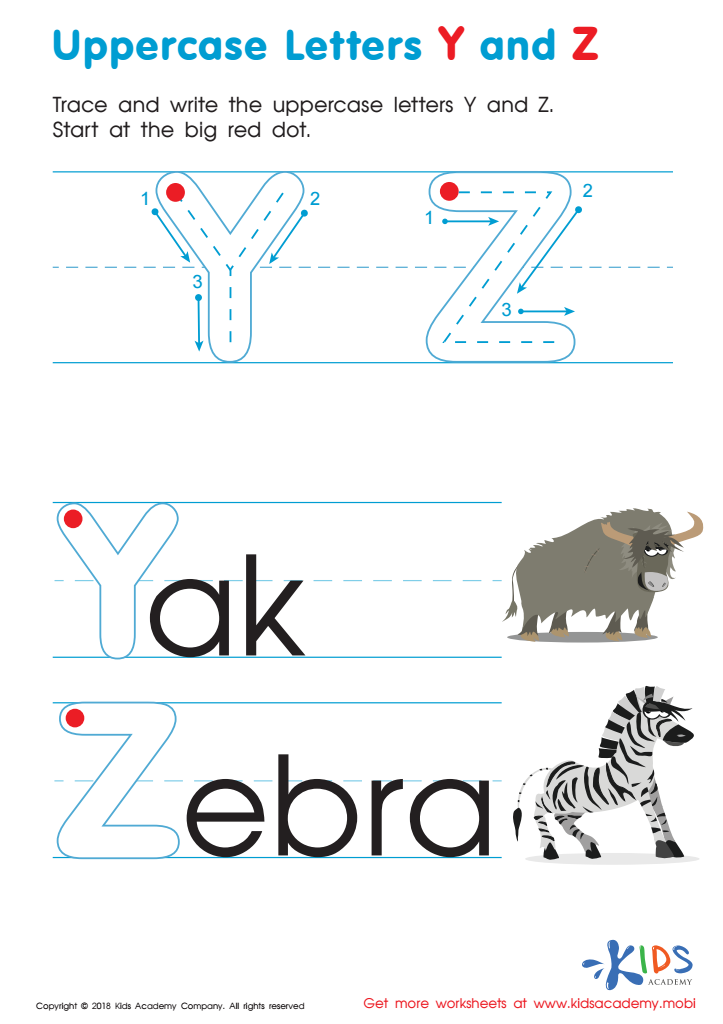
Uppercase Letters Y Z Worksheet
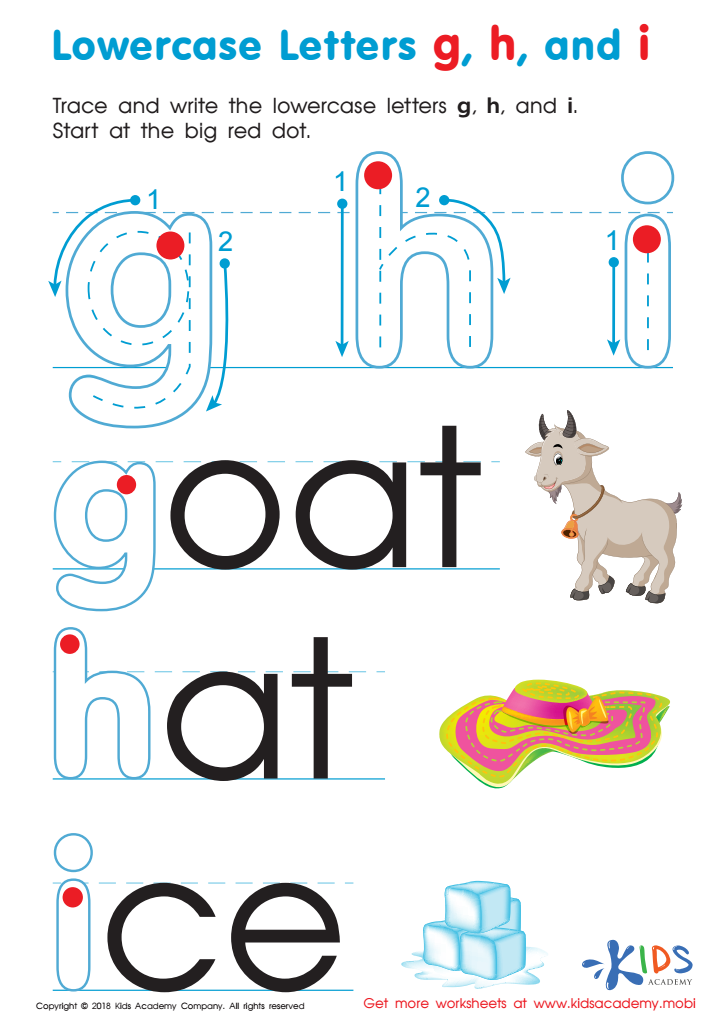
Lowercase Letters g h i Worksheet
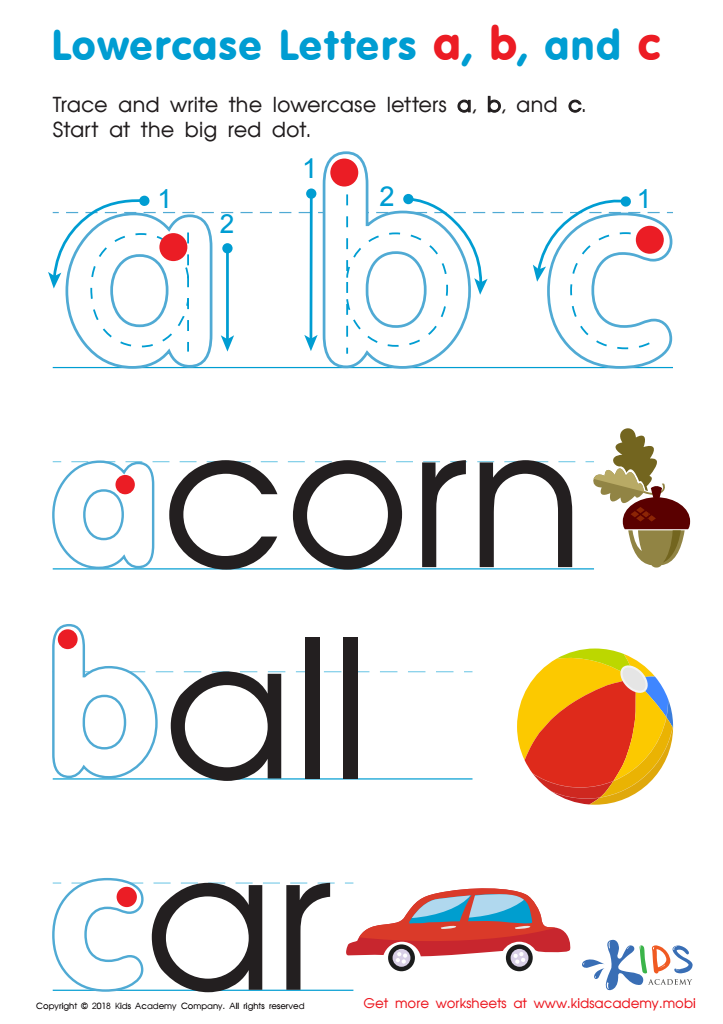
Lowercase Letters a b c Worksheet








Handwriting practice, particularly tracing letters for ages 5-6, is essential for several reasons that warrant the attention of parents and teachers alike. Firstly, this practice aids in developing fine motor skills, which are crucial for children as they begin to engage in more complex tasks throughout their education. By tracing letters, children learn to control their hand movements, enhancing their dexterity and coordination.
Moreover, early handwriting practice reinforces letter recognition and phonemic awareness. As children trace each letter, they begin connecting visual symbols with their corresponding sounds and nuances, building a solid foundation for reading and spelling skills. This familiarity helps boost confidence in their literacy abilities and paves the way for more advanced writing tasks.
Additionally, consistent handwriting practice fosters discipline and focus. Children learn to concentrate on their movements and the formation of letters, teaching them patience and perseverance—qualities essential for lifelong learning. Encouraging these skills early on set the stage for academic success and self-esteem.
Ultimately, handwriting is not just about writing; it encompasses cognitive, social, and emotional development. Engaging children in tracing letters at this age can significantly benefit their overall growth and enthusiasm for learning.








