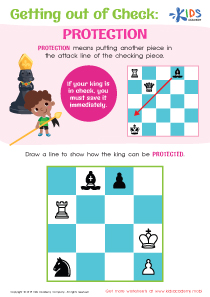
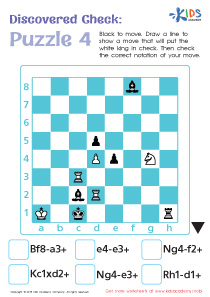
Decision making skills Chess Worksheets for Ages 5-6
3 filtered results
-
From - To
Boost your child's decision-making skills with our engaging chess worksheets designed specifically for ages 5-6. These interactive resources introduce young learners to the fundamentals of chess while fostering critical thinking and problem-solving abilities. Kids will explore basic strategies, learn to evaluate options, and practice making informed choices through fun, age-appropriate exercises. Our thoughtfully crafted worksheets encourage creativity and self-confidence in a playful manner, ensuring that learning is both effective and enjoyable. Perfect for home or classroom use, these worksheets make it easy to nurture essential decision-making skills in your child. Start their chess journey today and watch them thrive!
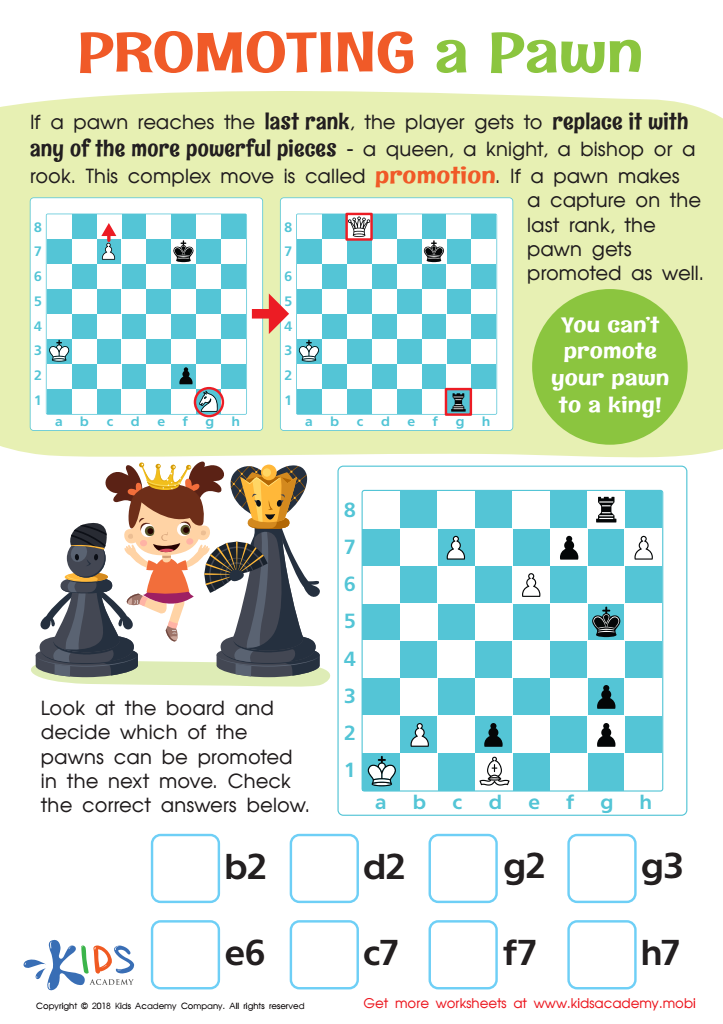
Promoting a Pawn Worksheet
 Assign to My Students
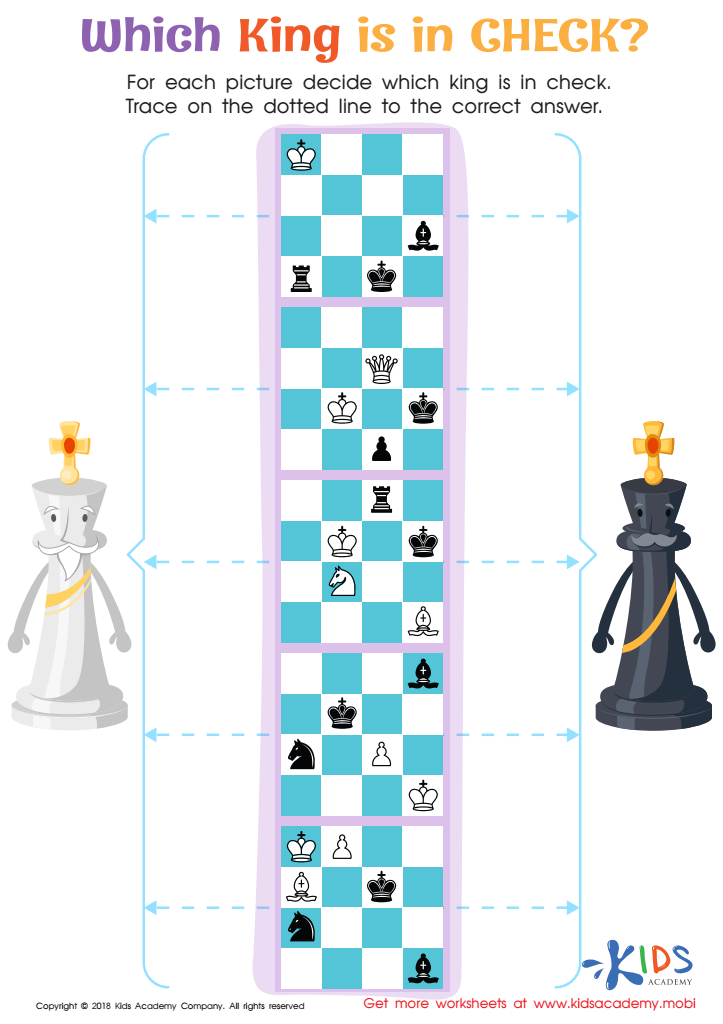
Which King is in Check? Worksheet
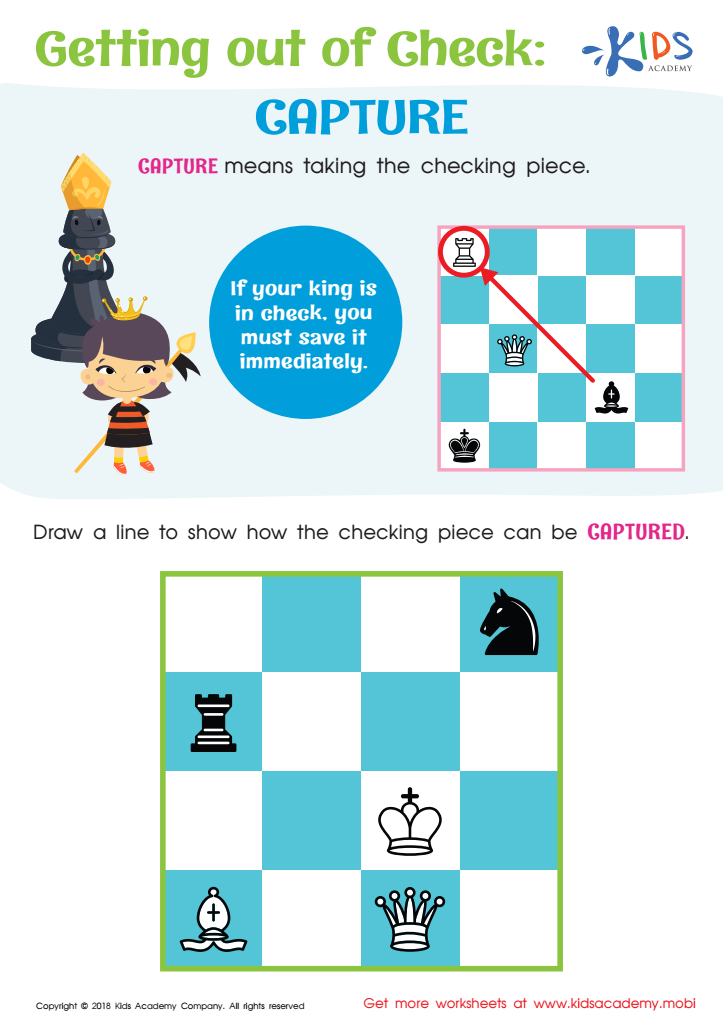
Getting out of Check: Capture








Decision-making skills are essential for young children, as they lay the foundation for problem-solving, critical thinking, and emotional intelligence. Introducing chess to children ages 5-6 can significantly enhance these skills in a fun and engaging way.
Chess teaches children how to evaluate situations, anticipate consequences, and strategize their moves. Each game challenges them to think several steps ahead while considering their opponent's potential actions, fostering foresight and flexibility—key components of effective decision-making. Furthermore, chess encourages patience and discipline, as children learn to wait for the right moment to make their move.
Parents and teachers play a crucial role in cultivating these skills early on. By incorporating chess into children's activities, they not only stimulate cognitive development but also empower kids to feel more confident in their abilities to make choices and accept outcomes. This confidence in decision-making can translate significantly into other areas of life, from academic performance to social interactions and beyond.
Moreover, chess nourishes a sense of sportsmanship, teaching children how to handle victory and defeat gracefully—skills that are vital in a collaborative world. Thus, encouraging chess at a young age equips children with invaluable tools for their future.