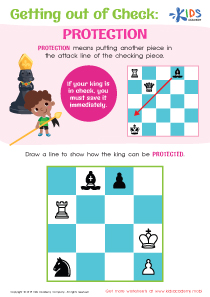
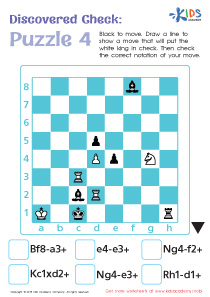
Enhancing problem-solving skills Chess Worksheets for Ages 5-6
3 filtered results
-
From - To
Empower young minds with our "Enhancing Problem-Solving Skills: Chess Worksheets for Ages 5-6." Designed to make learning fun, these engaging worksheets introduce basic chess concepts while fostering critical thinking and problem-solving abilities. Through enjoyable puzzles and challenges, children will learn strategizing, pattern recognition, and decision-making skills essential for their development. As they navigate the chessboard, they will enhance their cognitive skills and boost their confidence. Perfect for homeschooling or supplementary education, these worksheets provide an interactive way to nurture young intellects. Start your child’s journey into the exciting world of chess and watch their problem-solving skills flourish!
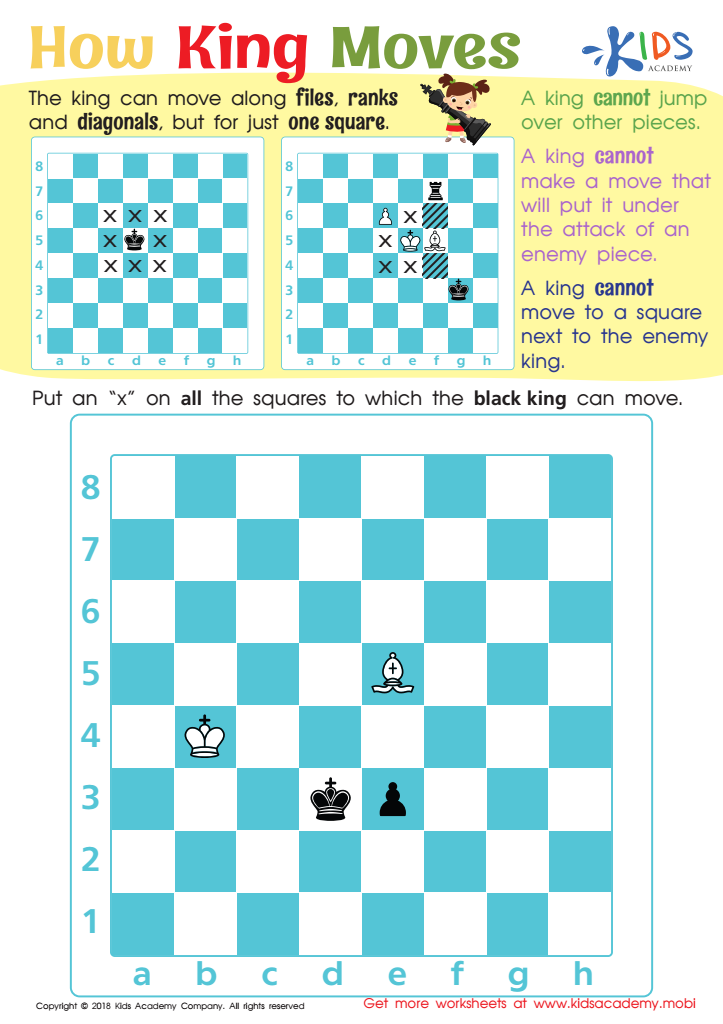
How King Moves Worksheet
 Assign to My Students
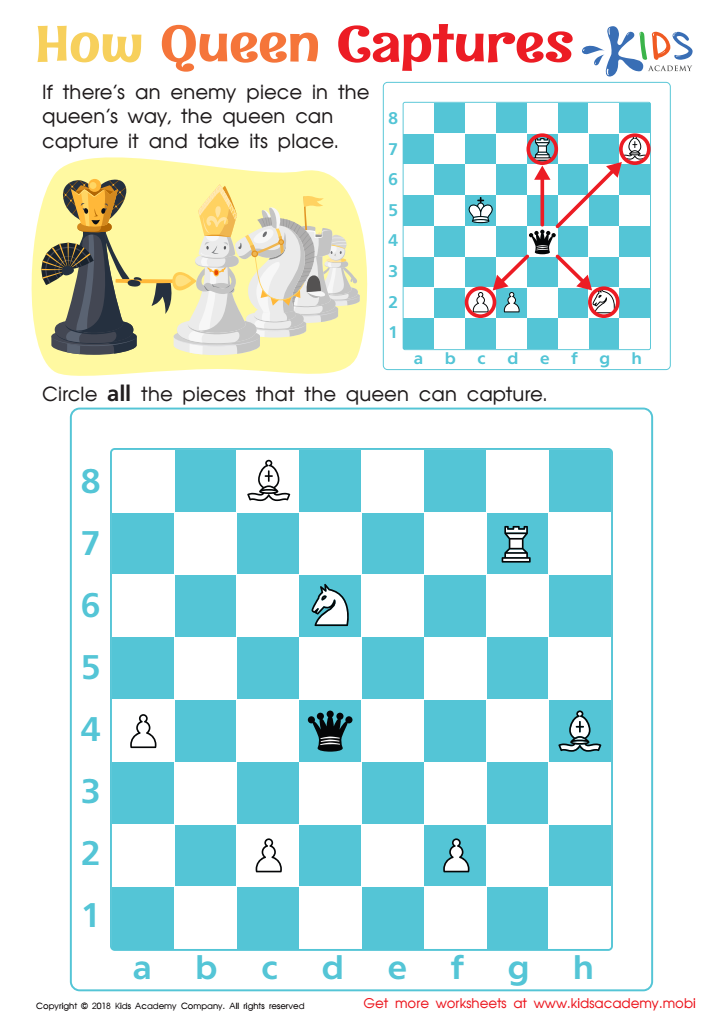
How Queen Captures Worksheet
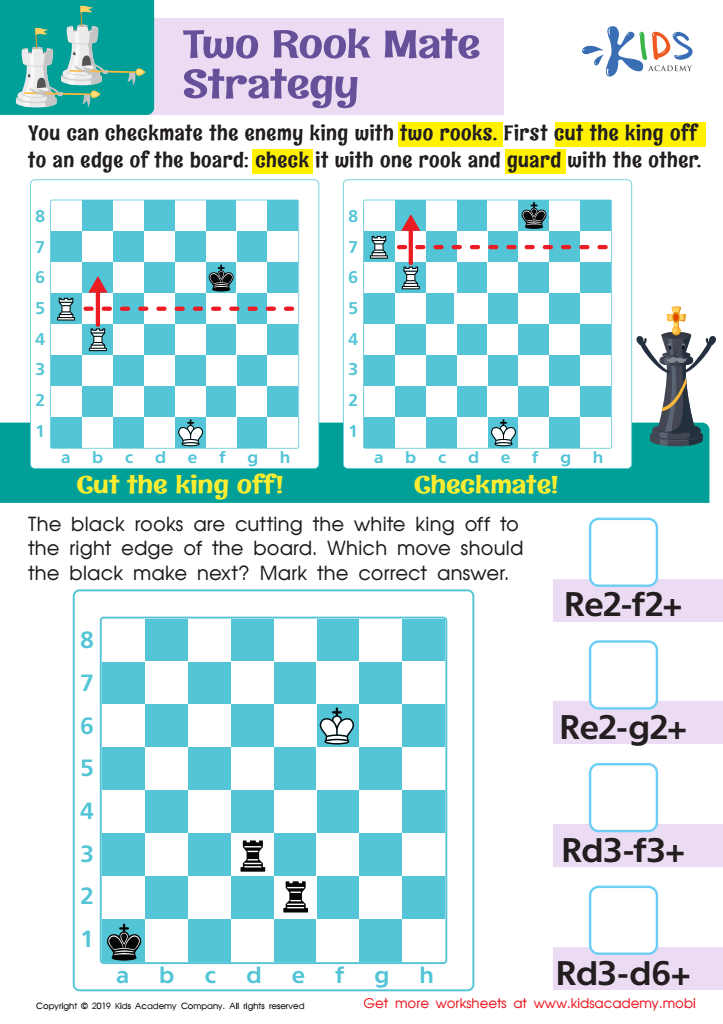
Two Rook Mate Strategy Worksheet





Enhancing problem-solving skills through chess for children aged 5-6 is vital because it nurtures critical thinking, patience, and creativity at an early age. At this developmental stage, children are naturally curious and eager to explore, making it an ideal time to introduce systematic thinking. Chess offers a structured environment where young players learn to assess situations, devise strategies, and anticipate outcomes.
As they engage in chess, children experience setbacks and victories, teaching them resilience and the importance of perseverance. These attributes extend beyond the chessboard and profoundly influence academic performance and social interactions. Additionally, chess helps improve concentration and memory, fundamental cognitive skills for learning in other subjects.
For parents and teachers, using chess as an educational tool presents an innovative way to foster engagement and collaborative learning. It serves as a fun and interactive way to cultivate essential life skills. Furthermore, endorsing activities that promote cognitive development, such as chess, models lifelong learning values, reinforcing the importance of mental agility and strategic thought. By nurturing these abilities early on, adults empower children to approach challenges with confidence and ingenuity, better preparing them for future academic and real-world scenarios.