
Alphabetical order understanding Worksheets for Ages 5-6
7 filtered results
Difficulty Level
Grade
Age
-
From - To
Subject
Activity
Standards
Enhance your child's alphabet skills with our engaging "Alphabetical Order Understanding Worksheets for Ages 5-6" at Kids Academy! Specially designed for early learners, these worksheets help develop essential literacy skills by teaching kids how to sequence letters and words alphabetically. Fun, interactive activities keep young minds attentive while they practice arranging and recognizing letters. Empower your 5-6-year-old with the foundational knowledge needed for reading and writing through this enjoyable learning resource. Perfect for both classroom and at-home use, our worksheets provide invaluable practice to support your child's educational journey. Visit Kids Academy to get started today!
Favorites
With answer key
Interactive
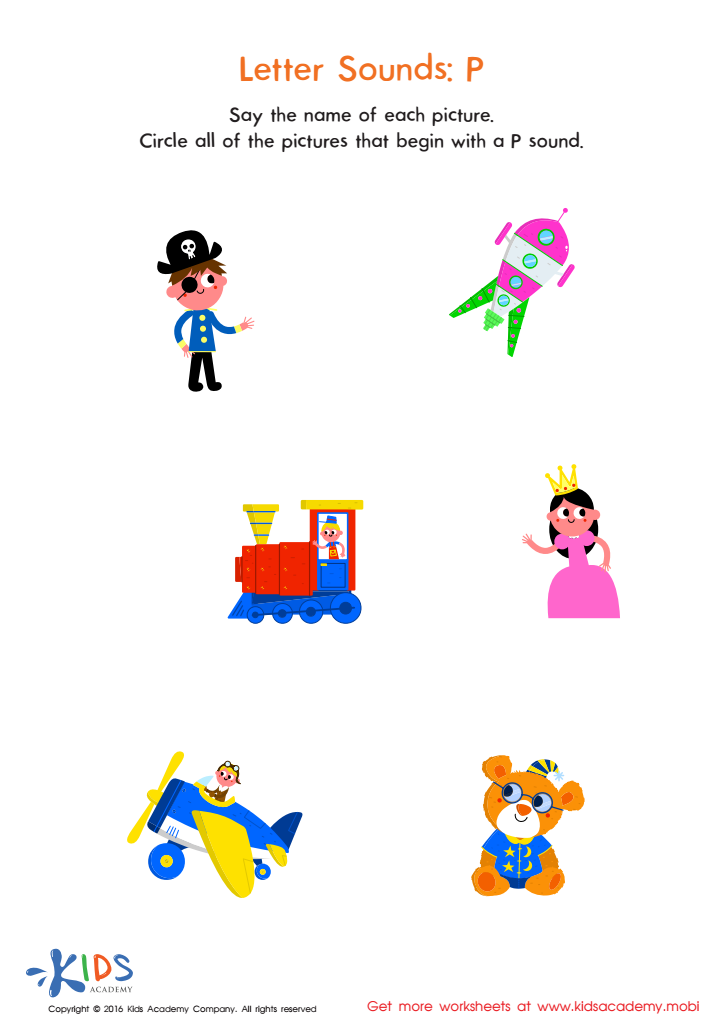
Letter P Sound Worksheet
Think P! Kids practice phonics with this fun letter P worksheet. With delightful illustrations, they'll sound out simple words and get closer to reading.
Letter P Sound Worksheet
Worksheet
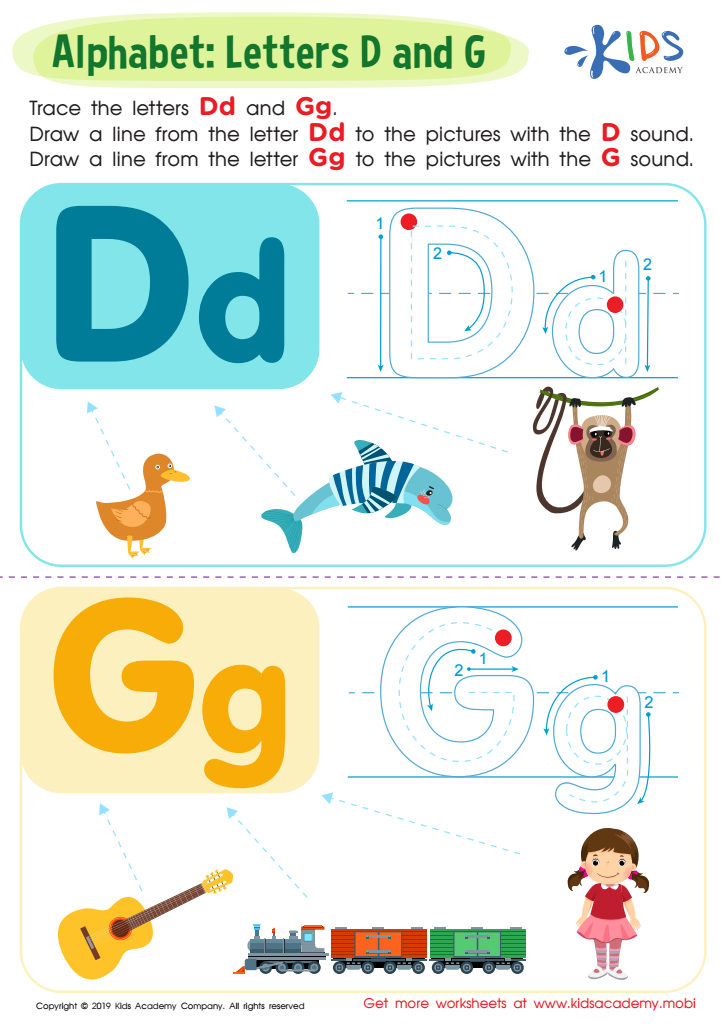
Letter D and G Tracing Worksheet
Kids can explore their imagination with the 'Alphabet: Letters D and G' worksheet! They'll trace capital and lowercase "D" and "G" and trace a line from the words. Colorful animals and objects make the task more fun and entertaining!
Letter D and G Tracing Worksheet
Worksheet
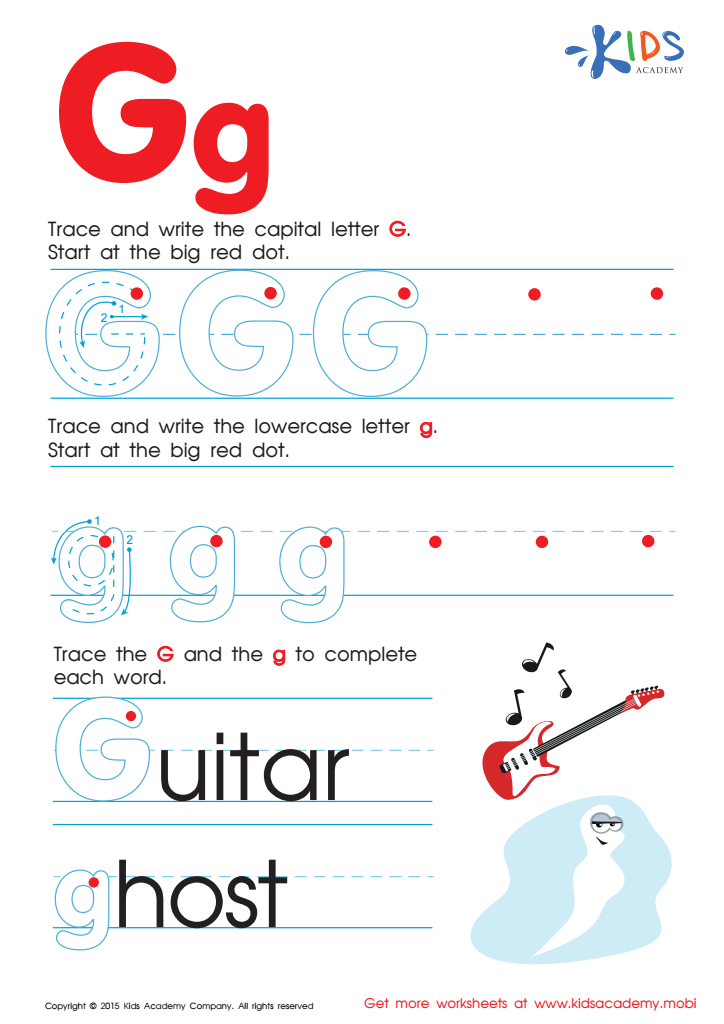
Letter G Tracing Page
Get ready to trace the letter "G" – with a big red spot as the starting point, trace the lines and watch the letter appear. Uppercase and lowercase letters are both easy and fun to write. Give it a go and finish the word "go". Play the guitar and say "hello" to a funny ghost!
Letter G Tracing Page
Worksheet
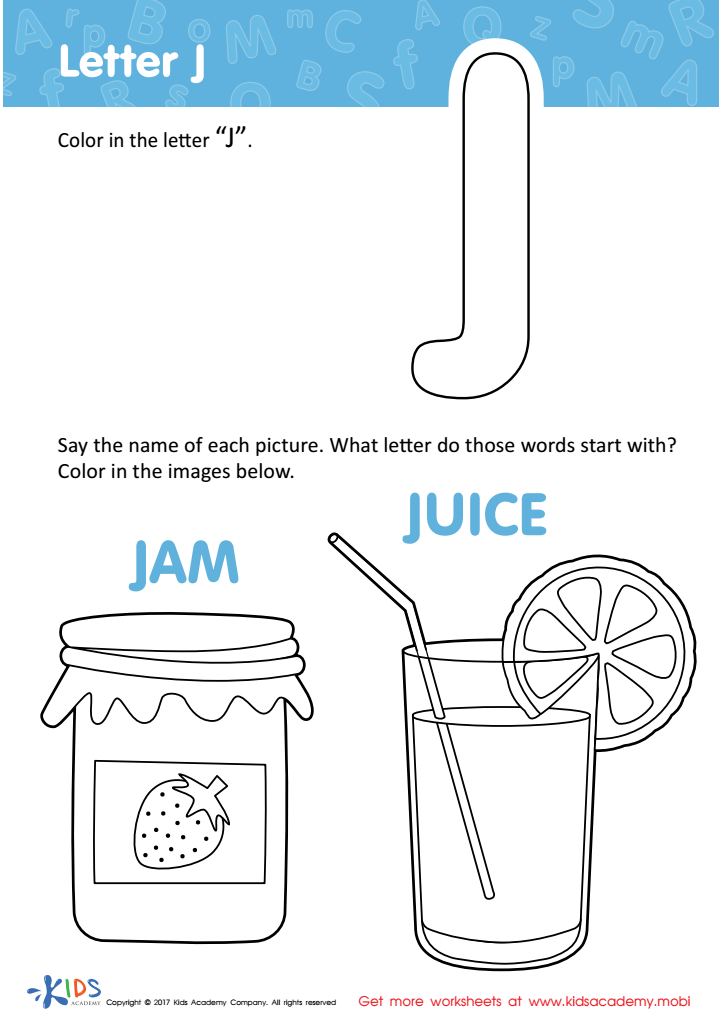
Letter J Coloring Sheet
Practice the letter 'J' with your little one with this fun coloring page! Pictures of jar, juice, jam and jelly make it an enjoyable experience for kids. Learning the letter and coloring is fun for even the youngest learners.
Download (PDF)
 Assign to My Students
Assign to My Students
Letter J Coloring Sheet
Worksheet
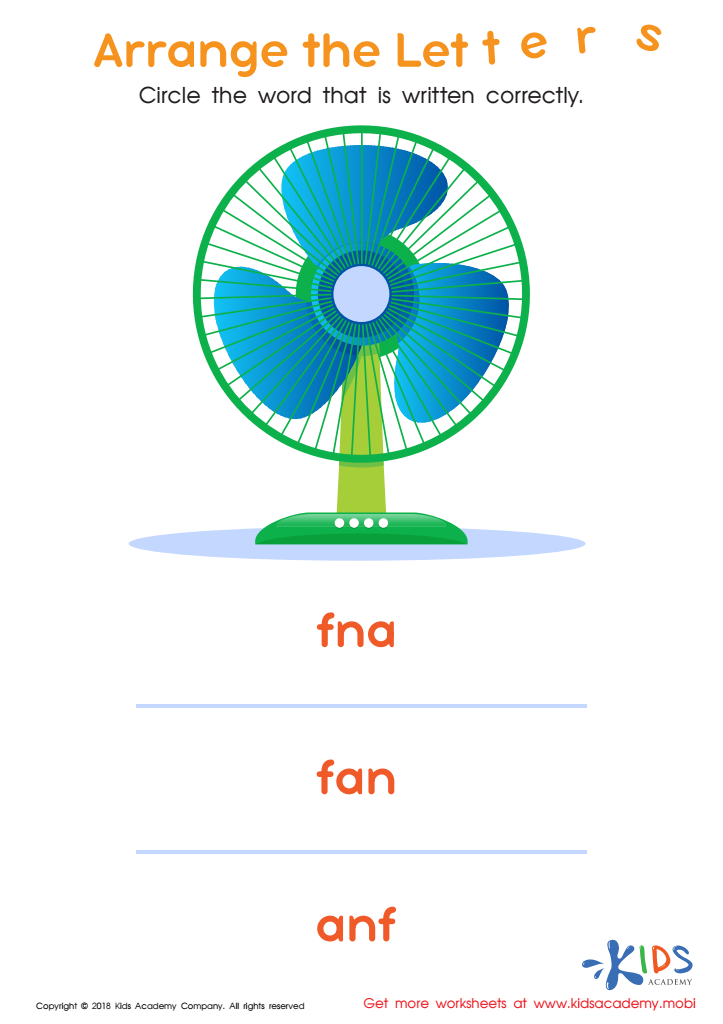
Arrange the Letters Worksheet
Test your kids' spelling skills with this worksheet! Show them the picture and ask what it stands for. Then, have them choose the correct spelling from the options given. Check their answer by circling the right one.
Arrange the Letters Worksheet
Worksheet
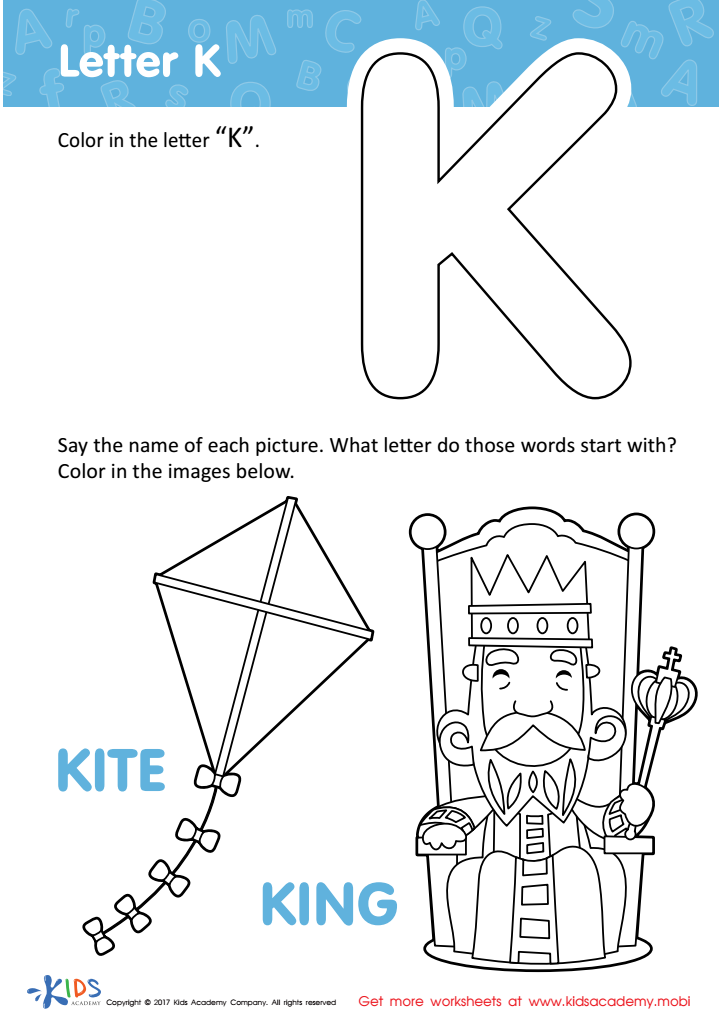
Letter K Coloring Sheet
This letter K coloring page captivates your child's creativity while learning the letter! Showcasing a king and kite, common words for their age group, it's sure to spark their imagination.
Download (PDF)
Assign to My Students
Assign to My Students
Letter K Coloring Sheet
Worksheet
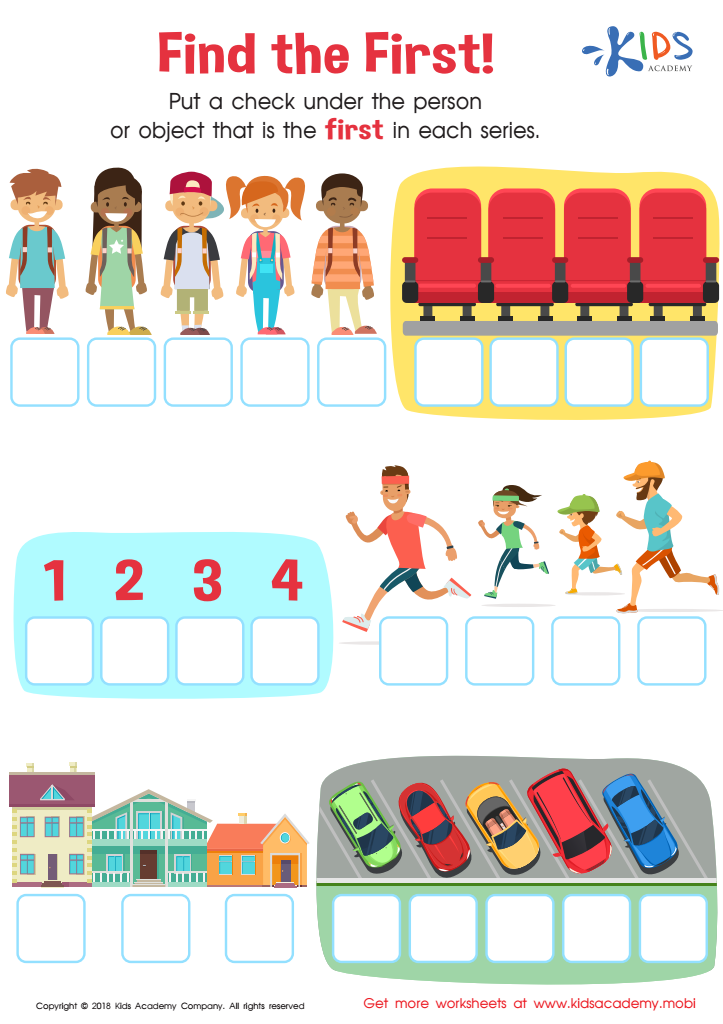
Find the First! Worksheet
Have your young students discuss what it means to be first in line, row, or a race. This free worksheet helps clarify their understanding of "first". View each group of people/objects and choose the first one. Follow up with hands-on activities like lining up students/toys or acting out a sequence of movements. Students can tell what happened first. Enjoy this printout for a fun math lesson!
Find the First! Worksheet
Worksheet
Join Kids Academy for Free
Who is primarily going to use this learning content?




.jpg)


Understanding alphabetical order is a foundational skill that benefits children in various ways. For children ages 5-6, grasping this concept aids in the development of literacy skills, which are critical at this early stage of learning. Knowing alphabetical order helps children become familiar with the sequence of letters, reinforcing letter recognition—a key aspect of reading proficiency.
When children understand alphabetical order, it aids them in learning to use dictionaries, indexes, and other reference tools effectively. This is essential for fostering independent learning as they progress in their education. Moreover, arranging words in alphabetical order enhances cognitive skills like categorization, sequencing, and organizing information logically.
In a classroom setting, mastering alphabetical order helps children in completing tasks more easily and efficiently, like finding their names on a roster or labeling items. It provides a sense of structure and predictability, which is comforting for young learners.
At home, parents can support this learning by playing simple games or engaging in activities that encourage the practice of putting things in alphabetical order. This not only reinforces what is taught in school but also strengthens the bond between parents and children through interactive and fun learning experiences. Therefore, both teachers and parents should recognize the importance of teaching and nurturing an understanding of alphabetical order in young children.








