
Analytical skills improvement Worksheets for Ages 5-6
3 filtered results
Difficulty Level
Grade
Age
-
From - To
Subject
Activity
Standards
Enhance your child's analytical skills with our engaging worksheets designed specifically for ages 5-6. These worksheets foster critical thinking, problem-solving, and reasoning abilities through fun and interactive activities that capture young learners' attention. Featuring colorful illustrations and age-appropriate tasks, they encourage kids to explore patterns, comparisons, and logical deductions. Parents and educators can easily incorporate these resources to improve cognitive development while making learning enjoyable. Suitable for at-home practice or in the classroom, our analytical skills improvement worksheets aim to build a strong foundation for future academic success. Start your child's journey towards becoming a confident thinker today!
Favorites
With answer key
Interactive

Learn About Vets Worksheet
Assess your child's reading comprehension and recall with this ELA worksheet! It reviews interesting facts about vets with brief passages and pictures to help your reader. Ask the question at the bottom to see what they learned. It's a great way to check understanding!
 Assign to My Students
Learn About Vets Worksheet
Worksheet
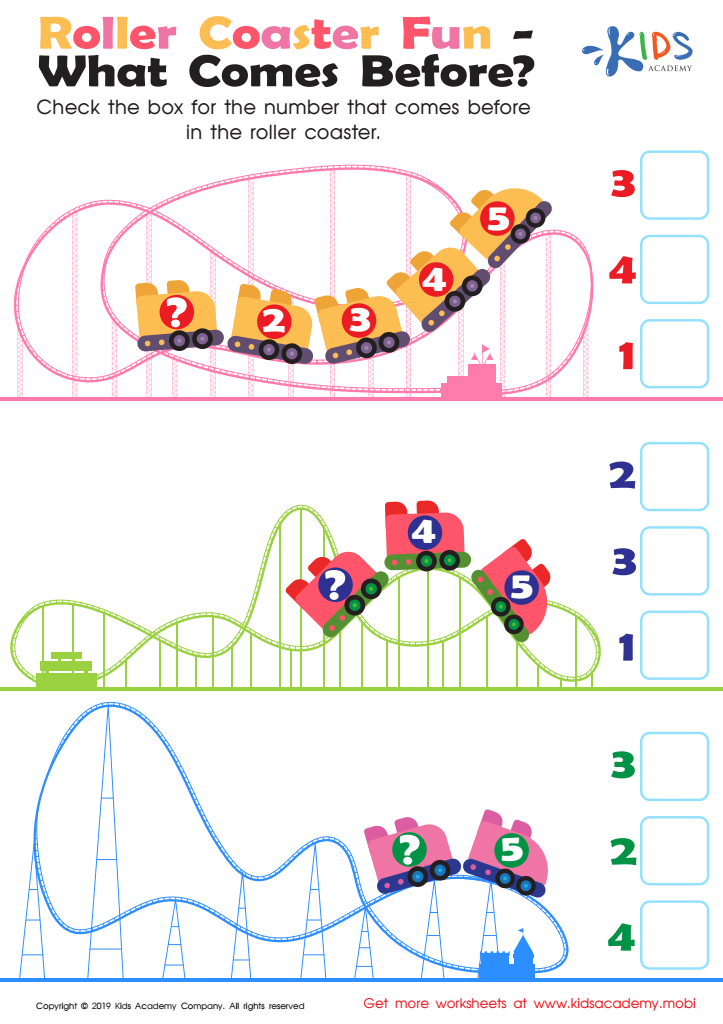
Roller Coaster Fun Worksheet
Ride a roller coaster and experience the thrill! Kids will love checking off the number that comes before each one on the worksheet. With three roller coasters to choose from, the fun never stops! Ask your kids if they've been on a roller coaster and where. Let them explore the excitement and joy of this thrilling ride!
Roller Coaster Fun Worksheet
Worksheet
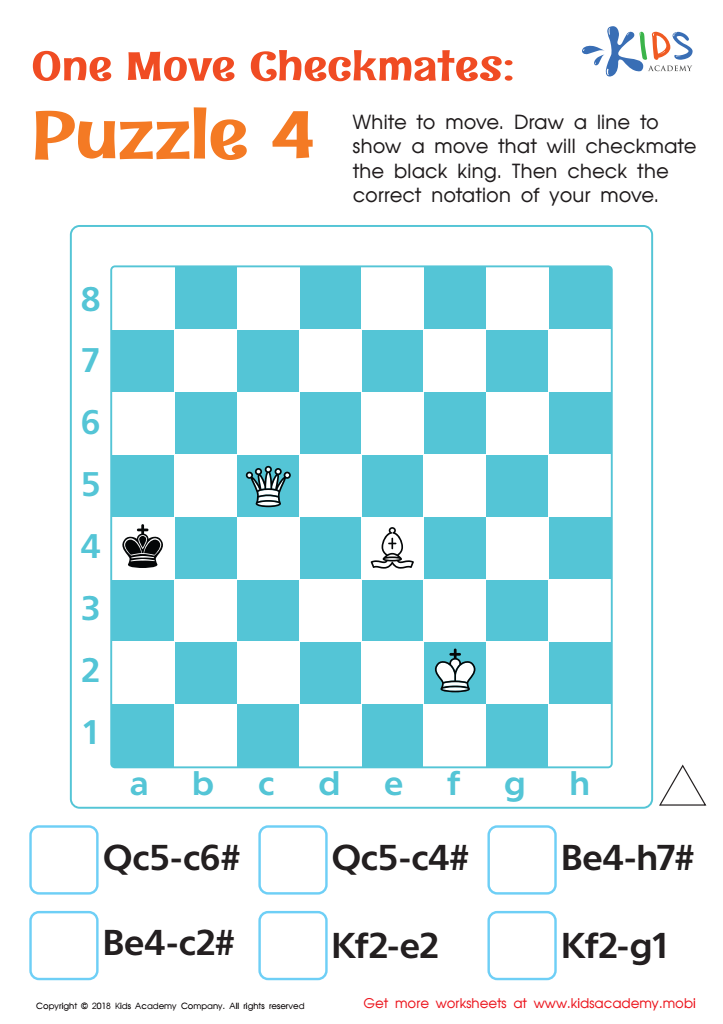
One Move Checkmates: Puzzle 4 Worksheet
Want to challenge your logistician? This engaging PDF worksheet tests their critical thinking, strategy and visual-spatial skills. They must plot to overtake and checkmate the king and use the answer choices to check if they've strategized correctly. It's a fun way to build problem-solving skills needed for higher-level math.
One Move Checkmates: Puzzle 4 Worksheet
Worksheet
Join Kids Academy for Free
Who is primarily going to use this learning content?







Development of analytical skills in children aged 5 to 6 is crucial for their cognitive and social growth. At this stage, children are beginning to make sense of the world around them, and strong analytical skills will empower them to solve problems, make decisions, and understand complex concepts as they progress in education.
Parents and teachers should prioritize these skills because analytical thinking fosters curiosity. Children learn to ask questions, identify relationships, and think critically about information. This skill set aids in foundational subjects, such as math and science, where analysis is essential for understanding patterns and making predictions.
Moreover, enhancing analytical skills nurtures independence and confidence. As children learn to evaluate their surroundings and draw conclusions, they become more self-reliant and capable of facing challenges. Additionally, these skills will be beneficial in social settings; children will learn to navigate relationships, understand different perspectives, and resolve conflicts effectively.
Ultimately, early investment in analytical skill development positions children for academic success and prepares them for real-world challenges, enabling them to become effective learners and leaders. Engaging them in games, discussions, and activities that promote these skills will yield lifelong benefits.








