
Constellation identification Worksheets for Ages 5-6
3 filtered results
Difficulty Level
Grade
Age
-
From - To
Subject
Activity
Standards
Help young stargazers uncover the wonders of the night sky with our engaging Constellation Identification Worksheets, designed specifically for ages 5-6. These fun and educational worksheets introduce little ones to various constellations, nurturing their curiosity about astronomy while enhancing their learning skills. Each worksheet features clear star patterns, easy-to-follow instructions, and captivating visuals to make constellation identification an enjoyable experience. Guided activities promote early childhood development, enhancing fine motor skills, concentration, and critical thinking. Spark your child's interest in the stars with Kids Academy's constellation worksheets—the perfect blend of learning and adventure!
Favorites
With answer key
Interactive
 Assign to My Students
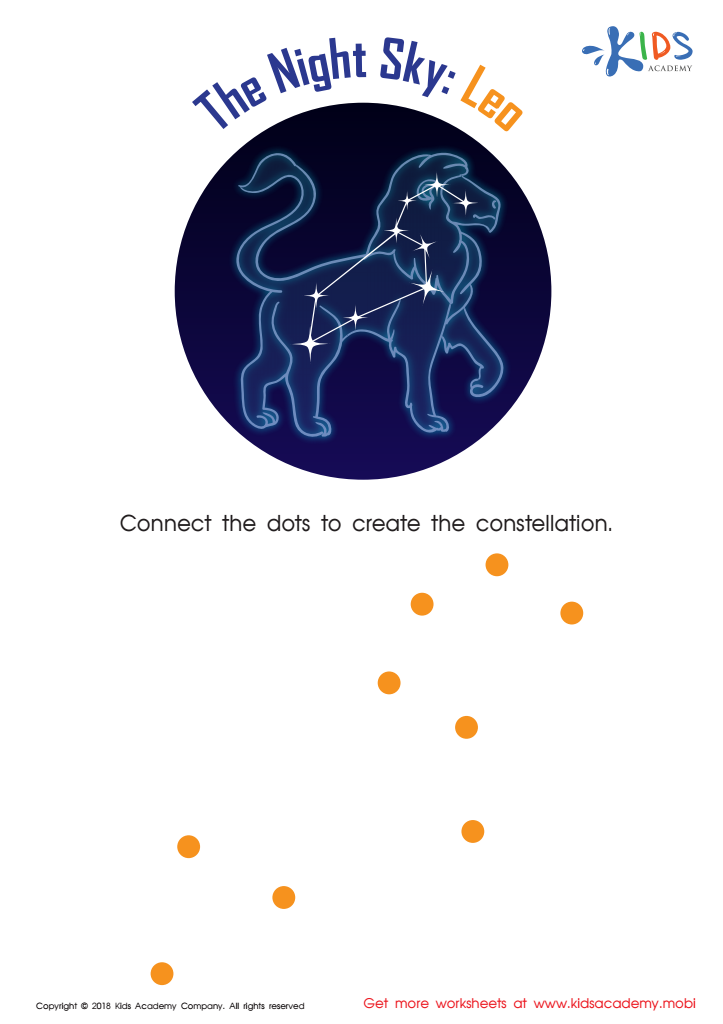
The Night Sky: Leo Worksheet
Let your kids explore the wonders of the stars with this fun worksheet! They'll connect the dots to create the constellation Leo. Night gazing instruments, a telescope or this printout can help your kids learn about constellations and horoscopes. Download the worksheet and let the star watching begin!
The Night Sky: Leo Worksheet
Worksheet
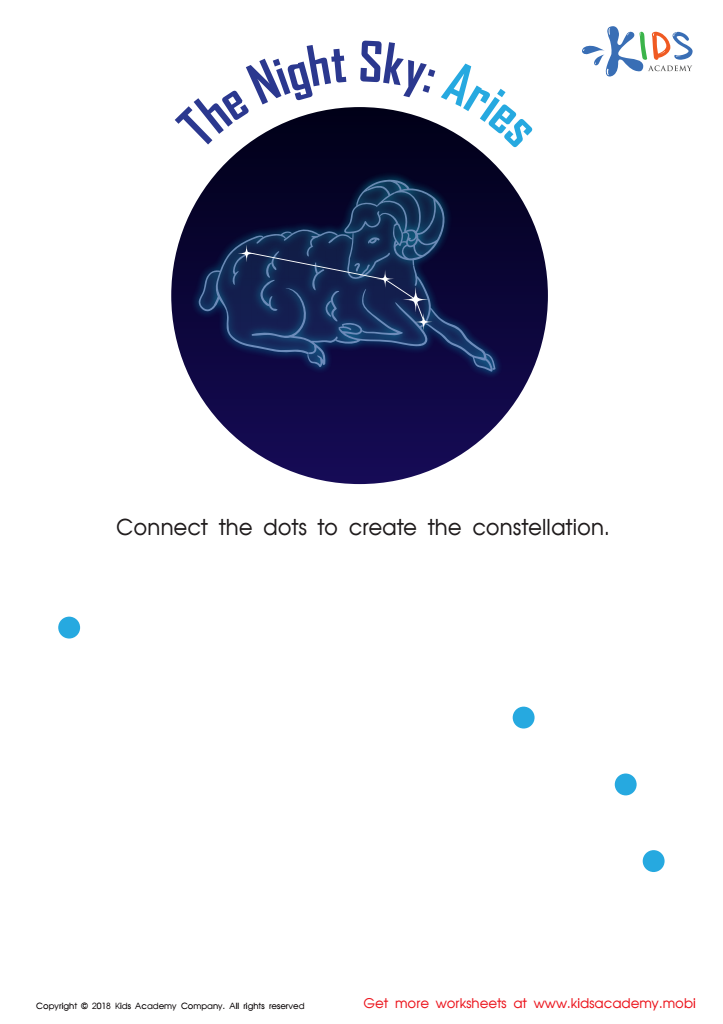
The Night Sky: Aries Worksheet
Does your child know constellations and horoscope? If you've got them interested in horoscope readings and star gazing, the Aries constellation in the pdf should be familiar. Have them look at the picture and identify it. If they can't, tell them it's Aries. Then, help them connect the dots to form the constellation.
The Night Sky: Aries Worksheet
Worksheet
Join Kids Academy for Free
Who is primarily going to use this learning content?








Identifying constellations is not just about recognizing stars; it plays a significant role in early childhood development. For ages 5-6, learning about constellations can spark curiosity and foster a lifelong interest in science and nature. At this age, children are incredibly imaginative and interested in exploring the world around them. Constellations, with their rich mythologies and stories, can captivate young minds, making learning both fun and engaging.
Additionally, constellation identification can enhance cognitive and observational skills. When children learn to identify patterns in the sky, they practice focusing their attention and memory. They also develop spatial awareness by understanding how different stars relate to each other within a particular constellation. This form of pattern recognition lays the groundwork for skills in mathematics and critical thinking.
Moreover, this activity often takes place outdoors, providing children with valuable time away from screens and an opportunity to appreciate nature. It can improve their sense of time as they observe how the night sky changes with the seasons.
Lastly, learning about constellations can be a collaborative activity that fosters bonding. Whether it’s one-on-one time with a parent or a teacher guiding a small group, these shared experiences can build meaningful relationships while promoting a sense of wonder and discovery.








